Published
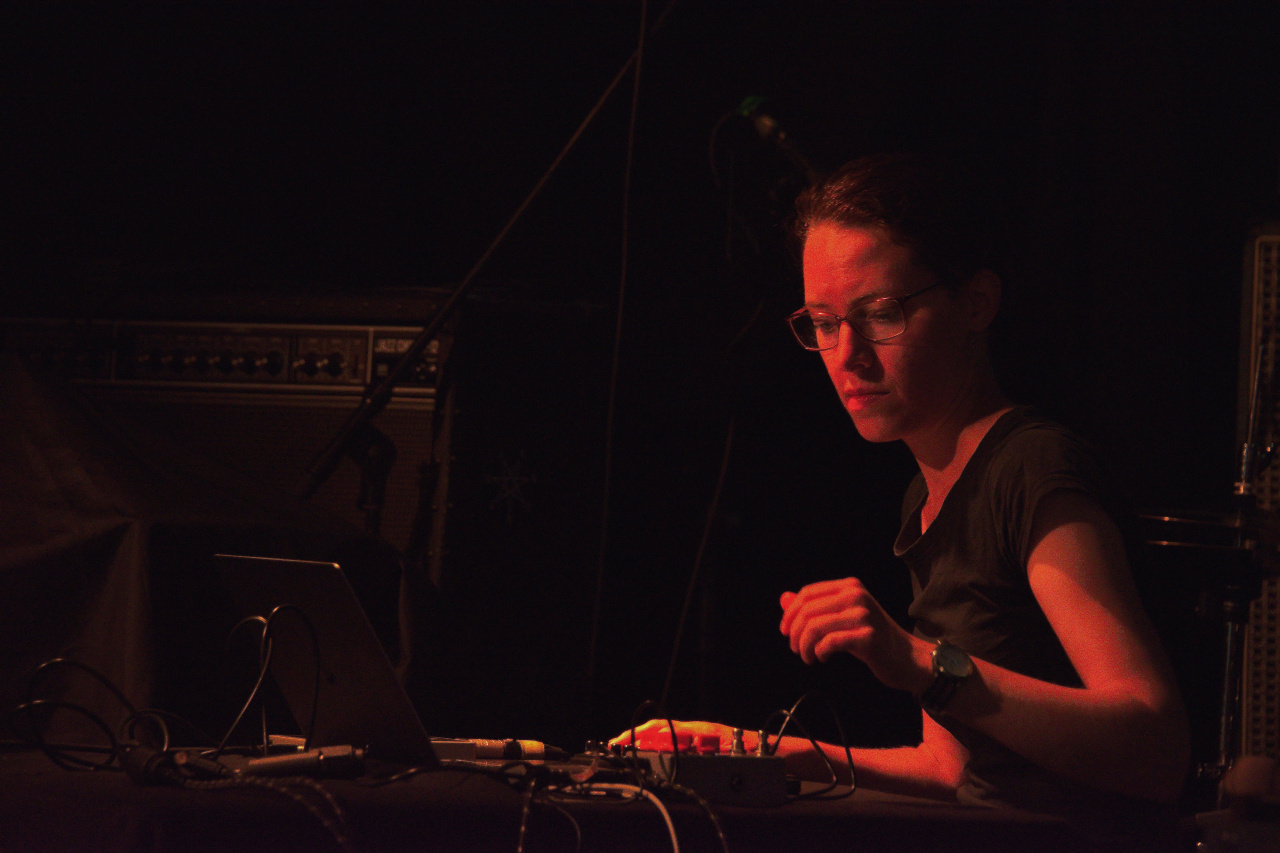
Name: Katharina Schmidt
Nationality: German
Occupation: Sound artist, field recorder, drummer, radio presenter
Current release: Katharina Schmidt's new studio album If & When is available via Elm. She is also one of the artists contributing to harkening critters, an epochal, 33-track-encompassing compilation which "tunes in to the plethora of vocalizations, mechanical emanations, and any other acoustics phenomenon produced by animals." The album is available from forms of minutiae.
If you enjoyed these thoughts by Katharina Schmidt and would like to know more about her music, visit her official homepage. She is also on bandcamp.
For a deeper dive, read our earlier Katharina Schmidt interview.
What sparked your interest in animal sounds? Are there any memories or experiences with these sounds that you can share?
I come from indie music, so the first time I got interested in field recordings was actually through songs and albums like Feist’s The Park or Holly Throsby’s On Night, where field recordings and ambiances — bird calls specifically — inscribe a place and a sense of reality into the music.
I remember listening to On Night and occasionally turning around because I thought the sounds were in the room with me, or I couldn’t tell whether a bird call was in the recording or had come through my window from the backyard.
I loved the effect of collapsing the space of the music and my space of listening into one another.
Did or do you do any research on animal sounds? If so, what were some interesting findings?
I’ve studied animal sounds in the context of Sound Studies and Cultural Studies, delving into topics like field recordings on radio, sound in literature, ambiances and atmospheres in music, and sonic perspectives on Otherness. The common theme in all of these has been a reflection on how humans relate to animal sounds and how music and poetic language are expanded by field recordings and non-human sounds.
There are very few definite “findings” in the humanities, but some of my favourite conversations have been around interspecies communication and the tendency of people to swing between othering animals and anthropomorphising them.
Working with field recordings in musical contexts may give us an opportunity to explore a middle ground in that dynamic, where we come closer to the animal world while still acknowledging its strangeness.
Tell me a bit about your first animal recordings, please.
Invariably, my first animal recordings must have been of birds. There is something magnetic about bird calls, as evidenced by anything from Clare’s poetry to Messiaen’s Catalogue d’oiseaux to electronic pieces like eleh’s Circle Three: Full Moon At 35Hz.
Also, my first recordings were quite domestic, exploring backyards and gardens. For a while, I used to have a ritual of recording the sounds in my backyard daily, just sitting at my window in silence and listening to the sounds of the city, as well as the animals and humans in the yard, while recording them.
Over time, I’ve gotten more interested in recording less overtly “musical” animal sounds, like insects and aquatic wildlife, and also more intentional about the places and ecosystems I want to explore sonically.
What did your first field recording set-up look like – and how has it changed over time?
I initially used a little Zoom H2 for everything: making field recordings, documenting rehearsals and concerts, recording voiceovers. One of my goals at that time was simply to keep the recorder with me and capture sounds whenever I heard something interesting. I think a big part of field recording is actually listening and forming habits.
Now, I have a Zoom H6 and work with a variety of microphones. For me, it has always been about making recordings that are good enough; unless you’re working in a documentarian or scientific context, I don’t believe in pursuing the idea of perfect sound.
Aside from the issue of accessibility that arises with the aura that’s created around expensive equipment, I think a point can be made for embracing the roughness and resistance that comes with imperfect gear, rather than attempting to erase the medium of the recording.
Have animal sounds been a direct inspiration on some of your other creative projects – if so, in which way?
Working with animal sounds in field recordings has definitely informed my other work, mainly because animal sounds have found their way into many of my projects: radio shows, installations, releases.
Field recording is also a fantastic exercise in listening beyond the structures we’re trained to recognize in music and developing a different sense of timing, texture, intensity. So it has informed my musical vocabulary as a drummer and composer as well, in the sense that I’ve learned to think in a different sonic palette and different structural logics from those I was taught in the conservatory.
Tell me about your contribution to harkening critters, please. What were your considerations going in? When, where and how was it recorded?
"Havn" is an exploration of the multitudes of small voices and the percussive textures in hydrophone recordings. These recordings were made at the Træskibshavn in Struer, Denmark, during a residency at Sound Art Lab in April 2023.
In the original recordings, the percussive impulses come from a number of sources, such as fish, crustaceans, barnacles, bubbles of oxygen in the water, ships moored in the harbour and other natural and human-made sources.
I then filtered and processed the original recordings to isolate different frequencies and textures.
The press release to harkening critters uses the word “signals” to classify the sounds on the CDs. Undeniably, there are many “musical” moments on harkening critters, but how do you feel about using the term “music” for them? What sets “signals” apart from “music”?
The term “signal” carries less cultural baggage than the term music.
Music implies a plethora of preconceived ideas about form, semantics, genre, agency, education, aesthetic judgment, social dynamics, and much more. Using a less fraught term like “signal” may be a reminder to be mindful of the ethics of “composing” with animal sounds and the pitfalls of subsuming them into our narratives of music. It also escapes the question of further categorizing the tracks on the compilation as “soundscapes”, “musique concrète”, “ambient”, or whatever else might come to mind.
However, I wouldn’t be entirely opposed to classifying the material on the CDs as “music”, precisely to trouble and expand the term: The effect of field recordings and animal voices in musical contexts may be a form of decentering or loosening of categories and assumptions, thereby updating our definitions of music.
Some have argued that recording animals is a form of appropriation and that they should be compensated in some form. Do you have any thoughts on this?
I definitely agree we should be giving back in some form. One way of course is donating the proceeds of this release to help aid the protection of the environment. Another way of giving back may be about creating awareness:
I remember how listening to Jana Winderen’s The Noisiest Guys on the Planet opened up a whole world for me sonically and ecologically. If I might achieve something similar for some listeners, I’d consider that a success.
Beyond that, negotiating the ethics of field recording is an ongoing process. French philosophers like Levinas and Irigaray argue that the ethical encounter is based on recognizing the infinite strangeness of another as well as your own obligation to them. I think that is a good starting point for working with animal sounds, where it’s hopefully not so much about appropriation but about enabling a sort of conversation and creating a common meeting ground.
Being exposed to the richness of the world of animal sounds can be an intense experience. How has listening to animals changed your views on various topics? (ecology comes to mind, but there may be more)
For me it is really about developing a closer connection to a specific place and its ecosystem. This is especially true of the recordings I made in Struer. All that time spent recording and listening at the harbour has created a special bond for me to the town and the Limfjord.
In my last interview on 15 Questions, I quoted Laurie Spiegel saying about music, “it’s always been a way to deal with the intensity of being alive.” The same holds true for field recording: Engaging with animal sounds is a great way to feel connected to the world, to be in touch with what is alive outside of you and your narrative.
That doesn’t have to lead to some drastic change in your views, it’s more of a slow shift in some of their foundations.