Published
Name: Kati Rán
Occupation: Singer, songwriter, composer
Nationality: Dutch
Recent release: Kati Rán's new album SÁLA is out via Svart May 24th 2024.
Recommendations on the topic of sound: I have a lot of books that come from antique stores that maybe are not so easily available that were a source for my Nordic album Sála. However easily available and highly inspiring is for example 'The Viking Way' by Neil Price, the 'Hávamál' from the Codex Regius, for which many versions now are available online, 'Gylfaginning' by Snorre Sturlusson. I like the translation made by Finnur Jónsson, 'Animism, Magic and the Divine King' by Géza Róheim, and 'Old Norse Woman's Poetry, Voices of the Female Skalds' by Sandra Ballif Straubhaar. That's a really good dive deep into certain backgrounds that co-inspired my Nordic Dark Folk album.
If you enjoyed this Kati Rán interview and would like to stay up to date with her work, visit her official homepage. She is also on Instagram, Facebook, and tiktok.
When I listen to music, I see shapes, objects and colours. What happens in your body when you're listening? Do you listen with your eyes open or closed?
I really depends on the music I listen to and why or where. Or even what part of the music I focus on.
I hope my music can bring synaesthesia similar to what you describe with colours, shapes or even numbers) to some of my listeners.
How do listening with headphones and listening through a stereo system change your experience of sound and music?
I prefer listening on good headphones if I really want to dive deep into a music piece.
Most of the time I am not listening a lot to other bands, unless I'm out and in a party mood. Of course, I have a few favourites I listen to when I am cooking at home or walking in nature. Most of the time I’m a little busy with my own material.
But when I’m out walking or biking, it's a good time to reflect on the songs and get inspired what to do next with a piece. It can also be a very practical thing that I want to record or edit differently or suddenly get inspired to ask someone to add their sound of a certain instrument onto it.
Tell me about some of the albums or artists that you love specifically for their sound, please.
On my new album Sála I invited the legendary Norwegian folk and jazz musician Karl Seglem and I was incredibly grateful to hear from him that he would gladly add his bukkehorn sound to a few of the new album songs.
A 'bukkehorn' is a traditional wind instrument made directly from the horns of goats. It's a nature instrument. Seglem is known for bringing the sound of the bukkehorn back into contemporary music of today. For me this sound immediately transports the listener to another time and place, and the instrument can be used to 'call upon' something or someone or send messages. It's just beautiful and full of emotion.
Another favorite sound that I really appreciate is that of the 'Hardingfele'; the Norwegian Hardanger fiddle. One of the best players I know is Olav Luksengård Mjelva and I enjoy listening to the intricate rhythms and melodies of that traditional sound. For some reasons we didn't bring Hardingfele onto this album, as none of the songs really required it, but perhaps sometime in the future for other compositions or collaborations. I'd love to work with it again.
[Read our feature on the Hardanger fiddle]
I also am very intrigued by the sound of Ney-flutes. I love to record with Dariush Rasouli on his Iranian Ney-flute, or listen to other players, such as Jasen Laz from the Bulgarian group Irfan.
There so many sounds in the World that I love, especially nature and historic instruments and it's always been a huge part of my work to make music with it or collaborate with players who master a certain instrument from their cultural tradition and I am not only listening to music from the Nordic regions even if I work with that material a lot.
I feel more and more like venturing out a little further into history and hidden gems from ancient cultures. Music truly brings everyone together in a world tapestry of sound.
Do you experience strong emotional responses towards certain sounds? If so, what kind of sounds are these and do you have an explanation about the reasons for these responses?
I believe music is one of the most profound ways we can connect to and bring people together, reconnect to nature and to our history. That has always been the mantra and the mission behind my music, or the sounds I produce.
Essentially music is vibration and frequency; the buildingblocks of the Universe. All atoms and molecules that the seen and unseen world is made up by, each have their own vibration and frequency. So of course, it's only natural that certain sounds resonate with us on a deeper level, or really move something within us. Like attracts like, and according to the law of correspondence, we can vibrate and merge along with that accordingly.
So yes, certain sounds move me profoundly and other sounds can bring you into another state of mind. We can work with that in our lives. I think, to discover someone's vibration or 'natural tonality' goes a long way into truly getting to know one another. 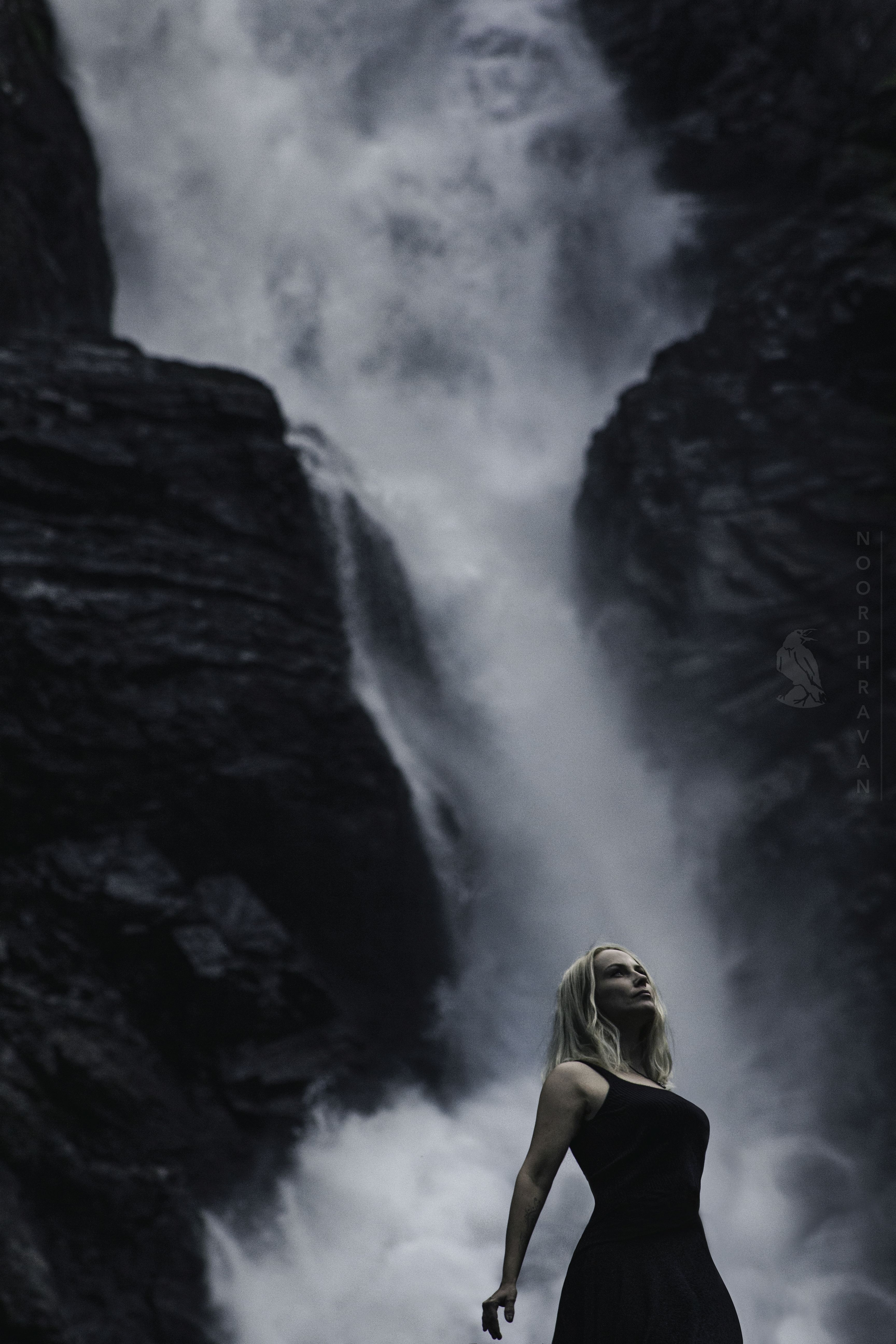
Kati Rán Interview Image by Ruben Terlouw
There can be sounds which feel highly irritating to us and then there are others we could gladly listen to for hours. Do you have examples for either one or both of these?
I am still not fond of hordes of mosquitoes when we sit on summer evenings by the lake. There is a very natural and biological reason their sound alert us, as they are blood suckers by nature, haha!
Are there everyday places, spaces, or devices which intrigue you by the way they sound? Which are these?
No not really. Not specific every day places. To my understanding inspiration mainly strikes hardest when something feels more out of the ordinairy.
However, I did use the sounds of clocks on my new album; I think this is something everyone can have a certain feeling with, especially when the sound of various clocks gradually multiplies and becomes one interwoven and quirky rhytm. We had a lot of fun with editing those sounds.
There is definitely a strong reason why I added those sounds as the base of the deeply personal duett of “Himinglæva” that I sang with Jaani Peuhu together on my upcoming album Sála. Not just as a metaphor for time specifically, but broader ideas behind it.
Have you ever been in spaces with extreme sonic characteristics, such as anechoic chambers or caves? What was the experience like?
Yes, in various places during travels where the acoustics change.
I love caves for that reason. It really feels like you are stepping into a womb of mother earth, and the underground. I love the smell of it, the dampness and the darkness. I feel like making it a home, like Ronja the Robber's daughter, but we can't live in caves anymore.
I was really happy to step into a cave system once with only my family and one supervisor during 'off hours", so that we were the only ones there and I played some swanbone flute in there for the Spirit of the Cave. I also stood inside a giant hollow sequoia tree in the Redwoods on the East Coast of the US. It was really special to stand in the middle if a living tree.
What are among your favourite spaces to record and play your music?
Well I don't want to over-romanticize the recording work when we make music albums; usually these are taking place in studios or in my own home studio or the like, and it's not per se the most inspiring room from a esthethic point of view; but with the right people it will always feel like a great and productive day.
I was also incredibly happy and insprired to record in Iceland, in the middle of the countryside in Húsafjell when visiting Páll Guðmundsson to record with a stone marimba. This is a instrument that he creates with stones from the land that each have a certain tone and he works withnatural material as a true artist.
I knew I just needed to have this sound on my new album Sála and for the song 'Stone Pillars' everything just came toghether. I invested quite some time to actually get to the point I could record this sound in Iceland. The area where the marimba is placed is just magnificent with incredible art, paintings, rock carvings, green moss and mountains everywhere you look and the obligatory black Icelandic filter coffee;
As a recording artist and a 'fan' myself of the more 'traditional' Icelandic music scene, it really cannot get much better than that.
How important is sound for our overall well-being and in how far do you feel the "acoustic health" of a society or environment is reflective of its overall health?
Well sound can be perceived as coming from outside or inside. I think natural sound in 432 khz, or the direct sounds of nature are the most natural frequency one can surround onesself with, and it will be the most beneficial for our well-being. It's a collective experience that a walk in nature can really refresh the mind and body.
We in the West collectively listen more to music in 440 Khz, as this is the tuning we are used to in the last decades. I am interested in working with other frequenciues too, perhaps in the future more so in the guided mediation & visualisation tracks that I also sometimes release.
As far as 'inner sound' goes, I think our inner voice, or inner 'critic' should be taken care off as well. It will be really good to talk to yourself as kindly as you talk to others; with honesty and compassion.
Sound, song, and rhythm are all around us, from animal noises to the waves of the ocean. What, if any, are some of the most moving experiences you've had with these non-human-made sounds?
That will be the sound of the ocean. It is also the main 'patron sound' on my new album Sála (Old Norse for 'Sea' and 'Soul').
Many animals communicate through sound. Based either on experience or intuition, do you feel as though interspecies communication is possible and important? Is there a creative element to it, would you say?
For me personally, this is a no brainer; I just need to look into the eyes of my cat (for others this can be their dog or other close animal like their horse) and we can "communicate" directly with compassion and feeling.
It's for me easy to read or feel their feelings and be aware of their body language too, which speaks all the time and in clear ways. It's not telepathic in the sense of " mentally hearing in the human language", as animals of course do not share the same language, it's more a matter of tuning in, of true empathy.
I do think we also communicate; whether we touch a stone, a tree or holding the hand of a person. I think a lot of people have lost track of the incredible ways we can communicate through direct, consensual touch.
Tinnitus and developing hyperacusis are very real risks for anyone working with sound. Do you take precautions in this regard and if you're suffering from these or similar issues – how do you cope with them?
I have actually a slight hearing impairment, so working with music has been different for me, than say, someone with perfect hearing. Certain frequencies are lost to me due to a childhood accident in my left ear. As much as 40 percent of sound is lost to my left side; but our ears can adapt, and my right ear makes up for a lot of it.
Ear ringing is something to be very mindful of. When doing production work for many hours it's also important to rest the ears, so we can protect our ears and hear our material better and also in a new light some time later.
Kati Rán Interview Image by Ruben Terlouw
We can surround us with sound every second of the day. The great pianist Glenn Gould even considered this the ultimate delight. How do you see that yourself and what importance does silence hold?
As we spoke of before earlier, sound and music are one of the most direct ways we can connect to each other and communicate emotions and other vibrations or messages.I'm happy you touch upon the topic of silence, as it's even a more powerful tool to (re) connect ourselves:
Whether we are out in nature and are silent, then we become aware of so much more details around us, signs even, or whether we make space for one another and 'be together in silence'. In my experience, one of the most beautiful things a person can do in a partnership is to sit together in silence and observe each other. lovingly and completly.
Silence is also a powerful tool in sound production and sound design. A good producer or songwriter will have "silence" or 'songbreaks' in their toolbox of sounds to guide and direct a listener through the motion, or movements of that composition.
Seth S. Horowitz called hearing the “universal sense” and emphasised that it was more precise and faster than any of our other senses, including vision. How would our world be different if we paid less attention to looks and listened more instead?
In any case it would be good for our well being if we did not always need a visual aid to listen to music or consume other entertainment. I see a growing imbalance happening in music and its promotion in general where artists and their photos and music videos (and looks) almost seem to have become of equal importance if not more so, than the actual songs and sounds those artists created.
Of course we love 'world building' and seeing any visual aspects really compliment and enrich the music. But I truly hope my listeners will also be able to enjoy the new Sála album with listening at the forefront. Especially if one takes the time to listen with headphones, they will discover many more layers, whispers, sound panning and other depths to my tracks than at first glance.
Some tracks have well over a hundred layers, placed in different ratios to the human hearing. And for sure some of that falls away if we consume a new song or album merely via the visual presentation on social media platforms.
My music is made and sound designed with the idea for immersive listening first and foremost.