Published
Name: KAU
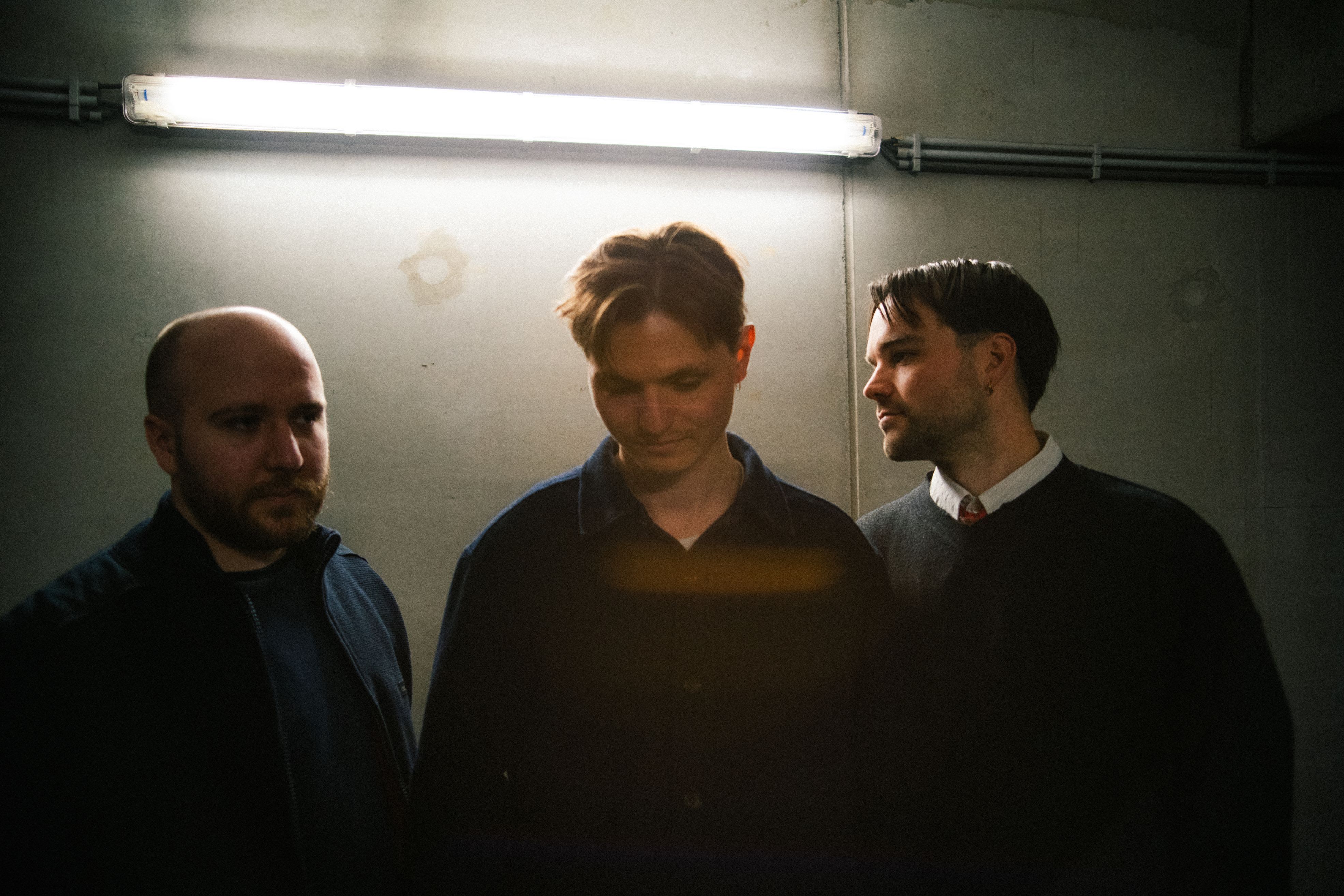
Members: André Breidlid (drums), Matteo Genovese (bass), Jan Janzen (synths)
Interviewee: Jan Janzen
Nationality: Belgian
Current Release: KAU's new album Unknown Waveforms is out via Sdban Ultra.
Shoutouts: One shoutout definitely goes to our label Sdban Ultra. They really do support young and local artists in realizing their projects so we are really thankful for their help. In general in Belgium there are many opportunities or subsidies available to see your project come to fruition and the list of people who have supported us is very long! In general a shoutout goes to every artist out there pushing the boundaries of music.
If you enjoyed this KAU interview and would like to know more about the band and their music and upcoming live dates, visit them on Instagram, Facebook, and bandcamp.
What were some of the musical experiences which planted a seed for your interest in jazz?
We all have inherited some jazz LPs from our parents, and probably all have a copy of Kind Of Blue hiding somewhere. But the main event that grew our interest in jazz was probably when we started attending jam sessions in local bars.
Back in 2012 the three of us were attending university and our musical background was very different from what it is today. But seeing people of our age playing jazz really inspired us to explore and learn about the genre.
What does the term jazz mean today, would you say?
Jazz has evolved so much in the past two decades that it is now really hard to define. It can be interpreted very personally, but to us it generally means ‘the act of improvising’.
Traditional musicians still think of jazz as swing, bebop, postbop or modern variations of these older existing sub genres.
Today in countries like the UK and Belgium you have a lot of musicians, like us, who like to blend jazz with hip hop and electronic music.
Where do most of your inspirations to create come from – rather from internal impulses or external ones?
Most inspiration to create comes from external impulses. It’s the total sum of music that we have heard or experienced in our life. We are lucky to be very open minded and enjoy listening to so many different genres of music, from jazz to rock, classical, hip hop, electronic ... everything.
So when we get in our rehearsal safe space, anything could come out of a jam session. We then filter concepts that we think can work best and that’s how we start composing.
As of today, what kind of materials, ideas, and technologies are particularly stimulating for you?
We really love analog synthesizers and that is still what stimulates us the most.
We like to create music through long jam sessions where we spontaneously find new sounds and integrate them into our compositions. This is the concept behind Unknown Waveforms, our new album.
What role do electronic tools and instruments play for your creative process?
So let me take you inside the KAU rehearsal and creative space.
Imagine a room with a drumset, a bass guitar and synthesizers at our disposal. As bass and drums lay the fundamentals of the rhythms that will make the backbone of a song, a third person is improvising melodies/chord structures with a synthesizer. On top of that, we constantly finetune the sound of the instrument by modifying the oscillators and all the other parameters until a match is found.
It is a ‘trial and error’ kind of creative process that can sometimes go on for hours until something concrete is found. This is how we integrate improvisation in our creative process.
The main synthesizers, among many others, that make the backbone of our new album are a Moog subphatty, a long time KAU classic, and a Prophet Rev 2.
Tell me a bit about the sounds & creative directions, artists & communities, as well as the colleagues & creative hotspots of your current hometown, please. How do they influence your music?
Brussels itself is a hotspot for music. There are musicians from many different countries and cultures and the musical scene is incredibly diverse.
What really facilitated the creative process for us and many others is ‘Volta’, a musical center providing rehearsal space and support. Volta itself is a community where we had the chance to meet musicians and inspire one another. Our music was probably partly influenced by the many encounters that were made there.
Many people associate us with a movement called ‘Brussels Sound’ where other projects seem to have a similar approach of blending genres together.
Jazz has always had an interesting relationship between honouring its roots and exploring the unknown. What does the balance between these two poles look like in your music?
We tend to ‘explore the unknown’ rather than ‘keeping the roots.’
What we take from jazz are elements that we have explored and learned about during our time at conservatory. This last taught us a lot about complex rhythms and harmonic structures that you rarely find in mainstream music, but the result sounds far from the ‘roots’.
KAU is a very creative project where music is created through improvisation and spontaneity. This is why we blend so many genres together and why it is hard to put our music in a single box.
The objective is to simply create music that talks to us and feels good when played live as a trio.
How much potential for something “new” is there still in jazz? What could this “new” look like?
There are no limits and boundaries to what music can be. There is always room for something new.
It is also impossible to imagine what this could be as there are infinite possibilities. It all comes down to who the creator is and what he/she/them want to express, what instruments are chosen and what the creative process behind it is.
For many artists, life-changing musical experiences take place live. How do you see that yourself?
Playing live is the most important part of our project. Everything we create is because we see ourselves playing it on stage, and most importantly having fun while doing it.
Everything we record is also mainly played live with very little production, transmitting a similar energy to when we are on stage.
The Montreux Festival intends to preserve its archive of recordings for future generations. Do you personally feel it's important that everything should remain available forever - or is there something to be said for letting beautiful moments pass and linger in the memories of those that experienced them?
We think it’s great that there is an archive. Keeping a record of a live performance can be inspiring for the generations to come.
Today, everything is constantly filmed anyway on a day to day basis because of our telephones. So an actual recording of a live performance at Montreaux sounds very interesting. It would be great to play there one day!