Published
Name: Kessoncoda
Members: Tom Sunney (drums), Filip Sowa (keyboards)
Nationality: British
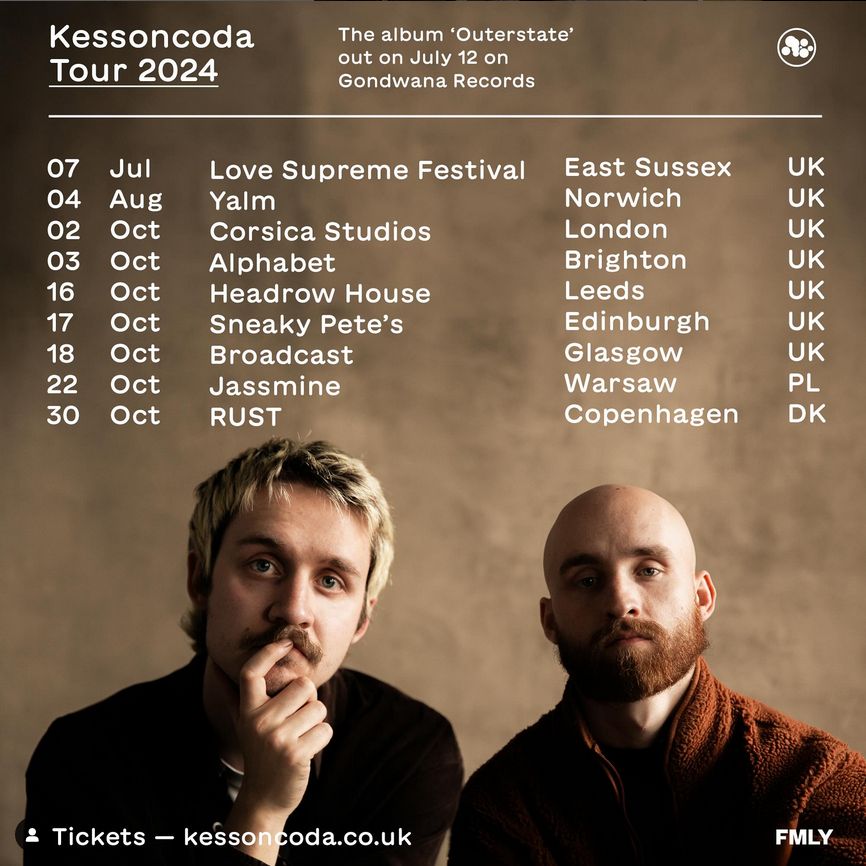
Current release: Kessoncoda's debut LP Outerstate is out via Gondwana. The duo will embark on a tour in support of the release, catch them live here: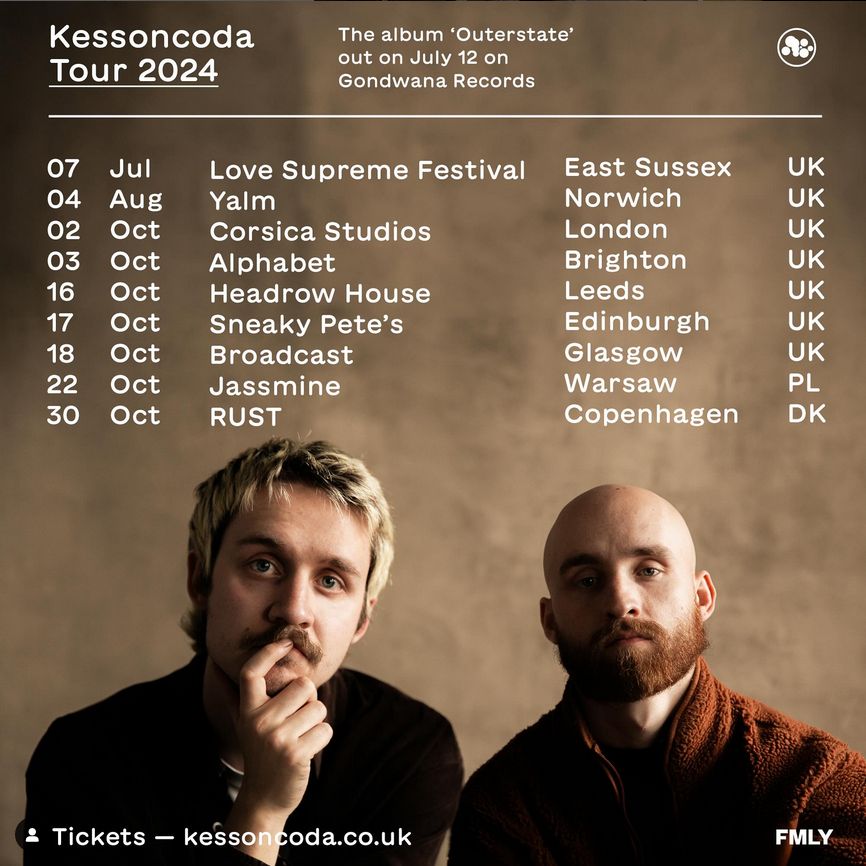
Recommendations: David Toop - Ocean of sound: Ambient sound and radical listening in the age of communication; Questlove - Creative Quest
[Read our David Toop interview]
If you enjoyed this Kessoncoda interview and would like to stay up to date with their music, visit their band page on the Gondwana website. They are also on Instagram, Facebook, Soundcloud, and tiktok.
What were some of your earliest collaborations? How do you look back on them with hindsight?
Some of our earliest collaborations go back to when we would write together alongside some of our friends. We have many fond memories of that time as it always felt so natural and honest. To be able to hang out with each other, listen to music, lazy about in the shed; all the while writing and recording music. It was fantastic!
Looking back now, we consider that part of our lives to be a very special time for us. For all of us who were involved, we all grew from there after learning so much about ourselves, not just as musicians but as people.
That’s the most important thing that came from that collaboration; learning and understanding about ourselves together as friends.
There are many potential models for collaboration, from live performances and jamming/producing in the same room together up to file sharing. Which of these do you prefer – and why?
We prefer jamming an idea together in the same room along with producing together.
The idea of jamming something out together in the same room removes all barriers. It’s a way of letting your subconscious take the driver's seat and reveal something about yourself that you wouldn’t have thought was there. Any barriers that you might put up consciously, are completely removed in this way. That can sometimes be the purest form of writing.
Producing in collaboration is much more specific in the sense that we will take much longer to work things out because we’ll be highlighting parts to either change or discard all together. It’s an area of writing that we both enjoy as it challenges us to not only think deeper but creatively resolve ideas and find what’s best for the piece.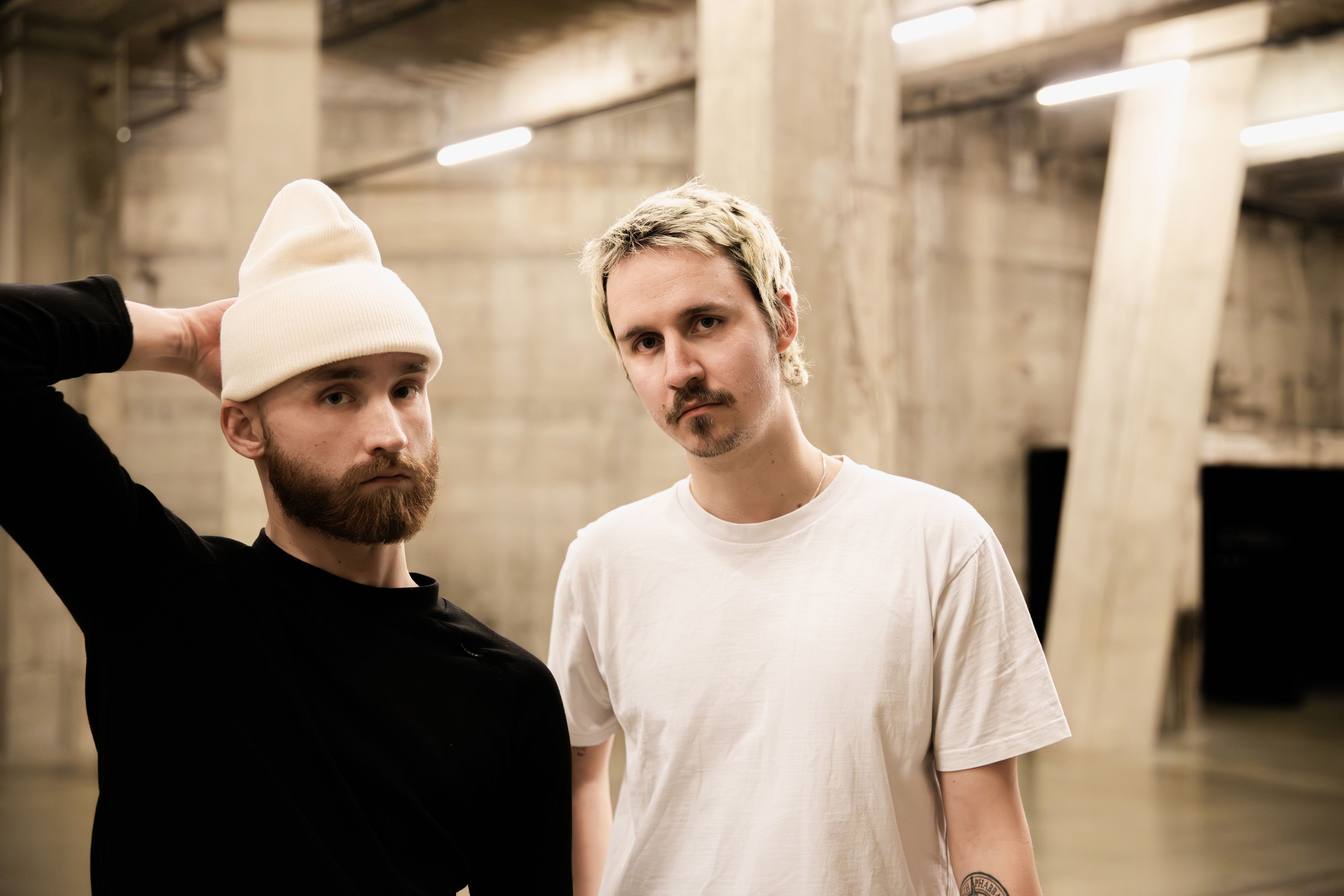
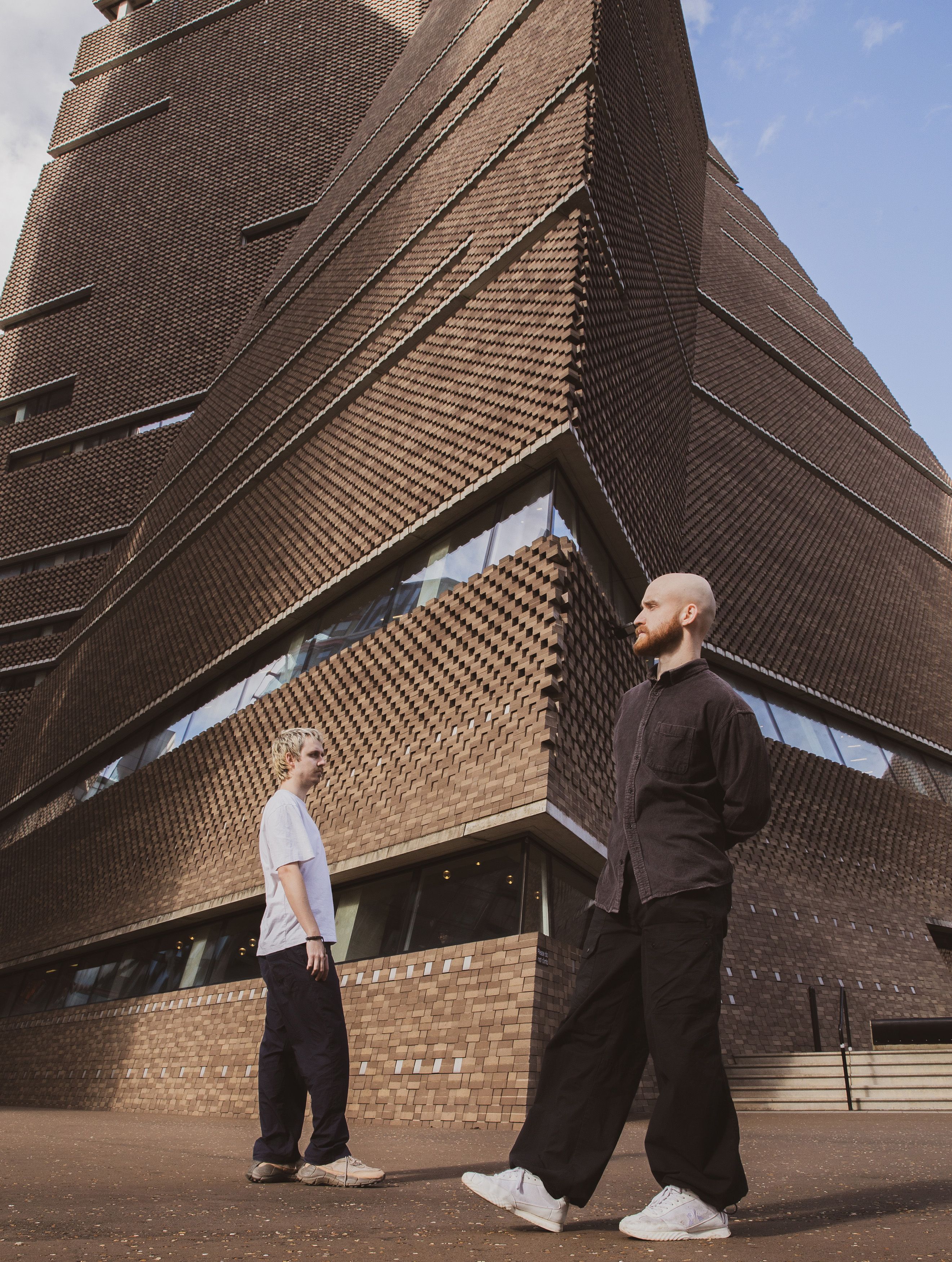
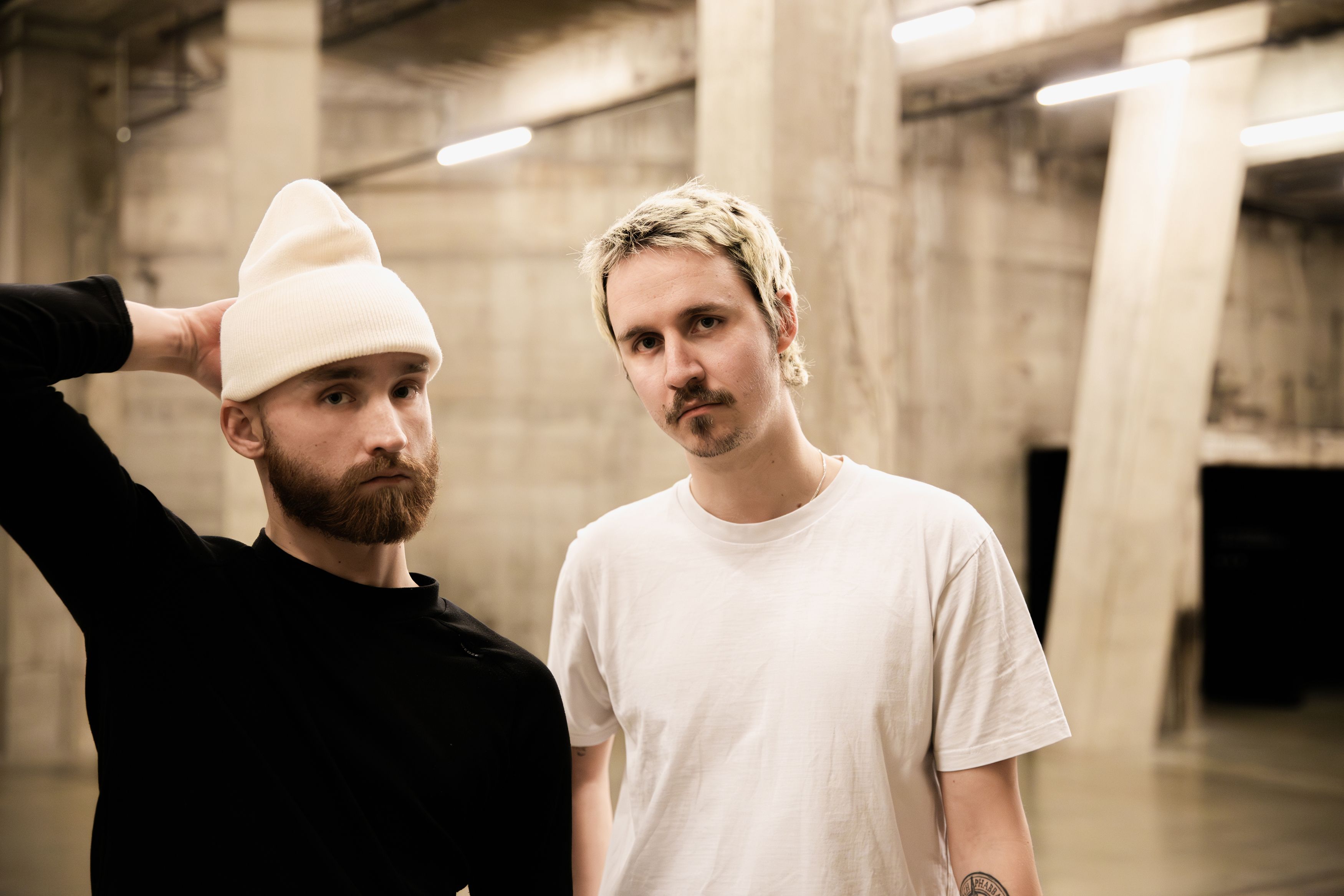
Kessoncoda Interview Image by Siân O'Connor
How did this particular collaboration come about?
We met in high school. Tom was already in and out of bands and Fil would be dabbling on guitar here and there. Over time, we somehow met (we don’t recall the specifics) and after realising that there were no bass players in school; Fil decided to learn bass himself and joined Tom alongside the various bands he was part of.
From there we became a solid rhythm section, we would jam out to Red Hot Chili Peppers and Rage Against The Machine records together in our spare time and learn other people's songs. For the most part, we performed in cover bands and then as time went on we ventured off into writing our own music.
Those early years were very formative for us and we both feel very fortunate to have had that experience early on.
What did you know about each other before working together? Describe your creative partner in a few words, please.
After spending a large portion of our time together as a rhythm section we knew something had clicked between us. We figured that we both had a desire to create in some form; whether that was in music, art or writing.
But little did we know of what we could create together, and that was what was exciting for us back when we first started and it still is today.
What do you generally look for in a collaborator and what made you want to collaborate with each other specifically?
Someone who is able to bring their own unique voice to the mix and is open to pushing the boundaries.
Tell me a bit about your current instruments and tools, please. In which way do they support creative exchange and collaborations with others?
We have quite a minimal set up, which has its benefits. The fact that we only have a minimal set up allows limitations and we find that to be very beneficial when it comes to the writing process.
Nowadays we are very lucky in the sense that we have everything at our fingertips, the music technology of today is so advanced that the capabilities are endless and it’s incredible with what you’re able to do with it.
That being said, we feel that working within that context of having everything available to you; can sometimes have a negative effect on the music that you’re making. Having limitations pushes us to think outside of our abilities.
Before you started making music together, did you in any form exchange concrete ideas, goals, or strategies? Generally speaking, what are your preferences when it comes to planning vs spontaneity in a collaboration?
We both agreed that we never want to be stuck in one place for too long, musically speaking. To avoid making the same record twice and feeling comfortable. We want to challenge ourselves as much as possible, keep ourselves just above the surface. That’s the mentality that we live by.
Planning has its benefits, depending on the piece of music. The more complex the piece then the more planning we put behind it. Spontaneity also has its benefits with what we mentioned earlier regarding jamming; it removes all barriers and lets your subconscious take over, sometimes getting the best out of you.
They both go hand in hand and preferring one over the other is limiting.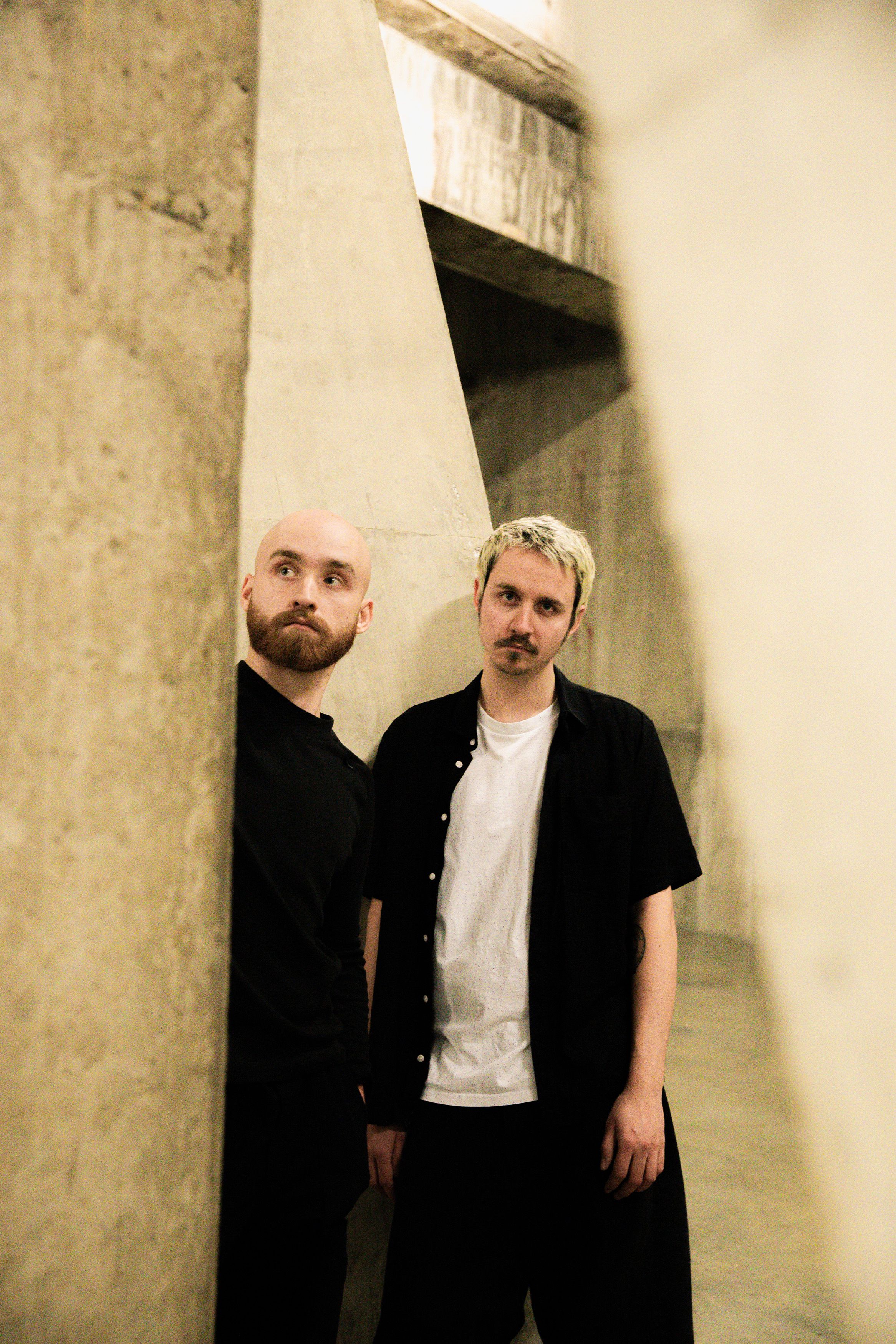
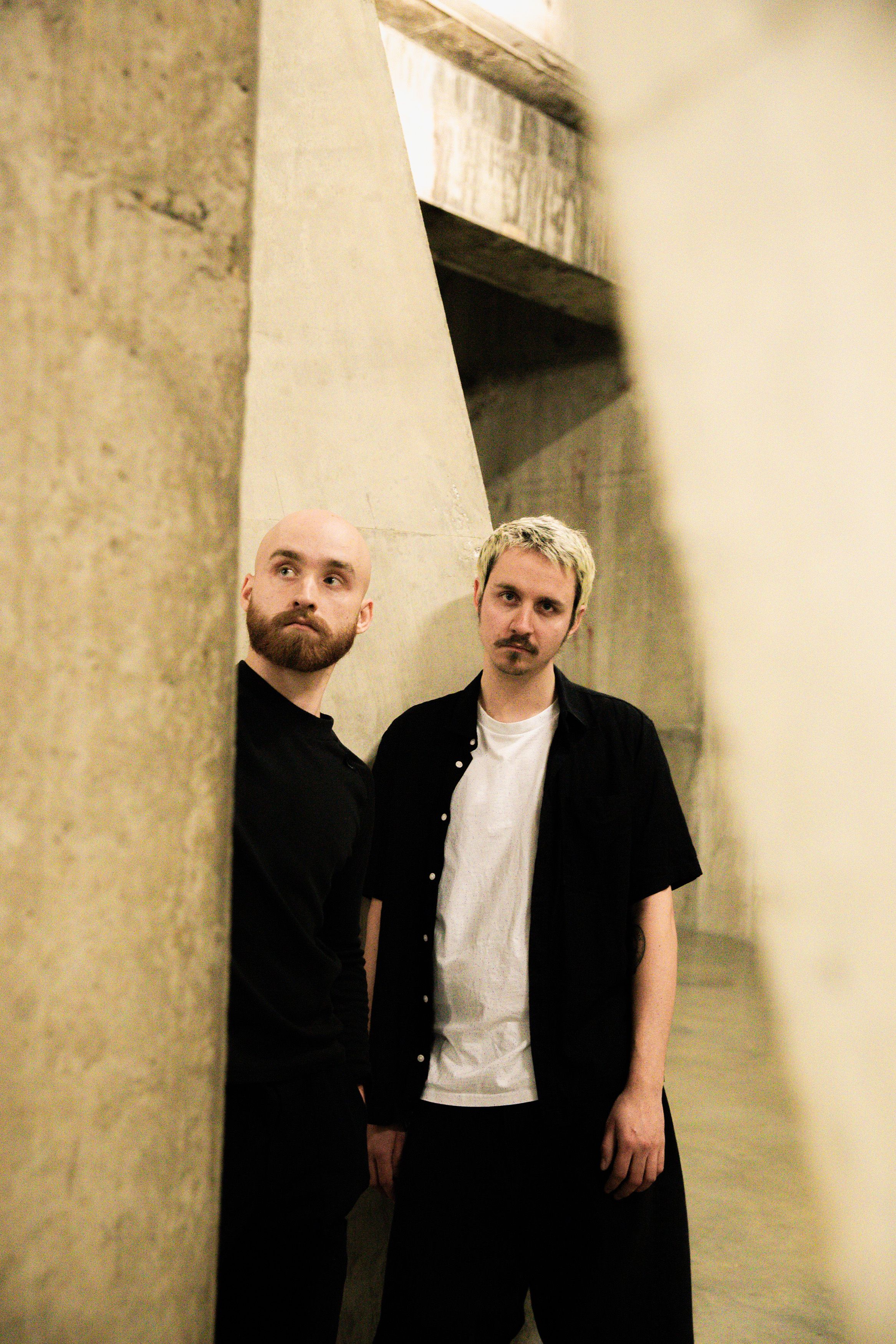
Kessoncoda Interview Image by Siân O'Connor
What tend to be the best collaborations in your opinion – those with artists you have a lot in common with or those where you have more differences? What happens when another musician take you outside of your comfort zone?
Personally the best collaborations are those where the artists have more differences; this creates for a unique blend.
Having an artist who is able to take you out of your comfort zone helps with pushing the boundaries; not just in terms of the music but as an artist yourself. The outcome of the music in this context might not always be what you expect, but that’s what’s exciting.
Decisions between creatives often work without words. How did this process work in this case?
This is the case when we’re jamming. For the most part, ideas just flow into one another and with it comes structure. It’s always very natural this way, but can often lead to being dissatisfied when listening back.
We have found ourselves in the position of listening back to an idea that we have jammed, falling in love with it for a few days, then feeling the need to add more. Then we go full circle with various ideas and land straight back to where we started.
Sometimes it’s best to leave a piece of music that you have jammed and let it be, or finish it there and then. Otherwise you end up trying to capture the main essence of the first demo but never quite being able to. It’s very hard to let go of a piece because you always want to do more, wanting to explore further. But in this case, at least for us, it never quite works out how you want it.
What are your thoughts on the need for compromise vs standing by one's convictions? How did you resolve potential disagreements in this collaboration?
Trust in one another is key. Allowing each other the time and space to fulfil their ideas and seeing them through allows progression. There always needs to be space for compromise.
Standing by your own convictions is important, but you can’t always work with that mindset. In order for the collaboration to flourish requires total trust in one another and full honesty in what you’re both trying to achieve.