

Name: The King's Singers
Nationality: New Zealand (Christopher Bruerton), British (the other members)
Members: Patrick Dunachie (first Countertenor), Edward Button (second Countertenor), Julian Gregory (Tenor), Christopher Bruerton (first Baritone), Nick Ashby (second Baritone), Jonathan Howard (Bass),
Interviewee: Jonathan Howard
Current release: The King's Singers' new album Close Harmony is out November 18th 2024 via Signum Classics.
Vocal music recommendations: There are so many singers I admire, and I find it’s often most profound when we hear different kinds of brilliant singers side by side. I recommend making a playlist of some amazing singers - let’s take Adele, Bryn Terfel, Whitney Houston, Maria Callas and Stevie Wonder for now - and focusing on how each extraordinary artists elicits a response from you in a different way.
If you enjoyed this King's Singers interview and would like to stay up to date with the ensemble and their music, visit her official homepage. They are also on Instagram, Facebook, and twitter.
Do you think that some of your earliest musical experiences planted a seed for your interest in your voice and singing? How and when did you start singing?
I could never stop singing when I was a child. When I was just two years old, my parents bought me a portable cassette player, some headphones and countless tapes of children’s songs, folk songs and hymns, and I sang along to them for hours. Within months, I started to memorise songs for fun (once completing a whole hymn book).
I was sent to join a local community children’s choir when I was eight years old, to give a home to all of the noise I made, and I’ve been in choirs continuously ever since.
If you're also playing other instruments, how does the expressive potential of these compare to your own voice?
Every instrument is expressive in different ways, and I love the fact that I can connect differently with people depending on whether it’s my voice, my violin, my viola or a piano that I’m playing. Clearly, there’s something really powerful about the human voice: it’s built inside us, and so is perhaps the purest expression of who and what we are.
Then there’s also the fact that the human voice has the unique ability to incorporate words, adding on an additional plane for emotion and storytelling to live.
But I’m equally moved by music played on so many instruments - each different instrumental range and texture speaks to us in a unique way.
Singing is an integral part of all cultures, and traditions. Which of these do you draw from – and why?
Both personally and through The King’s Singers, I feel that it’s the variety of ways in which singing has brought people together - each with their own timbres, harmonic structures and purposes - that’s so remarkable.
It’s why The King’s Singers released Finding Harmony in 2020 (a collection of songs from all over the world and across the last 1,000 years that have brought people together, often during times of extreme struggle), to showcase so many kinds of songs from extraordinary groups of people.
It’s this variety of ways in which people sing together - across different cultures - that’s the most magical thing to me.
What were some of the main challenges in your development as a singer/vocalist? Which practices, exercises, or experiences were most helpful in reaching your goals – were there also “harmful” ones?
I feel a bit embarrassed to say that I’ve not been particularly plagued by struggle during my growth as a singer. I’ve always been lucky to sing songs and parts that sit comfortably within my range, and I always allow my voice to warm up gently during the first few minutes of a rehearsal, rather than forcing it to do anything prematurely.
I love the fact that my voice hasn’t historically brought me a lot of stress - as I’ve always wanted singing to be a source of joy more than anything else.
How do you see the relationship between harmony, rhythm and melody? Do you feel that honing your sense of rhythm and groove has an effect on your singing skills?
Absolutely. The better your grasp of harmony, rhythm and melody are, the easier it’ll be for you to sing and perform more idiomatically in a wider range of styles.
To me, developing these three key principles is the foundation of what being a great singer is.
What are the things you hear in a voice when listening to a vocalist? What moves you in the voices of other singers?
I agree with what the author Kazuo Ishiguro said about singing in his Nobel Prize acceptance speech in 2017:
“I should say here that I have, on a number of other occasions, learned crucial lessons from the voices of singers. I refer here less to the lyrics being sung, and more to the actual singing. As we know, a human voice in song is capable of expressing an unfathomably complex blend of feelings. Over the years, specific aspects of my writing have been influenced by, among others, Bob Dylan, Nina Simone, Emmylou Harris, Ray Charles, Bruce Springsteen, Gillian Welch and my friend and collaborator Stacey Kent. Catching something in their voices, I’ve said to myself: ‘Ah yes, that’s it. That’s what I need to capture in that scene. Something very close to that.’ Often it’s an emotion I can’t quite put into words, but there it is, in the singer’s voice, and now I’ve been given something to aim for.”
When a singer expresses a feeling through their voice that I’ve either not been able to express myself, or hear in the voices of others before, then I’m captive. Technique and precision are good, but they both go for nothing if a singer doesn’t make me truly feel something.
How would you describe the physical sensation of singing? [Where do you feel the voice, do you have a visual sensation/representation, is there a sense of release or tension etc …]
Again, I’m not the best person to provide answers on vocal physiology.
I don’t really think about vocal placement inside the body anywhere near as much as I do about generating a feeling outside of it.
We have a speaking voice and a singing voice. Do these feel like they are natural extensions of each other, ends on a spectrum or different in kind?
I mean, they’re obviously both related in terms of timbre, but I’ve always found it interesting that my singing vocal range is very low (as a bass), whereas my spoken voice doesn’t feel deep or gravelly at all.
I find it jarring when people try to prove that they’re true bass singers, for example, by affecting the way they speak. 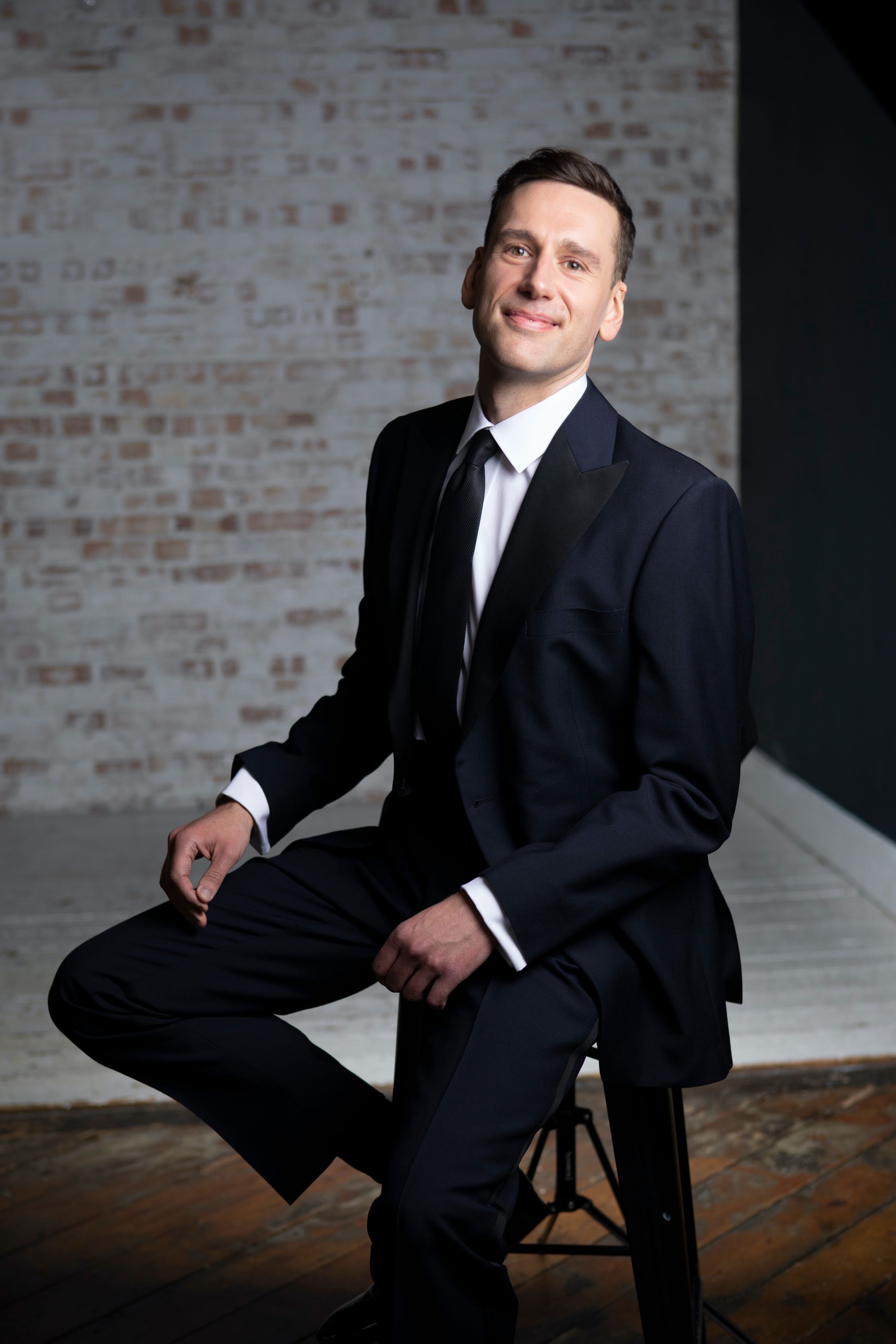
Jonathan Howard of The Kings Singers Interview Image by Marshall Light Studio
From whispers to screams, from different colours to dynamics, what are the potentials and limits of your voice? How much of your vocal performance can and do you want to control?
I wish people thought about this more. If we imagine our voices having a number of dials to control what it does - like volume and breathiness - the magic happens when we think about how we can deploy all of them, in lots of different combinations, over the course of a song or programme.
That’s when we really start to heighten engagement with our audiences and keep their focus.
Does it need to feel and sound “good” or “right” to sing certain words? What's your perspective in this regard of singing someone else's songs versus your own?
The best songs are always the ones where the music serves the text, and the text serves the music: phonically, emotionally, lyrically.
I’ve never written a song of my own, but you can always tell when a text was written to be sung, or when music was composed for a specific text, rather than one being clunkily forced on top of the other.
Strain is a particularly serious issue for many vocalists. How do you take care of your voice? Are the recipes or techniques to get a damaged voice back in shape?
There are two main rules I follow: lots of sleep, and lots of water.
Vocal rest is game-changing. Singers are like athletes: you have to think very carefully about what the right amount of training is (and that will be different for each person), and try not to exceed it. Otherwise you can do serious damage.
How has technology, such as autotune or effect processing, impacted singing? Has it been a concrete influence on your own approach?
In The King’s Singers, we always want to show what’s possible with human voices without electronic intervention. That doesn’t mean I think it’s evil - they’re processes that serve so many brilliant singers and performers - but I prefer knowing that what I/we put out in our recordings reflects what’s actually coming out of our six mouths.
As I mentioned before, the human voice is so special because it’s fully in-built. It therefore feels like a shame to impact that with modern bells and whistles that often compromise its impact.
For recording engineers, the human voice remains a tricky element to capture. What, from your perspective, makes voices sound great on record and in a live setting?
I always think finding the right building is crucial.
Singing in acoustics that make you feel good as the singer, and which compliment the kind of music you’re singing. It has a massive impact on the end product.
Motherese may have been the origin of music, and singing is possibly the earliest form of musical expression, and culture in general. How connected is the human voice to your own sense of wellbeing, your creativity, and society as a whole?
I believe that no other instrument can express who we truly are quite as authentically as the human voice. Being without an additional physical instrument makes us so vulnerable, and it’s from that place of vulnerability that I think we’re best able to connect with others.
Since our voice is therefore this amazing vessel for connecting us with ourselves and with each other, I think it has an exceptional role to play in enhancing our individual and collective senses of wellbeing and self.
In short, I truly believe everyone should sing in one way or another.

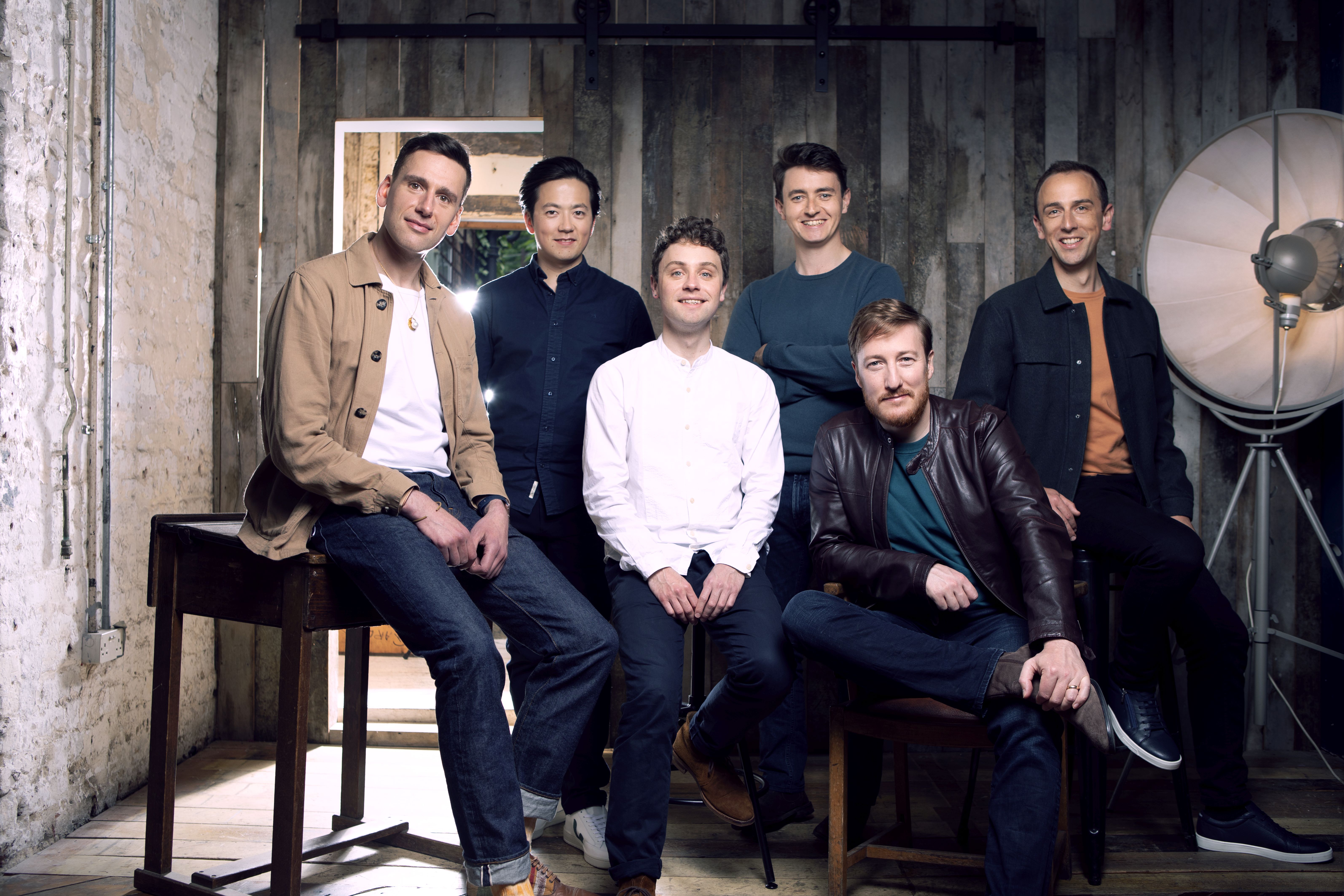 The Kings Singers Interview Image by Frances Marshall
"Technique and precision are good. But they both go for nothing if a singer doesn’t make me truly feel something."
Video
