Published
Name: Kinkajous
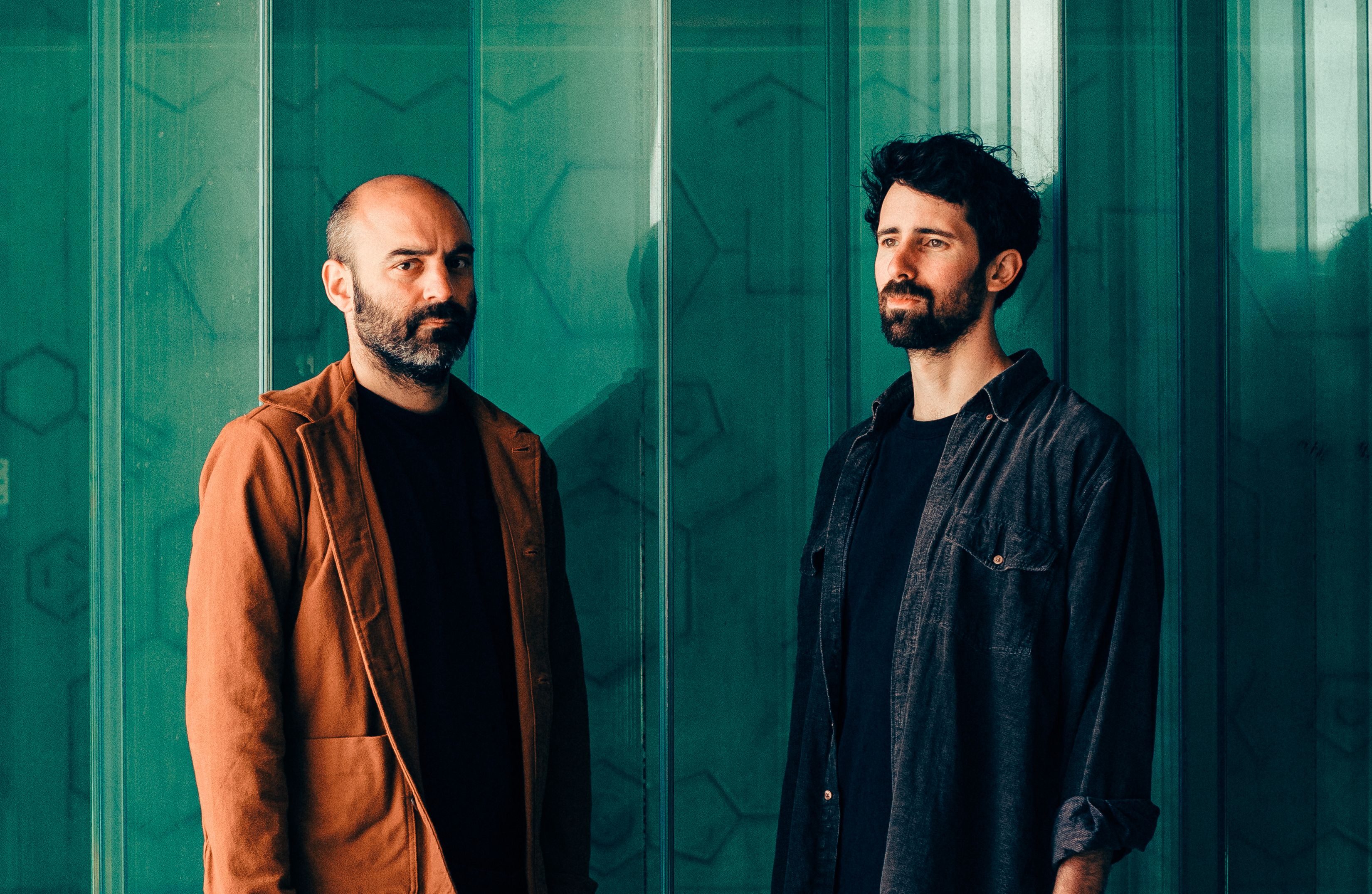
Members: Benoît Parmentier (production), Adrien Cau (saxophone)
Interviewee: Benoît Parmentier
Current release: Kinkajous's new album Nothing Will Disappear is out October 18th 2024 via Running Circle.
Recommendations: Froth On The Daydream by Boris Vian: A deeply moving surrealist novel that I’ve been reading almost once a year for as long as I can remember. Reading this always makes me feel quite emotional and serves as a profound reminder of the beauty, fragility, and madness of human nature.
Levaguiã Terê by Vitor Araújo: A beautiful album that I found a few years ago and rediscovered recently. It is so generous and inspired, with some minimalist qualities that I love. I don’t know much about the artist, but this album is definitely worth a listen.
If you enjoyed this Kinkajous interview and would like to know more, visit their official homepage. The band are also on Instagram, twitter, Soundcloud, and Facebook.
Where does the impulse to create something come from for you? What role do often-quoted sources of inspiration like dreams, other forms of art, personal relationships, politics etc play?
Creation is more or less constant. Some of it is musical, but mediums vary - sketching ideas, researching sounds, textures, colours, the collection of beautiful things I come across also feels very creative.
Building systems with modular, sampling experimentation, MaxMSP (programming language) to get inspired through controlled randomness is something also very important to me. Most of it really comes through curiosity and being interested in a lot of things.
The impulse that drives all of this come down to the obsessive and constant pursuit of a certain aesthetic. Trying to stay an open receptacle to all things that contribute to this search every day- letting them in and guide you.
For you to get started, do there need to be concrete ideas – or what some have called a 'visualisation' of the finished work? What does the balance between planning and chance look like for you?
It depends. Most of the time, the process is very chaotic. There would be a vague idea or general aesthetic direction, and we’d throw a lot of things at it, see what sticks. We often end up with a huge amount of elements for any given track - and then starts the pruning process, shaping, refining and giving it focus and substance.
Other times, like for ‘Heliosphere’, there is a lot of clarity from the get go. The vision for this track was very defined before we started working on it, and it came together very quickly.
It’s important to keep your process fluid, let yourself be surprised and ready to cease the moment in order to grow and to keep evolving.
Is there a preparation phase for your process? Do you require your tools to be laid out in a particular way, for example, do you need to do 'research' or create 'early versions'?
Tools and workflow are very important. Our studio is set up in such a way that almost every piece of equipment is set up and ready to play with and record. Before working on a new album, there is a brewing period more than
research per say.
We had a vision for Nothing Will Disappear very early on, mainly originating from things that needed more exploration after finishing our previous record. I started collecting sounds and textures for it, as well as developing specific devices on MaxMSP that would answer certain musical needs.
We wrote a lot of initial material that didn’t make it to the album but was essential in shaping the sound and direction we wanted for the record. Once we felt like there was enough substance from all of those elements, every new track we wrote made it to the album.
What do you start with? And, to quote a question by the great Bruce Duffie: When you come up with a musical idea, have you created the idea or have you discovered the idea?
I think ideas manifests themselves when the time is right, they find their way to you if you know how to listen.
I would say it always starts by listening to yourself and trying to be true to yourself. Once you find this place of honesty, only then the ideas flow.
Many writers have claimed that as soon as they enter into the process, certain aspects of the narrative are out of their hands. Do you like to keep strict control or is there a sense of following things where they lead you?
For me, it’s all about carefully building a space within which you want to operate. Giving yourself limits and spending time selecting your tools.
Once this is in place, the creative process very much feels out of your hands and sometimes chaotic as you let yourself explore. Trying not to overly be in control and let yourself be surprised.
It’s often within this space that I find beauty.
Often, while writing, new ideas and alternative roads will open themselves up, pulling and pushing the creator in a different direction. Does this happen to you, too, and how do you deal with it? What do you do with these ideas?
This happens constantly and it is part of the process. Often, I’d start working on an idea with clear intentions, but it will instead give birth to two new tracks and the original one will be discarded as if it’s purpose was to be the soil for other seeds to grow.
I try to become more comfortable with this process over time and not to get too attached certain ideas, trust the process and be willing to follow where it takes you without judgment.
When you're in the studio to record a piece, how important is the actual performance and the moment of performing the song still in an age where so much can be “done and fixed in post?“
I’m definitely guilty of having a tendency of fixing things a little too much, but I’m trying to step out of this habit.
On NWD, we made conscious choices of keeping full takes. ‘Calling’ for example was a one take from a session at our studio. It was messy and chaotic, and we spent a fair bit of time trying to recreate that moment and ‘make it better’ while recording the album. But its soul was gone and the original rough unpolished demo made it to the album.
At a time when you can have so much control over every aspect of your production, it’s the human factor and the space in between that makes music stand out and create a real connection with people listening to it.
After finishing a piece or album and releasing something into the world, there can be a sense of emptiness. Can you relate to this – and how do you return to the state of creativity after experiencing it?
I can definitely relate to this. Making and releasing an album can be an intense process, especially as an independent artist. It can take a toll on you creatively, physically, and emotionally.
For NWD, the creativity carried over from our previous album, Being Waves. It was part of the same artistic gesture. However, it took time to rebuild enough creative energy and drive to embark on a new body of work.
A lot of this renewal comes from self-care, immersing yourself in inspiring environments, and being around inspiring people until you feel the strength and urge to do it all over again.
Creativity can reach many different corners of our lives. Do you personally feel as though writing a piece of music is inherently different from something like making a great cup of coffee? What do you express through music that you couldn't or wouldn't in more 'mundane' tasks?
I believe creativity can be found in all things. It emerges from the need to express, connect with oneself, communicate, and be fully engaged. In that sense, making a great cup of coffee and writing a piece of music are related, as both involve a form of artistry and expression.
However, writing music taps into much deeper emotions and ideas that are complex and deeply personal. It allows you to communicate abstract concepts and evoke feelings that words alone often can't capture. It also pushes you to be truly honest with yourself and understand things about yourself on a much deeper level.
In contrast, making a great cup of coffee is a more immediate and tangible form of creativity. It's about mastering a craft rather than true expression. While it might not carry the same emotional depth as music, it still requires care and passion.
Both music and more mundane tasks can be vehicles for creativity and expression, but they serve different purposes and fulfil different aspects of the creative process.