Published
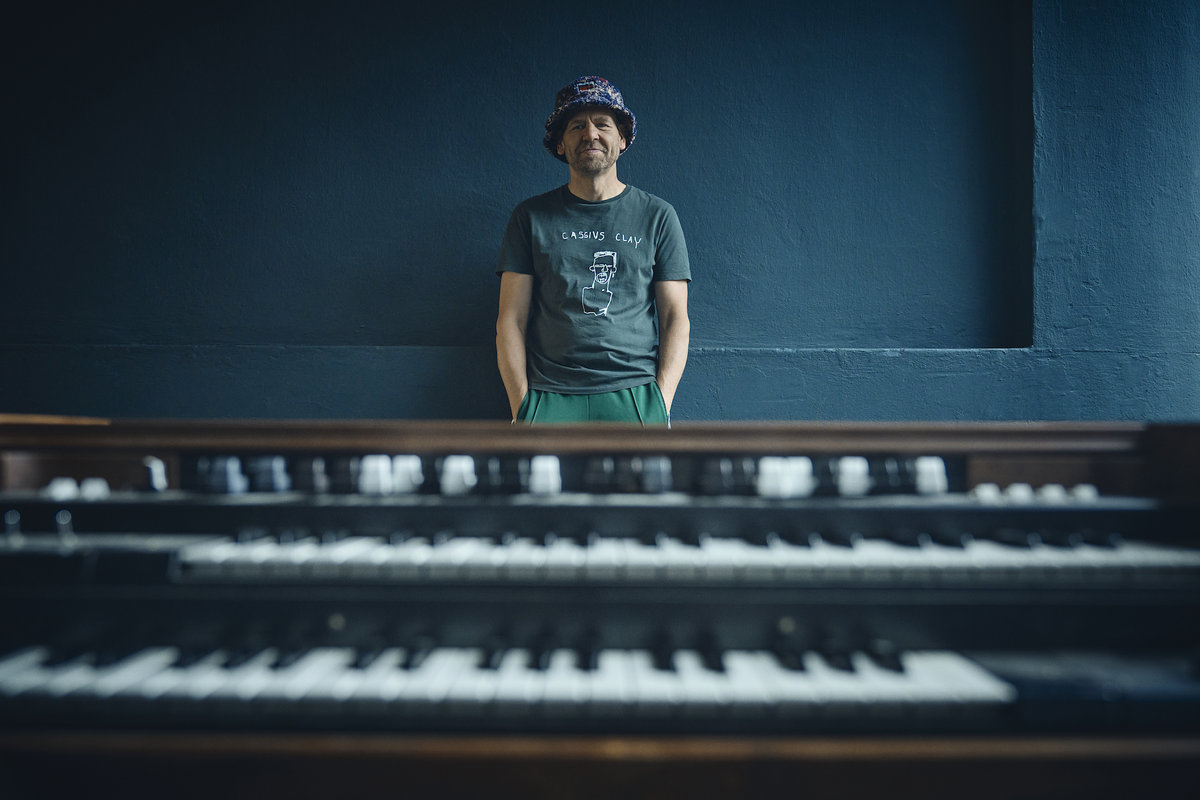
Name: Lutz Krajenski
Nationality: German
Occupation: Pianist, organ and keyboard player, composer, arranger
Current release: Krajenski's new album B-3 Vol. 2 is out via Agogo.
Recommendation for his hometown of Hannover: Believe it or not - in Hanover we have the most crookedt elevator in the world, situated in our wonderful city hall.
[Read our feature on the Hammond organ]
If you enjoyed this Krajenski interview and would like to know more about his music, visit his official homepage. He is also on Instagram.
What were some of the musical experiences which planted a seed for your interest in jazz?
My parents had a very open-minded collection of records in their collection, from classical music, Schlager, pop and rock and of course also jazz.
Don´t know why, but I had most interest in the jazz records - maybe the seed was planted when I was born.
What does the term jazz mean today, would you say?
Freedom, openness and peace.
As of today, what kind of materials, ideas, and technologies are particularly stimulating for you?
My idea of “open minded” is to use pop-music production-techniques also in jazz and other music styles.
In my opinion this is very important to keep this music alive and to develop it.
Where do most of your inspirations to create come from – rather from internal impulses or external ones? Which current social / political / ecological or other developments make you feel like you need to respond as an artist?
I think it is always a mixture of internal development and external influences.
The contact with other musicians is very important to me. Also my students are very inspiring with their fresh view and a kind of different relationship to the music.
I am not a political music-person. I try to make people happy with my music- and happiness is the key to solve all our problems- social / political / ecological.
Music has become a lot more global, and incorporating elements from other parts of the world or the musical spectrum is commonplace. Do you still think there are city scenes with a distinct, unique sound? How does your local scene influence your work?
To be honest there are a lot of possibilities for musical work in my town and I am feeling very happy to live here. But the local scene does not influence my work. It is more the contacts to musicians in other towns and the internet.
I haven't travelled that much in my life, so I don't have many experiences with the local scenes in other countries. But I am sure that with the internet, YouTube and music streaming the globalization of music will go faster and faster.
What role do electronic tools and instruments play for your creative process?
I am working with my computer in nearly every stage of making music. For production, composing, notation, organizing and even on stage for sounds and reading music sheets on my IPad.
Jazz has always had an interesting relationship between honouring its roots and exploring the unknown. What does the balance between these two poles look like in your music?
One example: I love to play old Hammond-Organs. I also collect and service them and do restaurations.
On my latest album (B-3 Vol.2) I placed the “old” Hammond-sound in a completely different light by working with two hiphop- producers, using samples, beats and other typical elements. It is fantastic how the album sounds!
How much potential for something “new” is there still in jazz? What could this “new” look like?
As long as “new” is organic and the reason is not any pressure to create something “new” there are still a lot of possibilities.
When the situation is right, music will find it´s way.
For many artists, life-changing musical experiences take place live. How do you see that yourself?
Working in the studio or composing and arranging always had the same impact on my musical development as playing live on stage.
How, would you say are your live performances and your recording projects connected at the moment? How do they mutually influence and feed off each other?
They were always connected in a miraculous way. Musical elements I “construct” by composing and producing will automatically find their way into my live performances on stage. And the concerts I play give me inspiration for my work off-stage.
Ímprovisation is obviously an essential element of jazz, but I would assume that just like composition, it is transforming. How do you feel has the role of improvisation changed in jazz?
I had some weird experiences with improvising. I think, a main idea of making jazz music is overcoming boundaries and to free yourself from shackles. But step by step!
When I see young musicians improvising wild and totally free but not being able to play a solo over a simple jazz standard I get a strange feeling as I ask myself “free from what?”
What, would you say, are the key ideas behind your approach to improvisation?
Just let it flow!
The Montreux Festival intends to preserve its archive of recordings for future generations. Do you personally feel it's important that everything should remain available forever - or is there something to be said for letting beautiful moments pass and linger in the memories of those that experienced them?
Lately I realized that it is not necessary for me to keep everything recorded and filmed. The memories we have in our hearts and minds are so valuable as they are connected with our own energy and our mood in the moment we are part of a concert - as a musician AND a listener!
Recordings will always be much more one-dimensional as so much is missing - the live-sound, the room, the smell, the other people.