Published
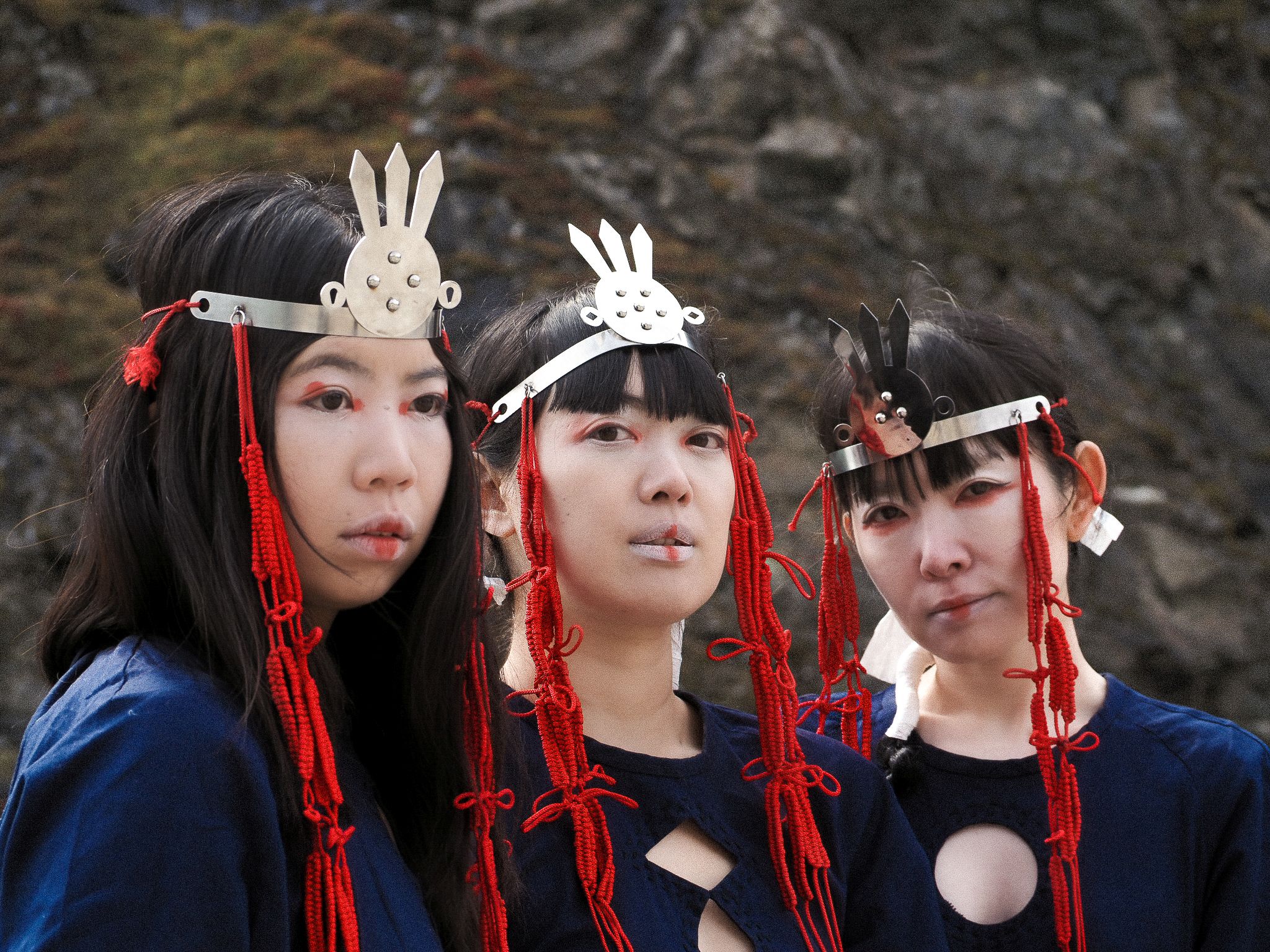
Name: Kuunatic
Members: Fumie Kikuchi (keys), Yuko Araki (drums), Shoko (bass)
Nationality: Japanese
Current release: Kuunatic's new album Wheels of Ömon is out April 11th 2025 via Glitterbeat.
Things we rarely get to talk about: Yuko: Manga and Anime
If you enjoyed this Kuunatic interview and would like to know more about the band and their music, visit them on Instagram, Facebook, and bandcamp.
Where does the impulse to create something come from for you? What role do often-quoted sources of inspiration like dreams, other forms of art, personal relationships, politics etc play?
Fumie: Ideas always strike me when I’m travelling.
Going to different countries/cities, meeting people, and learning about the cultures and histories of places gives me inspiration and melodies.
For you to get started, do there need to be concrete ideas – or what some have called a 'visualisation' of the finished work? What does the balance between planning and chance look like for you?
Fumie: No, when we compose music, our concept, ideas, and sound constantly change.
Of course we have certain visualised ideas of sound at the beginning, but we always come up with new challenges. Sometimes we achieve them, but sometimes we go for the opposite. And other times beautiful accidents occur.
Is there a preparation phase for your process? Do you require your tools to be laid out in a particular way, for example, do you need to do 'research' or create 'early versions'?
Yuko: Sometimes I start creating impulsively, and other times I have a phase where I visualize things in my head to a certain extent.
I believe that both methods produce good results that are specialized to each approach.
Do you have certain rituals to get you into the right mindset for creating? What role do certain foods or stimulants like coffee, lighting, scents, exercise or reading poetry play?
Shoko: Personally, I tackle production after doing a thorough house clean, tidying my surroundings, doing some yoga to align my body, and taking deep breaths. I burn incense from Nanzen-ji Temple in Kyoto, or the scent of hinoki wood.
If I get stuck, I make miso soup to calm myself down and then return to production.
For your latest release, what did you start with? If there were conceptual considerations, what were they?
Fumie: When we made the first album, we already had a sequel idea of the story.
Our musical concept is always a mixture of science fiction, mythology, and actual events that have happened on the earth. So we kept developing the idea over 4 years.
Tell me a bit about the way the new material developed and gradually took its final form, please.
Yuko: There were a few things we definitely wanted to accomplish with this album. We wanted to feature a vocal trio, and we wanted to incorporate more Japanese traditional musical instruments. We also wanted to explore experimental recording techniques. Additionally, I desired to collaborate with other artists.
We collectively developed the narrative following our previous work during our 2023 tour. After returning to our respective countries, we expanded upon the song concepts based on the narrative, exchanging ideas online and constructing the songs.
We convened at the end of September 2024 and participated in a residency in a Swiss Alps mountain chalet. We completed approximately 70% of the album there, with the remaining 30% finalized during the recording process.
As we reside in different countries, composing presents certain challenges. However, this provided us with opportunities for improvisation and experimentation, which we believe yielded excellent results.
Many writers have claimed that as soon as they enter into the process, certain aspects of the narrative are out of their hands. Do you like to keep strict control or is there a sense of following things where they lead you?
Fumie: I would say we are always flexible and try to be open-minded when it comes to the process.
We do have certain things that we need to take control of, but we like to hear different opinions and approaches from others to make our music more interesting and epic.
There are many descriptions of the creative state. How would you describe it for you personally? Is there an element of spirituality to what you do?
Fumie: I never thought of it, but maybe. When I later hear songs that we made, sometimes I have this feeling that wow, did we really make those?
When that kind of thought hits, I feel like something was guiding us to create music. I'm sure some people have experienced this.
Once a piece is finished, how important is it for you to let it lie and evaluate it later on? How much improvement and refinement do you personally allow until you're satisfied with a piece? What does this process look like in practise?
Shoko: I always think it's important to take a step back from my work to gain perspective.
This helps me identify areas for improvement, figure out what sounds to add, and refine things to get closer to the world we're aiming to create.
How do you think the meaning, or effect of an individual piece is enhanced, clarified or possibly contrasted by the EPs, or albums it is part of? Does each piece, for example, need to be consistent with the larger whole?
Shoko: All the EPs and albums are connected by a storyline. However, each one has its own distinct narrative arc and development, requiring us to create contrasts.
This album, in particular, is designed to have a change in atmosphere between the A-side and B-side, like a vinyl record following a story. The songs were then crafted to match the mood of each side.
What's your take on the role and importance of production, including mixing and mastering for you personally? In terms of what they contribute to a song, what is the balance between the composition and the arrangement (performance)?
Yuko: I'm hesitant to quantify the ratio because each role is distinct.
But I can confidently say that production shapes the overall sound and feel of the album.
After finishing a piece or album and releasing something into the world, there can be a sense of emptiness. Can you relate to this – and how do you return to the state of creativity after experiencing it?
Shoko: There was a sense of liberation. Because I was so focused, paying close attention to the sounds, the tension was constant. And then, a sense of accomplishment.
Through this collaboration with these three people, we mutually received new stimulation and felt a new expansion of creativity. I believe this will surely influence each of our solo activities as well.
I would love to know a little about the feedback you've received from listeners or critics about what they thought some of your songs are about or the impact it had on them – have there been “misunderstandings” or did you perhaps even gain new “insights?”
Yuko: We really enjoy it when people mention influences that we didn't intend. Sometimes it's band names or music genres that we know, but haven't listened to or been influenced by.
Since it's difficult to explain our musicality, it can actually be helpful to get objective opinions.
Creativity can reach many different corners of our lives. Do you personally feel as though writing a piece of music is inherently different from something like making a great cup of coffee? What do you express through music that you couldn't or wouldn't in more 'mundane' tasks?
Shoko: I was talking to Monna from Bo Ningen the other day, and he mentioned that he's a very good cook, and that the process of cooking is similar to making music. He said that the flavour and taste of a dish change depending on the timing of adding spices and ingredients. It's just like improvisation, he said.
Indeed, even adding a single note or a breath of air can drastically change the atmosphere. I thought that could be said for all kinds of work.