Published
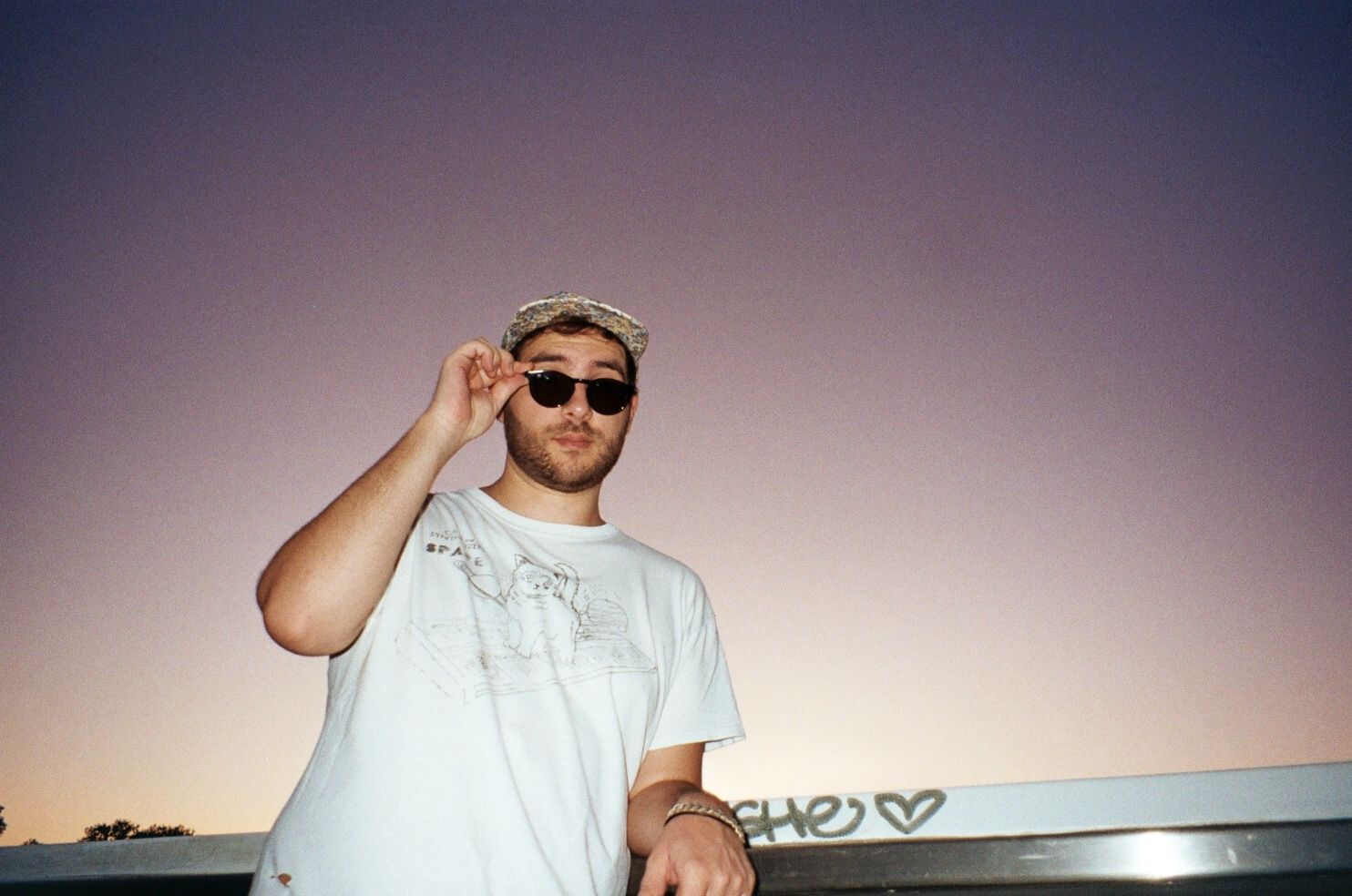
Name: Kerim Ben Mustapha aka KX9000
Nationality: French-Tunisian
Occupation: Producer, DJ
Current release: KX9000's new Dream Log EP is out via Pont Neuf.
Hometown Recommendations: I grew up in the eastern suburbs of Paris, in the «93», near the Marne riverbanks, which I’ve always found super charming despite its poor reputation.
Now I live in Vincennes, a lovely town with a castle and the beautiful Bois de Vincennes right next door. On the opposite side of the spectrum, my studio is in Aubervilliers, near Parc de la Villette. I’ve always been drawn to that place - it’s futuristic and original, and I love hanging out there when the weather’s nice. There’s always something happening.
Things I am passionate about: I’m deeply in love with my girlfriend, I haven’t missed a single One Piece chapter since 2006, I love cats, I cook incredible makrouna bel salsa, and I main Wolf and Captain Falcon on Smash Bros.
If you enjoyed this KX9000 interview and would like to stay up to date with his music, visit him on Instagram, Soundcloud, bandcamp, and Facebook.
Where does the impulse to create something come from for you? What role do often-quoted sources of inspiration like dreams, other forms of art, personal relationships, politics etc play?
I don’t really have fixed rituals or a set method. What I love are happy accidents, the unexpected things that can lead to something unique. Every recording feels like a new adventure, a chance to learn, improve, and try things out.
I’m always curious and excited to start a new track. Each one has its own story, sometimes emotional, sometimes purely technical from experiment.
For you to get started, do there need to be concrete ideas – or what some have called a 'visualisation' of the finished work? What does the balance between planning and chance look like for you?
Most of the time, the idea builds up as the track takes shape. I’m pretty versatile in terms of inspiration, but also very picky about sounds that are meaningful to me. I’m fascinated by the machines I use, they feel like little puzzles to solve or treasure chests to open.
There’s often a mix of very random elements and meticulous detail. It’s kind of my personal challenge to make those opposing elements come together in a satisfying way.
Is there a preparation phase for your process? Do you require your tools to be laid out in a particular way, for example, do you need to do 'research' or create 'early versions'?
Yes, I go through a lot of phases. Usually, the composition has to happen quickly, or start from a very simple idea. Then I try to keep the groove of my playing, or that of other musicians, to preserve a human, organic feel. I always try to keep that ‘jam’ spirit.
After that, I love manipulating audio, I’m a big fan of instrumental remixes and club or dub versions. Sometimes it really twists the track, and other times it just adds the depth it needed.
In the end, I might go with mix 2 … or mix 54, depending on the vibe.
Do you have certain rituals to get you into the right mindset for creating? What role do certain foods or stimulants like coffee, lighting, scents, exercise or reading poetry play?
I like to think there’s an art to many everyday tasks that’s very similar to making music - like cooking, playing video games, fixing furniture, or exercising. I love that kind of shared, non-elitist culture. You can do those things mechanically, or you can put part of yourself into them with emotion, interest, curiosity.
That approach really inspires how I come to the studio: with that same hands-on, DIY mindset, bringing in everything I’ve lived outside my little “mouse hole” music studio.
For your Dream Log EP, what did you start with? If there were conceptual considerations, what were they?
For many reasons, I’ve always associated my music with transportation like cassette radios in the car on holiday trips, my Walkman and later iPod on the school bus … Even now, I mostly listen to music when I’m on the move. I love the feeling of being accompanied by music, like having your own soundtrack.
For this EP, the idea was to create music that could be enjoyed in different ways: in the car with friends, with headphones on the subway, at the beginning of a night out and of course, in a club.
Many writers have claimed that as soon as they enter into the process, certain aspects of the narrative are out of their hands. Do you like to keep strict control or is there a sense of following things where they lead you?
I tend to let myself be guided by the process.
That said, I’m always looking to learn and improve. I constantly navigate between what I’ve already learned and what I still question. I think it keeps a kind of naïve spark alive in the music, something that gives it a personal and original character.
There are many descriptions of the creative state. How would you describe it for you personally? Is there an element of spirituality to what you do?
I’m not really a rationalist at heart. I’m pretty atheistic and not very superstitious either. That said, the more I learn, the more I realize how complex and mysterious the world can be.
Sometimes I make things I can’t fully explain maybe because of gaps in my technical or musical knowledge but I call that my “sound esotericism,” haha.
I picture myself more like an alchemist wizard witch throwing things into a cauldron than a scientist calculating everything … though I wish I could be both!
Once a piece is finished, how important is it for you to let it lie and evaluate it later on? How much improvement and refinement do you personally allow until you're satisfied with a piece? What does this process look like in practise?
Definitely. I like doing intense sessions on a track to keep the energy and mood fresh. But then I let it sit for days or even weeks. When you come back to it with fresh ears, the things that don’t work jump out more easily.
I’m always chasing that feeling of: “Okay, there’s nothing more to do, this is it.” Of course, it’s easier said than done. Perfection is endless.
With this EP, I took extra time and care, probably because I was going through a rough patch and felt like it might be the last one. I’m proud of it but moving forward, I want to work more spontaneously again.
How do you think the meaning, or effect of an individual piece is enhanced, clarified or possibly contrasted by the EPs, or albums it is part of? Does each piece, for example, need to be consistent with the larger whole?
There’s definitely a dominance of playlist culture today that takes tracks out of context. I don’t mind it, but it does make it harder for artists to transmit concepts or experiments.
With this EP, I wanted each track to have its own identity, but still fit into a coherent atmosphere. Production-wise, they’re all very different drum machines, live drums, bass guitar, sub synths …
But it’s all filtered through my style, my habits, my references. That’s what ties them together.
What's your take on the role and importance of production, including mixing and mastering for you personally? In terms of what they contribute to a song, what is the balance between the composition and the arrangement (performance)?
As a mixer, I often work with Mathieu Berthet (MB Mastering), who also runs the studio where I work in Villette45. We have endless audiophile conversations, haha. Funny enough, I feel more comfortable mixing other people’s tracks than my own I feel more objective and focused that way.
I’m not chasing some perfect soundgear, but quality, ergonomy and originality really matter to me. Nowadays, you can get a clean sound easily using Splice samples, but I try to go beyond that without falling into gear elitism either. I am just very lucky to have in disposition great valuable or vintage stuff so I enjoy using it!
That’s the beauty of sound and music: it sparks so many debates and constant questioning.
Music and the accompanying artwork are often closely related. Can you talk about this a little bit for your current project and the relationship that images and sounds have for you in general?
I’ve received great feedback about my record covers on Pont Neuf. There’s a real belief in making each release a full artistic statement. That’s rare and precious.
I’ve had the chance to work with some very cool visual artists like Timothée Bombay, Liorzh, and Antoine Duruflé. It probably wasn’t easy for them because my visual ideas are usually all over the place a big jumble of references and tributes, kind of like my music but they did it well!
After finishing a piece or album and releasing something into the world, there can be a sense of emptiness. Can you relate to this – and how do you return to the state of creativity after experiencing it?
Because of how long it usually takes between finishing a project and releasing it, I mostly feel relief. I share it, promote it, and then I’m already thinking about what I want to do next or how I could do better.
I do have moments where I worry that inspiration might vanish. There are highs and lows, and I’m quite sensitive but I try to manage that and protect that creative flame the best I can.
I would love to know a little about the feedback you've received from listeners or critics about what they thought some of your songs are about or the impact it had on them – have there been “misunderstandings” or did you perhaps even gain new “insights?”
It’s hard to get deep feedback. In real life, people are either super positive without much detail, or they just say nothing probably out of politeness.
What I love most besides funny YouTube comments is when people recognize the influences or samples I’ve used. It’s super satisfying when they guess right … or wrong! Even their theories can be fascinating.
Creativity can reach many different corners of our lives. Do you personally feel as though writing a piece of music is inherently different from something like making a great cup of coffee? What do you express through music that you couldn't or wouldn't in more 'mundane' tasks?
Funny enough, this echoes something I said earlier. I don’t think we should make music in an ordinary way I think we should do ordinary things the way we make make music.
Of course, music is more direct in expressing emotions. Its apparent “uselessness” makes the energy we put into it even more beautiful and meaningful.