Published
Name: La Cozna
Nationality: French
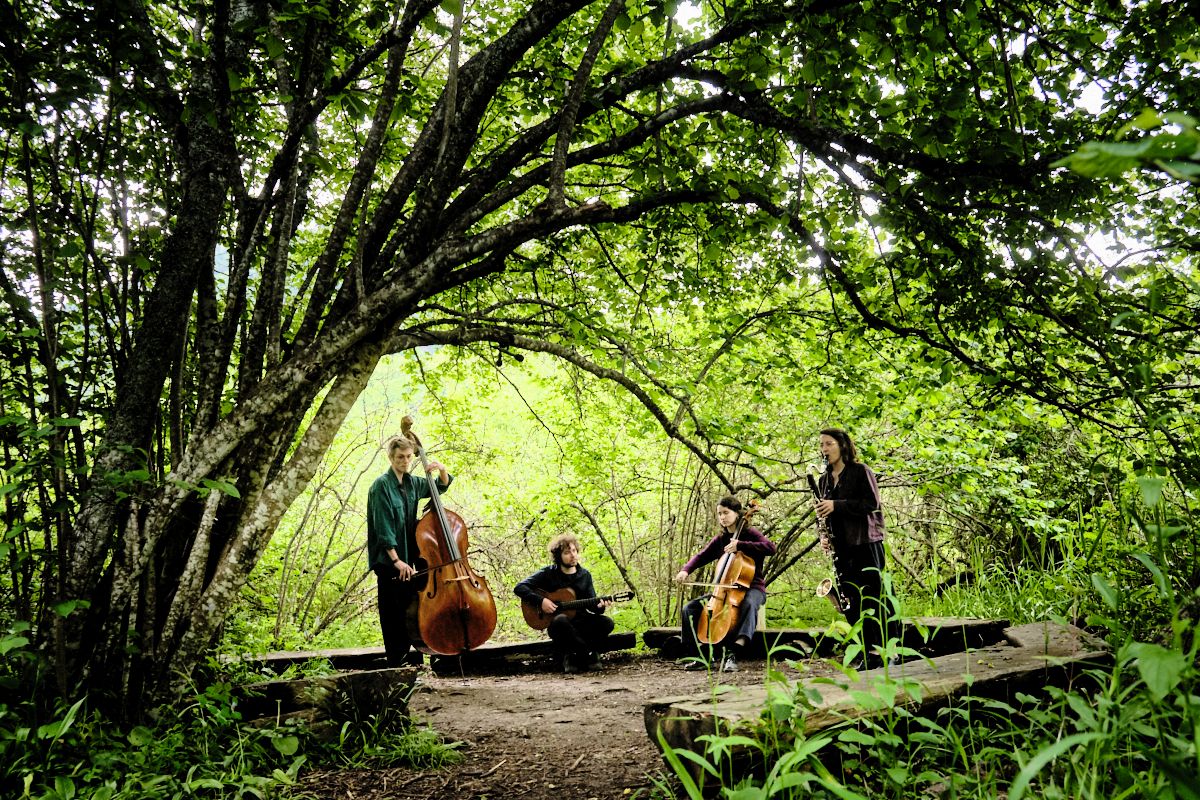
Members: Clémentine Ristord (bass clarinet, saxophones, boîte à bourdon), Pierre-Antoine Despatures (double bass, percussion), Clémence Baillot d'Estivaux (singing, cello), Benjamin Garson (guitars)
Current release: La Cozna's Ni Nuit Ni Jour is out via Art'lambic.
Recommendations:
PAD: Du même bois, by Marion Fayolle and the album by Huntsville, For flowers, cars and merry wars on Hubro
CBE: Frida Kahlo’s diary and "Trois Lueurs Brèves," a string quartet written by Tobias Feierabend
If you enjoyed this La Cozna interview and would like to know more about the band and their music, upcoming releases and live dates, visit them on Instagram, and Facebook.
For you to get started, do there need to be concrete ideas – or what some have called a 'visualisation' of the finished work? What does the balance between planning and chance look like for you?
Most of the time, the finished work will be quite different from what it was originally meant to be. We go through a lot of trials and errors during the composing and rehearsing process. We always try and improvise around the original idea, take an idea a step further by twisting it a bit more, or push the sound of the band in an other directions by using a weird extended technique, effect pedals etc.
However, when we got into the studio to record the album, we had gone through our creative process so many times on every tune that we had a very clear idea of what we wanted to achieve (except for two or three tunes that were meant to be much more open and improvised). We could really focus on how to perform it the best we could, and how to use the studio and the recording process to serve the music.
Is there a preparation phase for your process? Do you require your tools to be laid out in a particular way, for example, do you need to do 'research' or create 'early versions'?
We often start arranging traditional songs that we find in sound collections. We go through recordings that date back to the 70’s, when there was a strong folk revival movement in France. We choose several songs that we like, and one of us will say «I have an idea for this particular song, I’ll try something at home». He/she will then come to the next rehearsal with a laid out plan on how to play the song.
It can be a very precise written arrangement, or a strong simple concept like «what if we loop this motif for the entire song?»
Do you have certain rituals to get you into the right mindset for creating? What role do certain foods or stimulants like coffee, lighting, scents, exercise or reading poetry play?
CBE: I would say that these are the constraints that help us to compose: the time allotted, the limits of the instruments, the meaning of the words.
But it’s true that our double bassist Pierre-Antoine can’t start a rehearsal without his coffee!
What do you start with? And, to quote a question by the great Bruce Duffie: When you come up with a musical idea, have you created the idea or have you discovered the idea?
P-A: I never feel like I create anything. I often start by trying to imitate a particular compositional technique or sound that I’m obsessed with. I eventually will fail, which is good because no one wants to be a copycat.
From this failed attempt and the combination of my very own obsessions comes out something personal and unique, I hope.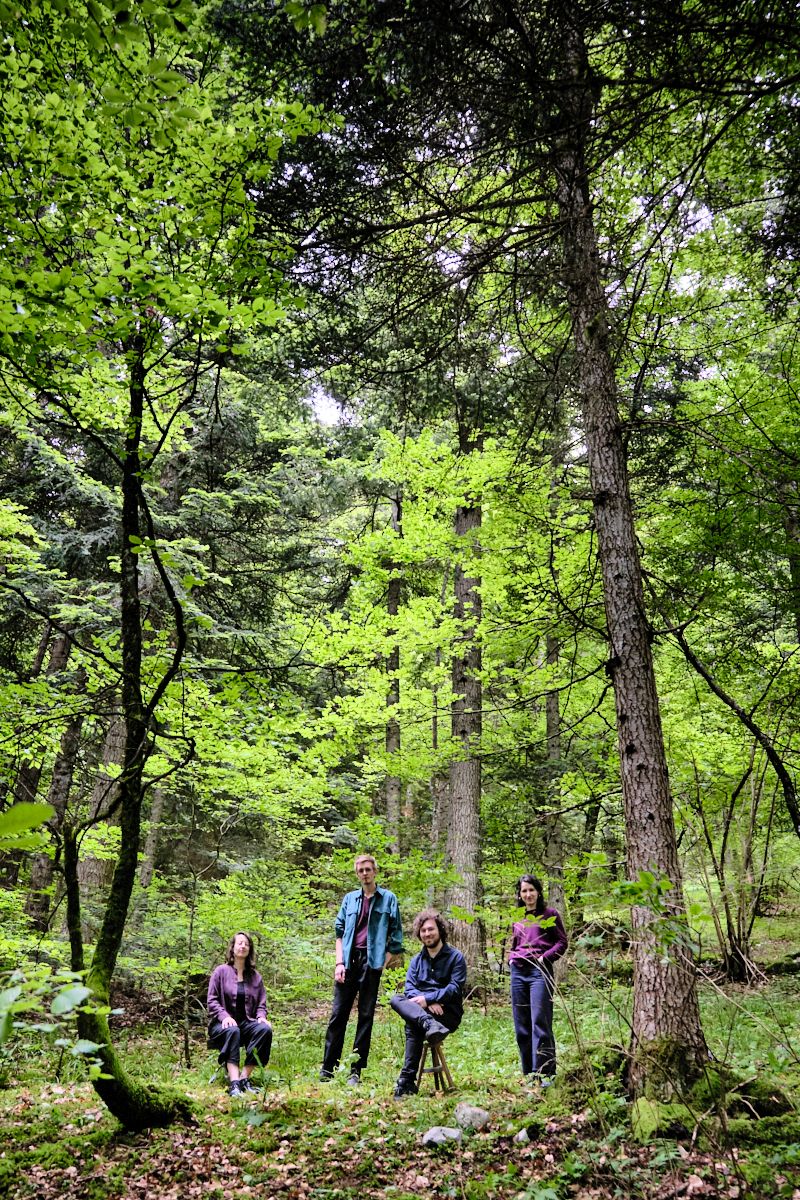
La Cozna Interview Image by Tomas Bozzato
When do the lyrics enter the picture? Where do they come from? Do lyrics need to grow together with the music or can they emerge from a place of their own?
As we said, up until now we’ve mostly been working on traditional songs. The lyrics are there to begin with, so we try and work with them, or against them.
Mostly, the music grows from the lyrics. We like to be playful with them, make the music serve the lyrics, or make it the opposite of the character of the text: playing something really dark under “happy” lyrics can result in a very unsettling result for example.
The music can reveal hidden messages in the words, emphasize certain ambiguities.
What makes lyrics good in your opinion? What are your own ambitions and challenges in this regard?
There are a few things that would make us hear a traditional song and think that it’s good material for us to work with.
We try and find songs that resonate with today’s political struggles. For the first album, it is mostly women’s songs, about sexual violence and patriarchy, but also desires, emancipation, freedom. We like when those lyrics have hidden meanings, ambiguities, a certain humor to it.
Through our education (even more so when you are classically trained musician or artist) we might be led to believe that fine arts, music, or poetry were the prerogative of the upper class. We pass on the great work of art of a few European white males, and that gives a very biased view of what is art, what is good and what is not. We try and do the opposite and give substance to a certain expression of a form of popular poetry.
We are not too conservative about it, we feel free to change a phrase if we don’t like it or if the meaning is opposed to what we stand for politically. That’s how those songs work anyway, it is not rare to find many different variations of the same song.
Often, while writing, new ideas and alternative roads will open themselves up, pulling and pushing the creator in a different direction. Does this happen to you, too, and how do you deal with it? What do you do with these ideas?
It is often when we confront our original idea for a tune with the band that those alternative roads will unfold. The original idea could be very clear, everyone would get it and want to play with it, push it further: that’s what happened for “Blanche biche”. We just pushed the same idea further and further ...
Or the idea could be unclear, not very accurate musically, or physically not as easy to execute as we would like. We then need to toss the idea around during rehearsal, to see where it can take us. In general, we try everything, until something convinces everyone. When we’re stuck, we improvise, record and listen back a few days later. If something catches our ear we will then write again from that musical idea. We will inevitably follow one of those many roads that we find as far as we can.
At times, on the songs “Le Jardin des amours” or “Les amants sont volages” we worked on an idea for two years, and found ourselves in a dead end. We went back, and went another way. One has to let go of its original idea and surrender it to the band to make it a collective endeavor.
When we were unsure of what road to take, we thought about the general structure that we wanted to give the album. We have three duos along the album “La chasse,” “Les amants sont volages” and “Songez à votre monde”, and we wanted to have the same song twice with two different arrangements opening and closing the album.
At first, the whole band played “Les amants sont volages” on a quite precisely written arrangement: it was one of the first tune we worked on with the new-born band in 2020. But after two years, and having a better view of the whole repertoire, we all agreed that our way of playing this song was not relevant anymore and did not match our own “style” anymore. We looked for other ways to play it, and at the end, we came back to improvisation.
We chose to let Clémence, our singer, and Benjamin, our guitar player, to completely improvise it. The result is quite fun: we can still hear the first materials we worked on (a very strong bass line), it underlies the whole improvisation. Benjamin seems to be playing “hide and seek” with it the whole time. It also works very well with the lyrics: it’s all about a woman saying to her lovers that she is free, she doesn’t love them and will choose for herself what’s good for her: “girls are rebels, when I said “I love you”, you shouldn’t have believed me …”
Then, being sure that we wanted this song played in this very improvised way (improvisation being how we all met musically at first - it had a role to play within the album), we thought: “why not having duos spread/scattered through the album?”. So we worked on “La Chasse” played by P-A and Clémence, and a second interpretation of the first song of the album to close it “Réveillez vous / Songez à votre monde”, as a mirror effect, with Clémence and Clémentine, in another very improvised way.
When you're in the studio to record a piece, how important is the actual performance and the moment of performing the song still in an age where so much can be “done and fixed in post?“
Improvised music is a big part of our artistic lives, and we are all convinced that letting the music live and unfold in the studio while keeping the imperfections makes for a very fulfilling and interesting process.
However for this very particular album, we were not clinging to that idea of doing complete takes with as little editing as possible. That is mostly due to the fact that we needed to serve the songs first, because we wanted the album to feel like a «song» album, with clean finished tunes (even though they can get quite dirty and messy at times). The arrangements were very demanding and precise, and on some of the songs a playthrough was not even possible: one might need to stomp an effect pedal, stick a needle between the strings, and retune the guitar to open D between verse 1 and 2 … So we let ourselves use all the tools at our disposals to achieve our artistic goals.
However, we don’t feel like the music came out unalive or too clean. We were very cautious about that because it can always be a risk when going down the editing and overdubs road. We tried and let new ideas come up in the studio, give space to improvised parts, and keep a sense of interplay with one another.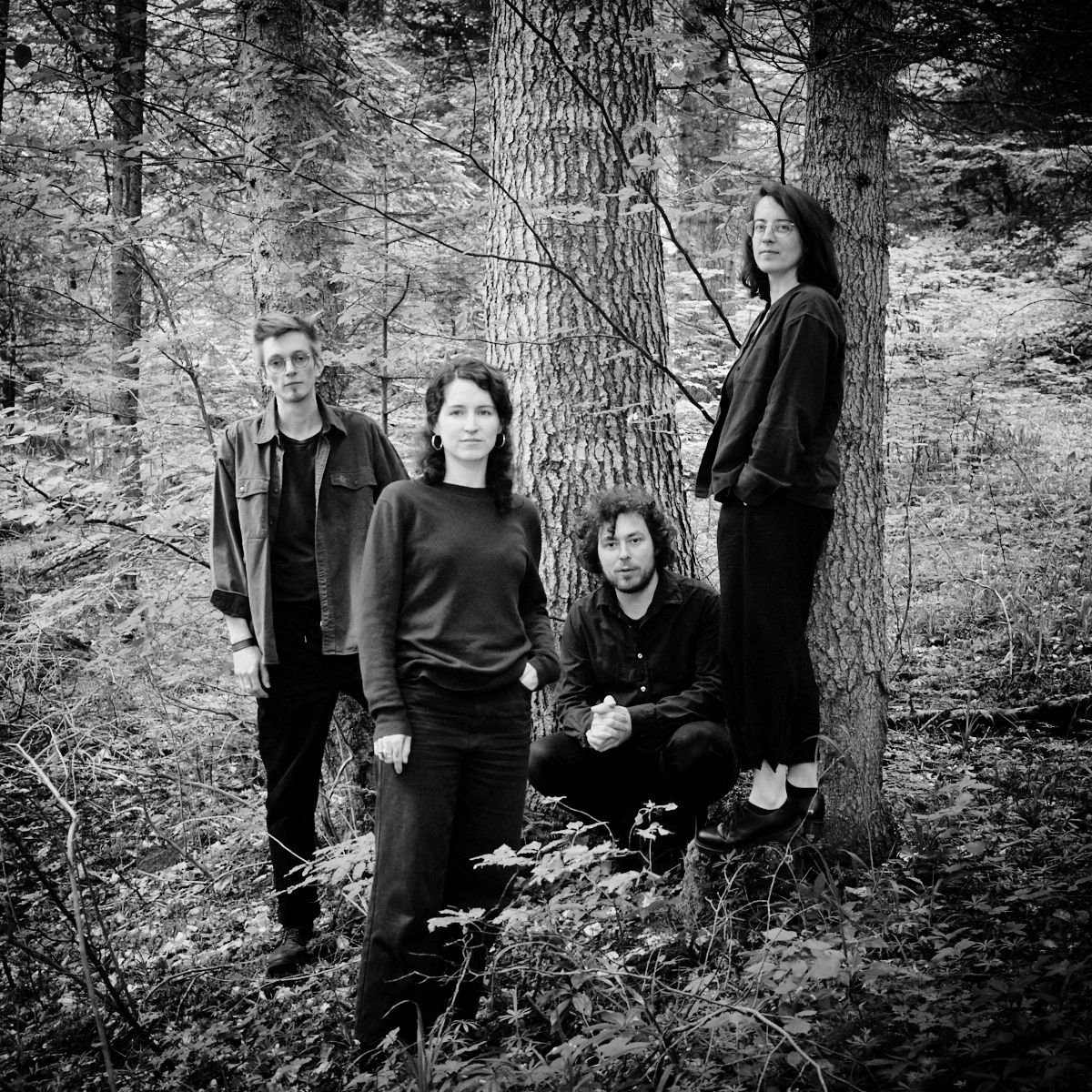
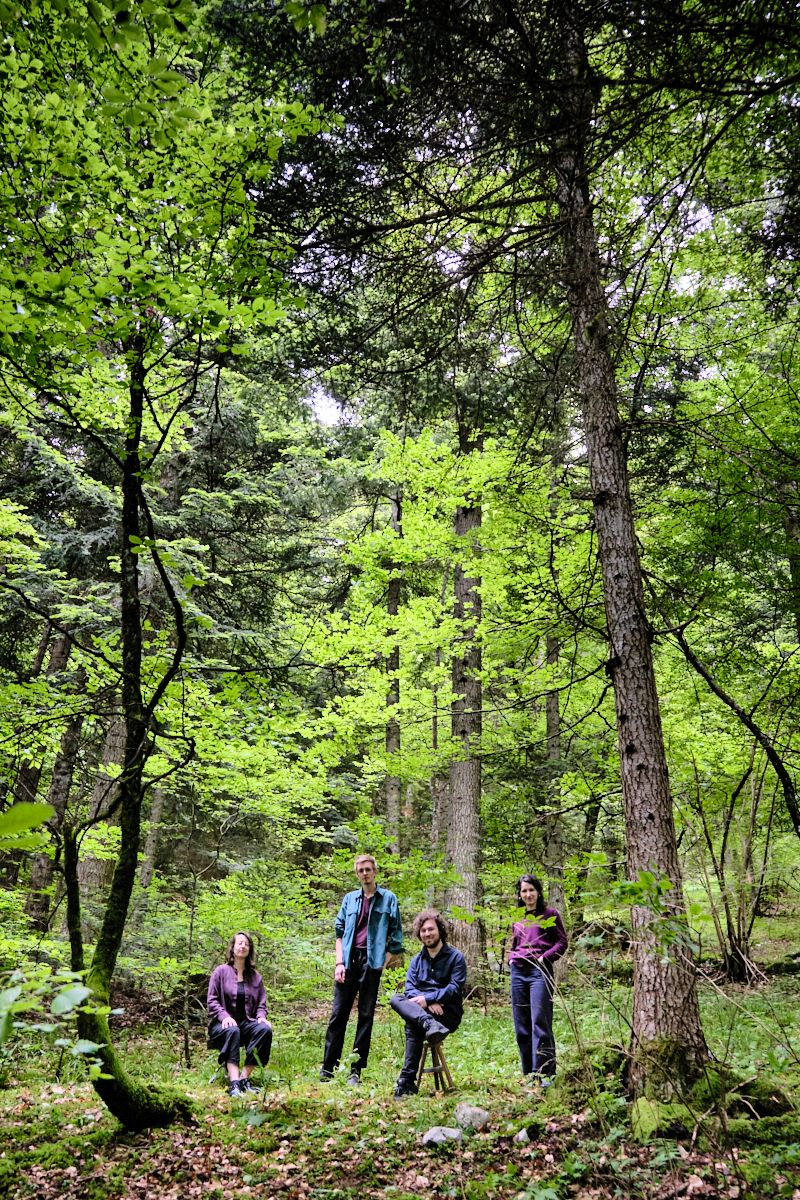
La Cozna Interview Image by Tomas Bozzato
Once a piece is finished, how important is it for you to let it lie and evaluate it later on? How much improvement and refinement do you personally allow until you're satisfied with a piece? What does this process look like in practise?
I think a piece in La Cozna is never totally finished, we are always open to new ideas, that’s how we don’t get bored with those songs. However, in the light of recording this album, we had to be able to say, during our creative process: “ok, now it’s good, let’s play it this way”. We worked a whole year on preparing the studio session, so we took the time we needed on each songs, and did not stop until we were satisfied and had the feeling that our way of playing one song was personal enough, was what felt right at the time.
The song “la jardinière” is a good example.
Along with “les amants sont volages”, it was one of the first song we worked on at the beginning. But years passed, our music evolved and became more unique, mixing all of our influences and ways of playing our instruments. So we were not satisfied anymore with the arrangement. During weeks, we searched other ways to play it, we improvised a lot, and it seems that we were in a dead end.
We were ready to choose not to record it anymore because nothing satisfying came along. But only a few weeks before the recording session, Clémentine came in with new written ideas, and everyone jumped in the creative process, it was a very collective research, and we finally found our way into this song. We even think that it’s one of the most representative of our very own music at the moment.
An album is like a photograph: it shows what we are, what our music sounds like at a given moment. But we change and evolve and so does our music. It’s very likely that in a few months or a few years, we will still play some of those songs but in very different ways.
Even recording a solo song is usually a collaborative process. Tell me about the importance of trust between the participants, personal relationships between musicians and engineers and the freedom to perform and try things – rather than gear, technique or “chops” - for creating a great song.
I think trust is really the most important human factor in any creative journey. Feeling that we’re in a safe creative space is crucial to be able to try everything, to fail, to propose ideas even though they might not be good, to play honestly and reveal ourselves …
When there is no identified band leader making the decisions, the creative process is always a question of accepting everyone’s ideas, letting go of your own… It’s sometimes so hard to let go of an artistic idea that you’re clinging to. You need to really trust the others when they tell you that it might be better to try something different, play a certain part differently. We do admire each other very much, and I think we all have had time thinking: «Damn, I think I might be the worst musician of the band…». Which is kind of a good thing, I think.
In the studio we had the chance to work with the incredible French engineer Erwan Boulay, who really is a master of his craft. Erwan really connected with our music, and took every idea a step further. He helped us be more radical when we needed to, or got us out of musical dead ends we always face in the studio.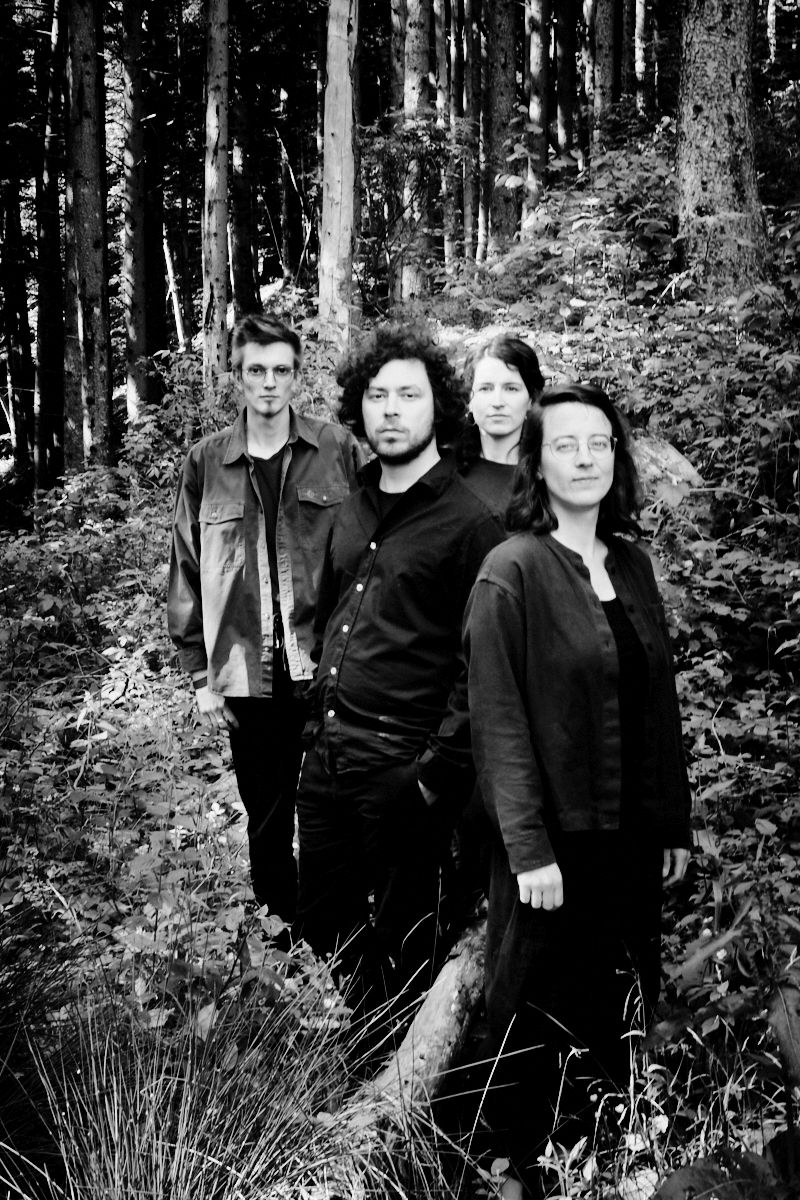
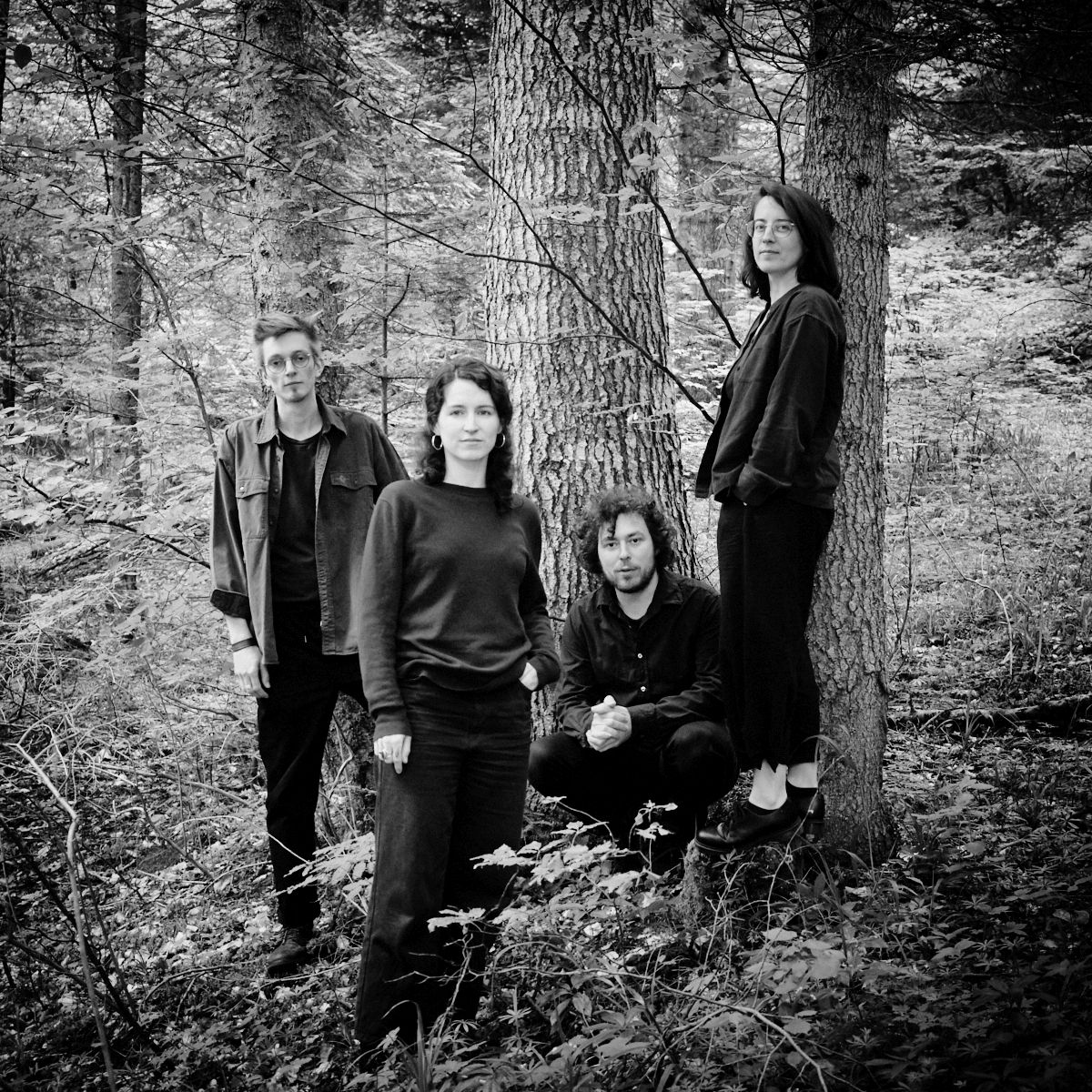
La Cozna Interview Image by Tomas Bozzato
What's your take on the role and importance of production, including mixing and mastering for you personally? In terms of what they contribute to a song, what is the balance between the composition and the arrangement (performance)?
Our guitarist Ben, who is also a sound engineer, had really thought the production process thoroughly : amping, mic choices, room choices, creative micing techniques were things that were decided during the rehearsing and composing process. It allowed us to get sonically really creative, knowing that any sound would find its place in the mix: we used every extended techniques we could think of on our instruments, used clothespins on the strings, knitting needles, coffee stirrers. That kind of sounds structure the entire album.
It was great to do it this way because some musical ideas only work when you use just the right technique. For example bringing a very quiet sound upfront or push a very loud sound way far in the background. Those kind of things might not come out great if they’re thought about only at the mixing stage. That worked for us because we really wanted that neat singer/songwriter feeling to the album. The music and the sound of the band can be dirty, wild, eerie, but the production needed to be just writen so that people who might not be used to unsettling music would be able to connect with the music anyway.
After finishing a piece or album and releasing something into the world, there can be a sense of emptiness. Can you relate to this – and how do you return to the state of creativity after experiencing it?
After so much work preparing for the studio, we now have quite a big amount of work to prepare for live performances.
We’re deeply connected to the songs now, but the arrangements were specifically made for the studio, so it’s a complete different way of practicing and relating to the music. That’s what is fulfilling us at the moment, we’re very eager to share this music on stage and let go of all that energy accumulated along the past three years preparing the album.
Creativity can reach many different corners of our lives. Do you personally feel as though writing a piece of music is inherently different from something like making a great cup of coffee? What do you express through music that you couldn't or wouldn't in more 'mundane' tasks?
P-A: I personally don’t see too much spirituality or magic in my creative process. Ideally, making a good cup of coffee or a good meal would fulfill me as much as making music. One could put as much care into it as any other artistic endeavor.
I see music as a craft, and sometimes I do it with a lot of care and I feel good about it, sometimes I do it in a rush, sometimes because I have too. It’s a part of my life that I try to keep in balance with other things. It can take a lot of space and eat up the time that should be dedicated to the mundane tasks.
Music is the main thing that connects me to people, but it doesn’t work like “the more music I make the more I share and the happier I am”. I know a lot of dedicated musicians, incredible artists.