Published
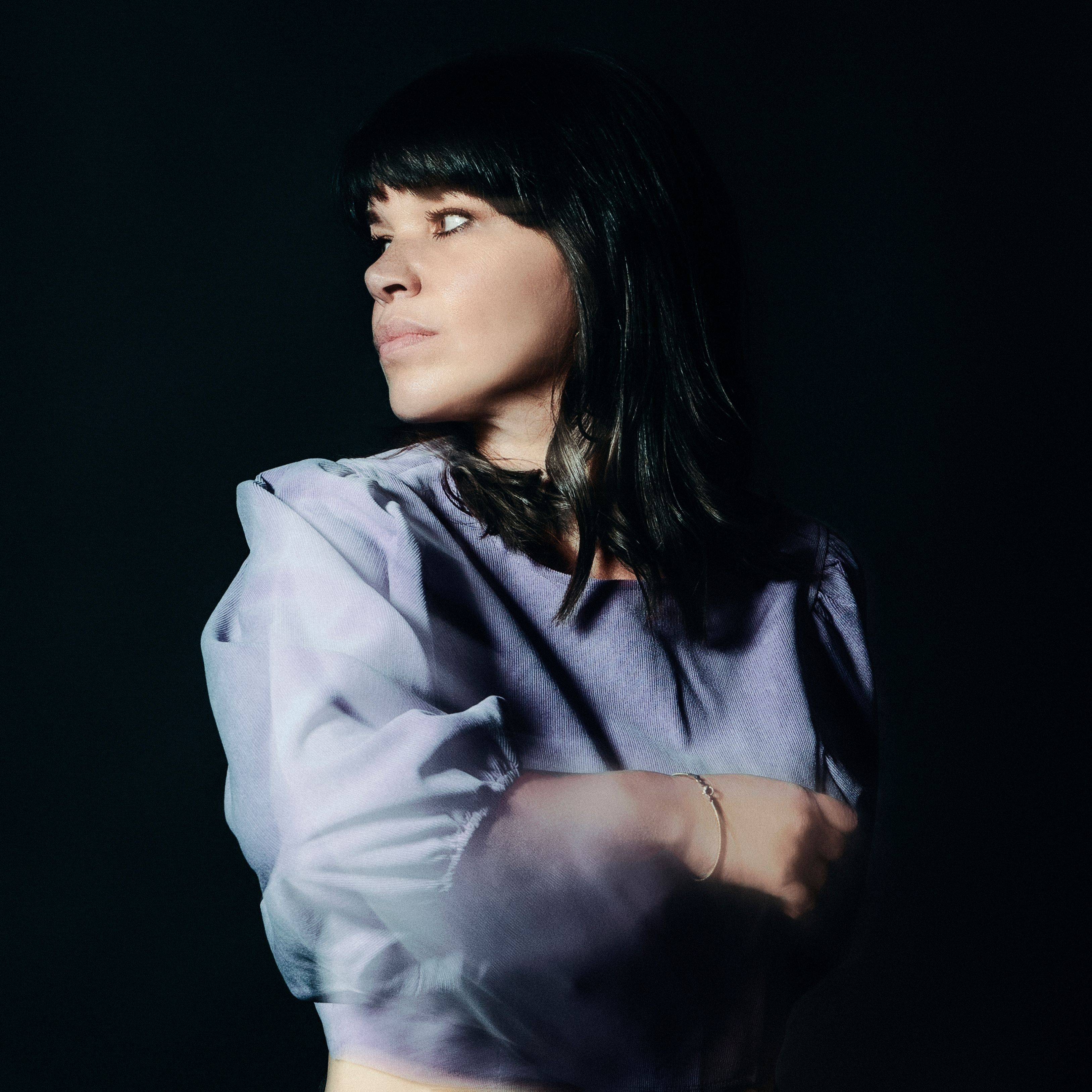
Name: Lien De Greef aka Lady Linn
Occupation: Singer, songwriter
Nationality: Belgian
Current release: Lady Linn features on the new FCL EP Can We Try Remixes, out via Freerange. It features reworks by Jimpster, Ben Hixon, and Deetron. Her new album with Her Magnificent Seven, Midnight Sun, is out via V2.
[Read our FCL interview]
If you enjoyed this Lady Linn interview and would like to stay up to date with her music, visit her official homepage. She is also on Instagram, bandcamp, and Facebook.
When did you first consciously start getting interested in singing? What was your first performance as a singer on stage or in the studio and what was the experience like?
I've been singing for as long as I can remember. As a child, my parents used to record me singing “Tomorrow,” from Annie, “Jaime la vie” (Belgian Eurovision song that won ;)) and “I don’t wanna dance,” which I made a version of later on my first album.
One of my first real roles as a singer was at the age of 15 with friends from the neighbourhood, in our rock band Fish ;)
If you're also playing other instruments, how does the expressive potential of these compare to your own voice?
I used to play classical piano from 8 till 18 and never stopped using it for songwriting purposes. I also play it live.
Singing is an integral part of all cultures, and traditions. Which of these do you draw from – and why?
I love jazz, soul, house, but also 70s rock, 60s songs.
I can’t really say that I have a particular culture I’m more drawn to, although for instance Brazilian music is so rich, related to African music … all of them, of course …
What were some of the main challenges in your development as a singer/vocalist? Which practices, exercises, or teachers were most helpful in reaching your goals – were there also “harmful” ones?
Singing as a live singer and recording albums with great musicians and producers gave me a lot of practical exercises and made me a better singer.
Listening a lot and singing live, studying Jazz at the conservatory in Ghent made me discover different vocal sounds and improvisation, as well as singing house with Red D & FCL. It makes you sing in all kinds of situations, not always the most reliable sound wise ;) So you have to learn how to make your sound.
Challenges in the beginning of my career included the smoking inside of bars. I always lost my voice due to the cigarette smoke! ;)
What are the things you hear in a voice when listening to a vocalist? What moves you in the voices of other singers?
I really love when melodies and depth fluently meet a story telling factor.
Also, not always showing all the technical expertise, but using it at the right moment can really get me. The timbre of the singer is also really important to me, but it’s so personal.
How would you describe the physical sensation of singing? [Where do you feel the voice, do you have a visual sensation/representation, is there a sense of release or tension etc …]
Singing feels so good when I feel the music, when the tonality is right and when the song suits my kind of singing.
It’s releasing energy but also getting energy and surprising yourself when the music around you - whether it's the musicians or the DJ - takes you along
We have a speaking voice and a singing voice. Do these feel like they are natural extensions of each other, ends on a spectrum or different in kind?
The soft singing voice in the same range of the speaking voice is similar and feels easy going.
When you have to give some volume, though, it’s more similar to shouting, but then in a musical, controlled way. It’s very physical.
How do you see the relationship between harmony, rhythm and melody? Do you feel that honing your sense of rhythm and groove has an effect on your singing skills?
It all goes together.
Rhythm is such an underestimated part of singing! When you don’t feel the groove or the swing, your vocal performance will not blend or fit the music and therefore not have the same effect …
As a singer, it is possible to whisper at the audience, scream at the audience, reveal deep secrets or confront them with uncomfortable truths. Tell me about the sense of freedom that singing allows you to express yourself and how you perceive and build the relation with the audience.
I really like to take the moment, not prepare what I’m going to say. I try to connect with the audience by looking at them and I'll talk to them about my songs or things that are happening in the moment.
I smile a lot while singing and have eye contact when people are feeling the same feeling at the same moment as myself. I feel connected by the music itself.
I'd love to know more about the vocal performances for your latest release, please, and the qualities of your voice that you wanted to bring to the fore.
I try to tell a story when I sing and feel the music around it, try to blend with it, not show off unless when it's needed.
Sometimes a song asks for it and then I go all the way. It depends on the message of the song.
When you're writing song lyrics, do you sense or see a connection between your voice and the text? Does it need to feel and sound “good” or “right” to sing certain words? What's your perspective in this regard of singing someone else's songs versus your own?
There’s certainly a link between the right words and the quality of the sound of my voice. Sometimes I write the lyric first, but often I jam at the piano and use an intuitive lyric , which often sounds good but is not really making sense. It depends on the moment.
Some vowels or words are easier to sing, it’s always a search for perfection by correcting and re-recording demos before recording.
I often find it easier to sing songs that are not self written. I choose the right songs though ;) It’s a challenge to write the perfect song for my own voice. I’m getting better at it, it’s my ultimate goal! :)
Strain is a particularly serious issue for many vocalists. How do you take care of your voice? Are the recipes or techniques to get a damaged voice back in shape?
I try to relax when I sing and use the right technique, not drink alcohol before a gig, certainly not wine ;) Sometimes a vodka Red bull gives me energy though ;)
I try to sleep well, not go out or talk over loud music on parties the night before a gig …
How has technology, such as autotune or effect processing, impacted singing? Has it been a concrete influence on your own approach?
When recording I rarely use autotune, also live I don’t use it. I use effects when it serves the song!
I have a vocal performer which I use live sometimes as a harmoniser. It’s cool ;) But I like to use it for the right song or even the right word in a song when the song asks for it.
For recording engineers, the human voice remains a tricky element to capture. What are some of the favourite recordings of your own voice so far and what makes voices sound great on record and in a live setting?
For me it’s my latest album: Midnight Sun we made versions of songs about ‘night ‘. I recorded live with the band.
“Night Air” by Jamie Woon is one of them and I’m proud of it. Also “Move your body” by Marshall Jefferson is on the album.
I learned so much from singing house with Red D, I love the way my voice takes off to the higher parts, just because of this kind of chords, beat, message. House music is my religion. ;)
[Read our Marshall Jefferson interview]
I’m also very proud of my latest release with Red D on Detroit label 7 Days entertainment. The song is called “Take it back.”
Motherese may have been the origin of music, and singing is possibly the earliest form of musical expression, and culture in general. How connected is the human voice to your own sense of wellbeing, your creativity, and society as a whole?
I think singing is a way of connecting.
All children sing and dance, it’s a way of expressing yourself and letting go of worries, sorrow, physical stress.
When people sing together something absolutely magical happens. We should all sing more! I’m so glad I’m a singer and I’m sure I need it to be happy.