Published
Name: Lariza
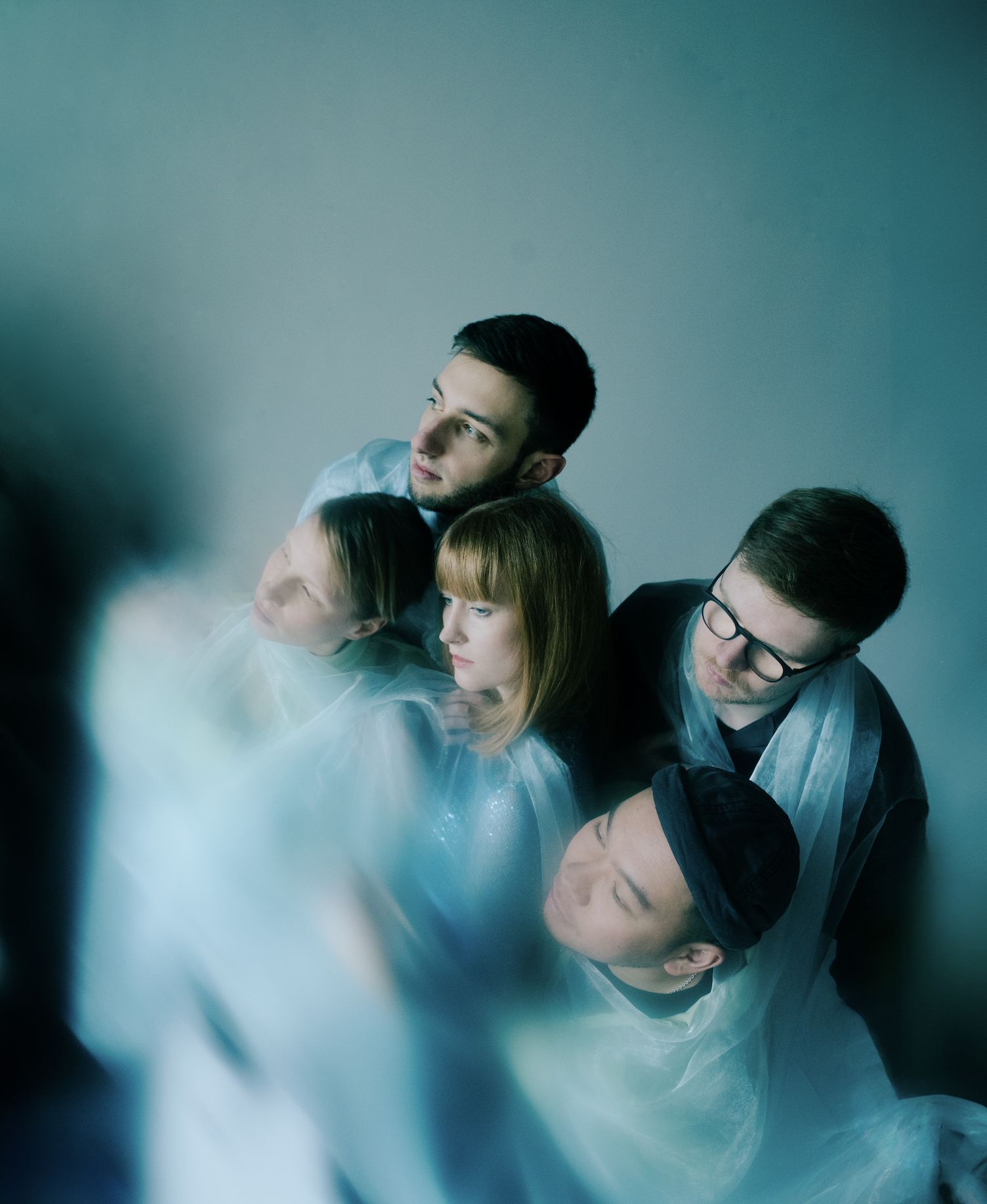
Members: Lena-Larissa Senge (voc, synth), Lorenz Schönle (sax, fl, EWI, voc), Raissa Mehner (git, voc, elec), Duy Luong (bs, elec), Lukas Schwegmann (dr, elec)
Interviewee: Lena-Larissa Senge
Nationality: German
Current release: Lariza's sophomore album Luminance is out via Unit.
If you enjoyed this Lariza interview and would like to know more about the band and their music, visit their official homepage. They are also on Instagram, Facebook, and bandcamp.
What were some of the musical experiences which planted a seed for your interest in jazz?
My parents always listened to a lot of jazz, especially bossa nova like Joao Gilberto, Bebel Gilberto and Tom Jobim. So I came into contact with jazz at an early age through listening to music.
I took classical flute lessons when I was a child. When I was 13 years old, I had the opportunity to play flute in a big band at music school, with a lot of groove and fusion music like “Spain” by Chick Corea. I really enjoyed that, and I liked the technical virtuosity and expression of those kinds of big band jazz pieces.
When I was 16 years old, I took singing lessons with a teacher who worked a lot with improvisation and call and response. My singing teacher did scat exercises with me from Judy Niemack's book Hear it and sing it: Exploring Modal Jazz. That was great fun and really inspired me to delve deeper into scat singing.
Since then I began to sing scat solos by Dianne Reeves and other singers by ear and started to work on standards. So I had many different musical experiences along the way, which ultimately led me to study jazz singing.
How do jazz and jazz culture factor into your artistic processes and the music resulting from them?
The diversity of jazz culture shapes my musical understanding and makes me very free in the compositional process. Jazz gives me the artistic flexibility to choose what mood, colors, harmonies, images a song should have. Nothing is fixed or predetermined from the outset, it can go in a completely different musical direction every time.
In terms of musical form, this results in simple songs with verses and a recurring refrain (“In The Swirl” played by Lariza) …
… or songs that are structured more like suites with many different formal parts that are constantly evolving (“White Lake” or “Altitude Angle” played by Lariza).
Improvisation is the starting point for many compositions: I develop ideas while improvising on the piano or with my voice which are then developed further and put into song structure. Improvisation can be found in our music not only in fixed solo parts but also in the general approach that a piece is never played in the same way.
There are always variations and the possibility of playing things differently than last time.
What does the term jazz mean today, would you say?
For me, jazz means diversity, artistic freedom, understanding and independence. In jazz, more than in any other musical styles, it is possible to mix influences from different genres and create something of one's own that draws its value from individual internal creativity and not from external interests.
Jazz is a universal language that brings people together. It can be a means of communicating with each other and exchanging ideas about the music. I think that the social and communal aspect of making music is particularly important in today's world to ensure cohesion.
Even if jazz naturally always has a reference to tradition, and this is very important for the understanding and reception of jazz, a contemporary understanding of jazz goes beyond the concept of tradition. Jazz is also partly a break with tradition. Jazz is not something of the past, but progressive and closely linked to the present day.
For me, this is the core of jazz - always moving with the times and allowing new artistic and cultural developments, trends, directions and fusions.
LARIZA Interview Image by Sophia Hegewald
Many people perceive jazz as a genre with high barriers of entrance, both for listeners and musicians. What have your own experiences been in this regard?
For listeners, jazz can feel intimidating because it’s so broad and complex. If you’re new, it can be overwhelming.
But what I learned in my jazz education and what I try to teach my vocal students is: You don’t have to understand all the theory behind a Coltrane solo to feel something. The emotion and storytelling are universal and that’s the most important thing about that.
For musicians, I’d say jazz requires you to be a student for life - of your instrument, of the history, and of collaboration. My own journey started with just loving how it made me feel and wanting to make others feel the same way. You learn by playing with others, and those "others" are often willing to mentor, to jam, and to help you grow.
So, I’d say to jazz newbies, start anywhere - just pick a song, an album, an artist you like, and let the journey unfold. And for aspiring musicians, remember, jazz isn’t about being perfect; it’s about being present, curious, and open to dialogue. Once you let go of the fear, it’s one of the most inclusive and joyful art forms out there.
Derek Bailey defined improvising as the search for material which is endlessly transformable. As of 2024, what kind of materials are particularly stimulating for you?
I’m particularly interested in materials that allow for flexibility and reinterpretation across different contexts.
I’ve been focusing on rhythmic structures, the melting of acoustic and electronic soundscapes, and text - whether it’s poetry or even casual phrases. These elements offer a lot of potential for variation and reinterpretation, which is key to jazz and improvised music.
With the band we’ve been exploring the use of technology, such as electronic drum machines, samples, synthetic and analogue effects. Electronic samples can be heard in tracks like “Morass”, “Clyde” or “Agoraphobia”.
We play with lots of synthetic and analogue effects in “Altitude Angle” and “White Lake”.
These tools add new layers to the musical process, allowing for real-time manipulation and transformation of material. They expand the color palette and create opportunities for more complex and dynamic interactions.
In essence, I’m drawn to materials that challenge traditional boundaries, whether between genres, technologies, or modes of expression. This openness creates a lot of possibilities for developing something fresh and continuously transformable.
What, would you say, are the key ideas behind your approach to improvisation?
The key ideas behind my approach to improvisation are exploration, interaction, and adaptability. Exploration is about staying curious - finding new sounds, rhythms, or concepts to work with. It’s important to approach each performance as an opportunity to discover something unexpected.
Interaction is central too. Whether I’m playing with other musicians, responding to an audience, or engaging with the acoustics of a space, I see improvisation as a conversation. The goal is to remain open and responsive to the moment.
Adaptability ties it all together. I aim to take any musical idea, whether planned or spontaneous, and transform it into something that fits the context, mood, or energy of the performance. For me, improvisation is less about showing off technical skill and more about creating something authentic and alive in the present moment.
How would you describe your relationship with your instrument – is it an extension of your self/body, a partner and companion, a creative catalyst, a challenge to be overcome, something else entirely?
I would describe my relationship with my voice as a mixture of partnership and creative catalyst. It's not just an extension of my body, but more of a collaborator that I'm constantly learning from and negotiating with. It is shaped by my emotions, experiences and physicality, but it also has a mind of its own.
Sometimes my voice feels like a creative energy that surprises me with sounds or textures I wasn't expecting. Other times it challenges me in difficult situations with demanding musical material or in challenging concert situations, reminding me to listen carefully, adapt and hone my craft.
My voice is always a bridge between inner expression and outer connection. It is the medium through which I communicate and connect with others, and it gives our “relationship” a meaning that goes beyond technique and skill.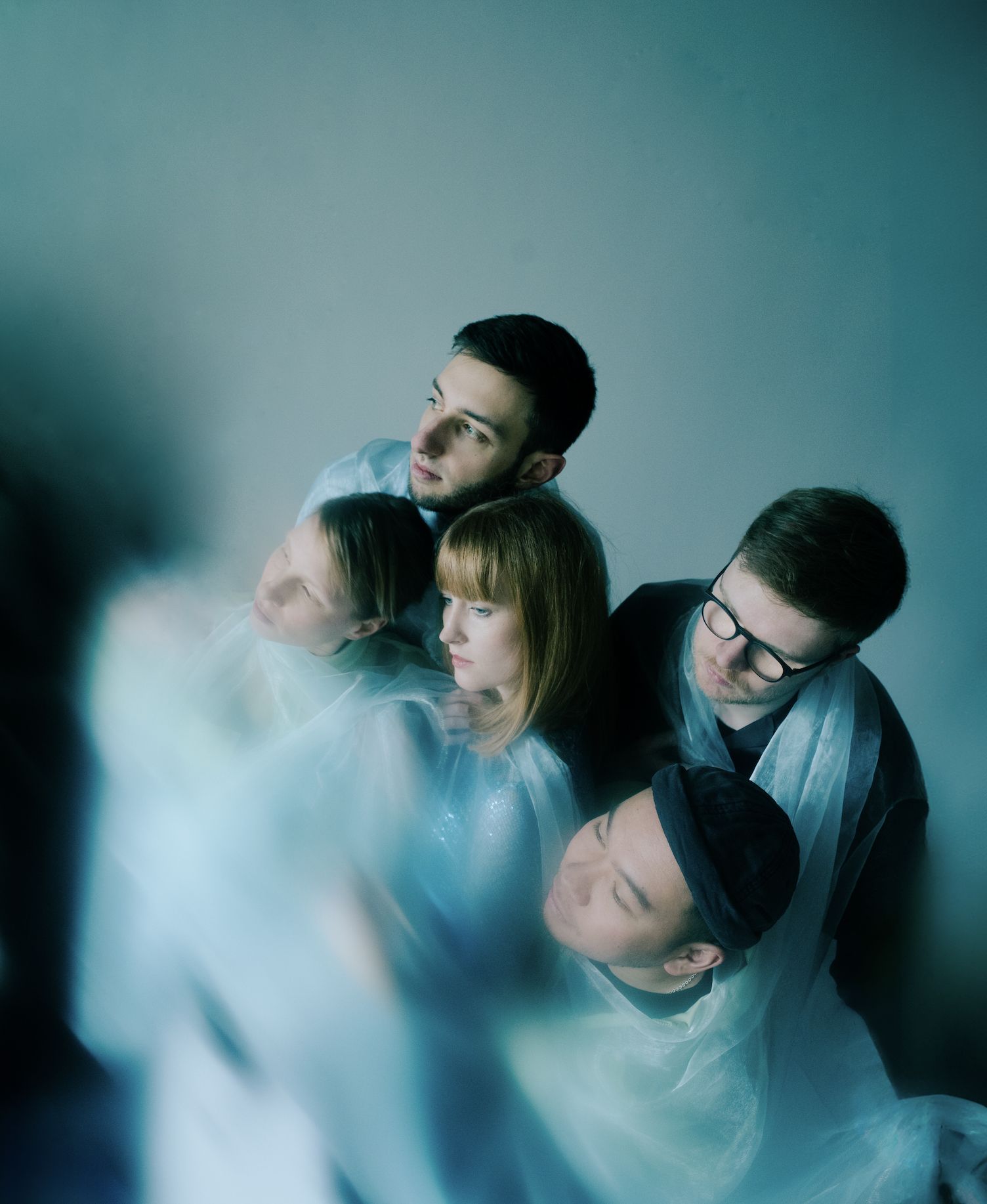
LARIZA Interview Image by Sophia Hegewald
Jazz has always had an interesting relationship between honouring its roots and exploring the unknown. What does the balance between these two poles look like in your music?
In my music, the balance between honoring jazz’s roots and exploring the unknown comes down to creating a dialogue between tradition and innovation. I see the roots of jazz, its rhythms, harmonies, and improvisational spirit as a foundation, not a limitation.
My music mixes jazz, pop, global music and electronic music, so you could ask: Is that still jazz? I like to play with the blurring of roots. For me, that means taking elements from jazz’s history and reinterpreting them through modern influences. That could be blending in textures from electronic music (“Morass” or “The Maze” played by Lariza), incorporating global rhythms, or experimenting with extended vocal techniques (like in the song “Clyde” played by Lariza).
However, everything is based on a jazz-harmonic understanding of multi-layered sounds and chords, on the playful freedom of rhythmic structures and the breeding ground of improvisation. The goal is to respect where jazz comes from while also letting it evolve and reflect the world we live in today.
Jazz has always been about change and risk, and I try to embody that by building up my music on the grounds of improvised music but open to wherever creativity leads.
How, would you say are your live performances and your recording projects connected at the moment? How do they mutually influence and feed off each other?
The recording process makes it possible to understand the music down to the smallest detail, as the good and transparent sound in the studio suddenly makes you pay even more attention to everything than usual.
In the studio, we sometimes notice musical subtleties that nobody has heard before in the rehearsal room. The recording process often leads to an even better understanding of the various structures of an arrangement or even brings forth new creative ideas, which we then integrate directly. The recording process always influences the next live performances, as we then pay even more attention to dynamics and subtleties.
Live performances are in turn always very enriching for interaction and coordination. Once we went into the studio straight after a tour and everything went really quickly and smoothly because we were so well-rehearsed.
There are various models to support jazz artists, from financial help to mentorships/masterclasses. Which of these feel like the best way forward to you?
I think financial support is the most important thing to promote creative work and concert activities. Unfortunately, venues can't pay enough, so musicians can hardly perform without funding these days. Funding is of course highly coveted and it quickly leads to an imbalance if only certain bands receive funding and others don't.
I therefore think that financial support that is widely available is particularly important in order to enable cultural diversity and professional concert activities. Master classes are particularly good to develop artistically and expand your own network, which is particularly important in the music industry.
Coming into contact with other musicians and mentors can open new doors and pave the way for artistic development and career opportunities.
The Montreux Festival intends to preserve its archive of recordings for future generations. Do you personally feels it's important that everything should remain available forever - or is there something to be said for letting beautiful moments pass and linger in the memories of those that experienced them?
I think it is very important for a large institution like the Montreux Jazz Festival to make past concerts accessible to the next generation. Concert recordings in good quality from the past decades are very important for understanding live jazz and how it was practiced and received at the time. These are historical and cultural events that are worth preserving.
Nevertheless, these recordings only reflect a small part of what the people who were there felt and experienced at the time. We should always be aware of this and remember how important it is to experience and enjoy these live moments for ourselves - without always having to capture everything.