Published
Name: Leif Vollebekk
Occupation: Singer, songwriter
Nationality: Canadian
Current release: Leif Vollebekk's Revelation is out via Secret City.
Recommendations: Wim Wenders' film Perfect Days.
The James Turrell Skyspace in Houston, TX at dusk. If you're not there at dusk, then you can go to the Rothko Chapel not too far away. Maybe you should do both.
If you enjoyed this Leif Vollebekk interview and would like to stay up to date with his music, visit his official homepage. He is also on Instagram, Facebook, and twitter.
Do you think that some of your earliest musical experiences planted a seed for your interest in writing lyrics or poetry? How and when did you start writing?
Lyrics and poetry held no interest for me until I heard Dylan's “Simple Twist of Fate” in my twenties. Up to that point I only cared about melodies and chords. After that I was happy with a song with 2 chords and nothing else.
He could paint a Velasquez with just a guitar and his voice. His ability is mythical and it should be. Shakespeare, Homer, Dylan, Whitman ... The breadth is infinite. There's nothing that can't be touched in a song by him. All the songwriters I know feel the same way.
It is sometimes said that “music begins where words end.” What do you make of that?
I like that. I try not to put too many chords or arrangements when there are dense lyrics in my songs. (Like the ending in “False-Hearted Lover” with the chromatic chords.)
I was moved to tears by Der Klang Der Offenbarung des Göttlichen by Kjartan Sveinsson when I saw it at Place des Arts in Montreal. It was an opera, with only set design and no actors. No words. It was like travelling.
Entering new worlds and escapism through music and literature have always exerted a very strong pull on me. What do you think you are drawn to most when it comes to writing?
I just want to see something. I just want to follow the images. Like that Springsteen song “Dry Lightning.” You're there and you see it all.
Even if it doesn't tell you, you know that the weather is 87 degrees, the fields are yellow and there's only one road into town.
What were some of the artists and albums which inspired you early on purely on the strength of their lyrics? What moves you in the lyrics of other artists?
The classics. Joni Mitchell's Blue, Leonard Cohen's Ten New Songs and Songs of Leonard Cohen, Dylan's whole catalogue. It's all about the images.
Van Morrison's Astral Weeks is indescribable. (The way the strings follow the vocals near the end of “Surfer's Journal” is especially inspired by "Madame George.")
I have always considered many forms of music to be a form of poetry as well. Where do you personally see similarities? What can music express which may be out of reach for poetry?
Well, before the invention of writing, all poetry was oral tradition. And before the phonograph, poems would often be associated with melodies.
A lot of Byron's famous poems are written to old melodies. Poetry is music.
When working on music, when do the lyrics enter the picture? Where do they come from? Do lyrics need to grow together with the music or can they emerge from a place of their own?
It's all just one thing. The chords and the lyrics and the melody are all one thing, inseparable. Sometimes there are lost sheep and you have to go find them, but most of the herd arrives together.
Do you feel like the music triggers specific words inside you? Or is more of a feeling or a memory? Would you say there is instantly an entire idea in front of you or does the story grow as you keep listening to the music?
Writing is not like that for me. They call it troubadour, from the Occitan word trobador, the one who finds melodies, words. It's like they're waiting. The second you think you're in control, you lose the thread. You're always just hoping you find your way to the song.
Sometimes you're lost for a year with nothing. On “Sunset Boulevard Expedition,” the words and images just came along with the melody, but over the course of a few months.
More generally, in how far can music take you to places with your writing you would possibly not have visited without it?
I can't separate those two ideas, at all. I'm not sure that's possible for me.
When you're writing song lyrics, do you sense or see a connection between your voice and the text? Does it need to feel and sound “good” or “right” to sing certain words? What's your perspective in this regard of singing someone else's songs versus your own?
Some words aren't in the meter, and they fight the song. It's like the furniture won't fit through the door and you have to shave off a corner.
Often latin-derived words don't work, they can be too clinical. But sometimes that's what gives clarity to the song if you use them sparsely. I know Keats tried to write entirely from Germanic words, to keep that earthly sound and feeling in his poems. 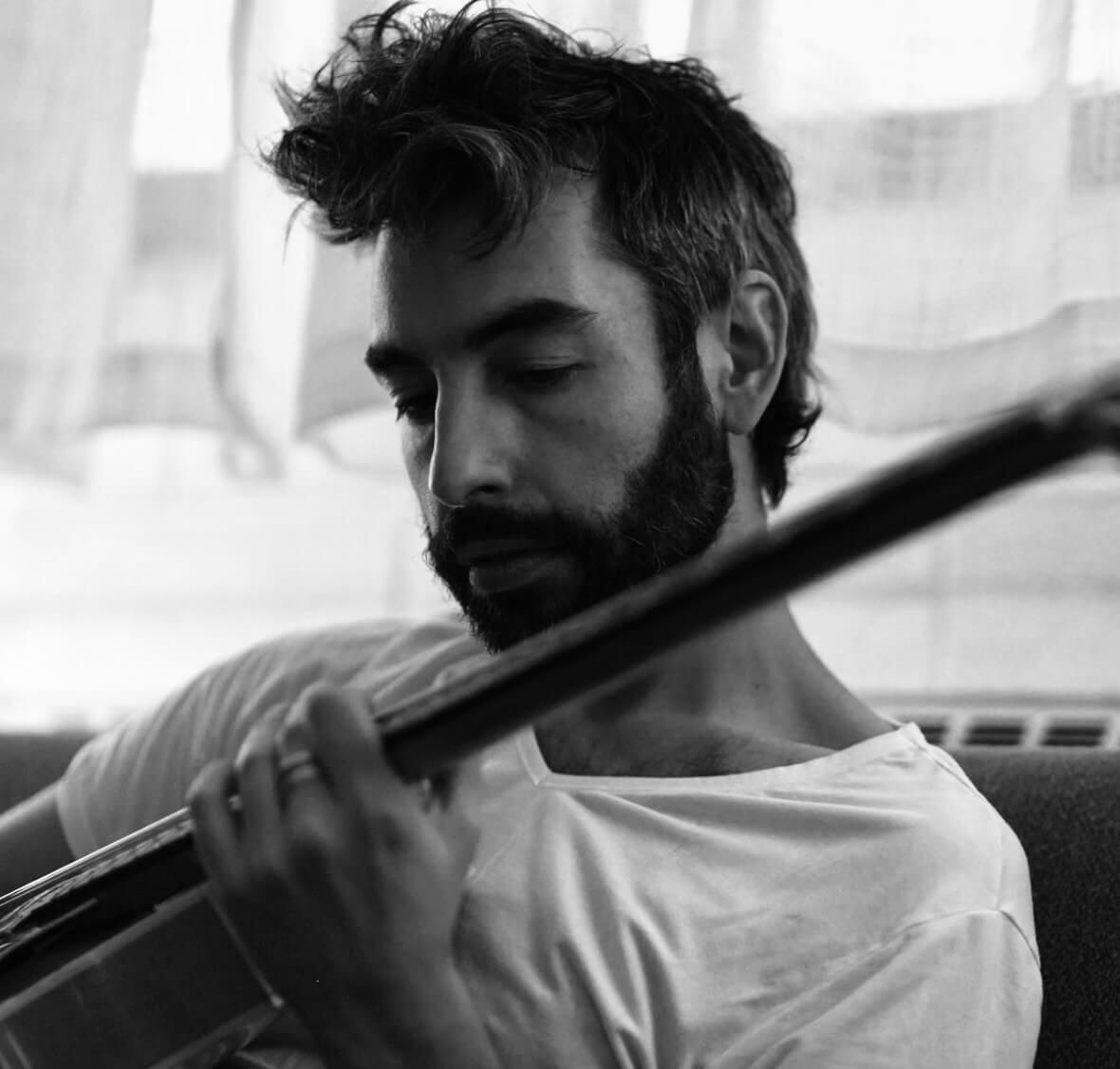
Leif Vollebekk Interview Image by Nicholas Sutton Bell
What is the value of song lyrics or hip hop bars outside of the music?
Well it's just a map, a translation of the real art. So you can look at the schematics of the thing.
It's like looking at the record grooves, instead of the sheet music. It's technically the same thing, but everything is different.
How do you see the relationship between harmony, rhythm and melody? Do you feel that honing your sense of rhythm and groove has an effect on your lyrics-writing skills?
It's completely mysterious. If the groove is set, and you have tempo and meter, you can go down the river.
Creativity can reach many different corners of our lives. Do you feel as though writing or performing a piece of poetry is inherently different from something like making a great cup of coffee? What do you express through music that you couldn't or wouldn't in more 'mundane' tasks?
I think the only difference is intention.
I recently met the man who runs the coffee movement in San Francisco. His coffee was a fully creative act. I was backstage at my friend Fred Again's show before playing my opening set where he was serving espresso. Bryan would speak to you, ask about your life and make a cup of coffee that had the edge or the sweetness that could help you turn the corner. The balance of the acidity, the bitterness, even the temperature was perfection. No one received the same coffee.
Conversely, I've seen some musicians turn music into something mundane. I'm not sure what the difference is, maybe it's not intention. Maybe the difference is sincerity. Maybe the difference is reverence.