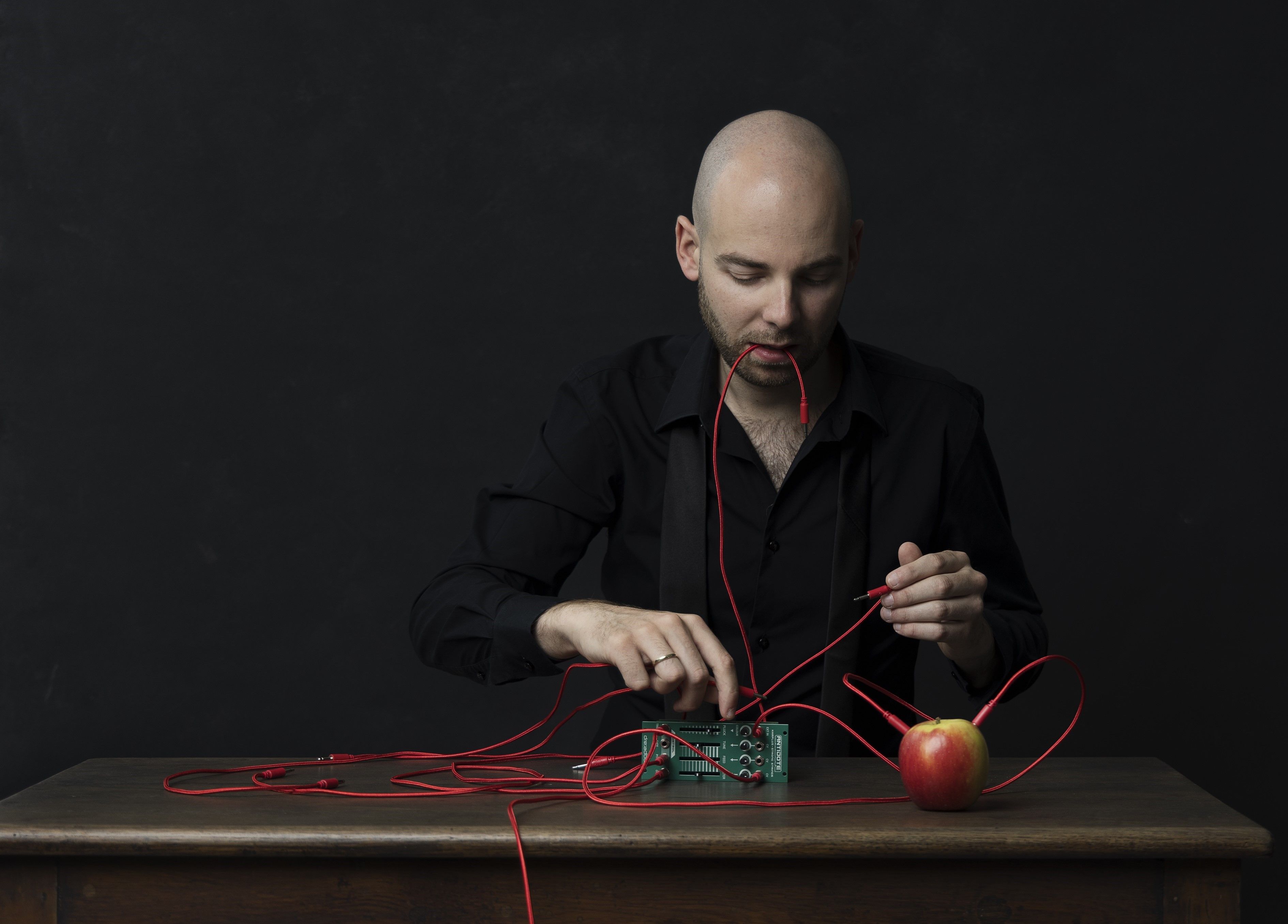
Published
Name: Léo Belthoise
Nationality: French
Occupation: Composer, violinist, experimental artist
Current Release: Léo Belthoise's most recent recording is Violin, a collection of solo violin interpretations, on Disques Coriolan.
If you enjoyed this Léo Belthoise interview and would like to know more about his music, visit his official homepage. He is also on Instagram, and Soundcloud.
Could you very briefly elaborate on the idea of "the evolution of the art-making process in society"?
It is correlated with the way people are evolving in their habits in industrialized countries, especially how they produce and consume contents of any kind. I see two main things: the increasing speed of producing, consuming and sharing (information, goods, ideas, art, entertainment ...) and the growing necessity to project oneself into all these activities (personal search for meaning, for definition, or for identity).
It isn’t something new and it already has had an influence on the artistic field of the past years, aesthetically and politically speaking. But to me what seems to be growing underneath, in the performing arts, is a deeper change on the process of composing, performing and presenting new works. In collaboration with composers and scenographers we work more and more In Situ, in shorter time (like during a residency) but using more context and exchange during the creation process so that the line between composer and performer becomes much thinner.
I believe the way of addressing the public is also changing drastically: instead of starting from the idea of making Art for itself and then using cultural mediation and sensitization to share it to a prepared audience, artists are starting to work from the daily life and the needs of individuals inside a given society. This would include composing music to help overcome the loss of a related one outside of an official ceremony, or to facilitate the navigation of students in school / subway / playground, or to accompany someone who’s getting out of jail. Working with the French composers Manon Lepauvre and Maël Bailly has been an eye-opener in this matter.
These experiences have led me to change my views over my own practice as a violinist / musician, realising that the performer’s choice of close collaborations makes a big impact in what becomes predominant in the artistic world.
Of course, artists will still need long periods of time to think and produce their work, and on the opposite side it doesn’t mean that it becomes solely an entertainment for the masses. But in any case, it is a definitive rupture with the Ivory Tower concept: making Art for Art's skae is becoming less important than building bridges, it means less search for perfection and more for significance.
“The line between composer and performer becomes much thinner.” Can you tell me a little more about this?
Working closely with composers in a certain time frame is mainly about mutual inspiration via fast exchanges of ideas. During this process, the materials and the sequences can evolve drastically because of the direct connection between a concept and its trial which circles back and brings a new element in the construction.
It feels like a ping-pong game, but with the ball being a question. Sometimes it’s a Why, sometimes a How, but it always involves both players.
How did that collaboration with Armando Balice look like in practise?
With Armando Balice, a composer who focuses on electroacoustic music, I recorded many samples, from randomized to a more refined set of sounds, and the more I played, the more precise the base idea of the composition became.
Is there a fundamental difference between this mode of working and the possibilities of filesharing and video calling which have been in place for a while now?
It’s technically the same, but the space-time situation makes all the difference. When you choose to meet someone in a chosen place for a certain period of time, you virtually sign to commit yourself to a goal that will be determined by these limits.
For now I can take the time and enjoy the place I want to answer your questions with my computer, and both questions and answers are influenced by these conditions. They would never be the exact same under different rules, for example if we were meeting on the terrace of a crowded bar during the specific time frame of the happy hour.
What, from your experience, can performer and composer learn from each other?
Composers can learn from years, decades of the performer’s experience about playing an instrument on stage at a high level. Performers can learn from the exact opposite, from the freshness of the composer’s approach. I did things I would have never thought to be possible with my violin thanks to that.
I see my accumulated knowledge more as a disadvantage when it comes to creativity. There is a tendency, especially in institutionalized fields, to worship the extensive experience of older artists. Of course, it remains a resource for students and young artists, but it can very easily become a burden that leads to a standstill. We need to stay aware of that and composers can help us on this matter by urging us to play on the edge.
How will this affect listeners?
If the composer makes sure that the performer is galvanized by the challenge, and if the performer makes sure that the piece will still survive under performance conditions, the listeners will feel the richness and density of the work, whether they like the piece or not.
It would seem to me as though the shorter time span of this type of interaction places it somewhere in the middle between improvisation and composition. What do you like about this in-between state and what kind of results does it lead to?
Improvisation is definitely a tool for composing, and it breaks the idea of an inspiration coming from contemplation, from the divine. The stroke of genius and the piece unfolding by itself is a myth, instead I believe in relentless experimentation that slowly builds up.
You can have a thematic idea, a concept, a material you want to build around, but it will never be enough for a great piece of art if it’s not being refined through its questioning. Improvisation allows you to set aside a part of your expectations in order to find elements you weren’t looking for.
In the end, being surprised by your own work is also a part of the journey. 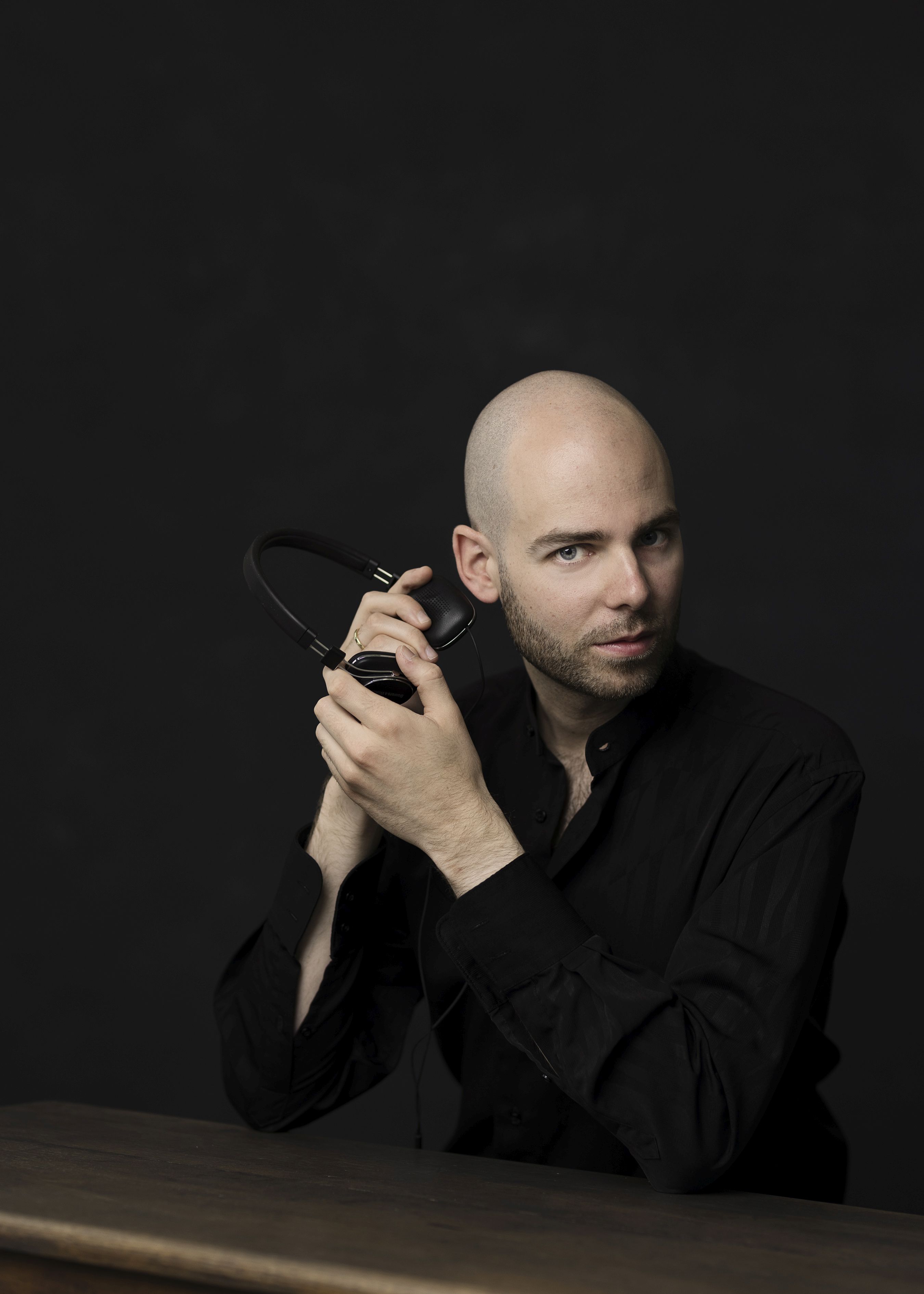
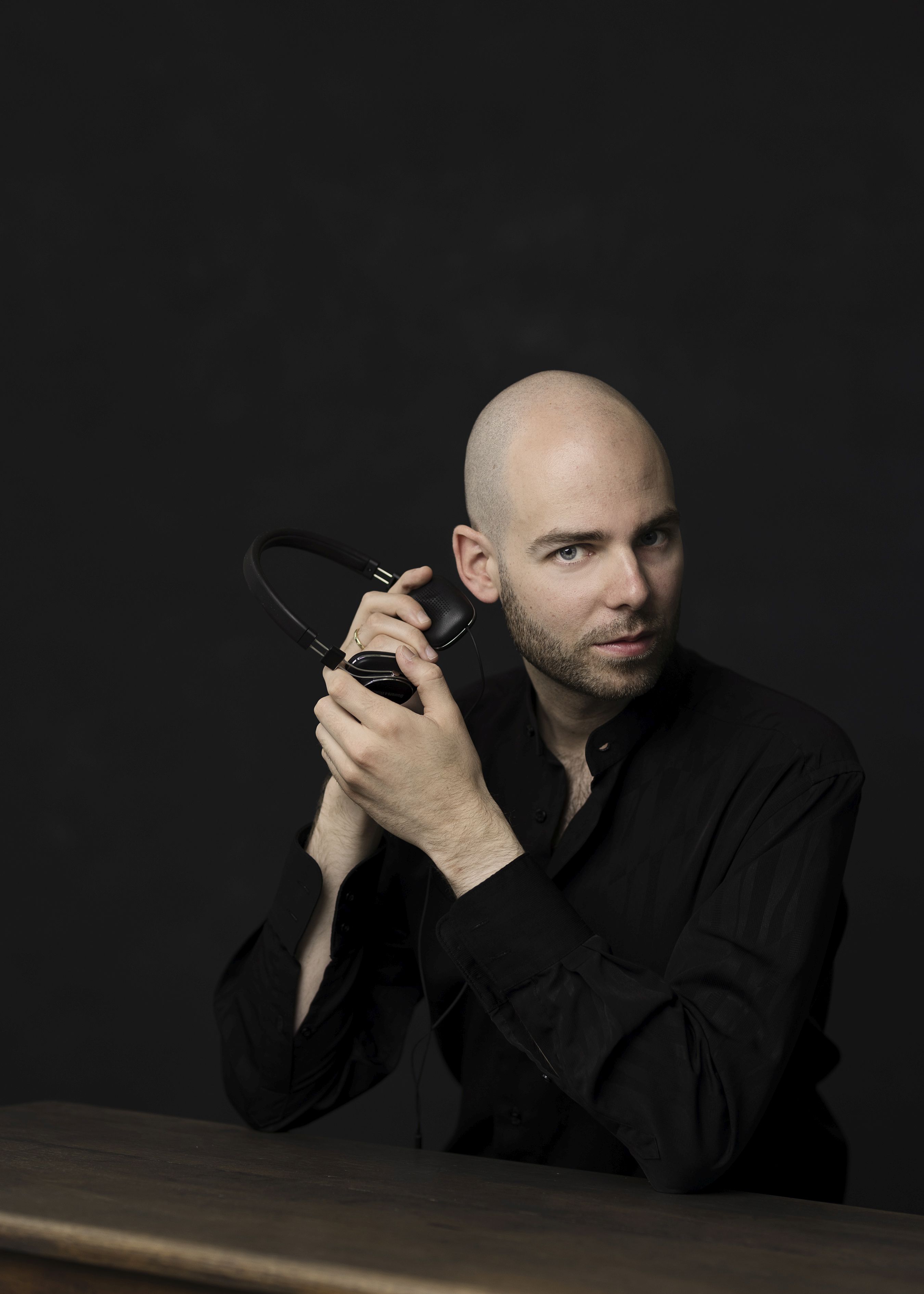
Léo Belthoise Interview Image (c) the artist
A slightly speculative question, but: Do you think that as this kind of cooperation takes place more often, we'll find that improvisation and composition are, ultimately, the same thing, only with different temporal dimensions? Or will they reveal themselves as two related, but different phenomena?
Then I’ll risk a speculative answer: there is no “real” improvisation. It may be a deterministic point of view, but no matter how you approach it, you will always set rules and boundaries even within the shortest temporal dimension you evolve in.
Following the same logic, I also believe there will always be room for what we could call micro-improvisation inside the most elaborated compositions, which is the essence of interpretation. The possibility for the performer to enjoy what makes every moment unique will bring life to the work and separate it from the world of predictable repetitions.
Getting back to your statement about music as a part of daily life … What you're describing can be seen as two things: A more functional approach to music as part of which its value is measured by its usefulness. Or an embedding of music into the rituals of daily life, which would mark a return to a state where sound is truly the soundtrack of our lives. What's your perspective on these two scenarios and what's your take on them?
It appears to me that the second scenario goes naturally against the first. I’ll bring a personal stance to answer you.
As a musician it may seem strange to be aiming for more silence, but our world has become very loud. Like goods and information, sound diffusions have followed the expansion of social and technological development and are now everywhere, in every public place. And you will listen to them, whether you want to or not. The world is being sound designed to manage every moment of our life, a ping to notify you that a door is closing, a jingle to make you wait, an extended version to make you do your shopping faster, loud music in an already crowded place.
Which leads me to question the intentions behind this cacophony. We can’t change it entirely, but we should care more about how music is being used, and how we could, as performers, composers, artists, take more responsibilities in this field. I’m convinced that working to bring more sensibility, more subtlety in the incorporation of music into the collective life can help to prevent oriented third-parties to get full control over it.
Have there been instances from your personal life experience, where music fulfilled the roles you described me?
The composer Francisco Alvarado has worked on an electronic piece designed to be listened to only via a pair of disposable headphones, which were standing at a specific square of his city. It struck me to realise that music could be designed for a particular public place without being pushed into it, more like an invitation.
And last year I had a fantastic experience in listening to three musicians playing a synchronized piece by Violeta Cruz in three different parts of the Maulnes Castle in France, during the Musiques en Tonnerrois festival. The audience was invited to explore the mysterious architecture of the castle while listening to the piece from different acoustic perspectives.
These kind of curiosity triggers may sound different from the emotions you could feel in a traditional concert hall, but they should be encouraged and supported as much.
I agree with your assessment that the Ivory Tower model is crumbling or has already crumbled. I personally see this with, as say in Germany, a "weeping and a smiling eye." How do you look at it from your point of view as a listener and an artist respectively?
Having been formerly educated in a very classical way, I am affected by this evolution too. But as someone who also invest a fair amount of time in less conventional form of art, I’m convinced there is more to win than to lose in this crumbling.
Since our habits are playing a big part in our approach of all things, it is not so bad to break some of the principles that define a composer or a performer and how they should act. It will leave room for other perspectives that may have more chances to be relevant today.
This is not to say that the traditional way of composing and the classical concert configuration are no longer important, we need them to be preserved for what they are, but it doesn’t mean that what comes next will be of lesser quality. As a listener I’m not worried about how the music is being elaborated, and from both points of view I am feeling confident about its future.
You mention that this does not need to mean that music will only be entertainment. Where do you personally see the line between art and entertainment? And what does art still mean if the Ivory Tower indeed should fall completely?
It’s a long-discussed topic, but for me it all comes back to the question of purpose. Art and entertainment share similarities which can make them appear to be interchangeable, and their definition has evolved within the socio-cultural context, but entertainment is purposely made to provide enjoyment and diversion. By doing so, it maintains the audience in a comfort zone and leads to a predictable and quantifiable pattern, to a closed circle.
Art is purposely made to provoke thought, to impulse questions and to challenge the mind. It wounds us and leaves a scar in the process, and by doing so it allows us to break the circle, something that is not appreciated by any form of power because of its disturbing nature.
Many works of art incorporate elements of entertainment and vice-versa, and they can also be deviated from their original intention. We probably need a combination of the two in our life, and that is perfectly okay as long as we remain conscious about the purpose of what is being presented to us. The same logic applies when it comes to our activity. What is my intention? Do I want to close the circle or open it?
Ultimately, this question remains to me the only Ivory Tower we really need in order to keep the sincerity of our approach.