Published
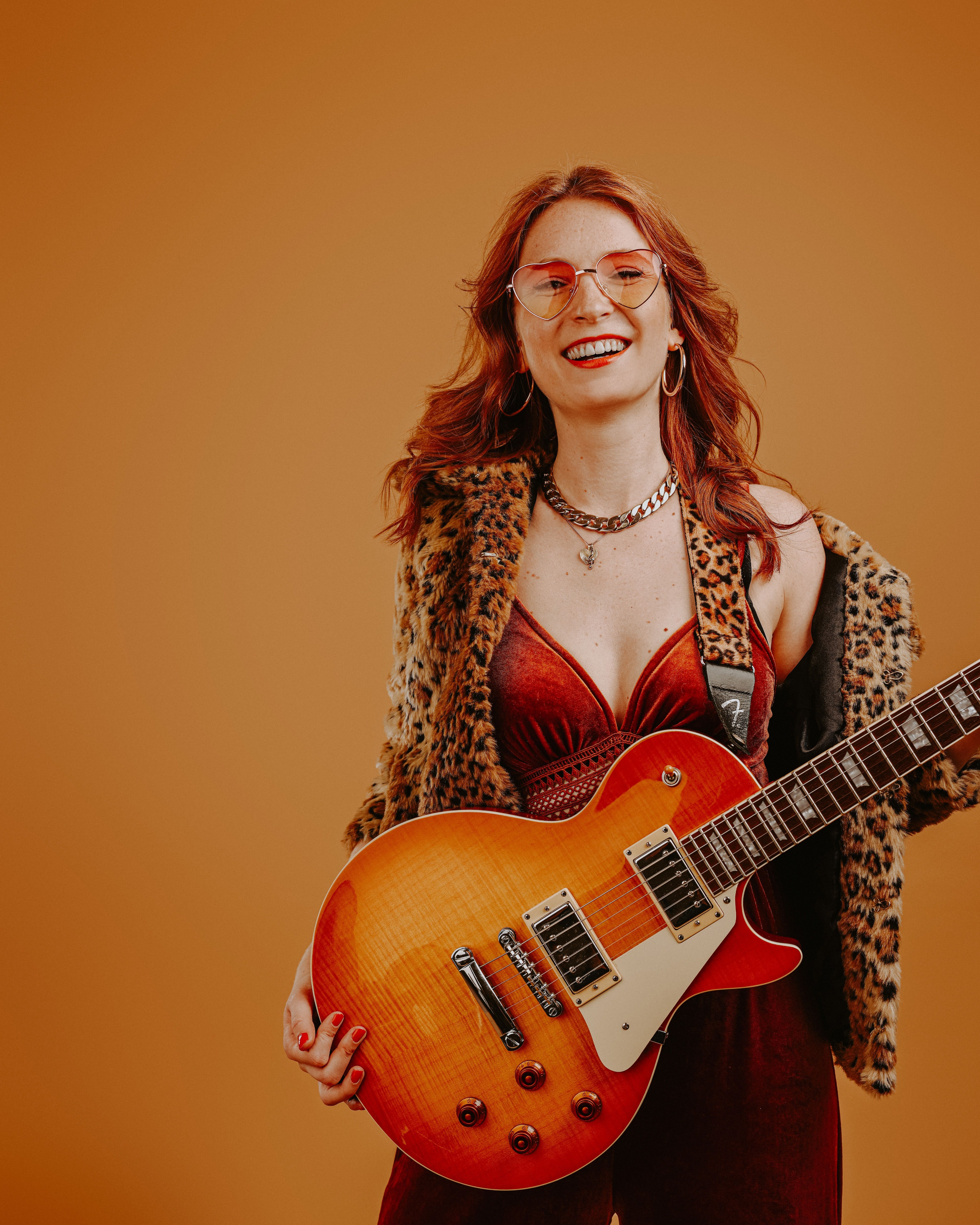
Name: Leonie Jakobi
Occupation: Singer, songwriter
Nationality: German
Current release: Leonie Jakobi's new single “I Deserve to Shine” is out now.
Global Recommendation: In Dreieich, near Frankfurt, I’d recommend seeing the Burg Dreieichenhain, which is close to where I grew up. It’s such a beautiful, safe place.
In Liverpool, my favourite spot is right by the Mersey next to the M&S Bank arena. It’s the perfect place to watch the sunset!
Topic I am passionate about: I wish we would stop seeing singing and making music as something to be good at or something to turn into a career. I know so many people would benefit from seeing writing more from a therapeutical perspective. And singing too!
I love that in the UK and Ireland it’s such a big part of everyday life. There’s live music everywhere, everyone knows at least a few chords on the guitar, and even at funerals people sing together. Music doesn’t have to be so serious all the time.
If you enjoyed this Leonie Jakobi interview and would like to stay up to date with her music, visit her official website. She is also on Instagram, and Facebook.
When did you first consciously start getting interested in singing? What was your first performance as a singer on stage or in the studio and what was the experience like?
My first time singing solo on stage was when I was about 12 years old. It was the 30th anniversary of my dad’s cover band and all of us kids got a chance to sing a song. I sang “Always” by Bon Jovi and I had the best time.
I was a little nervous before, but as soon as the music started, it felt so natural.
If you're also playing other instruments, how does the expressive potential of these compare to your own voice?
I play guitar and a bit of piano, but I’ve always loved singing the most. There’s something about having this unique, individual instrument inside of you that will never sound like anyone else’s.
Singing feels a lot more intimate to me because it’s more like a conversation you’re having.
Singing is an integral part of all cultures, and traditions. Which of these do you draw from – and why?
I believe that singing is what brings people together. When I think of community or even protests, I can’t imagine it without singing.
That’s why I love writing simple songs that are easy to sing along to. It reminds me of my hometown where we have a lot of local songs we sing together every year.
What were some of the main challenges in your development as a singer/vocalist? Which practices, exercises, or teachers were most helpful in reaching your goals – were there also “harmful” ones?
I really struggled with my voice as a teenager. Now I know that most of it was from having no female role models. I was a 12 year old girl trying to sound like Bon Jovi, which did not go well. In my vocal lessons, I mainly sang musicals, so the sound was completely different.
I didn’t feel like I was in control of my voice until I did a singing course at the Complete Vocal Institute in Copenhagen. CVT has worked amazingly for me ever since and it opened up a whole range of possibilities vocally.
What are the things you hear in a voice when listening to a vocalist? What moves you in the voices of other singers?
What inspires me about listening to other singers is when you can hear that they 100% accept their voice. They use it as a tool to tell a story or make us feel something.
I used to overthink the sound of my voice, so I find it fascinating when people make it look so easy and natural.
How would you describe the physical sensation of singing? [Where do you feel the voice, do you have a visual sensation/representation, is there a sense of release or tension etc …]
Where I feel the sensation of singing in my body depends on the song and the setting.
If the lyrics are intimate, I feel it in my heart, like I did on “Walk to West Berlin”.
If it’s an upbeat rock song like “Don’t mind me (while I give you up), I feel it in my whole body like a cardio workout.
Either way, it definitely relaxes my brain every time.
We have a speaking voice and a singing voice. Do these feel like they are natural extensions of each other, ends on a spectrum or different in kind?
That’s an interesting question. I believe it’s the same voice but bigger and freer.
Just like our personalities have so many layers, when we sing, we have the chance to show so much more of us and what we feel than our speaking voice ever could.
What are the potentials and limits of your voice? How much of your vocal performance can and do you want to control?
I’m a big fan of being able to control my voice. I love trying out new stuff and going a bit wilder and rougher with my voice, but that depends on the day.
I used to mainly write songs which would go all the way to the limit, but I would get so nervous before gigs, especially if it’s a full tour. Nowadays, I write songs that are easier to sing (also easier to sing along for the audience), and I play around more if I have a good day.
As a singer, it is possible to whisper at the audience, scream at the audience, reveal deep secrets or confront them with uncomfortable truths. Tell me about the sense of freedom that singing allows you to express yourself and how you perceive and build the relation with the audience.
Victor Hugo said it perfectly when he said, “music expresses that which cannot be said and on which it is impossible to be silent”.
I’m very honest with my lyrics and most of them are things I could never tell a person. Singing it to an audience (even if that one person is a part of it), weirdly doesn’t feel as intimate and revealing.
I'd love to know more about the vocal performances for your latest single, please, and the qualities of your voice that you wanted to bring to the fore.
Singing “I Deserve to Shine” felt like a full circle moment. I had finally found my voice. It felt easy and natural to sing and challenging in the right parts.
The verses sound like conversations I’ve had over the years, so my singing and speaking voice around this song are one and the same.
When you're writing song lyrics, do you sense or see a connection between your voice and the text? Does it need to feel and sound “good” or “right” to sing certain words? What's your perspective in this regard of singing someone else's songs versus your own?
It always feels more intimate to sing your own songs because people find out how you tick or at least what you thought about in one moment.
I don’t mind too much if a word doesn’t fit perfectly, you still have the chance to get the feeling across by singing it in a way that suits the story. But at the same time, I’ve also written songs with words in them that I really needed to say, even though it was difficult to make them sound right.
Strain is a particularly serious issue for many vocalists. How do you take care of your voice? Are the recipes or techniques to get a damaged voice back in shape?
I do a lot of LaxVox, which is when you blow bubbles into a bottle of water while humming. It’s like a massage for your vocal cords.
I also do vocal warm ups before every gig, which includes singing through the full album Blue by Joni Mitchell, and I always carry Gelo Revoice with me.
How has technology, such as autotune or effect processing, impacted singing? Has it been a concrete influence on your own approach?
I don’t take these things too seriously to be honest. If you have a take that sounds amazing and emotional and there’s a note that’s pitchy – autotune it or not, I don’t really mind. I think it created a lot more opportunities than it has taken away.
And I believe that it’s still more important to be a great artist with an interesting personality and something to say instead of having perfect intonation. So if someone decides to fix those or not, I don’t judge either way.
Motherese may have been the origin of music, and singing is possibly the earliest form of musical expression, and culture in general. How connected is the human voice to your own sense of wellbeing, your creativity, and society as a whole?
My voice is always the most obvious sign to how I’m feeling. If I’m tired, anxious, sad, upset or insecure – you’ll hear it in both my singing and speaking voice. Which makes looking after your body and mind an important part of touring, because my voice won’t work properly if I’m unwell physically or mentally.
At the same time, singing always helps me feel better. Even just humming helps my brain and body relax.