Published
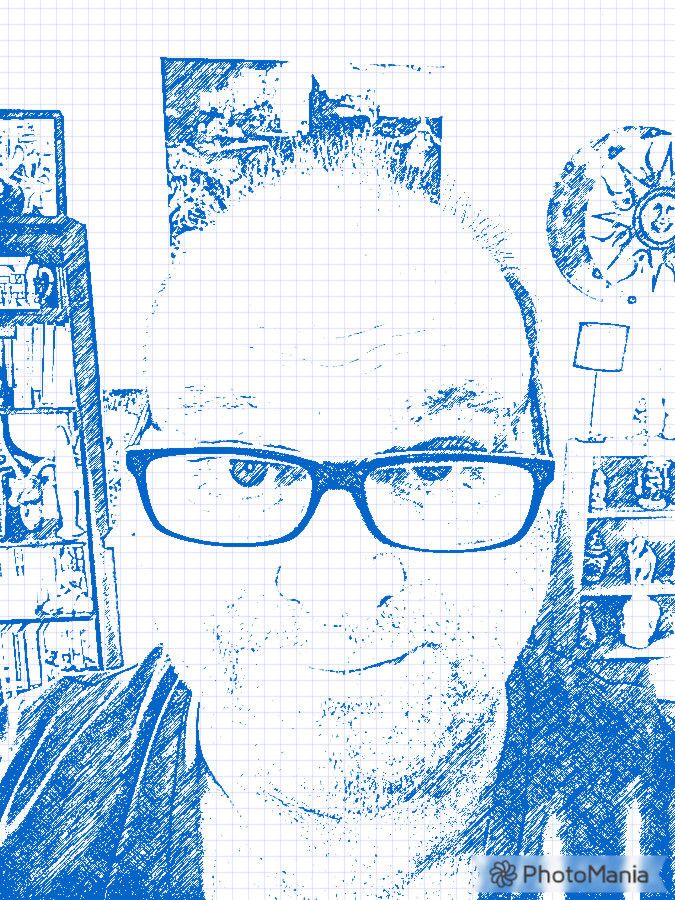
Name: Lewis Gill
Nationality: British
Occupation: Composer
Recent release: Lewis Gill's Redeemer is out now.
Recommendations:
1-Stockhausen's “Carre“ – this is an incredible soundworld! It is scored for 4 orchestras and 4 choirs so the listener should prepare for a sonic challenge on a massive scale. It contains some of the most peculiar vocal writing, almost ritual-like, I’m surprised Kubrick never used it in one of his films, or Friedkin in one of his! A massive influence for me.
2- The song“Dirty Boy“ by Cardiacs (english pop group) – this is a song with fairly obscure lyrics, but it has an absolutely irresistable chord progression, melody, vocal delivery, instrumental delivery. For me, this is the most emotionally powerful rock song ever recorded, it blasts with intensity and features a coda that actually leaves me mind-blown every time I hear it. It's from an album called Sing to God which is arguably a masterpiece. The writer of the song was Tim Smith who unfortunately passed away in 2020.
If you enjoyed this Lewis Gill interview and would like to know more, we recommend his Wikipedia entry. He's also on Soundcloud, and Facebook.
Where does the impulse to create something come from for you? What role do often-quoted sources of inspiration like dreams, other forms of art, personal relationships, politics etc play?
It varies, the impulse for “Black Odyssey” came from watching a documentary about Black Holes. It was narrated by the Scientist Janna Levin and caused me endless fascination and confusion aswell.
Soon after watching it I had the idea of composing an orchestral piece that would somehow musically illustate a journey into a black hole. I could almost immediately hear in my mind's ear what the piece would sound like: dark, dissonant (but tonal here and there) and somehow lyrical with a story telling narrative (without words).
I don’t think politics plays a signicant role for me, although I do have strong political views, I have always separated music from politics, although a lot of singer-songwriters have obvious political relevance, I tend to mean music as music (instrumental stuff). Some of my favourite music was written by people who I would probably be at odds with politically speaking. I have no doubt that personal relationships (or lack of) have affected my music in very gereral terms but I doubt if I could be specific regarding the details of compositional thinking in relation to this.
The impulse to compose something is sometimes very hard to pinpoint, I guess a lot of it is subconcious. But, going back to “Black Odyssey,” the impulse was very clear cut and specific.
For you to get started, do there need to be concrete ideas – or what some have called a 'visualisation' of the finished work? What does the balance between planning and chance look like for you?
This goes back to the previous question, some of my music was initially visualised (or imagined sonically in my minds ear).
“Black Odyssey” was a concrete idea but it was realised with a certain degree of chance because of the serial method in composing it, experimenting with different interval relationships drawn from the initial row of a piece is bound to produce chords that would not have otherwise come about.
So there is a balance between planning and chance. But I would never allow chance to interfere with the general soundworld I’m looking for, its a bit like playing with a dice to subtly decorate a room that is specifically structured.
Is there a preparation phase for your process? Do you require your tools to be laid out in a particular way, for example, do you need to do 'research' or create 'early versions'?
Yes, the preperation is usually establishing serial parameters and a choice of instruments. This is sometomes a long process when you want to match the colours of a piece with what you can hear in your head.
I usually have numerous prototypes of compositions that are stretched, shrunk, speeded up etc till I end up with something satisfying. So there are invariably early versions‘ and a fair bit of research‘
Do you have certain rituals to get you into the right mindset for creating? What role do certain foods or stimulants like coffee, lighting, scents, exercise or reading poetry play?
Absolutely, I am a caffeine freak and I like to lift weights, these are both major stimulants! Caffeine wakes me up and weight lifting usually gives me a blast of dopamine which in turn gives me motivation and alertness, these are obviously both beneficial to composing.
I guess I have a preference for dingy lighting, possibly because it helps to prevent migraines – and composing with a migraine is a definite no-go! Paradoxically, caffeine can cause migraines so maybe I’m doing something wrong – lol.
What do you start with? And, to quote a question by the great Bruce Duffie: When you come up with a musical idea, have you created the idea or have you discovered the idea?
There’s a philosophical debate here. I think I prefer the term ”create” to the term discover, though. Composing isn’t like archaeology, I’m not discovering something that was already there waiting to be found, I’m putting together elements in such a way that is peculiar to me.
However, the concept of a piece (as opposed to the material of a piece) can be discovered. It could be found in a book, a painting etc.
Many writers have claimed that as soon as they enter into the process, certain aspects of the narrative are out of their hands. Do you like to keep strict control or is there a sense of following things where they lead you?
I like to keep control. But there have been occasions when a piece has mainly written itself, that's the subconcious mind taking over, and I trust it when it does this.
There are composers who claim to merely “tune in“ to the Universe/God and have little to do with the process once that happens, I don’t go for that philosophy, I think my music is essentially “mine“ but some of it was written conciously and some of it was written subconciously.
This doesn’t mean I’m denying the spiritual aspect of music. But it denies the idea of a divine presence channeling me.
Often, while writing, new ideas and alternative roads will open themselves up, pulling and pushing the creator in a different direction. Does this happen to you, too, and how do you deal with it? What do you do with these ideas?
It happens a lot, a sudden new idea can appear while I’m writing something, it could be an idea related to dynamics or even the overall concept of a piece.
I tend to go along with these new ideas if I think they are interesting enough. This can result in a composition sounding quite different to the way I initially envisioned it. Although I like to be incontrol, I like that unpredictable aspect of composing.
But there have also been pieces which never deviate from an initial compositional method and end up identical to my initial idea of them, this is fairly rare though.
There are many descriptions of the creative state. How would you describe it for you personally? Is there an element of spirituality to what you do?
Yes there is an element of spirituality to what I do. But that doesn’t necessarily mean I connect my music to religion in any sense. Spiritual can mean “immaterial“ but still “meaningfull.“
All art can have this, walking through a beautiful place can have this, we don’t have to bring a supreme being into the equation though.
Once a piece is finished, how important is it for you to let it lie and evaluate it later on? How much improvement and refinement do you personally allow until you're satisfied with a piece? What does this process look like in practise?
Interesting question, there have been pieces which I have fiddled about with endlessly to get a satisfying result, then ignored them for a period of time, then re-listened and been completely satisfied. But then a few months later I have found flaws and wished I’d done something differently.
I think you can only give a piece a certain length of time before it's time to make your mind up. You just have to take a chance, if you dislike something later on, it's simply tough luck (if you’ve already released it).
I generally like everything I’ve released so far, the flaws have been minor.
When you're in the studio to record a piece, how important is the actual performance and the moment of performing the song still in an age where so much can be “done and fixed in post?“
It's very important, the strength of a performance can depend on so many things. I think a player’s mood and thought processes should sometimes be controlled to some extent, I know Stockhausen certainly agreed with this.
Even with technology that can do almost anything I think the mental states of performers is essential to desired results.
Even recording a solo song is usually a collaborative process. Tell me about the importance of trust between the participants, personal relationships between musicians and engineers and the freedom to perform and try things – rather than gear, technique or “chops” - for creating a great song.
I don’t collaborate in any sense regarding my“composed“ music.
But I can certainly see the the relevance of this question when I think about previous bands I’ve been in. It generally helps if personal relationships are good, I have had some serious fall-outs with band members in the past and it invariably makes the whole band situation ugly.
Some people would argue that it's better to not be friends at all with band members, producers etc. Maybe it's better to keep all relationships strictly professional. It's debatable
What's your take on the role and importance of production, including mixing and mastering for you personally? In terms of what they contribute to a song, what is the balance between the composition and the arrangement (performance)?
I tend to do all those things myself so there is no one else to blame for poor quality.
I think mixing and mastering is a crucial process for me, especially panning the sound and getting a distinct clarity from the individual sounds. I can’t stand a dead sound but I also can’t stand saturating reverb – it almost has a sickliness to it.
I tend to think of an arrangement as part of the composition itself. I guess this would be different for pop musicians and producers, but when I compose I am simultaneously arranging.
After finishing a piece or album and releasing something into the world, there can be a sense of emptiness. Can you relate to this – and how do you return to the state of creativity after experiencing it?
That feeling of emptiness is little more than a break for me.
I’ve got used to it, after I’ve drained myself completing a piece I routinely expect to feel no creative impulse for a while but I know the impulse will return when I’m ready again,
Music is a language, but like any language, it can lead to misunderstandings. In which way has your own work – or perhaps the work of artists you like or admire - been misunderstood? How do you deal with this?
I think being experimental can naturally lead to misunderstandings. An Avant Garde musician or composer might use “noise” in a piece, or severe dissonance or generally make very abstract music, and because there often isn’t an “explanation” for this it can lead to multiple misunderstandings – what could a composer possibly be expressing with all this abstraction?
An extreme example of this is Stockhausen’s Helicopter Quartet, if the listener reads about the composers motives behind the piece and how it integrates into something larger (The Licht Opera) it can make perfect sense, but without that knowledge the listener can have a severe misunderstanding of the piece (or NO understanding) or even think the composer must be insane!
I guess misunderstandings go with the territory when it comes to anything musically abstact.
Creativity can reach many different corners of our lives. Do you personally feel as though writing a piece of music is inherently different from something like making a great cup of coffee? What do you express through music that you couldn't or wouldn't in more 'mundane' tasks?
I’d say that creativity like composing is massively different from mundane tasks. I express very little about myself when doing ordinary day to day things.
There isn’t much room for “being distinctive“ or“self expression“ when it comes to our daily routine tasks, although there are probably people who think everything (even making a cup of coffee) can (at least in principle) be artistic or creative.
I guess it's down to the individual. I personally express a lot more with music than I do with mundane tasks.