Published
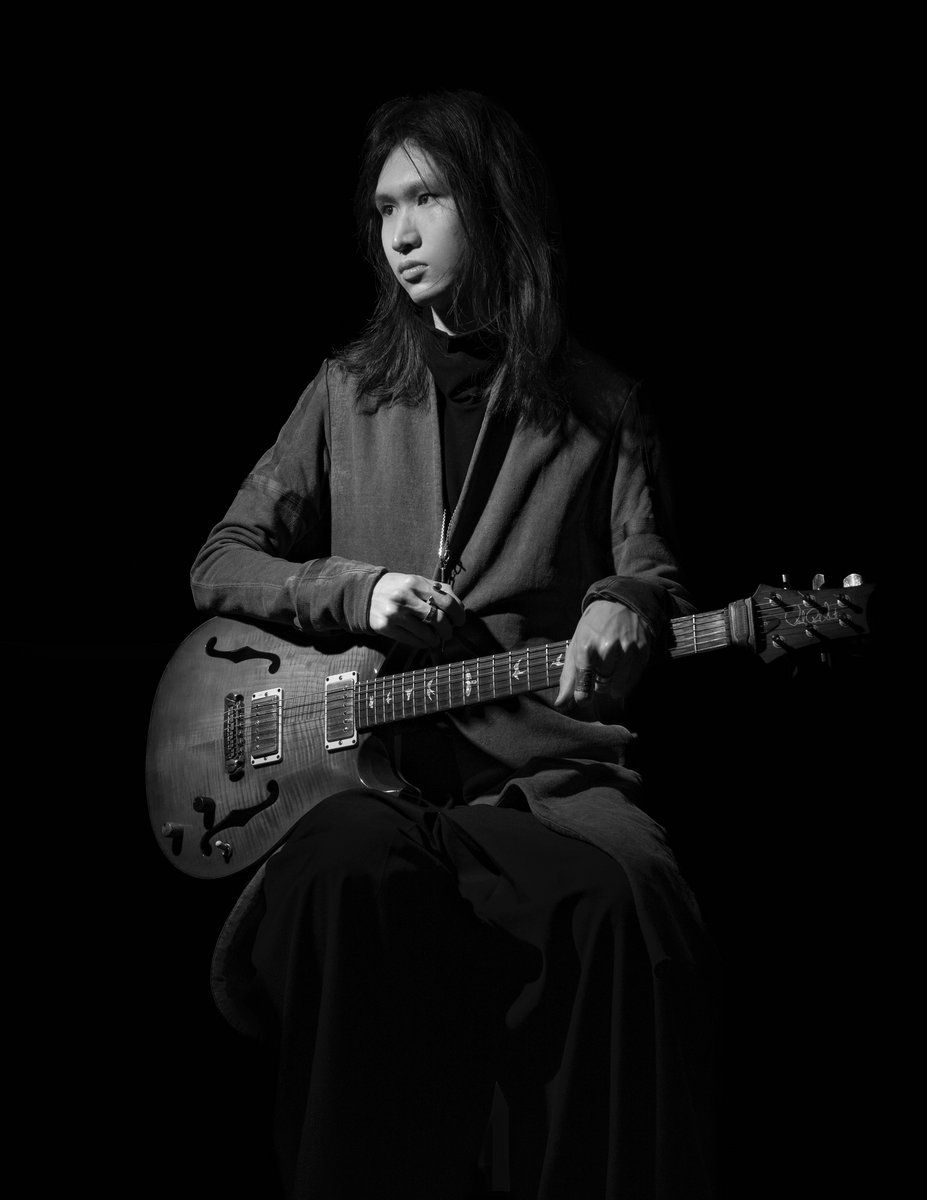
Name: Lingyuan Yang
Nationality: Chinese
Occupation: Composer, guitarist
Current Release: Lingyuan Yang's new album Cursed Month, featuring Shinya Lin (piano) and Asher Herzog (drums), is out August 15th 2025 via Chaospace.
Shoutouts: In the creation of Cursed Month, I received a lot of support and inspiration from my mentors Matt Mitchell and Kate Gentile, who encouraged me to experiment with a lot of things in improvised music. I highly recommend checking out their work!
If you enjoyed this Lingyuan Yang interview and would like to know more about his music, visit his official homepage. He is also on Instagram, and bandcamp.
The borders between producers, sound artists, and even songwriters are becoming increasingly blurry. What does being a composer mean today, would you say?
I agree that the boundaries between producers, sound artists, and songwriters are increasingly blurred. In Cursed Month, I wasn’t only composing, I was also deeply involved in production and sound design.
I consider myself a composer because the majority of my musical practice is devoted to writing music; production and sound design are extensions of that work, serving the needs of the pieces I create.
Many people perceive classical music and contemporary composition as having high barriers of entrance, both for listeners and musicians. What have your own experiences been in this regard?
I believe that as long as you take the time to listen closely and attentively, you can find joy in the music, there’s no real barrier to entry.
In my experience, anyone willing to slow down and engage deeply with the sounds can access the emotional and intellectual rewards that classical and contemporary music offer. It doesn’t require any special knowledge, just an open mind and patience.
As of today, what kind of materials, ideas, and technologies are particularly stimulating for you?
Right now, my main area of exploration is microtonality. I’m writing many different works that use microtonal systems.
In Cursed Month, I worked with quarter-tones, while in some of my other chamber pieces I use just intonation. I’m fascinated by the otherworldly harmonies microtones can produce.
At the same time, I’m very drawn to electroacoustic music, and I’m continuously learning new electronic techniques to incorporate into my compositions.
Tell me a bit about the sounds & creative directions, artists & communities, as well as the colleagues & creative hotspots of your current hometown, please. How do they influence your music?
I’m currently based in New York, although I’ll soon be heading to Europe. New York is an incredibly open-minded place for music, you can hear wonderfully weird sounds everywhere, which constantly inspires me to take risks in my own work.
I also feel very fortunate to have met Shinya and Asher here, who joined me in recording Cursed Month. It’s extremely challenging music, and we spent a long time shedding together to bring it to life.
Composing has always had an interesting relationship between honouring its roots and exploring the unknown. What does the balance between these two poles look like in your music?
I’ve studied a lot of "roots" music.
As a jazz guitarist, I learned many standards and bebop tunes, which have subtly shaped the way I improvise. In composition, I’ve explored composers from different eras, and although much of what I write today is very contemporary, I believe that studying the roots has greatly strengthened my ability to organize musical material and develop structure.
For me, honoring the past provides a solid foundation that allows me to push my music into new and unexplored territories.
How much potential for something “new” is there still in composition? What could this “new” look like?
I believe there’s still immense potential for the “new” in composition.
Take microtonality, for example, there are thousands of different microtonal systems, each offering unique harmonic possibilities that are still largely unexplored. The same goes for the use of electronics: the tools, techniques, and technologies available today open up infinite ways to shape, transform, and spatialize sound.
Beyond that, new ideas can emerge from combining diverse musical traditions, experimenting with forms, or even integrating concepts from other disciplines like architecture, visual arts, or science. To me, the “new” in composition isn’t just about inventing unheard sounds, but also about finding fresh ways to organize and experience music, challenging both the listener’s and the performer’s expectations.
What role do electronic tools and instruments play for your creative process? What does your creative space / studio look like and what tools does it contain?
When I compose, I often use guitar, piano, and Ableton Live. Ableton’s tuning system allows me to accurately hear and experiment with microtonality. I also write patches in Max to assist my compositional process, whether it’s for generating materials, testing rhythmic ideas, or designing new sounds.
My creative space is pretty minimal, it usually includes my guitar, a MIDI keyboard, a pair of speakers, and my laptop.
Working with long forms, complex concepts or new vocabulary is potentially more challenging today because they require us to remember things that happened perhaps minutes ago – while most of us are finding it hard to focus even on what's happening right now. Both as a composer and as a listener yourself, how do you deal with this?
As a composer, I usually work with a minimum amount of materials that I develop and transform throughout the piece, which helps listeners keep track of what’s happening.
As a listener, I find that complex, long-form music encourages me to slow down and really focus. I often listen to a piece multiple times, and with each repeat I discover new details and layers of meaning.
That process of gradually becoming familiar with the music, and uncovering something new each time is one of the main reasons I love this kind of work.
For many artists, life-changing musical experiences take place live. Few works these days, however, are performed beyond their premiere. What, do you feel, does this mean for composers, and the music they write, and how does this reality influence your own work?
This is definitely an issue many composers, including myself, face. Of course, I hope my pieces can be performed more than once, but often practical realities make that difficult.
At the same time, I feel grateful whenever my music is performed at all, even if it’s only once, because I love creating music, and each performance is a chance to share that passion with others.
To some, the advent of AI and 'intelligent' composing tools offers potential for machines to contribute to the creative process. What are your hopes, fears, expectations and possible concrete plans in this regard?
I think AI is a great tool, and there are already many interesting AI-assisted composition and sound design technologies available. Applying these tools in the creative process can open up a lot of new possibilities and lead to unexpected ideas.
As long as AI is used thoughtfully, I believe it can greatly benefit the development of music by expanding the range of sounds, structures, and approaches we can explore.