Published
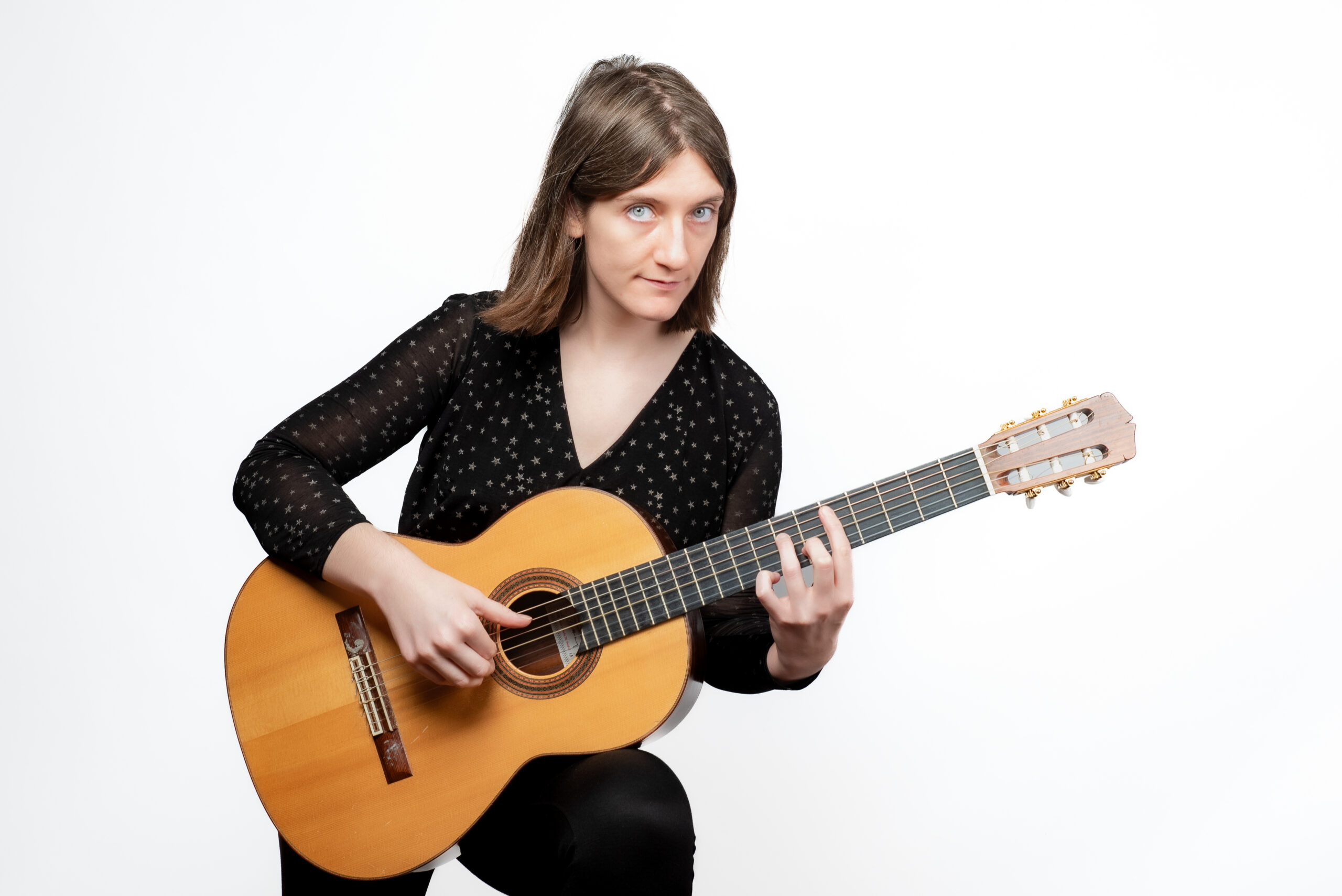
Name: Liz Hogg
Nationality: American
Occupation: Singer, songwriter
Current release: Liz Hogg's new album Goodbye World Hello Something is out via Aagoo.
Recommendation for NYC, USA: Liberty Bagels, my newest discovery, which I have to say is equal to or better than my hometown Terrace Bagels. It’s also important for every NYer to take a stand on the best pizza, which is Di Fara, with close runner ups. Lastly, I’m trying to see more comedy and recently I went to Second City in Williamsburg; I saw 2 ticketed shows and one of them was hilarious which means it’s worth going.
Topics I am passionate about but rarely get to talk about: 19th century Russian literature, some movies, my thoughts and opinions on “masculinity” and to a lesser extent, femininity which doesn’t require as much scrutiny, parenting - especially the first 10 years, and the point of living. I have strong opinions about all those and would say I’m passionate, except I don’t consider myself a film aficionado who remembers details, and lots of trivia, just a fan; someone who loves and watches tons of movies. I also like riding my bike all over the city, even though it’s been a solid year now since I was able to. I plan to do more trails and extended trips when I have time.
If you enjoyed this Liz Hogg interview and would like to stay up to date with her music and upcoming live dates, visit her official homepage. She is also on Instagram, Facebook, tiktok, and Soundcloud.
Where does the impulse to create something come from for you? What role do often-quoted sources of inspiration like dreams, other forms of art, personal relationships, politics etc play?
I don’t know for sure exactly where it comes from, it’s just one of those mysteries of human existence. But I do know since as long as I can remember, I’ve been inspired and motivated by the way music makes me feel. And I always considered it the ultimate feat to get a grasp on that, fully understand it as much as it can be understood, and do it myself.
So I’d say it mostly comes from being inspired by other art, usually music, and sometimes also books, people and ideas. Dreams have not inspired me; I don’t put much stock in them. Politics somewhat but only in subtle and disguised ways, and more from a social standpoint. Personal relationships sometimes but again, not directly, usually shrouded in something else.
For you to get started, do there need to be concrete ideas – or what some have called a 'visualisation' of the finished work? What does the balance between planning and chance look like for you?
Writing this album has taught me that the more visualization and concrete ideas I have ahead of time, the better. But only in terms of the abstract pre-planning part of songwriting.
I think it’s great to do as much planning as possible before actually touching the instrument and recording stuff. Composing in your head. The Beatles never worried about remembering their songs because they said if they couldn’t remember the tune the next day it wasn’t good enough to work on. So the more you can hold in your head the better.
Once hands touch the instrument or the computer, you should be as prepared as possible because the process immediately slows down then. Chance is fine for some things: perhaps a cool keyboard you encountered in the studio makes you rethink the sound of one part, or maybe an accidental mic placement ended up creating an effect you want to keep.
Or in the case of “One Thread,” one of the midi drum sounds in my Logic library did not have a direct translation on my producer Carlos Truly’s ProTools library, when he imported the drum track at the session. Instead, it created this weird booming effect that I decided to keep in the final mix.
Also on “One Thread,” I did the rhythm guitar chord part all in one take on my first try, and Carlos responded “cool, ok.” I liked the cheerful and relaxed tone in his voice and thought that would make a cute little ending.
In the beginning he kept sending me mixes back with it cut out, and I kept saying don’t forget your vocal cameo to end the album!
For Goodbye World Hello Something, what did you start with? If there were conceptual considerations, what were they?
I started with a lot of healthy pressure on myself: something along the lines of telling myself “this better be good album. I’ll be 31 or 32 when it comes out, and if your music is bad then when will it ever be good!” A little bit of anxiety prodding thoughts like that helped put some pressure on but not too much. I felt ready to make the album regardless.
The pressure I put on myself was not all necessary, except for some factors of it: like the pressure I put to trust in other people. I’ve tended to be a control freak like a lot of musicians, but I told myself I had to absolutely hire a producer and drummer and not try to tackle those aspects myself like I did on the first album. I wanted to put my trust in other people’s professionalism and Carlos & Daniel did a great job (Carlos Truly: production / engineering / bass, and Daniel Siles: drums).
Other conceptual considerations were in regards to instrumentation and what was most important in a song: the main ones were - write it for traditional 3-5 piece rock band instrumentation, focus on the form first, and make sure the vocal melody and all vocals were treated front and center with as much priority given to their melodies, harmonies etc. as possible.
Tell me a bit about the way the new material developed and gradually took its final form, please.
10 kernels (short audio files with 1-2 musical ideas) randomly selected from a folder entitled Acoustic Digital (the first alphabetically of 7 folders that held 283 kernels catalogued based on method of recording and instrumentation) kicked off the process. I only gave myself 2 focused songwriting sessions to finish each song.
The only slight exception to this was for the 1st song, only because I had the chorus in my head for a while and knew I wanted a long anthemic repetitive outro of the chorus and had the lyrical concept of “Things I Said Before” as being the opener to the album. So when I saw the first kernel was this slightly funky 2-chord thing, I backwards composed the song to merge those 2 ideas, the chorus I already had in my head and this kernel.
For each song, I prioritized the form and the drums, down to every last fill. If I couldn’t enjoy listening to the drum track all by itself and wasn’t bopping along to it, the “box” I was creating was not strong or detailed enough.
Then I harmonized the kernel and sang along all the ideas that came to me from that kernel. As fast as possible before I could judge them. And then I’d fill everything in with details and instrumentation choices, applying little changes that make repeated verses or choruses different than other iterations of them, etc.
I tend to write the lyrics and vocal melodies last, but I tried to prioritize those right after the drums and song form for this album a bit more.
What are areas/themes/topics that you keep returning to in your lyrics?
The contrast and battle that exists between internal and external lives.
And the best songs are love songs, so I always try to write about that even if it’s hard.
Many writers have claimed that as soon as they enter into the process, certain aspects of the narrative are out of their hands. Do you like to keep strict control or is there a sense of following things where they lead you?
I like to follow things where they lead me and not over analyze. And usually when I listen back to a kernel/idea I have recorded, I pretty quickly hear the best possible routes it can take.
Of course, many details can be left to chance or various correct but just different decisions, so in that sense I do follow things where they lead me but the beginning construction is very controlled.
There are many descriptions of the creative state. How would you describe it for you personally? Is there an element of spirituality to what you do?
I think the whole vessel and conduit analogy is pretty apt. You have to be clear and open to receive all the info the world gives you, and that your accumulated experiences give you.
That means be vulnerable and not in denial about being hurt or in pain. You have to let all your feelings flow. There always has to be a well of feeling you can draw from at any time so you need to be in touch with your emotions. That helps drive the impetus of a song.
I don’t really relate to religion or even spirituality on a personal level, though I find it interesting to learn about and understand from a historical and social standpoint.
Once a piece is finished, how important is it for you to let it lie and evaluate it later on? How much improvement and refinement do you personally allow until you're satisfied with a piece?
Once a recording is public, I never evaluate it again, and I don’t even listen to it again if I can help it. There’s just no point as far as I can tell. Before that, I listen the most in the mixing process of course which requires lots of listens.
I’m not sure if there’s an ideal timeline between listening to final recordings and then the first mixes; there’s an argument that could be made for letting them lie so that you hear it more with fresh ears, like a real person would. That part was left out of my hands because I had to wait for Carlos to finish bass and do the mixes, so it was a while before I heard the songs again. I’m not sure if that helped or hurt the process or mattered, it could be just one of those factors where chance is just fine.
I don’t think it’s good to belabor songs forever or even mixes; at the same time, I could just feel that way because I’ve gotten quicker at knowing what I want and being able to put it clearly in mixing terms. So you have to get it right.
But ideally you get faster and faster at doing that with practice, because I do find it can be unproductive to spend too much time on a song.
How do you think the meaning, or effect of an individual piece is enhanced, clarified or possibly contrasted by the EPs, or albums it is part of? Does each piece, for example, need to be consistent with the larger whole?
I think it should be consistent yes.
I’m aware many people, myself included, only listen to a song or a few songs by an artist before taking a deeper dive into an entire album, but there should be some sort of payoff for the listener to hear the whole album; some kind of sequencing that delivers something bigger than the sum of its parts.
There’s room to play with of course, but just like all good stories hit certain landmarks to succeed, an album should be sequenced in a way that tells a story as well - boisterous and declamatory intro, more introspective songs after that, a single or 2 about 30% and 70% in, a more experimental or maybe silly one usually towards the end, and the last song making a big final statement.
That formula works pretty well, but you can look at any album you like and see if their song sequencing makes a good blueprint for your particular set of songs. But from the beginning, the variety should be there so that a sequence can come from it.
In terms of what they contribute to a song, what is the balance between the composition and the arrangement (including production, mixing and mastering)?
I think any great song still survives even with bad production and even mediocre performances sometimes. That’s why I tried to not get overly fixated on guitar tones and mixing details; I just wanted it to not detract from the song, whose integrity is what I spent the most time on.
That being said, the better a song you write, the more you want the mix to do it justice. As well as the production and the mastering. But I don’t consider production, mixing and mastering as building blocks of a song. The song should be finished and sound great as is right after recording. Because production can’t save a song. And it can only enhance what’s already there, so the actual recording needs to be as good as possible.
This is all really obvious and said by everyone, but it’s something I always remind myself because, while I’ve gotten better, I still try to make things happen in the mix sometimes that really need to happen first on the recording to really come out right.
Music and the accompanying artwork are often closely related. Can you talk about this a little bit for your current project and the relationship that images and sounds have for you in general?
I had the cover in mind from the get-go: a girl (me) in a hot air balloon, leaving the planet, finding that “something.” I wanted the background to be rolling green hills, like the countryside of Italy.
I wouldn’t say I have a relationship with images in general. Sometimes I have images of dance moves when listening to songs and am dancing in my head.
I’d never dare display these dances in public however; that’s something I’d save for when I have a baby and toddler to dance with who wouldn’t judge me or stop me, that is until they can voice a choice.
After finishing a piece or album and releasing something into the world, there can be a sense of emptiness. Can you relate to this – and how do you return to the state of creativity after experiencing it?
I don’t feel empty. Maybe a little less full, but not empty.
I consider promoting the release, doing things like answering these questions for this publication, as the tail end of the album’s lifespan, so it’s not completely “finished”. I want to do it justice and get the word out as much as I can, so I look at promoting it as the final creative step. It’s definitely not as fun or important as all the steps beforehand, but it’s still a part of the overall process.
When that’s truly done, at least as far as my effort goes, I’ll just start the process all over with a new album. Now that I have a plan for writing music that was not as torturous and drawn out as it had been sometimes prior, it’s easier for me to stay in the creative state mentioned. I just need enough time to pass to establish the tone and attitude that I feel most strongly, the difference that will set it apart from the previous album.
That can take some time, but probably not more than a year or so.
I would love to know a little about the feedback you've received from listeners or critics about what they thought some of your songs are about or the impact it had on them – have there been “misunderstandings” or did you perhaps even gain new “insights?”
I wouldn’t say there have been misunderstandings because I’m open to anyone’s interpretation; there’s no wrong way to hear a song. There have been comparisons drawn to artists that I don’t necessarily relate to or people think I must listen to all the time but in fact don’t particularly like their music.
Many people have reached out to say nice things which is always a great feeling. There has been a pattern of people who just ended a relationship reaching out about it, and in general performances I’ve had that make me think there’s some kind of correlation since it’s happened several times.
So that’s been an insight - I’m happy that my music has made anyone feel better in any way.
Creativity can reach many different corners of our lives. Do you personally feel as though writing a piece of music is inherently different from something like making a great cup of coffee? What do you express through music that you couldn't or wouldn't in more 'mundane' tasks?
Yes I do. I think music is the most powerful art form and the most amazing thing a human can do because it merges all the faculties: brain power, creativity, emotion, etc. So I do think it’s on a different level than making a cup of coffee, which can be done by a robot.
Music expresses itself with a specificity, precision and depth that no other art form can quite reach. What music expresses are emotions. And when a listener is moved by it, they will listen to the lyrics and have those affect them as well, and that’s how ideas, beyond just feelings, are translated and can sometimes make a real difference (eg “Imagine” by John Lennon).
Sometimes my brain does a little flip or I’ll often have physical reactions to music that just doesn’t happen with other art forms. So music is for when words fail; anything not able to be adequately expressed in words can be done in music.