Published
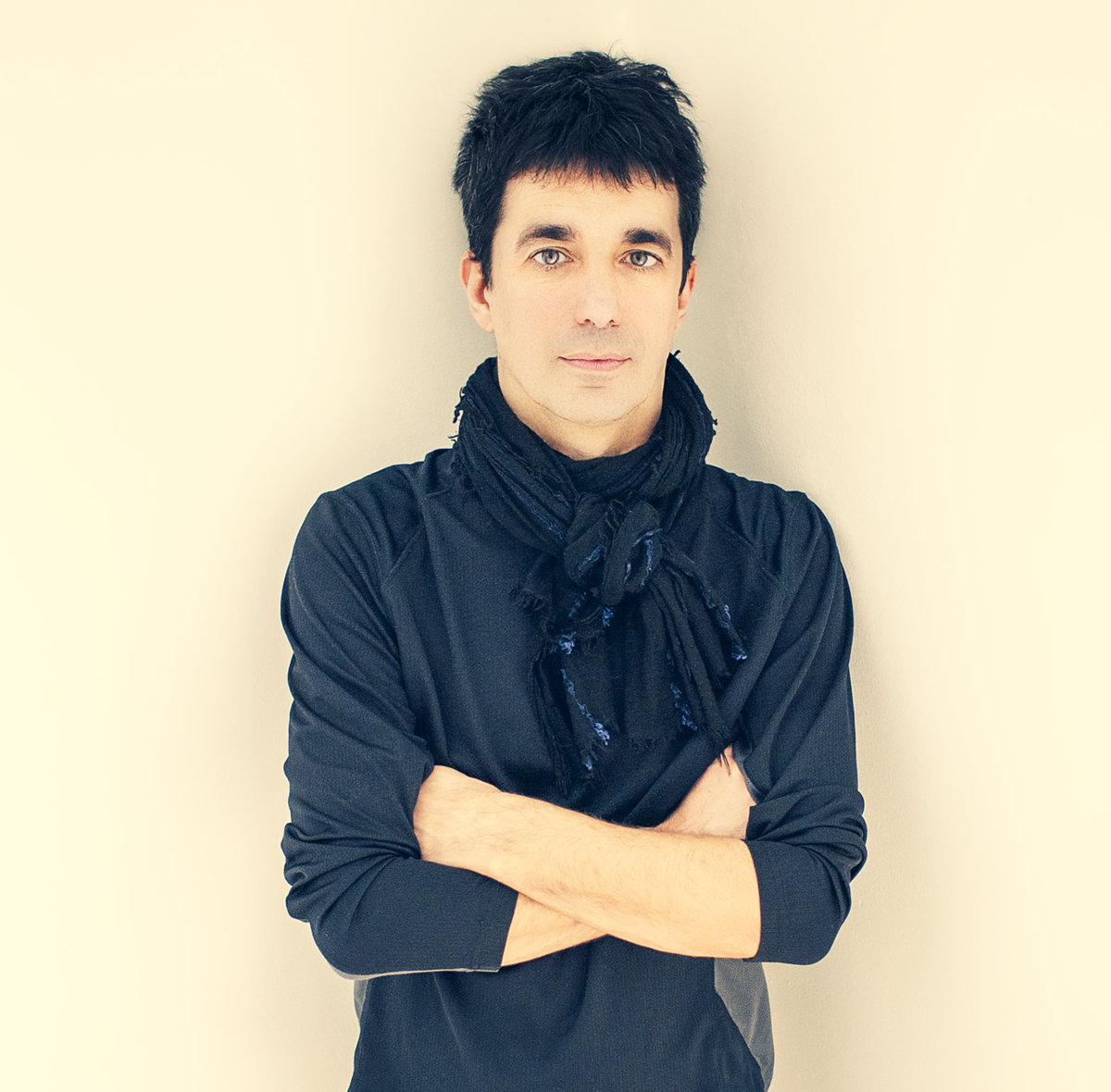
Name: Lorenzo De Finti
Occupation: Composer, pianist, producer, arranger
Nationality: Italian
Recent release: The Lorenzo De Finti Quartet’s new album Backlash of Uncertainty is out via Losen. Alongside Lorenzo De Finti on piano, it features Alberto Mandarini (trumpet, flugelhorn), Stefano Dall´Ora (bass), Marco Castiglioni (drums)
Shoutouts: It wouldn’t be fair to single out just one, because there are many. Let’s say this: when it comes to bringing jazz into the future, we really have two directions ahead of us.
The first is to keep searching, discovering, and presenting something new to the audience—both in terms of fresh projects and emerging voices.
The second is the road to extinction: the same names, the same projects, everywhere and all the time. In the end, the choice is clear—either we take risks, or the music slowly fades.
Recommendation for Milan, Italy: Visit the Chiesa di San Maurizio. It’s intimate, breathtaking, and full of quiet beauty—exactly the kind of space where music feels at home.
Topic I am passionate about but rarely get to talk about: Youth football. Following my kids’ journey has taught me so much about resilience, and the psychological side of young athletes. It’s surprisingly close to the artistic path as far as sacrifice, consistency and passion is concerned!
If you enjoyed this Lorenzo De Finti interview and would like to stay up to date with his music, visit him on Instagram, and bandcamp.
What were some of the musical experiences which planted a seed for your interest in jazz?
My father, a solid jazz pianist who played mostly for his own pleasure, introduced me early on to many of the giants—Oscar Peterson, Dizzy Gillespie, the early Miles Davis, Gerry Mulligan, and many more. At the time, though, I was drifting toward other sounds, especially rock.
Everything changed when I discovered Chick Corea, who hit me like a revelation. Then came Keith Jarrett and his poetry, Weather Report with their explosive energy—a completely new world opening up in front of me.
And then Esbjörn Svensson Trio, who showed me that jazz could be lyrical, raw, spacious, and electrifying all at once.
But the real awakening happened in the small clubs between Italy and Switzerland, where I could sit just a few meters from the musicians.
Feeling the physical vibration of the instruments—that stayed with me.
What does the term jazz mean today, would you say?
For me, jazz today is really a mindset. It’s the freedom to stay open, to let influences move through you without worrying about borders. It’s not about style as much as a way of listening and interacting.
Jazz still carries its history, of course, but its heart beats in the present. I can’t stand people assuming they know what is jazz and what isn’t: that’s the kind of attitude Miles Davis would have destroyed!
As of today, what materials, ideas, and technologies are particularly stimulating for you?
I’m very drawn to the meeting point between acoustic instruments and subtle electronics.
On my quartet’s latest album, we experimented with processed bowed bass in real time—sounds that feel organic but slightly mysterious.
I love technology when it expands the emotional palette, not when it dominates.
Where do most of your inspirations to create come from—internal or external impulses? Any developments you feel you need to respond to?
Most ideas begin internally, from emotional landscapes.
But I’m also sensitive to what’s happening around us—the instability in Europe, the fragility of our environment, the way the world feels both incredibly creative and incredibly uncertain. My album Backlash of Uncertainty is very much a response to that atmosphere.
I think most of artistic creations comes from a deep feeling about ourself wandering who we really are, what ‘s the sense of our lives, love, pain, struggles … this is my starting point, but naturally, as a consequence of a personal attitude towards life.
Tell me about the sounds, creative directions, and hotspots of your hometown. How do they influence your music?
Milan is a crossroads of arts—musicians, photographers, designers, dancers. That energy pushes you to stay awake creatively.
I often compose in a quiet studio near the Navigli or in the garden of an old convent where we filmed our “Backlash of Uncertainty” video. That mix of chaos and tranquility definitely shapes my music.
From Switzerland, I absorb clarity and spaciousness—almost a Nordic sensibility.
What role do electronic tools and instruments play in your creative process?
A small but important role. Electronics help me blur edges, create atmospheres that feel slightly suspended.
In “Occam’s Razor,” for example, there’s an electronic texture under the acoustic instruments that holds everything together.
I like electronics that disappear into the music, not ones that show off.
And, most important, it must be a live electronic processing, interplaying with the band.
Thanks to technological advances, collaboration has become easier. What recent collaborations were most fruitful for you?
Working with my quartet remains the core of everything—those are relationships built over years. I have been so lucky to have the chance to perform and record with some world class musicians, i.e. Eric Marienthal, Alex Acuna, Fabrizio Bosso, and many other.
Recently, playing as a soloist with two symphonic orchestras in the Czech Republic, alongside Rudy Linka, a Czech guitar legend, was a powerful encounter.
Technology helps us exchange ideas quickly, but the magic happens when we’re physically in the same room.
Jazz balances honoring roots and exploring the unknown. How does that work in your music?
I carry the roots with me—Chick Corea, Bill Evans, Jarrett, EST, Weather Report and many other—but I don’t want to recreate them.
On stage, I let hose influences guide my touch and phrasing. In the studio, I feel freer to take risks, bring in rock energy, electronics, or chamber music sensibilities.
I like to be influenced by the widest possible musical range, from Bach to the Beatles, from Be-Bop to Red Hot Chili Peppers. I love this kind of freeedom.
How much potential for something “new” is left in jazz? What could it look like?
There’s endless potential.
I don’t think the “new” will come from being more complicated, but from crossing disciplines—jazz meeting architecture, spatial audio, visual arts, new cultural voices. The most exciting things usually happen at the borders.
Many artists have life-changing musical experiences live. How about you?
Totally. Some of the strongest emotions I’ve felt have been on stage.
With my quartet, we’ve been fortunate to perform all across Europe and beyond—at major festivals like Bohemia Jazz Fest in Prague’s Old Town Square, in iconic clubs such as Ronnie Scott’s in London, and even in intimate rooms like the Jazz Cellar in Vilnius. Each setting brings a different kind of emotion; it’s never the same twice.
Being out there bringing my music to people who come from different cultures, with different habits and mindsets, and seeing it go straight to their hearts—that’s a unique feeling. I truly feel blessed to experience it.
How are your live performances and recording projects connected?
They feed each other constantly.
We recorded Backlash of Uncertainty right after a run of concerts where the pieces had already lived and stretched. And after we record an album, the material changes again on the road.
The music is never finished.
How do you feel improvisation has changed in jazz?
Improvisation today is less about showing what you can do and more about communicating something real.
People can hear technical perfection everywhere online—they want honesty, emotion, and storytelling. Improvisation is becoming a way to shape a shared moment, not a display.
What are the ideas behind your approach to improvisation?
I try to stay melodic, to let every phrase breathe naturally, almost like it’s sung. Space is important to me—sometimes silence says more than any phrase.
And above all, improvisation is collective. It’s not about one person speaking, but about four people listening.
Montreux wants to preserve its archives forever. Do you think everything should remain accessible, or is there beauty in letting moments fade?
I respect the work of preserving history—it’s a cultural treasure: as jazz producer at RSI Rete Due (Swiss national radio network) I produced many concerts broadcast and recording that will be there forever.
But I also believe some moments are meant to live only in memory. Not everything must be documented. The ephemeral nature of music is part of its beauty.