Published
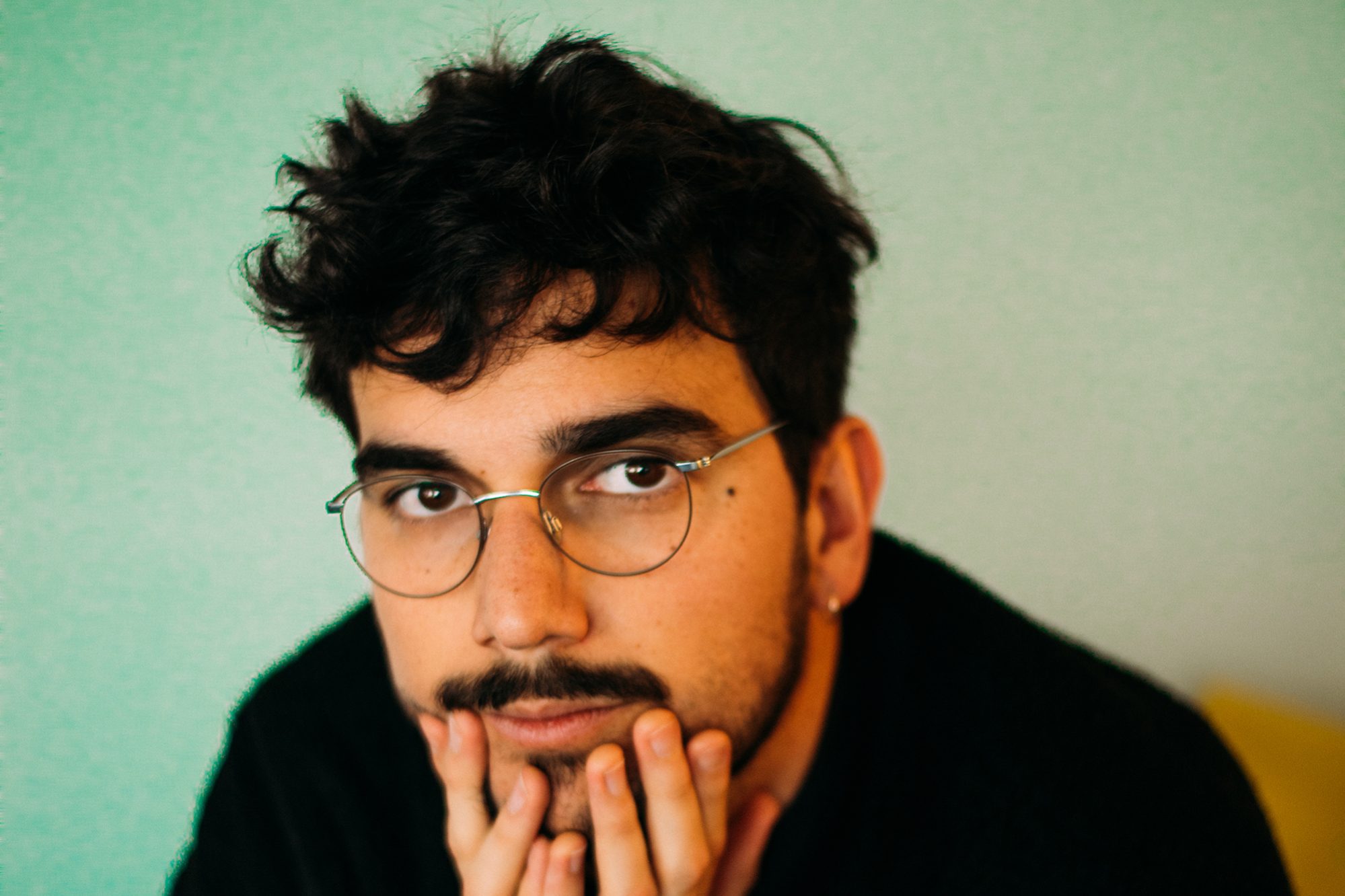
Name: Louis Matute
Nationality: Swiss
Occupation: Composer, improviser, guitarist
Current release: Louis Matute's new album Dolce Vita is out via naïve.
If you enjoyed this Louis Matute interview and would like to stay up to date with his music and upcoming live dates, visit his official homepage. He is also on Instagram, and Facebook.
What were some of the musical experiences which planted a seed for your interest in jazz?
I started jazz by discovering Django Reinhardt and being blown away by him. His sound, his life story and his own melodic and harmonic way of playing through the chords really got me.
Also I came from Flamenco and I was seeing some connections between these two genres. Some older musicians of a gipsy jazz band saw me play when I was a young cat and invited me to join the band.
So I basically played a lot of paid gigs with them and it was a cool and funny way of learning jazz.
What does the term jazz mean today, would you say?
To me jazz is one of the few possible sustainable future for music. Especially when it comes to live performances.
This summer I saw a lot of live concerts at the festivals, and the ones who always got the audience the most, are the ones where you have improvisation, interaction and surprises in the music. And the shows with less interaction are the ones that aren’t as interesting and giving than the others. I am still talking about live acts.
Jazz is a blessing for us musicians. I don’t know one single musician or one single music lover who isn’t fascinated by this music or interested in its history. It unites people around the world. Everywhere you go on this planet you will find people that share the same respect and love for this music and it helps you getting together and appreciating one another. It’s quiet amazing actually.
I don’t want to be stuck in this music though. I feel that jazz becomes even more powerful when it’s mixed with some other genres. In this sense, I feel that this music needs other genres to keep growing and inspire. It is why sometimes I don’t get people that are dying for jazz but are not interested in other stuff. I mean jazz was born out of blues and work songs, African music and then broadway songs and classical music right?
So it has to keep evolving. And we had some great leaders that showed us the way. Miles Davis and Quincy Jones are the two that come to mind immediately.
As of today, what kind of materials, ideas, and technologies are particularly stimulating for you?
I am really trying to get the best out of my city, here in Geneva. I think every city has a lot of good musicians that have the power to inspire you.
There are a few non-jazz musicians here that I admire and who play and produce other stuff, such as concrete music, repetitive, exotica, contemporary music, hip-hop, cinematic music, ambient, synth new wave stuff, postpunk, krautrock and other stuff like that. So for me it’s a gift and I am trying to produce music with those persons in order to mix the things I know and I do with their specific knowledge. It usually works out pretty well and we simply grow up naturally by doing those kind of collabs.
For example, I used to always record my albums with the same set up. Meaning, same pedal effects, same amp, same guitar. Kind of always the same gear. From last year onwards, I am now going on the studio never knowing which guitar and which amp I will use. I think I played like 20 different guitars on album records over the last year. And it’s SO amazing to realize that thanks to god I was being given the gift of being a good guitar player and composer and that I got to be able to play all these different beautiful instruments.
I am also listening a lot of music these times. I love it, got my vinyl records and my turntable and I'm spending a lot of money on buying some gems. But these days I am really into music recording, and if I could I would be recording 10 albums a year.
Where do most of your inspirations to create come from – rather from internal impulses or external ones? Which current social / political / ecological or other developments make you feel like you need to respond as an artist?
I live in the past. Because the present scares me and stresses me out.
I am not an artist who will write a song about Trump being the greatest fascist leader of our century. I feel like there is anger all around us and everybody is expressing it in a very direct and explicit way, which is good,
But I believe our role as artists is to express these conflicts in a different way, in a more poetic yet subversive way, with colours, melodies, harmonies, that speak to your body and not your mind.
Tell me a bit about the sounds & creative directions, artists & communities, as well as the colleagues & creative hotspots of your current hometown, please. How do they influence your music?
I live in Geneva in Switzerland. It’s a strange but very prolific city. We have a lot of different scenes and genres.
There is one place for example that inspires me quite a lot called Bongo Joe, which is a label and a vinyl shop. They have a curious selection of different genres and I like to go there and buy some vinyl LPs. I haven’t listened to a lot of jazz this past year. My focus was more on ambient, contemporary guitar works and basically all kind of popular music mixed with additional electronic textures that makes the tune sound like it’s a bit deviant.
I like also to dig into the history of bands and locations. For example in Geneva, we have a great history of artists fighting for their rights. There is a strong history of squats and protest. The music venue called AMR is a very interesting place for jazz.
I think people underestimate the value of local music. Jazz people always want to go to New York, Paris or other big cities, but I’ve never felt so curious and pumped than now working with different musicians from Geneva. There is so much that has been done in this city and you have to be interested in your local culture and show some respect for the people that showed us the way before us.
If you live in a place that has a musical history and culture, you have to be a part of the community that takes place in it, in order to make it evolve. And for that specific reason you cannot be only on your own, and make stuff alone pretending to make some great music and pretend that you can change the game on your own. You have to join the community.
If you want to change the game you have to know what is around you and respect it without getting blocked by it.
What role do electronic tools and instruments play for your creative process?
A very small one. I use synthesizers from time to time in my studio and record stuff on ableton, but I am not much of a producer nerd. I like to be in the studio with other people and have a deadline to put an end to a project.
As Brian Eno once said you have two elements that make a record shitty: no deadline and too much money. Sometimes you can get lost in electronics and by producing the music all alone.
With a studio session you pay for it so you have to get it done within the days you booked.
Thanks to technological advances, collaboration has become a lot easier. What have been some of the most fruitful collaborations for you recently and what approaches to and modes of collaboration currently seem best to you?
It's not as easy as you frame it. You have to explain what you mean by collaboration.
If you mean collaborating with other artists, it’s not as simple. Because everyone has a team working behind the project and a very tight schedule, so even if the artist wants to do something with another artist, the team (management, label, booker) will eventually stop it if it’s not interesting for the streams or doesn’t fit with the schedule.
Anyway I managed to meet Joyce a few years ago because a producer wanted to do something with her and my band. So we toured together and then I asked her if she wanted to be on my next album and she liked the tune so she said yes.
Dora Morelenbaum - I know her through friends in Rio. And Gabi Hartmann is a close friend of mine.
Jazz has always had an interesting relationship between honouring its roots and exploring the unknown. What does the balance between these two poles look like in your music?
My answer to that question would be if you really are a music digger then you will have some respect for the history and for the masters that came before you.
If you have something to say and you manage to gather all of what you need to express yourself in the best way, then it will be inevitably original and then you will be exploring the unknown
How much potential for something “new” is there still in jazz? What could this “new” look like?
Now more than ever. If artists manage to keep being creative it's going to be okay.
A lot of us suffer because of social networks. Jazz will always be redefining itself if it comes to mixing genres and keeping improvisation somewhere in the center of the music.
And improvisation doesn't just mean playing bebop lines on chord changes, it’s also matching your sound with others, locking in your time together, discussing with one another with space, time, sound, harmonies, melodies. It’s infinite.
For many artists, life-changing musical experiences take place live. How do you see that yourself?
It all depends on the moment you’re going through. One thing I know for sure, is that I feel really lucky and I’m really grateful to have the opportunities that we have with my band. Playing live in front of a packed audience, listening carefully to every notes that come out of your instrument is a blessing.
Also some spots are really charged with history. For example, we played last year opening for Jazz à Vienne on the main stage, and knowing that many music legends have played there gives you a special mindset. Also it is true that magic happens on stage, because there is always a special energy, a feeling and sensation that everybody is connected to this special moment.
You cannot not be at 100%. Everybody on stage is always trying to give their best, no matter how you feel, if you're tired, sad, in a weird place or not confident. You always give your best. Some times it’s not working the way you would have hoped for, but knowing that we try to make the best music possible anytime is a beautiful thing. And it is in these moments that you can create something special.
But on the opposite, this last month I was more into making records and finding the perfect combination between musicians, instruments, producers, studios, to create a music that will be truly original and authentic and will sound like no other records. This a part of the job I really like.
How, would you say are your live performances and your recording projects connected at the moment? How do they mutually influence and feed off each other?
It’s really two different jobs. You have to be aware of that.
On stage you will NEVER have the sound you spent hours trying to find in the studio. So it must be about something else. Live performances are about energy and giving. You can have a beautiful record but when you try to play it live it’s a total disaster. So then you will have to change the arrangements a bit to make it work live.
Luckily for us, the last two records we made (our folklore and small variations from the previous day) worked well both on the records and in live performances without changing a lot of things. We’ll see for this one. I don’t know yet.
Improvisation is obviously an essential element of jazz, but I would assume that just like composition, it is transforming. How do you feel has the role of improvisation changed in jazz?
There is less room for improvisation. Music now needs to be in a certain format, short and playlistable, focusing on strong melodies, on strong identity. So you could think these long solos you would hear on the jazz records you love are vanishing step by step.
But luckily for us, some radios or record labels, or diggers and DJs still like that “old way” and it’s important in order to highlight differences between artists and what they have to say.
Are there approaches, artists, festivals, labels, spaces or anyone/-thing else out there who you feel deserve a shout out for taking jazz into the future?
Oh yes. Chicago-based label International Anthem is a great one, really fighting for putting out fresh, non-conventional jazz. Jeff Parker is still one of my favourite musicians and producers out there.
I am also a huge fan of ECM. They still have a clear direction of how they want their records to sound like.
And this is something I really miss in the jazz records now. You don’t want to put all your attention to the playing and the compositions, but always remember that the production plays a huge part of the song and that is has the power to change the direction of an album.
The Montreux Festival intends to preserve its archive of recordings for future generations. Do you personally feels it's important that everything should remain available forever - or is there something to be said for letting beautiful moments pass and linger in the memories of those that experienced them?
No. We have to archive history, the more the better.
The experience will be different anyway compared to you being at the concert. It won’t affect the quality of your experience knowing that there will be a record out from the concert you saw that you liked so much.
The listener will experience it differently, and what you’ve witnessed in the crowd will remain unique.