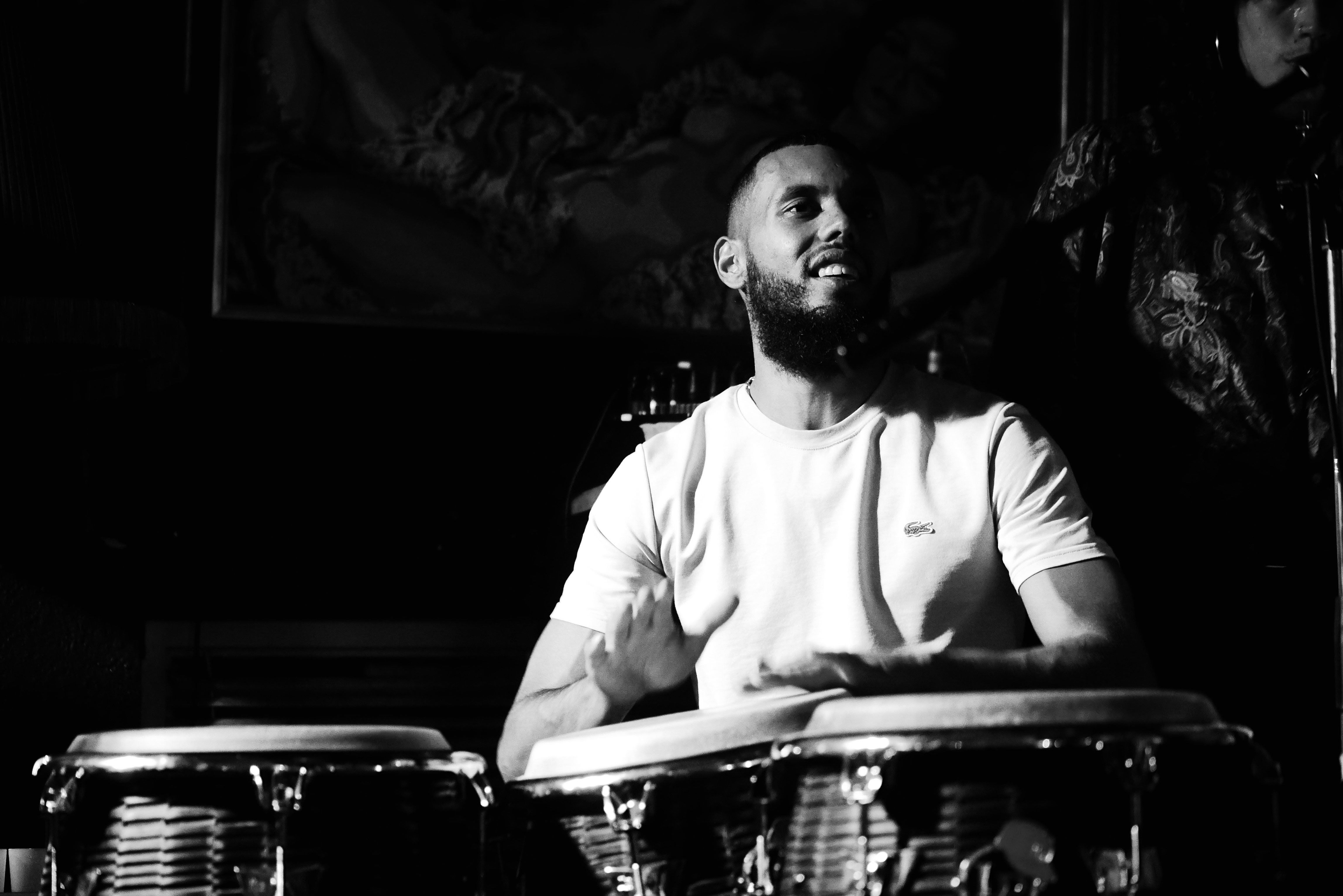
Published
Name: Luc Moindranze
Nationality: Réunion
Occupation: Singer, percussionist, composer
Current Release: Luc Moindranze's new album Mon Balo is out via Compagnie 4000.
Recommendations for Saint-Benoît, Réunion Island: A place not to be missed is Vié Kaz in Bras-Fusil, where Granmoun Lélé and his family grew up.
Pure Drumming Recordings Recommendations: Granmoun Lélé – Zelvoula; Saroyé – In Lèr; An Pagay – Somin Tégor
If you enjoyed this Luc Moindranze interview and would like to know more about his music, visit him on Instagram, and facebook.
The Réunion percussionist was deeply inspired by the Island's sacred spaces and the deep, earthly power of his first percussive instrument, the roulèr.
It seems as though most aspiring artists are drawn to the drums and percussion for one of two reasons: Creating sound/noise and creating rhythm. What captivated you?
What first captivated me about percussion were the polyrhythms, the discovery of a particular sound, and the energy that emerges when playing.
When I listen to music, I see shapes, objects and colours. Others experience emotions. Everything around drums, on the other hand, is based on touch, vibration, and movement. Does this mean that your own perception as a listener is also more connected to touch, vibration, and movement? What happens in your body when you're listening?
For me, vibration, history, and touch are deeply connected to the drum.
When I hear it or see it, my body tenses up and urges me to explore further.
What was your first drum set like and what are you using today? What, to you personally, are factors in terms of build and design that you appreciate in drums and percussion instruments?
My very first percussion instrument was a traditional instrument from Réunion: the roulèr.
What fascinated me about this percussion instrument are the materials as it’s made of wood, iron and strings …
Late Rush-drummer Neil Peart said: “The equipment is not an influence. It doesn't affect the way I play. It's an expression of the way I play.” What's your take on that?
I agree with Neil Peart that an instrument is part of language.
For me, the instrument itself is an extension of how I express myself — it’s a language in its own right.
The drums and percussive instruments are an integral part of many cultures, and traditions. Which of these do you draw from in your playing – and why?
In my playing and writing, I am often inspired by music performed in sacred spaces (Malgache and Malbar services) in Réunion.
Since childhood, I grew up close to these practices. The emotions I felt during those moments remain unique, which is why they inspire me both directly and indirectly.
What were some of the main challenges in your development as a drummer / percussionist? Which practices, exercises, or experiences were most helpful in reaching your goals?
The practices that helped me grow are patience, listening, sensitivity, sharing, and the people I’ve met along the way.
How would you describe the physical sensation of playing the drums? [Where do you feel the resonances/pulse/groove, what are emotional sensations, is there a sense of release or tension etc …]
The resonance, rhythm, and groove move through my whole body. They bring excitement and joy, sometimes tension or stress, but always with a positive outcome.
What is the relationship between harmony, rhythm and melody? How do non-percussion instruments contribute to the overall rhythmic texture of a piece?
They all belong together. If I had to name one connecting force, I would say memory.
And yes, other instruments contribute to the overall rhythmic texture and each one adds its own tone and colour.
Do you feel that honing your compositional / songwriting skills has an effect on your drumming skills?
The roulèr has strengthened my skills in both composition and writing.
I've long been intrigued by bands or ensembles where the drummer is the leader and/or main composer. In as far as it is possible to generalise, what do you think changes in terms of the music or performance in these situations?
Interpretation: the music, the groove.
The connection between the drummer and the leader or main composer becomes a special kind of synchronization.
How are you making use of the timbral and textural potentials/possibilities of your drums and percussion instruments when making music?
With the roulèr, I tighten or loosen the ropes to adjust the skin, which helps me find my place in the music.
How has technology, such as drum machines and sequencers, impacted the way rhythm is created and perceived? Has it been a concrete influence on your own approach?
Drum machines and sequencers haven’t influenced my approach. I remain someone who is constantly searching and discovering. I use my knowledge to develop a more human and oral approach to music.
Still, I recognize that these tools have expanded the perception and creation of rhythm, helping many musicians gain a broader vision of music.
Physical strain is a particularly serious issue for many drummers. How does it manifest itself, how do you deal with it and in how far does it affect your creativity?
Physical fatigue doesn’t affect my creativity, but it does affect my body.
To manage it, I relax and release tension.
Many recording engineers have remarked that the drums can be particularly hard to capture. What makes drums sound great on record and in a live setting?
The sound of the instrument in concert or in the studio depends on dialogue with sound engineers, as well as on the instrument’s history, resonance, and the importance it carries in each project.
Drums and percussion are remarkably often used for physical therapy / healing. What, from your point of view, makes them particularly suitable tools for this?
What makes the instrument unique are its vibrations, sounds, melody, relaxation — and even silence.