

Name: Luca Longobardi
Nationality: Italian
Occupation: Composer, producer
Current release: Luca Longobardi's Tempo Fugit EP is out now.
If you enjoyed this Luca Longobardi interview and would like to know more about his music, visit him on Instagram, Soundcloud, Facebook, and bandcamp.
For a deeper dive, read our earlier Luco Langobardi interview.
You had worked for ballet and installations prior to the van Gogh project. What changes for you as a composer, when you write for an art form that does not unfold in time the way these others do?
Every art form that involves music, whether as a support or as a primary component, requires the integration of multiple elements. It needs to absorb and reflect something that goes beyond purely personal input, something that can converge into a broader, shared result.
For me, immersive work represents a distinct experience compared to everything I had done before, for one main reason: I am not only the composer of the music, but also a co-author of the show itself. This means that the work is conceived collaboratively with the director from the very beginning, and musical ideas emerge already in the creation phase.
In the case of Van Gogh – La nuit étoilée, this process was further enriched by the collaboration with three directors, Gianfranco Iannuzzi, Renato Gatto and Massimiliano Siccardi. This meant that the range of inputs was particularly wide, and there was always a process of mediation in receiving and integrating them into a coherent whole.
One of the defining aspects of this deep integration between music and image is that the music actually comes first. The soundtrack is the first element to be delivered, and the visual animations are then developed on top of it. There is an ongoing exchange of revisions to ensure coherence, but fundamentally the music shapes the timing of the animations and the emotional trajectory of the images, sometimes through alignment, sometimes through contrast.
In this context, music is not an accompaniment, it is a structural element. It becomes symbiotic with the entire medium.
How do you see the relationship between visual art forms like painting or architecture and music?
These relationships are fundamentally dialectical, and they often become a source of inspiration.
I have frequently worked with painters in performative contexts, particularly in action painting. In those situations, painting is not only a visual form of communication, but also a gesture. Perhaps because of my background working with dance, I found myself observing the painter’s gestures and responding to them, trying to understand when a more energetic musical support was needed, and when, instead, a more subtle, emotional accompaniment could sustain the care of detail.
Architecture, on the other hand, has always been my primary source of inspiration. I believe that the silent communication of great architectural works, the precise balance between voids and solids, between light and shadow, between tension and release, represents one of the highest forms of narrative.
These are projects that become matter, that are tangible, observable, and that embody a profound sense of harmony and completeness of form.
You've mentioned that immersive music presents its own challenges. In how far is immersive music for a project like this one different from, say, a movie soundtrack?
The concept of a soundtrack for an immersive project is fundamentally different from that of cinema.
In film, you watch actors, there is dialogue, and a whole layer of sound design that supports the narrative. In the immersive works I have been involved in, especially those created with Massimiliano Siccardi, there is no use of spoken language. Everything is experienced subjectively, almost as a form of identification with an implicit protagonist.
In the case of Van Gogh, it feels like a first-person narrative. A first-person narrative without words, without a spoken text or acting, naturally requires the music to carry much more weight. It is not only an emotional commentary, it becomes the emotional essence of the story itself.
Perhaps one point of connection with cinema is that both approaches can combine pre-existing music with original compositions. However, in immersive work there is a particular sensitivity in how music is used, because it ultimately has to communicate more. Another challenge is that immersive shows often travel across different countries, which makes the use of music with lyrics in a specific language more complex and context dependent.
I would not say it is more or less complex than film scoring, but it is certainly different. And in my case, I see that difference as a strength, because it allows for a very specific and dedicated compositional approach to this kind of medium.
John Williams once said about working for film, that he could not be visual with his music. How do you see that for yourself and your contribution for the van Gogh shows?
For me, it is not about being “visual” with music, but about evoking emotional
suggestions. It is about activating a kind of collective memory, about allowing people to imagine places, and about creating something that can sustain the rhythm of the animation, sometimes in alignment, sometimes in contrast.
Above all, it is about building a sonic space in which people can momentarily leave their everyday reality behind and, for the duration of the immersive experience, feel completely held by the narrative. That narrative is almost always grounded in truth.
In most of the projects I have worked on, there has been a strong intention to portray the human being behind the artist, rather than simply constructing a poetic or mythologized image of them. This naturally involves a form of introspection, an attempt to understand what the artist was trying to express at a deeper level.
And it is precisely this emotional and human dimension that, in my view, music must bring forward and intensify.
There is a piece on the EP called “Mozart Recomposed.” Intriguingly, I am just in the middle of writing a book about the relationship between Mark Rothko's paintings and music and he absolutely adored Mozart. What of Mozart's music do you see in van Gogh's canvases? How much of your own music do you see in them?
In this particular case, there was no strict or conceptual correspondence between Mozart’s music and Van Gogh. Rather, what I imagined was taking the theme from Mozart’s Piano Concerto No. 21 in C major, expanding and rearranging it in a way that could somehow resonate with the atmosphere of The Starry Night.
It began almost as a kind of sonic vision. While we were discussing the scene, I had the idea of creating a sort of cradle, a space of suspension and intimacy.
The original Mozart theme, with its inherent softness and roundness, felt perfectly suited to this. The way the melody rises into the upper register, the precision and clarity of its movement, almost suggested the drawing of small constellations.
So there was no philological or analytical intent in linking Mozart to Van Gogh. It was more an intuitive correspondence, a visual and emotional resonance that I perceived between the imagery and that particular musical material.
I'm curious about the cover of the La nuit étoilée EP which is not something by van Gogh – how does this image relate to the music, how does it relate to the immersive experience?
I personally designed the cover, which for me was a kind of pixel-sorted translation of The Starry Night. It is a very free interpretation.
I took the color patterns from a small portion of the original painting and altered their texture using a technique I often apply when working with visual media myself.
What happens to the music, do you feel, outside the exhibit?
That remains, to some extent, an open question. However, something quite interesting has happened with this particular album.
There is a piece called “Elegie,” which is used in the moment of the narrative when Van Gogh moves toward the place where he is treated, and ultimately where his life comes to an end.
The idea was to evoke something that could recall Bach’s first Prelude, later associated with Gounod’s Ave Maria, as we know. There is something in the 4/4 structure and in the harmonic flow that subtly echoes that tradition.
In recent months, I have noticed that people on TikTok often use this piece to accompany reflections on mental health, to dedicate a spiritual thought to someone, or simply to frame moments of solitude in nature.
What I find particularly striking is how the deeper emotional intention behind the piece, originally composed for a very specific moment in Van Gogh’s narrative, has found resonance in the lives of complete strangers. It has, in a way, become the soundtrack to personal and intimate moments that mirror the same emotional space.
It has sometimes been said that Rothko painted the nothing behind the colours and director Michelangelo Antonioni filming the nothing – a sort of essence behind the forms they were showing. Is it imaginable that van Gogh was doing the same?
I am always quite cautious when expressing opinions about visual art, because while personal perception is important, there are people who dedicate their entire lives to research and scholarship in this field.
What I feel I can say is that I am not sure Van Gogh was trying to represent “nothingness” in the way that has been suggested for Rothko or Antonioni. It may be, rather, that what we perceive as a kind of void was actually the driving force behind his work.
From what I have read, and from my own experience working on two different projects about Van Gogh, I have the sense that nature deeply filled him, that it provided him with a constant flow of input. The same applies to people. His observation was often immediate, almost fleeting, but when he painted, later on, what emerged was not a direct representation of nature, but his own internal reflection on it.
The way he paints landscapes, light, or human figures suggests to me a search for fullness, something dense and emotionally charged behind the visible image. It is possible that this insistence on fullness was, in some way, a response to an inner void, something he may have experienced in moments of solitude, fragility, or psychological instability.
So rather than representing nothingness, I would say that his work is an attempt to express a form of fullness, perhaps as a reaction to that very sense of emptiness he might have felt at times.

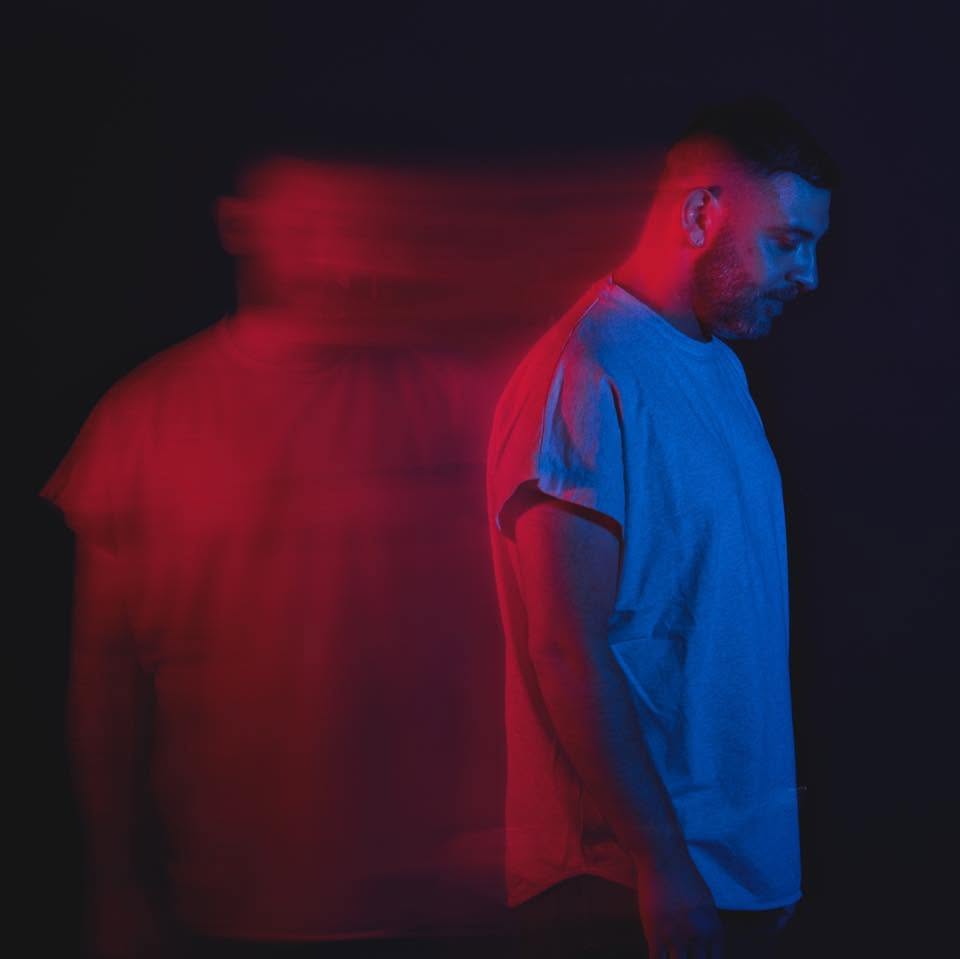 Luca Longobardi Interview Image by Alessandro Galatoli
“The way van Gogh paints, suggests to me a search for fullness, something dense and emotionally charged behind the visible image.“
Video
