Published
Name: Lucid Lucia
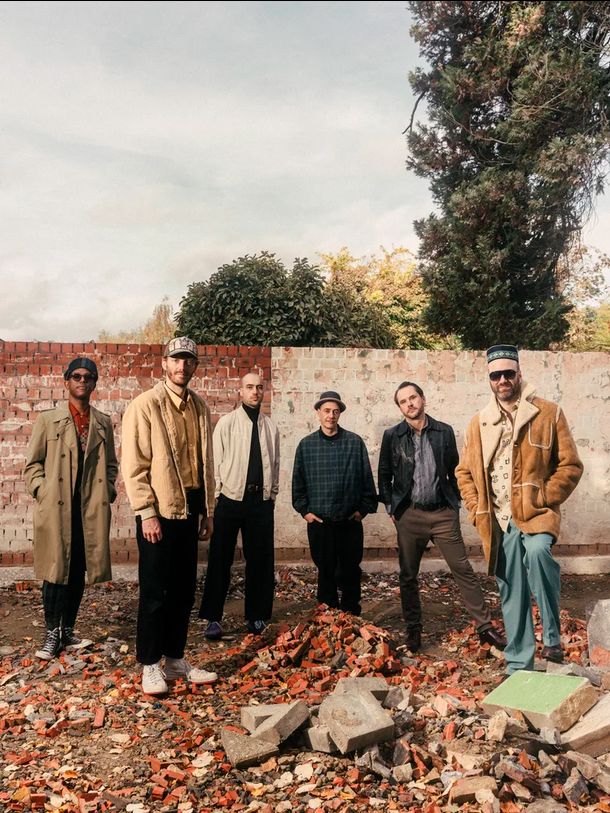
Members: Vincent Brijs (saxophones), Seba Colson (trumpet), DJ Grazzhoppa (turntables/samples), Dries Laheye (bass), Jan Willems (keys), James Williams (drums/percussion)
Interviewee: Vincent Brijs
Nationality: Belgian
Current release: Lucid Lucia's only album so far is their debut Ever-changing Light, released on sdban ultra in 2022. The band have recently changed their line-up and will return with their sophomore full-length in 2026.
If you enjoyed this Lucid Lucia interview and would like to stay up to date with the band and their music, visit their official homepage. They are also on Instagram, and bandcamp.
What were some of the musical experiences which planted a seed for your interest in jazz?
My elder brother, Michaël Brijs — who’s also a musician — came home with the albums A Love Supreme by John Coltrane and East Broadway Rundown by Sonny Rollins when I was about 14.
I was completely blown away when I heard them.
Around that time, I also saw Belgian percussionist Chris Joris at Jazz Café Hopper in Antwerp, and John Zorn at the Middelheim Jazz Festival. I was already dabbling on the saxophone, and when I got home from those concerts I tried to imitate what I had seen — randomly pressing keys and screaming through the horn, convinced that was what Zorn was doing.
At the same time, I was also DJ-ing. My friends and I were regulars at Fried Chicken Records in Antwerp, a shop specialized in hip hop but also selling jungle, trip hop, funk, and jazz. That place opened up a whole new world for me — discovering incredible music and meeting likeminded souls.
What does the term jazz mean today, would you say?
Obviously, it’s a collective name for the music styles of the last century rooted in African-American culture — swing, bebop, hard bop, modern jazz, crooners, cubop, Latin jazz, funk jazz, free jazz, fusion …
Today, I’d say jazz feels more like an approach than a single style. It’s made not only by jazz musicians, but also by players from other backgrounds — skilled improvisers who bring in all kinds of styles, influences, and instruments. As long as collective interaction and improvisation are at the core, it’s jazz.
To me, it’s about feeling free, while at the same time being deeply considerate of your fellow musicians.
Where do most of your inspirations to create come from – rather from internal impulses or external ones? Which current social / political / ecological or other developments make you feel like you need to respond as an artist?
The times we live in — the challenges, hopes, and sorrows — shape the dynamics of the music scene and naturally influence how we make music.
For me, the artist’s role is to reflect on these difficult times, to speak out against the toxicity of capitalism, greed, racism, and oppression. Without that, music can feel meaningless.
Our responsibility is to carry a hopeful message and respond to the world around us.
Tell me a bit about the sounds & creative directions, artists & communities, as well as the colleagues & creative hotspots of your current hometown, please. How do they influence your music?
I have a deep love for Antwerp, my hometown.
It’s a small city with a vivid and eclectic underground music scene, where connecting with other artists is easy — it almost feels like one big family, though sometimes that can feel a bit limiting. Certain venues, record stores, and cafés have shaped me profoundly. De Muze Jazz Café, where I played my first notes at 18, remains a cornerstone of the local jazz scene.
The cultural centre of Berchem has also been crucial. My band, BRZZVLL, started there in 2008 as the house band for the monthly concept Nuff Said, organized by Mourad Bekkour. Nuff Said blends music, spoken word, literature, and comedy, aiming to create a more diverse cultural scene in Antwerp.
We shared the stage with incredible international artists like The Last Poets, Ursula Rucker, Anthony Joseph, Zap Mama, Defunkt, Brother Ali, Maimouna Youssef, and Amir Sulaiman — collaborations that inspired two BRZZVLL albums: one with Anthony Joseph (Engines) …
... and one with Amir Sulaiman (First Let’s Dance).
After playing with Joe Bowie from Defunkt at Nuff Said, he invited me to join them on tour, which I did many times. The concept is still going strong today.
Other key spots that shaped me include Wally’s Groove World and Tune Up record stores, Rataplan Theatre, Hopper Jazz Café, Café Des Arts, Radio Centraal, Scheld’apen (now Het Bos), We Are Various Radio, Kaaiman, and the Antwerp Conservatory. These communities and venues have been — and continue to be — a huge part of my evolution as a musician.
What role do electronic tools and instruments play for your creative process?
For me, music is all about sound, and sounds are like colors — the wider the spectrum, the greater the possibilities. Electronic tools and instruments open up an almost limitless palette, so of course they play a big role in my work.
At the same time, I strongly believe that the expressiveness of your improvisation and the strength of your compositions should stand on their own, even without any electronic tools. They should be compelling by themselves.
Thanks to technological advances, collaboration has become a lot easier. What have been some of the most fruitful collaborations for you recently and what approaches to and modes of collaboration currently seem best to you?
It’s funny — last year, trumpet player Seba Colson and I connected through a Facebook message with a few Ethiopian jazz musicians from Addis Ababa, the Jazzbyssinia Ethio-jazz Band. They sent an open message saying they were coming to Belgium and looking for musicians to collaborate with.
We responded, organized some gigs here, and later they invited us back to Addis. There, we performed at a jazz festival at the Belgian Embassy and even played a concert with none other than Mulatu Astatke at the African Jazz Village Club.
How much potential for something “new” is there still in jazz? What could this “new” look like?
I think the “new” in jazz always evolves alongside technological progress.
Whenever new instruments, tools, or ways of making music appear — whether that’s software, AI, or new electronic devices — there will always be musicians eager to push their boundaries. That’s how fresh sounds and musical approaches emerge, often in ways we’ve never heard before.
For many artists, life-changing musical experiences take place live. How do you see that yourself?
Absolutely. Jazz is mostly instant-composed music, so both musicians and audiences feed off what happens in the moment — the interaction with your fellow players during a live concert. That’s part of the beauty of being a jazz musician.
For me, some of the most inspiring moments have happened on stage, simply by playing with others and discovering something unexpected in the moment. You don’t necessarily rely on producing tracks or making albums; you can build a career simply by being a strong player and finding your way in the scene.
How, would you say are your live performances and your recording projects connected at the moment? How do they mutually influence and feed off each other?
With our band, Lucid Lucia (formerly BRZZVLL), we often play and record new compositions during gigs. Afterwards, we listen back and rearrange where needed.
This process naturally influences how we record and arrange tracks when working on a new album. Once the production is finished, the album versions often serve as a blueprint for our live performances, though we’ll always integrate added or altered sounds.
For me, it’s an ongoing dialogue — the recordings inform the live shows, and the live energy constantly feeds back into the studio work. It’s always a work in progress.
What, would you say, are the key ideas behind your approach to improvisation?
I have a mantra I often use before I start playing: “Listen, breathe, play what you’d sing, start where you’ve ended, leave space, play rhythmically, build on your ideas.”
For me, it’s a way to stay grounded while keeping the music alive and spontaneous — a reminder to connect with both the sound and the moment.
The Montreux Festival intends to preserve its archive of recordings for future generations. Do you personally feels it's important that everything should remain available forever - or is there something to be said for letting beautiful moments pass and linger in the memories of those that experienced them?
I think it’s really important to archive or record good music. For me, recording your own gigs is one of the biggest favors you can do as an artist — it’s an incredible way to learn and grow. The recording doesn’t have to be perfect; it’s more about capturing the moment so you can listen back, reflect, and improve next time.
At the same time, some beautiful moments are meant to live in memory, lingering with those who experienced them.
And yet, having a multitrack recording of a great concert means that maybe one day you can turn it into a live album, keeping that magic alive in a new form.