Published
Name: Ludwig Berger
Occupation: Producer, composer, sound artist
Nationality: Swiss
Current release: Ludwig Berger's Species Loneliness and Garden of Ediacara are both out via -OUS. Order via Ludwig's bandcamp store.
Recommendations: Sounds Wild and Broken by David George Haskell; Deep Listening by Pauline Oliveros; Bodies of Water by Astrida Neimanis
[Read our Pauline Oliveros interview]
If you enjoyed this Ludwig Berger interview and would like to stay up to date with his music, visit his official homepage. He is also on Instagram.
Together with graphic designer Nicolas Turki, Ludwig Berger also runs the Vertical Music label. For the insights of some of the artists on the roster, we recommend the following interviews:
[Read our Abby Lee Tee interview]
[Read our Katharina Schmidt interview]
[Read our France Jobin interview]
[Read our Daniel Hignell aka Distant Animals interview]
Do you think that some of your earliest musical experiences planted a seed for your interest in sound?
Recently, I was listening to a cassette tape my mother recorded of my voice when I was little. There were always birds singing in the background, mainly wrens, and robins. Their songs must have been my first musical experiences and surely planted a seed.
Some of the tape recordings were used in ‘1959,’ my first larger scale piece that I composed as a student, dedicated to the memory of my mother.
Do you experience strong emotional responses towards certain sounds? If so, what kind of sounds are these and do you have an explanation about the reasons for these responses?
Again, a bird: I just love the songs of blackbirds. They are so simple, sweet, funny, melancholic, and filled with memories.
Are there places, spaces, or everyday devices which intrigue you by the way they sound? Which are these?
I love very quiet water sounds on the border of the audible, like the gentle trickling and bubbling of tiny streams, and other microscopic sounds.
I often find that the smaller the scale, the richer the sonic expression.
For some, music equals sound, to others they are two distinct things. What is the relation between music and sound for you? Are there rules to working with sound, similar to working with harmony, for example?
It’s entangled for me. I treat music as a landscape, and landscape as music.
What were your very first active steps in terms of working with sound and how would you rate the gains made through experience?
Recording cassettes of silly sounds with my brother (at 6 years old), inventing songs on my Yamaha keyboard (at 10 years old), making beats with HipHop eJay 2 (at 14 years old).
I would rate the gains from all of that as 10/10.
For your own creativity, what were some of the most important things you learned from teachers/tutorials, other sound artists, or personal experience?
Practice attention instead of intention (andrea caretto / raffaella spagna)
My inner and imaginary sounds are part of the soundscape (Pauline Oliveros)
Surround myself with likeminded artists (something I learned very late)
Make the music I want to actually listen to
Commit and bounce
How and for what reasons has your music set-up evolved over the years and what are currently some of the most important pieces of gear and software for you?
I never had much gear. I only keep what I currently use and sell what I don’t use. Right now, I just have a laptop, controllers, and lots of field recording equipment.
For software, I tend to stick to what I know well. Currently, my hydrophones are very important to me, and I love using my KM184 cardioid mics in the field, which I have used for 13 years.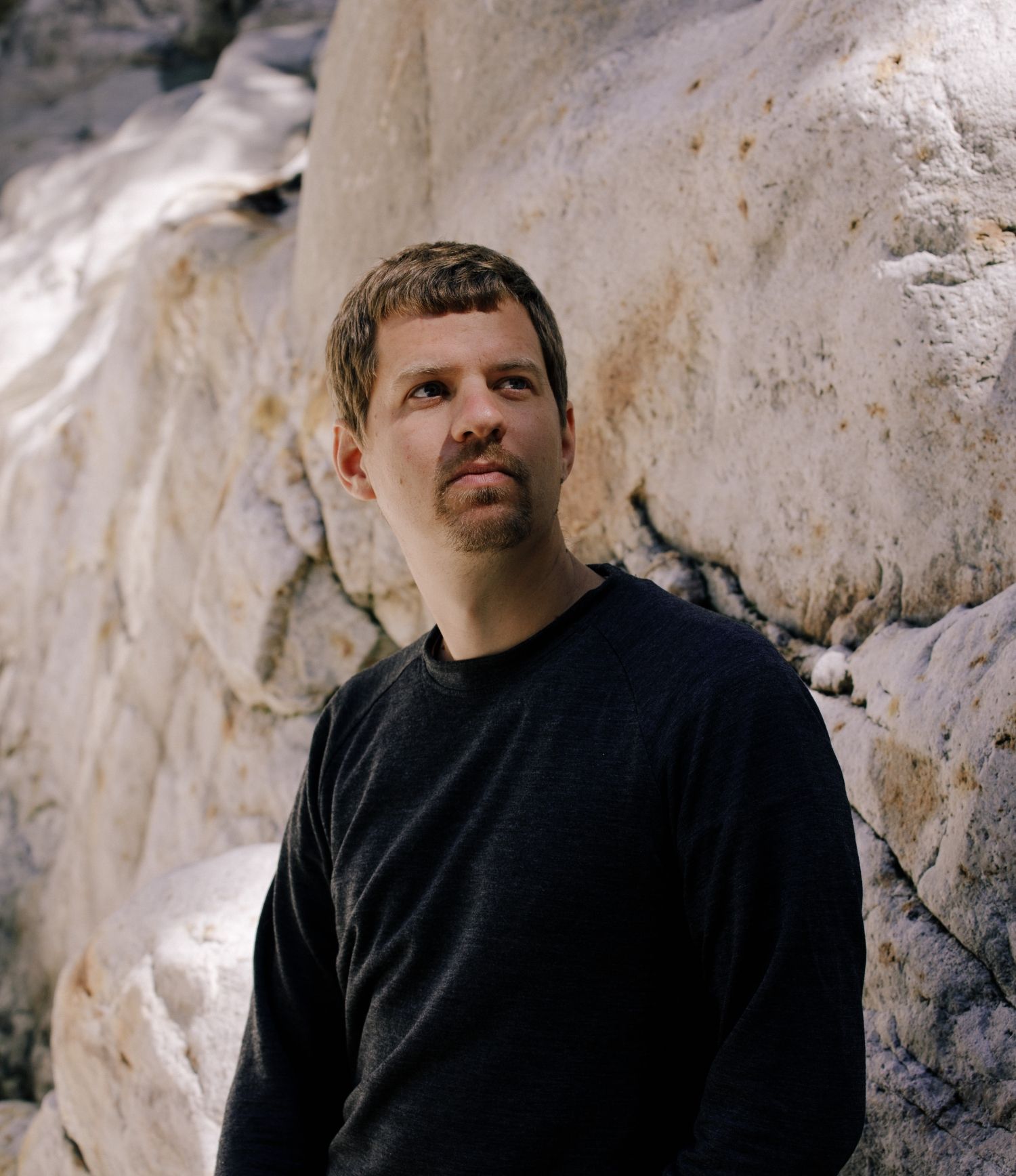
Ludwig Berger Interview Image (c) the artist
Already as a little kid, I was drawn to all aspects of electronic/electric music but I've never quite been able to put a finger on why this is. What's your own relationship to electronic sounds, rhythms, productions like – what, if any, are fundamental differences with “acoustic“ music and tools?
In electronic sounds, I am drawn to what sounds almost like acoustic instruments, natural processes, or beings. Conversely, I am interested when acoustic things sound “electronic.” I enjoy being confused about what’s organic or synthetic, human or non-human, intentional or not.
For example, some years ago I made a recording of a tree that sounds more like an animal or a musical instrument. And I recorded the photosynthesis of underwater plants that really sounds like techno.
Late producer SOPHIE said: “You have the possibility with electronic music to generate any texture, and any sound. So why would any musician want to limit themselves?” What's your take on that and the relevance of limitations in your set-up and process?
I like to limit myself with the instruments I use, for example for Garden of Ediacara I limited myself mostly to the use of 3 plugins. That helps me to dive deeper and find unusual solutions. I find them often more interesting.
Could you describe your creative process on the basis of one of your sounds, pieces, or live performances that's particularly dear to you, please?
For the intro track of my album Garden of Ediacara, I used a field recording from a sand beach near Belfast to stimulate a physical modelling synthesizer to produce the main sound. For the bass, I slowed down a cricket call, which sounds very round and full and always varies a bit.
Then, I used a voice synthesizer to express a kind of mourning song, which I improvised on my laptop keyboard. On top, I looped some textures of my terrible attempts to play my Shakuhachi Flute that I bought from an old master in Japan. So every element in the song has a little personal memory for me.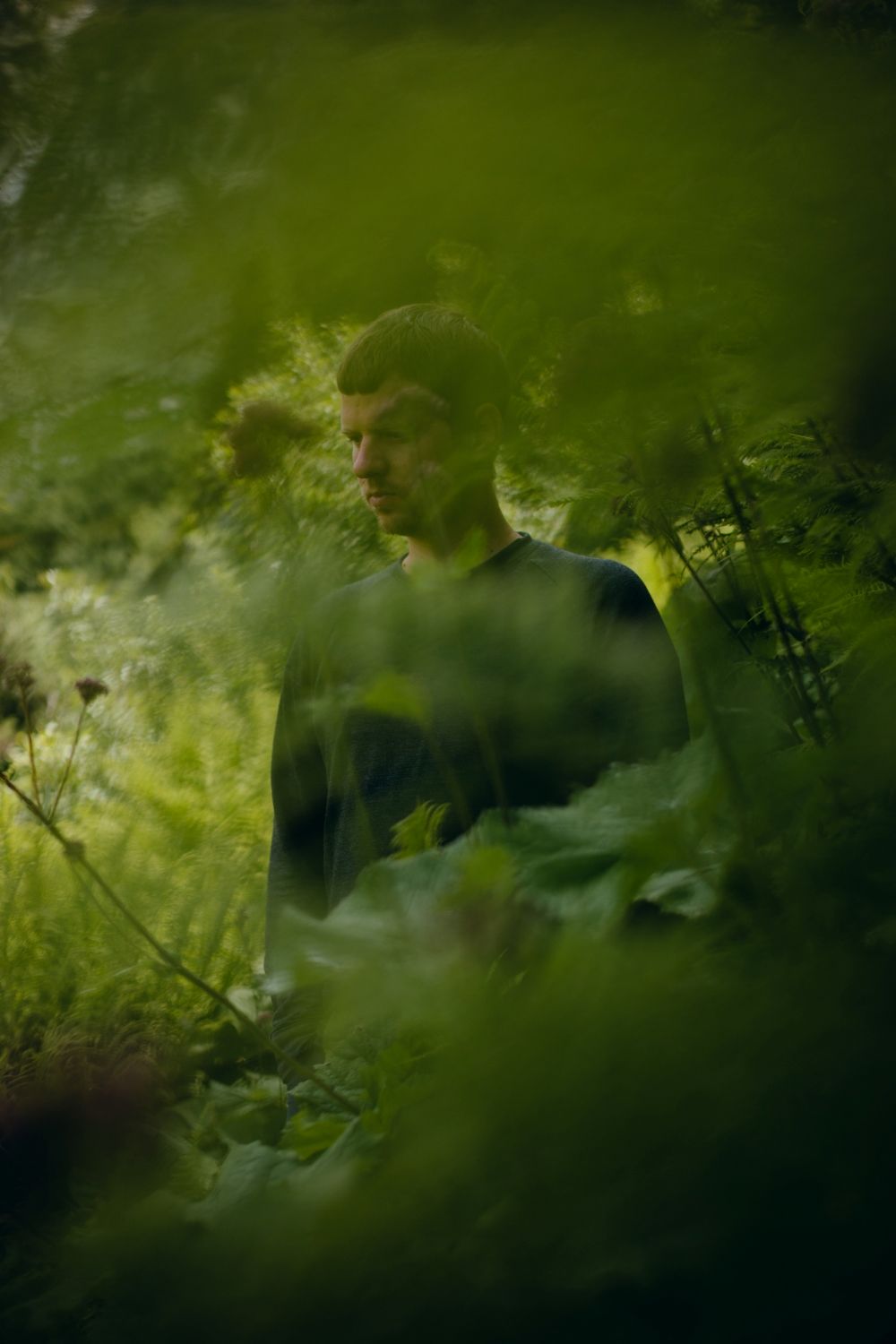
Ludwig Berger Interview Image (c) the artist
In relation to sound, one often reads words like “material”, “sculpting”, and “design”. How does your own way of working with sound look like? Do you find using presets lazy?
It depends. On Garden of Ediacara, I felt like a painter, mixing colours and adding different brushed gestures. In my documentary field recording work, I feel more like a photographer using Photoshop when I edit and compose. And sometimes like a sculptor when subtle sounds are very hidden behind the noise.
And I have no problems with presets. It’s all about how everything comes together. The first track I made for the album back in 2018 is actually based around a preset sound:
How important is sound for our overall well-being and in how far do you feel the "acoustic health" of a society or environment is reflective of its overall health? What importance does silence hold in this regard from your point of view?
Very important! I love the sounds of healthy ecosystems and suffer when they are audibly in trouble or have decayed.
Silence in itself is not a value for me; silence can be terrible. I care more about spaciousness that holds many sonic expressions and possibilities.
Seth S. Horowitz called hearing the “universal sense” and emphasised that it was more precise and faster than any of our other senses. How would our world be different if we paid less attention to looks and listened more instead?
Listening is not less or more important, per se, or better or worse than the other senses. But yes, we tend to be way too focused on our vision and could potentially benefit a lot by listening more.
But it also depends on what and who we listen to, and in which way.