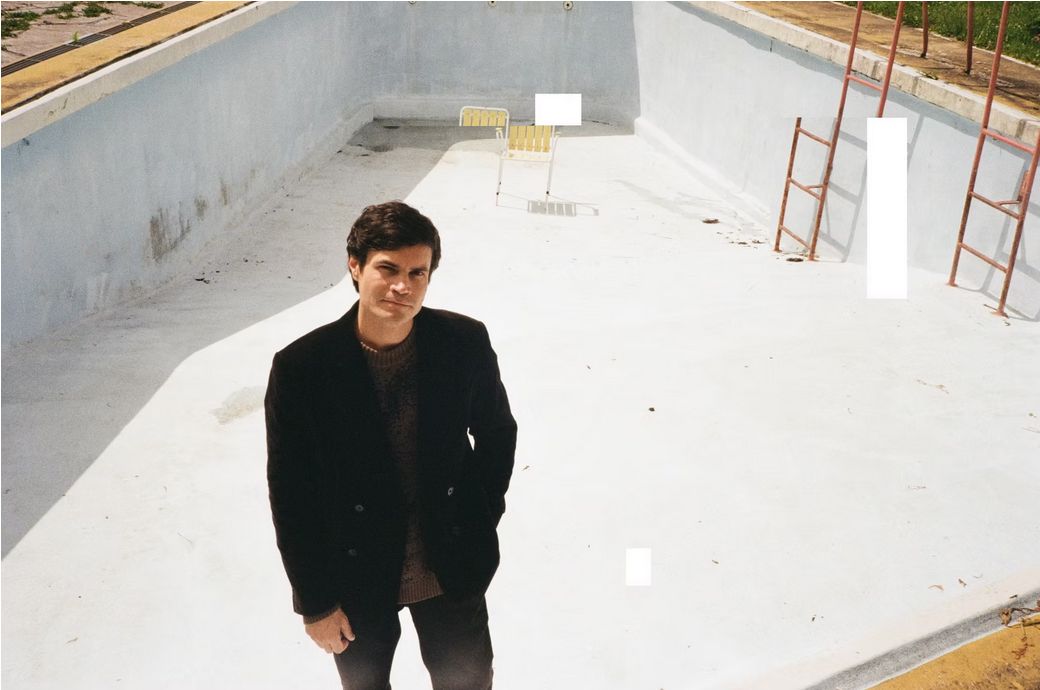
Published
Name: Lukas Lauermann
Nationality: Austrian
Occupation: Composer, cellist
Current Release: Lukas Lauermann's new album Varve is out via col legno.
Recommendations for Vienna, Austria: I would highly recommend visiting the Museum Gugging. It’s not directly in Vienna, but just a short trip — and absolutely worth it. The museum focuses on art brut and it‘s a place where artists also live and work. Many have drawn inspiration from the space and the works by Gugging artists — even David Bowie, for instance.
If you enjoyed this Lukas Lauermann interview and would like to stay up to date with his music and live dates, visit his official homepage. He is also on Instagram, facebook, and bandcamp.
The borders between producers, sound artists, and even songwriters are becoming increasingly blurry. What does being a composer mean today, would you say?
Well, technically speaking, I would still go with John Cage’s definition — organization of sound. But of course, the role of composers, or artists in general, in today’s society goes far beyond that.
Making art as a profession also means taking the time to delve deeply into certain topics — to reflect, to listen to people who usually do not get heard, to think about the developments happening around us. With that comes the responsibility to be a critical yet constructive voice in shaping how we live together.
Finding silence in our busy world and bringing it to light, or filling it with something that allows listeners to gain a new perspective, is, to me, an essential part of what it means to compose today.
Many people perceive classical music and contemporary composition as having high barriers of entrance, both for listeners and musicians. What have your own experiences been in this regard?
The barriers are never in the music itself, but in the listeners’ minds and habits.
You may connect with a piece of music — or not — no matter its style, and that’s perfectly fine. But turning away from it or dismissing it as “horrible” on principle is something else entirely.
For me, such reactions are not about the music at all; they’re reflections of where we are as a society. They remind us that there’s still work to be done — to listen more openly, to approach difference with curiosity rather than judgment, and to cultivate a more respectful way of encountering one another.
As of today, what kind of materials, ideas, and technologies are particularly stimulating for you?
I’ve found that anything you approach with genuine curiosity and without preconceived judgment can become deeply engaging — it can spark a process.
Where do most of your inspirations to create come from – rather from internal impulses or external ones? Which current social / political / ecological or other developments make you feel like you need to respond as an artist?
Actually, the impulses have always come from external sources. I don’t want to tell my own personal stories — I’d rather create music that can become a personal, perhaps entirely new, experience for each listener.
These external inspirations range from literature on my very first record, to themes surrounding the complexities of climate change on my third — and, in a very different way, on my new album Varve as well.
Composing has always had an interesting relationship between honouring its roots and exploring the unknown. What does the balance between these two poles look like in your music?
I play (and love) a centuries-old instrument, the cello, and I’m constantly experimenting with expanding its sonic possibilities through electronics.
That, I suppose, says a lot about my relationship to both tradition and the present.
How much potential for something “new” is there still in composition? What could this “new” look like?
I would never claim to know all the music that exists, so I could never say what is truly new.
What I do know is that I’m always searching for something I haven’t heard or expected in my own work — those moments when a composition simply needs to move toward a place I haven’t yet discovered myself.
What role do electronic tools and instruments play for your creative process? What does your creative space / studio look like and what tools does it contain?
I’m lucky to be working in a small studio at the old Funkhaus. That’s the former radio station in Vienna.
The building has a very unique atmosphere. You’ll find lots of FX pedals and various tape machines there, which I love experimenting with and also use in my live performances.
And of course, there’s my cello, a piano … and a few rather unusual, synth-like instruments.
It is my impression that adding a conceptual, non-musical dimension to one's work is almost a prerequisite for commissions and grants. How do you view this tendency and how “conceptual” is your own approach to writing?
I’ve always felt that having a conceptual foundation for one’s art is important. I also genuinely enjoy thinking about ideas and developing musical structures or elements through that process.
Playing with pop bands, however, has shown me a completely different, more immediate approach to making music. For me, that’s one of the main differences compared to modern classical music.
What I’m trying to do, I guess, is to create a kind of missing link between those two worlds.
Working with long forms, complex concepts or new vocabulary is potentially more challenging today because they require us to remember things that happened perhaps minutes ago – while most of us are finding it hard to focus even on what's happening right now. Both as a composer and as a listener yourself, how do you deal with this?
That’s a really important question. I think what you’re touching on becomes especially apparent in how we struggle or fail to deal with current crises and challenges.
Spatial and temporal connections, effects, and developments that extend beyond our comprehension are also central themes in my latest album, Varve.
The question of how to deal with time in music has always been influential for composers, I think. For me, it doesn’t feel right to simply give in to changing listening habits. I believe it’s always important to offer alternatives.
For many artists, life-changing musical experiences take place live. Few works these days, however, are performed beyond their premiere. What, do you feel, does this mean for composers, and the music they write, and how does this reality influence your own work?
That’s quite different for me, since I mostly write for myself — except when I’m working on film scores.
In a way, my process is closer to that of a rock band: I take my own music on tour after a new album is released, while already spinning around ideas for the next one in my head.
To some, the advent of AI and 'intelligent' composing tools offers potential for machines to contribute to the creative process. What are your hopes, fears, expectations and possible concrete plans in this regard?
I’ve tried using it, for example, to generate graphics of musical structures. It always claims to do that perfectly well — but the results have never even come close to making any real sense. To be honest, that frustrated me pretty quickly. I lose patience with AI much faster than with people haha.
So apart from the ways I probably use it without even realizing — simply because it’s already become so integrated into everyday life — I haven’t yet found a meaningful way to use it in my own work.
The Montreux Festival intends to preserve its archive of recordings for future generations. Do you personally feels it's important that everything should remain available forever - or is there something to be said for letting beautiful moments pass and linger in the memories of those that experienced them?
As a listener, of course I‘m happy about every recording of great music that is made. That said, I also believe you can never manage to preserve the experience of a live concert in its entirety.
And speaking for my own music: What I really like about releasing music on tape (for example, in the very limited editions I recently put out of Surface and Tension and Habit and Loss) is, that the music on it disappears gradually over time.
So, I really don’t feel like everything I compose and play needs to last forever.