Published
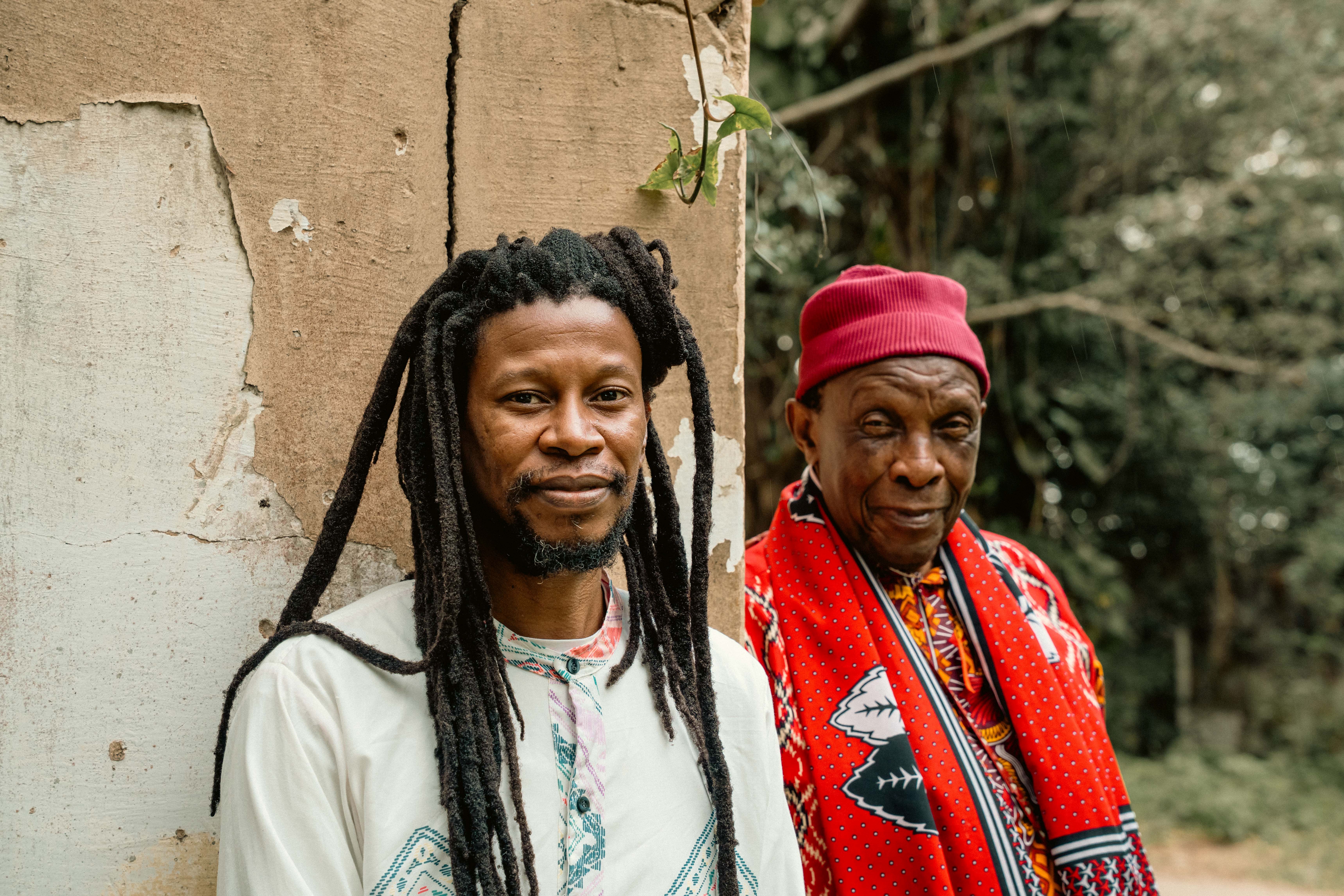
Names: Madala Kunene, Sibusile Xaba
Nationality: South African
Occupation: Singers, songwriters, guitarists
Current release: Madala Kunene and Sibusile Xaba team up for their new album kwaNTU, out via New Soil.
Hometown Recommendations:
SX: The clean rivers, gorgeous mountains and of course the warm beaches of Zululand.
MK: I usually wish to take my guests to areas like Midlands and Howick, the nature is majestic.
Topic I am passionate about but rarely get to talk about:
SX: I'm into reforesting and creating food gardens for my communities.
MK: I used to be an avid soccer player. Played for a club called Wanderers FC. It doesn’t exist any more. And Sea Gulls FC. In 1971 I got injured and that’s when I stopped. This was when my focus shifted to playing the guitar. I probably would have been a professional soccer player if it wasn’t for my injury.
If you enjoyed this Madala Kunene & Sibusile Xaba interview and would like to stay up to date with their music, visit their official Instagram profiles: Madala Kunene; Sibusile Xaba.
What were some of your earliest collaborations? How do you look back on them with hindsight?
Sibusile Xaba: Although we have been building and working together in the teacher / student relationship for more than a decade, our first public facing collaboration was just before Covid 19, where we did a live duo performance in Durban.
One of the best gigs I’ve ever played.
There are many potential models for collaboration, from live performances and jamming/producing in the same room together up to file sharing. Which of these do you prefer – and why?
SX: I'd say both. The physical aspect of things works but, in these times, digital platforms also get the job done in an excellent fashion. For me, at this point it's just about the coming together and creating, whether in person or virtual.
Madala Kunene: Jamming is not quite my preference. When I work with artists, I am lucky that I usually get backed by them, such as in my previous projects with the likes of Airto Moreira or Max Lasser.
With Sibusile, it has been different as I have contributed to his songs by adding my guitar lines. A first for me.
How did this particular collaboration come about?
SX: It was something that we have been talking about for a long time. Thanks to Andrew Curnow - one of the co-founders of Mushroom Hour Half Hour - the record has now found life. We shared the idea with him, and he ran with it in partnership with New Soil. New Soil is an exciting, upcoming label from London and we are honoured to now be working with them!
MK: We did our first show together during the lockdowns, in Umlazi KZN. He mentioned a potential partnership with Andrew (from Mushroom Hour) to record an album, and I was keen. We have not looked back since.
What did you know about each other before working together? Describe your creative partner in a few words, please.
SX: We both love the guitar enormously!!! He is a true master. That’s how best I can describe him.
MK: Sibusile is committed to success and his guitar. I loved his style of music, particularly, his solo performances. Being able to perform solos to me, means that he is dedicated to his craft and showmanship.
He also loves music that is culturally grounded. That resonates with me.
What do you generally look for in a collaborator and what made you want to collaborate with each other specifically?
SX: Just good vibes, good chemistry.
We wanted to collaborate to continue preserving indigenous African/Zulu music and to showcase its importance and depth. We also wanted to demonstrate the important of inter-generational collaborations and that these sorts of projects should be prioritised and produced far more often.
Tell me a bit about your current instruments and tools, please. In which way do they support creative exchange and collaborations with others?
SX: We mostly use voice and guitars, although we also play other instruments like mouthbow, udu etc. The best way I'd say to support any collaboration is by listening deeply and then responding with your authentic contribution.
MK: I play acoustic guitar, sing and play isitolotolo, an indigenous instrument I would buy for 5 cents in the 1970s.
Historically played by women who would travel long distances on feet. During their journey, they would play isitolotolo to pass time. We do some transcendental soundscapes together when performing.
Before you started making music together, did you in any form exchange concrete ideas, goals, or strategies? Generally speaking, what are your preferences when it comes to planning vs spontaneity in a collaboration?
SX: For this project both elements where used. The production of the project needed administration, which called for a level pre-planning and exchanging musical ideas via Whatsapp before the sessions.
Yet when the sessions started, a lot of what came out was spontaneous. Both worlds work in producing such a product.
Describe the process of working on kwaNTU, please. What was different from your expectations and what did the other add to the music?
SX: The project was fun. It was a weeklong incubation process in a cultural hub called Kwantu Village, which is located in a small town in Zululand. The creative process was truly an open canvas - no expectations were there, just room for full expression.
MK: When recording, it was quite an organic process. There were moments I felt that we could have added more layers, as with the process of composing and recording.
However, when working with Sibusile, and during the recording, it was effortless. He is sharp because I don’t write the music – it all comes from the heart and translates to song. Sibusile was able to adapt to this process.
What tend to be the best collaborations in your opinion – those with artists you have a lot in common with or those where you have more differences? What happens when another musician takes you outside of your comfort zone?
SX: I think music works more on a connection than anything else. That said, any music that moves the heart is worth contributing to, no matter the style or if you have things in common.
MK: My music is very different and therefore I am very particular about who I work with. I have to work with artists I resonate with or have a connection with.
Decisions between creatives often work without words. How did this process work in this case?
SX: It was the same case here.
Sonic conversations are the best. They come straight from the heart.
What are your thoughts on the need for compromise vs standing by one's convictions? How did you resolve potential disagreements in this collaboration?
SX: There were no disagreements funnily enough, it was all in flow.
Was/Is this collaboration fun – does it need to be?
SX: Yes it's fun. Lots of fun!
MK: The recording process with Gontse, Sibusile and Fakazile was amazing. We are all connected because we share similar sentiments. I enjoyed working with them.
Do you find that thanks to this collaboration, you changed certain parts of your process or your outlook on certain creative aspects?
SX: Yes, most definitely.
More practicing the guitar. More research on my origins.
Collaborating with one's heroes can be a thrill or a cause for panic. Do you have any practical experience with this and what was it like?
SX: It's been a thrill. An amazing experience holistically. My mentor teachers the unconditional love factor, that's the greatest lesson he continues to teach.