Published
Name: Madame Blavatsky
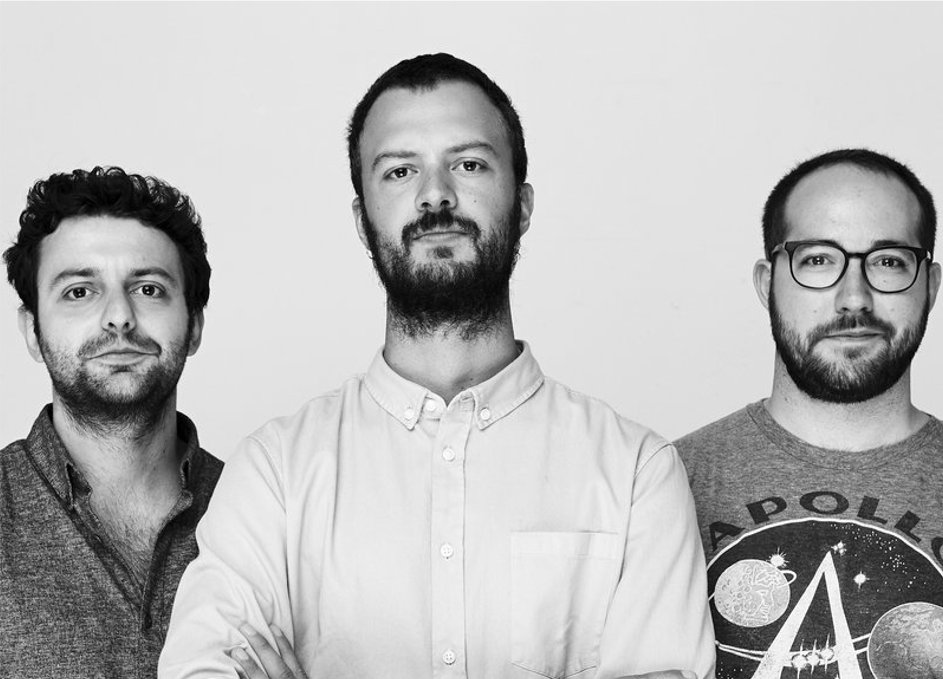
Members: Marius Couvreur (production, electronics, drums), Artan Buleshkaj (guitar), Jonas Desmet (keys)
Interviewee: Marius Couvreur
Nationality: Belgian
Current release: Madame Blavatsky were part of the selection on Lefto's first instalment of his incredible Lefto presents Jazz Cats series via sdban. The band's latest single is “Blimp,” released via Marcel in 2024. Their latest album is their debut Rocket Science.
Shoutouts: For me, Domi and JD Beck are the greatest innovators of the moment. With their signature LO-FI sound, incredible virtuosity, and humor, they're forging a whole new path. They're completely abandoning the serious image of jazz. They've barely released any music yet, but they're world-famous for their goofy videos on social media. And JD Beck is one of my (and many others') biggest drumming inspirations.
Recommendation for Ghent, Belgium: Check out ‘Gift shop’! It’s this cute, almost hidden, place in the middle of the Graffiti Street where you can go see and buy art (even from a vending machine), have a drink, see a performance or get info on the city. It’s hard to explain, go see for yourself!
If you enjoyed this Madame Blavatsky interview and would like to stay up to date with the band and their music, visit their official homepage. They are also on Instagram, Soundcloud, Facebook, and bandcamp.
What were some of the musical experiences which planted a seed for your interest in jazz?
Since I was a kid my dad used to take me to jazz concerts and festivals.
Seeing drummer Han Bennink play on a drumset made of cheese wheels at Jazz Middelheim definitely made an impact.
What does the term jazz mean today, would you say?
I believe most of the music considered jazz today is a blend of styles. It's inherent in jazz to want to innovate, and by incorporating new elements into your music, you quickly find yourself exploring other genres.
When I produce for Madame Blavatsky, I often start with creating sounds and a strong beat. Later, more melodic and harmonic elements creep in, often creating a more jazzy feel.
For example, “Laser Drill” begins with a fairly simple, almost folky melody, and when it's reintroduced a little later, the chords change completely, giving that same melody a completely different feel.
As of today, what kind of materials, ideas, and technologies are particularly stimulating for you?
I'm so happy to see how (alternative) bass music is re-embracing dubstep.
It's been quiet around the genre for a long time, but now you see artists like Alix Perez, Machinedrum, Coido, Cesco, and our compatriots ECHT! reviving dubstep.
Dubstep was my first love within electro and has always been an important part of my own music. Every time I’m creating new bass wobbles, I have a blast, like in “Chullachaqui” for example.
[Read our ECHT! interview]
Where do most of your inspirations to create come from – rather from internal impulses or external ones? Which current social / political / ecological or other developments make you feel like you need to respond as an artist?
When I create music I’m mostly thinking of sounds, rhythms, melodies … But later on, when I want to release a song, I still have to name it, which is not an easy task for a creator of instrumental music. But that’s my little window to link the music to global developments.
‘Le Internet’ was given that name to refer to how the internet and social media have so drastically changed our view of art and music and how we consume them. Not for better or worse, just very different. I find that very fascinating.
For the record, this song - with the sample of an old modem starting up – was released long before Lander & Adriaan did the same. They’re a great inspiration to me but this one thing I came up with by myself!
Tell me a bit about the sounds & creative directions, artists & communities, as well as the colleagues & creative hotspots of your current hometown, please. How do they influence your music?
To me, some important hotspots in Ghent have always been: Hot Club, Trefpunt, the music conservatory (Kask), the music school where I teach (APK Gent), and concert halls like Wintercircus, 404, HA, Minus One … That’s where I always meet other musicians/artists and where new projects find their origin.
Kosmo Sound, for example, was born when bassist Mattias Geernaert and me kept bumping into each other on dub parties at Minus One. We decided to invite some friends and start a dub band.
What role do electronic tools and instruments play for your creative process?
Some of my songs are born when I play the piano. But since I’m not that good, I usually turn over to Ableton to program my ideas and to get a better idea of what it will sound like at full speed and with the right sounds. That always leads to lots of adjustments so that everything fits together well and it also generates new ideas.
‘Blimp’ came to life when I was exploring a new plugin (Massive X) by playing a melody on the keyboard of my laptop. That melody became the hook of the song.
Thanks to technological advances, collaboration has become a lot easier. What have been some of the most fruitful collaborations for you recently and what approaches to and modes of collaboration currently seem best to you?
With Kosmo Sound we had a great collaboration with DJ Grazzhoppa.
We played a couple of shows together with very little rehearsal. He’s a master in feeling the vibe of our songs and improvising to them with his turntables and effects. And that then inspires us to explore new ideas in those songs.
Some pieces we had been playing for years suddenly sounded like totally new music.
Jazz has always had an interesting relationship between honouring its roots and exploring the unknown. What does the balance between these two poles look like in your music?
In my music I’m always trying to find a balance between the new / unknown / original and familiar / well-known.
Borrowing certain elements (from trap or UK garage, for example) will sound familiar and pleasing to the listener and it can make you want to move to it. But if you don’t add something new, something fresh, it stays very superficial and kitsch. It’s very important to me to surprise the listener.
“Spectaculoos” is basically a trap song. But it has this intro of an orchestra tuning, followed by a sample of my flipflops I recorded in the galleries in Oostende with my phone, and ends with a rooster crowing…
For many artists, life-changing musical experiences take place live. How do you see that yourself?
For a long time I performed with Madame Blavatsky as a trio: keyboard (Jonas Desmet), guitar (Artan Buleshkaj), and drums (me). All three of us had our laptops with us to trigger MIDI sounds and effects, a backing track ran simultaneously for backing tracks, and all the laptops were connected and MIDI synced.
That digital spiderweb was clearly a recipe for disaster, and more than once, things went wrong at live concerts. For example, the backing track would suddenly stop playing halfway through. Or the laptops would suddenly stop syncing at the start of the performance, leaving us all without sound when the song started ... That always caused a lot of stress and required a huge amount of preparation and problem-solving.
Now that I have two young children, I just don't have the time or energy to spend hours and hours on that anymore so I had to change the performance-concept. For now, I'm working on a DJ set and spending most of my time for Madame Blavatsky producing new music.