Published
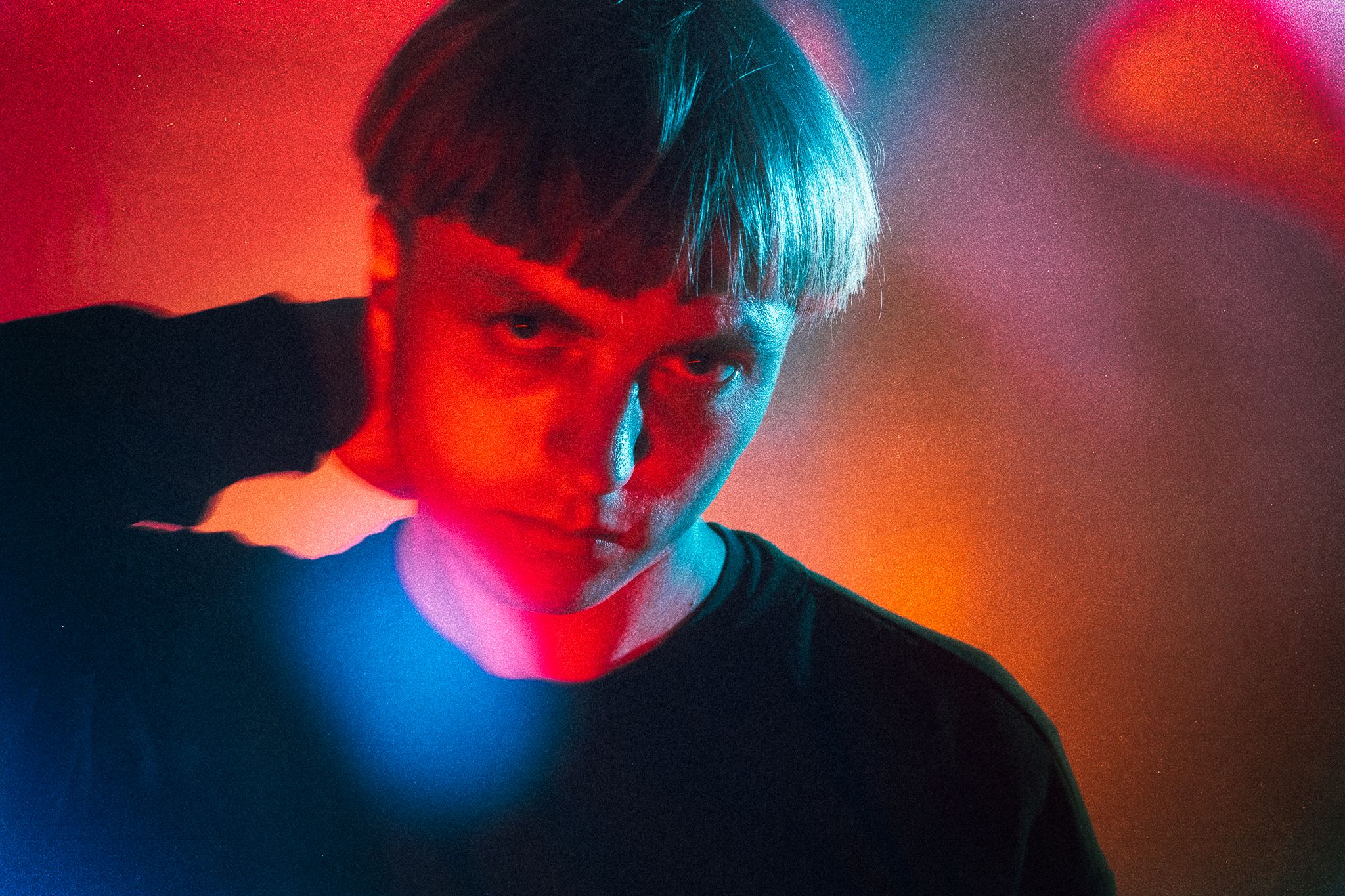
Name: Mads Kinnerup
Nationality: Danish
Occupation: Composer, producer, sound artist, sonic researcher
Current Release: Mads Kinnerup's new album Invented Mythology is out June 18th 2026 via No Technique.
If you enjoyed this Mads Kinnerup interview and would like to know more about his music, visit him on Instagram, and bandcamp.
What were some of the musical experiences which planted a seed for your interest in electronic music?
My interest in electronic music was first sparked by a curiosity about technology and the idea of creating new sounds through it. Early on, I was drawn to electroacoustic composers such as Else Marie Pade, Morton Subotnick, Eliane Radigue, and Pauline Oliveros, as well as IDM artists like Autechre, Aphex Twin, and u-Ziq.
Although these artists come from different eras and their music sounds very different, I found a shared connection in their exploratory approach to sound and composition. Much of it comes from pre-DAW practices, where limitations often led to a more focused and minimal way of working.
I’m currently returning to these influences. I feel particularly connected to music that has a simple core and relatively few layers, as I find it easier to understand and engage with sonically.
[Read our Pauline Oliveros interview]
Most genres of music make use of electronic production means. What does the term “electronic music” mean today, would you say?
For me, electronic music is music that uses technological methods and tools as the foundation for composition. This has been central to the genre since the early 20th century, from Luigi Russolo’s The Art of Noises onward.
Today, electronic music is no longer defined simply by synthesizers or computers, since almost all music uses electronic production in some form. What still makes electronic music unique is its focus on exploring and challenging music technology itself.
The genre continues to evolve through new technological possibilities, and that experimental relationship with technology is what keeps it relevant and progressive today.
Debates around electronic music tend to focus on technology. What, though, were some of the things you learned by talking to colleagues or through performing and/or recording with other musicians? What role does community play for your interest in production and getting better as a producer?
As an assistant professor in music production at the Rhythmic Music Conservatory (RMC) in Copenhagen, I gain a great deal of inspiration from my colleagues and, especially, my students. Working closely with them exposes me to a wide range of approaches, aesthetics, and working methods that I might not encounter otherwise.
Community is central to my development as an artist and producer. It provides constant feedback and inspiration. Being part of an active educational and creative environment helps me stay curious and responsive, and it continually pushes me to refine my own practice.
What are examples for artists, performances, and releases that really inspired you recently and possibly gave you the feeling of having experienced something fresh and new?
Last year, I saw the Togolese group Nana Benz du Togo perform at Roskilde Festival, and it was a very strong inspiration for me.
They had apparently built their instruments from scrap materials on the festival grounds the day before the performance. On stage, they played an almost entirely acoustic, dance- and trance-driven set using these self-built instruments, and the energy in the audience was extraordinary.
What struck me most was the sense of immediacy and physicality in the performance. It felt raw, direct, and deeply connected between the performers and the audience. In a time where much music-making is increasingly mediated through digital tools, experiences like this feel even more significant.
It reminded me of the importance of presence, improvisation, and human interaction in live performance. I think that is qualities that create a kind of shared intensity that I don’t see easily being replicated by technology in the foreseeable future.
What kind of musical/sonic materials, and ideas are particularly stimulating for your own work right now?
At the moment, I am particularly inspired by early electronic music, an interest that also traces back to my first explorations of the field. Returning to these roots feels important to me now.
I find that contemporary computer-based production is no longer as conceptually stimulating for me, partly because it has become so accessible. The sense of mystery and futurity that once defined electronic music seems to have faded as the tools have become widely available and easy to use.
Because of this, I am increasingly drawn back to early analog systems, especially Buchla modular synthesizers and other historical electronic instruments. There is something about their limitations, unpredictability, and physicality that feels creatively engaging.
For my next album, I would like to work with tape machines and further distance myself from computer-based workflows. I am interested in exploring how constraints and older technologies can open up new forms of listening and composition.
What were some of the recent tools you bought, used, or saw/read about which changed your perspective about production, performing, and making music?
I am deeply invested in the Eurorack modular ecosystem, and recently I have started working more with the new Tiptop Audio Buchla modules.
It has been particularly inspiring to see how elements of the Buchla system are now becoming accessible within the Eurorack format. Being able to integrate these historically significant instruments into a more flexible modular environment has opened up new perspectives for me in both sound design and composition.
It creates a bridge between different eras of electronic instrument design, and that combination of legacy systems with contemporary modular workflows has been very stimulating for my practice.
What are some of the most recent innovations in sound design for you - and what are currently personal limits to realising the sounds you have in your mind?
At the conservatory in Copenhagen (RMC), I am currently doing research into how AI will change the way we produce music in terms of track logic.
Since the beginning of recorded music, production has been built around tracks: separate layers of sound that can be recorded, edited, and mixed independently. While this approach has enabled precision and flexibility, it has also shaped how we think about music: as collections of isolated tracks under individual control. Modern productions can contain hundreds of tracks, sometimes at the expense of artistic intuition.
Recent AI developments are challenging this structure. Technologies such as used in platforms like Suno, allow sound to be treated as a single evolving sonic mass rather than layered tracks. Instead of arranging isolated elements, music makers can transform sound continuously as a single track. This opens new creative possibilities while also reshaping ideas of authorship, artistic control, and music production itself.
As AI-driven tools increasingly influence music infrastructure, it becomes important for artists to actively explore and shape these technologies rather than leaving development solely to commercial tech companies. My work investigates these new tools and the future impact on artists.
How, would you say are your live performances and your recording projects connected at the moment? How do they mutually influence and feed off each other?
My upcoming album, Invented Mythologies, was created at Elektron Musikstudion using their Buchla 100 and Buchla 200 modular systems. From the outset, I was interested in how this material could exist not only as a studio recording, but also as a performative work.
Ideally, I would like to perform the album in a way that stays close to how it was composed. However, the original Buchla systems are not practical to bring on stage. Because of this, I am currently developing a Eurorack-based system using Tiptop Audio Buchla modules, which allows me to approximate and translate that sonic world into a live context.
This process has created a strong connection between my recording and live practice. The limitations and possibilities of live performance are now directly shaping how I think about the music, and in turn, the material from the album informs the design of my live setup.
I feel there is something special and almost magical about these instruments, and I hope that sense can also be communicated in a live setting.
Even if AI will not entirely replace human composition, it looks set to have a significant impact on it. What does the terms composing/producing mean in the era of AI, do you feel?
I believe there is a deep, raw, and emotional human connection in performance and composition that machines will struggle to replicate. This is also true in electronic music, where technology is central. The physical presence, the decision-making in real time, and the imperfections that emerge in human performance all contribute to something that feels fundamentally human.
In that sense, I see composition and production in the age of AI as a negotiation between systems and human intent, where the role of the artist remains grounded in sensitivity, taste, and emotional expression rather than automation alone.