Published
Name: MadStarBase
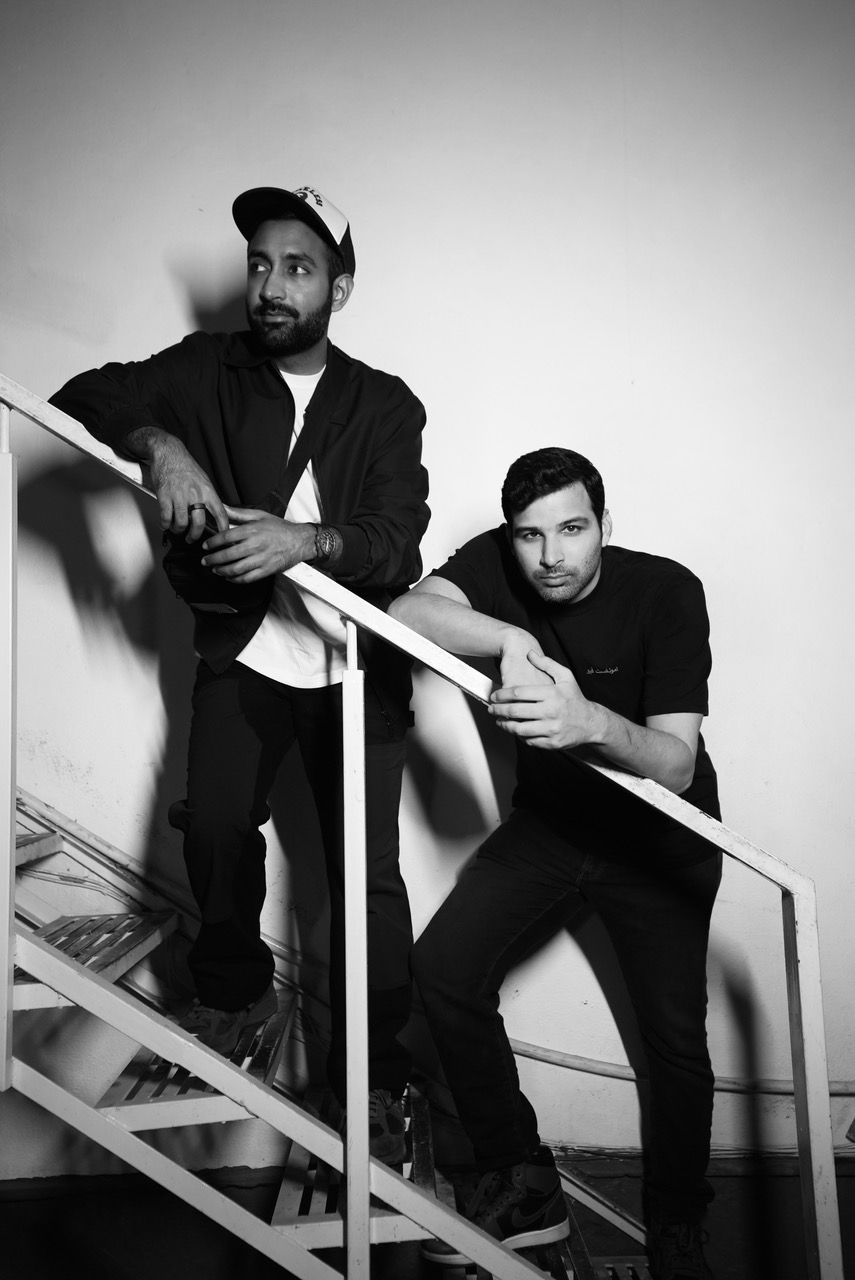
Members: Anant Ahuja, Neal Sekhri
Nationality: Indian
Occupation: Producers
Current Release: MadStarBase's remix of BC Azad's "Aayega Kal" is out via Boxout.fm.
Recommendations: There’s a lot of new MadStarBase music out there to explore! Check out all the streaming platforms, or if you really want to see the full catalog go to our youtube or bandcamp.
When it comes to art, we support an up and coming gallery in India known as Method India. They work with young and emerging artists across South Asia.
If you enjoyed this MadStarBase interview and would like to know more about their work and music, visit the duo's official homepage. They are also on Instagram, Facebook, and twitter.
Do you think that some of your earliest musical experiences planted a seed for your interest in production and technology?
Anant: Since we weren’t formally trained in any instruments at a young age, when we got our hands on our first DAW (Fruity Loops and then Reason) it was all about experimentation and applying the basic music theory we knew to create cool sounds. It felt like we were playing a video game where the result was a beat we could show to each other and collaborate on.
Having a creative output from beatmaking was really exciting and that process got us hooked early on.
What were your very first active steps with music technology and how would you rate the gains made through experience?
Anant: I remember buying an official copy of Propellerhead Reason version 2 or maybe 3, and then trying to learn how to use it all Summer. Before that I had tried making beats on a keyboard (can’t remember which one) but on that you could save your beats as midi files on floppy disks haha.
I also remember learning about new instruments when I would see them in the Reason sound library, like didgeridoos. All of this reinforced the idea that your laptop / DAW is the most powerful instrument in the world.
Making music, in the beginning, is often playful and about discovery. How do you retain a sense of playfulness and how do you still draw surprises from tools, approaches, and musical forms you may be very familiar with?
Neal: Retaining a sense of playfulness is my core philosophy when it comes to making music, and I’m always trying to exist in that sweet spot. One of the ways I manage to achieve that is by not taking myself or the music I make seriously.
The music is nothing more than me tapping into something and letting a stream flow out, whether it's good or bad. I just let it go. I try not to overthink anything. Anytime I feel we are forcing a track, or I’m forcing myself to make something, I just stop and revisit it later. I approach it like this: I should have fun when I’m making music.
Anant: If you’re making your own original music, it should always be playful and about discovery. There are aspects to finishing songs that can be tedious and not so fun. That’s why most producers have thousands of beats sitting in folders on their computers.
But one way to retain the playfulness is through collaboration with other people. Especially when you can take the time to set up the session properly and get the right vibe going.
For your own creativity, what is the balance and relative importance between what you learned from teachers, tutorials and other producers on the one hand – and what you discovered, understood, and achieved yourself? What are examples for both of these?
Neal: Regarding my own creative journey, I found that what I discovered, understood and achieved myself was far more beneficial to developing and enhancing my productions. As is with most things in life, doing it by yourself you learn so much more and you end up developing your own style.
However, the value of learning from tutorials and other producers is also incredibly important as it can inspire and become a platform for further exploration. With YouTube and tutorials so readily available online, I sometimes find myself watching tutorials on sound design and then spend days just playing around and finding what works for me.
Anant: We’ve both largely been self taught musicians. Youtube tutorials and learning from each other / our peers has been the main source of development, aside from just playing around with stuff and figuring out your own tricks.
Aside from this, when I was in college for a few years I joined a piano class and my teacher was an amazing pianist and composer, Orlando. When he learned I made beats, we started shifting our sessions from piano classes to production sessions where we made tons of compositions that had a lot of musicality due to Orlando’s skills. But from working with him I learned the way he thought of composing, melodies, layers and other little tricks he would use while making music.
Working closely with someone who had spent so much time studying and learning music was an amazing learning experience.
How and for what reasons has your music set-up evolved over the years and what are currently some of the most important pieces of gear and software for you?
Neal: My music setup has evolved to include more hardware over the years. I find the tactile process of using hardware so much more inspiring and creative. You can do a lot more interesting things without getting into your own head or finding blocks. I’ve started adding synthesisers and samplers in my setup.
Anant: Starting off as a bedroom producer, all we had was a computer and a software. Then the next piece of equipment was a midi keyboard and then monitors. Since then we have set up a dedicated studio space where we keep a collection of hardware like drum machines, synths, and recording equipment.
Have there been technologies which have profoundly influenced, changed or questioned the way you make music?
Anant: Not specifically! But I think overall computers (more specifically laptops) have really been important to allow us to do what we do. Make music everywhere, we go with anyone we can.
Already as a little kid, I was drawn to all aspects of electronic/electric music but I've never quite been able to put a finger on why this is. What's your own relationship to electronic sounds, rhythms, productions like – what, if any, are fundamental differences with “acoustic“ music and tools?
Neal: I agree with you, I don't know why but I was also always drawn to electronic music or shall I say non-acoustic music. I think it has to do with the sharp, crisp, cut straight through to your brain quality of electronic sounds. They rip, they are raw, they wobble, they are deep, lush, vibrant, wide. Just think of how iconic and incredible the dial up sound for the Internet was.
I think electronic music has a kind of pull, it pulls the mind into different places.
Anant: When you play an acoustic instrument and want to make a recording / composition, a lot depends on how you record it. If it’s not recorded well it's hard to capture the beauty of what you are hearing in real life with the instrument.
But with electronic music, the beauty is already there; you just have to sort of sculpt it or find ways to manipulate it. As a creator that’s what draws me to electronic music.
Late producer SOPHIE said: “You have the possibility with electronic music to generate any texture, and any sound. So why would any musician want to limit themselves?” What's your take on that and the relevance of limitations in your set-up and process?
Anant: It’s a nice quote and I agree. Limitations can help guide creativity though.
I remember once Neal told me that in college he was sitting in class listening to the lecture, but he had Reason open on his laptop and he was programming beats without being able to hear what he was making. Then he would run home after class and listen to what he made and if it was good, work on it. Those sort of limitations or new processes can also lead to creative outputs.
But overall if you know what you want to make then being able to generate any texture or sound is so powerful.
From the earliest sketches to the finished piece, what does your current production workflow/process look like?
Anant: Usually my process is more similar to hip hop producers in the sense that I’m trying to just build a loop of some kind. Then later on I add layers and arrange the piece.
But a lot of ideas don’t make it past the loop stage.
In relation to sound, one often reads words like “material”, “sculpting”, and “design”. How does your own way of working with sound look like? Do you find using presets lazy?
Neal: Haha no, not at all. I don’t find using presets lazy.
Again, this ties into the whole playfulness of making music. If you have fun sculpting and designing sound, then that is your way to channel your playfulness and creativity. Alternatively, you can also have just as much fun and be just as playful using presets.
My own way is a mixture of both. As I’ve matured as a producer, I’ve learned how to sculpt and design from scratch, simultaneously using presets which I sculpt or design further. It can be both, and it should be both.
What, to you, are the respective benefits of solo work and collaborations and do you often feel lonely in the studio? Can machines act as collaborators to you?
Neal: Collaborations all the way. MadStarBase is a collective, we only collaborate. I can’t think of any other way of making music. And in my opinion, there is no better way to make music. Collaboration at every level. The beauty of making connections and then translating that into something creative.
Yes, fundamentally machines can be collaborators too. Some of the new hardware and DAWs are wild, they can literally make the music for you.
Anant: Like Neal said, for us it’s all about collaboration. Solo work is useful when you’re at the stage of working on the finer details of a track. Mixing is also sometimes better done solo first, then shared for feedback and adjustments.
But even when you’re in the studio solo working on something, it's hard to feel lonely because there’s always someone to show the music to and see their reactions.
To some, the advent of AI and 'intelligent' composing tools offers potential for machines to contribute to the creative process. What are your hopes, fears, expectations and possible concrete plans in this regard?
Neal: my outlook is positive and hopeful. I think AI can be very neatly incorporated into music and music production. I understand the apprehension around AI being used to replace real artists. And maybe AI will take over music for movies or commercials and the corporate space. But there is a difference between human art and AI.
I think AI can be used to augment human art and music. It's another tool to unlock creativity. In fact it enhances creativity and leads to incredible new ideas and opportunities.