Published
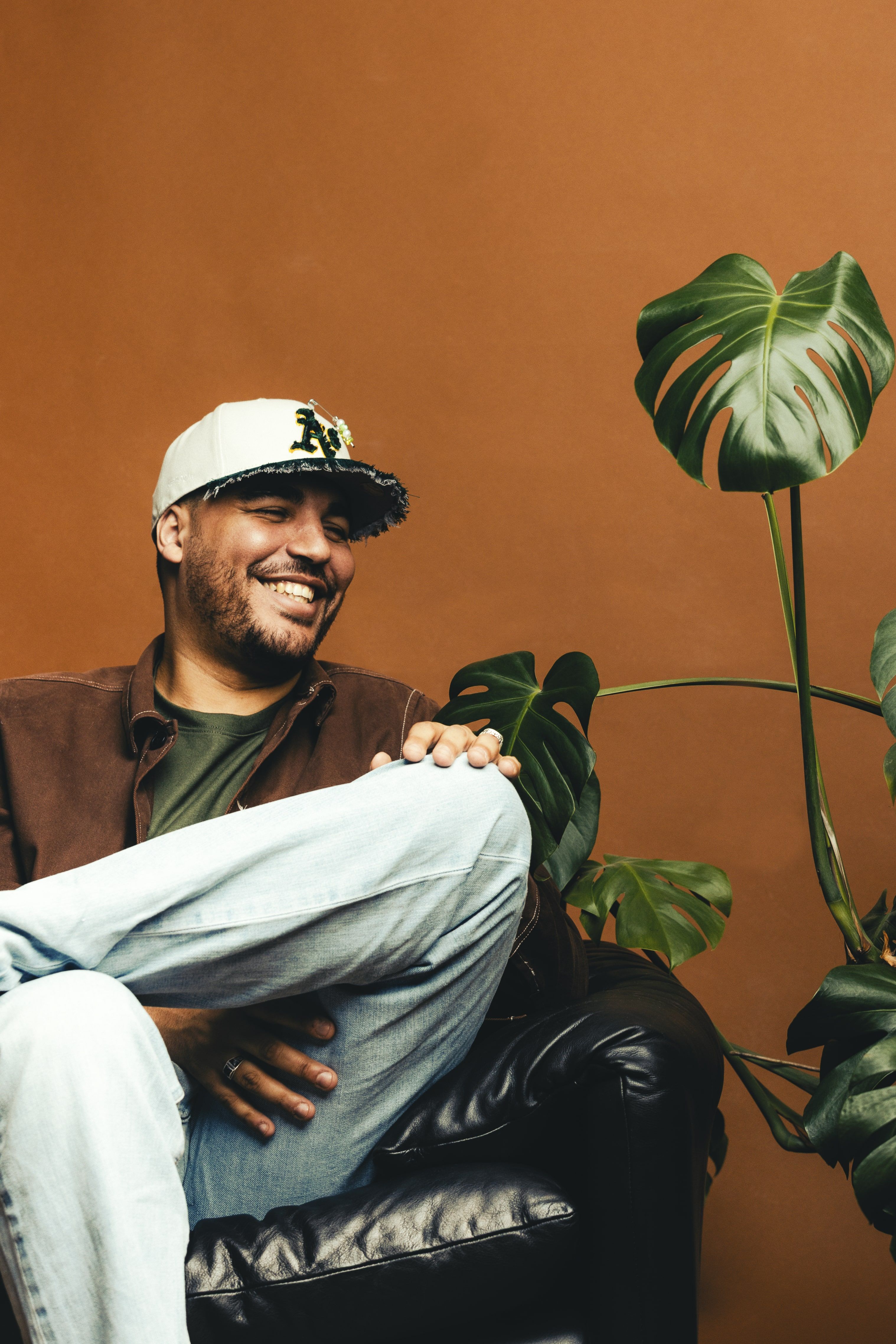
Name: Alaa Mhaissar aka Maison Blanche
Nationality: French
Occupation: Producer, DJ
Current release: Maison Blanche's What A Time! EP is out June 20th 2025 via Pont Neuf.
Recommendation for Paris, France: I highly recommend the audiophile bar Stereo Paris. It’s one of my favorite spots to enjoy great music, delicious food, and quality drinks all in one place.
Topics that I am passionate about but rarely get to talk about: I'm a huge fan of cooking. I love to cook and share meals with friends and family. I don’t talk about it much, but if you look closely, I often reference it, even in this interview!
If you enjoyed this Maison Blanche interview and would like to stay up to date with his music, visit him on Instagram, Soundcloud, and bandcamp.
Were you ever interested in minimalism as a style – from the Philip-Glass-variety to solo instrumental work to minimal techno? If so, tell me a bit about your interest in this.
Minimalism has always intrigued me! The ability to evoke emotion with very few elements, to transmit energy in a stripped-down way.
However, I've never quite managed to make a truly minimalist track myself. Maybe for the next project … who knows?
Do you tend to find that, as many claim, “less is more?” Are the notes you don't play really as important as the ones you do play?
I believe in “less is more,” but I also think a complex piano chord, for instance, can add depth and really express the artist’s vision.
Still, adding too many notes or instruments just to fill space often leads to artistic confusion. For me, that’s a creative mistake.
For example, on the track “Circle Again,” there’s just a piano loop that plays endlessly; but it’s the movement of the frequencies and the layering of different percussions that bring those essential ingredients to life.
Do you feel as that making music is a process of adding elements until it is done – or one where you chisel away pieces from something that is already there?
To me, music is like cooking: You add ingredients to create a dish that makes your mouth water.
But if we draw a parallel to minimalism, sometimes just a few high-quality ingredients are enough to make a great meal.
Many artists are becoming more minimalist in their music as the years go on, focusing on the “essence.” How is that for yourself and how would you describe your development in this regard?
Actually, I'm on the opposite path! Always improving, exploring new textures and sounds, adding new instruments.
But maybe one day, I’ll reach a kind of artistic maturity that will naturally guide me toward minimalism.
What were some of the starting points for What A Time?
I took time to reconnect with what I truly love in electronic music sampling. I went back in time, rediscovered tracks that marked my youth, and dove into my collection to find those hidden gems.
“Dance Forever” is a perfect example. With its energy somewhere between French Touch and Disco House, it’s exactly what I wanted to convey.
Do you like to set yourself limitations? If so, which were some of those limitations for the new pieces?
One of the main limitations I set was to inject a French Touch flavor into certain tracks, whether in the production style or the mix.
That gave me a clear direction and helped shape the identity of the whole project.
Thanks to sampling and digital synthesis, there are endless possibilities for sculpting the sounds and overall sound design of a piece or album. What are your considerations in this regard?
For me, sampling is essential. It’s the essence of creativity. With a single vocal or instrumental sample, you can create so many moods, styles, and energies.
That’s what I aim for: to convey emotion through the work I’ve done on a sample.
Would you say that you approach your creative tools with a minimalist mindset? Or do you need a wide choice of instruments and tools to make music?
I like having access to a wide range of tools. Sometimes, a great idea is born from an accident.
For me, the more options I have, the more freedom I give to creativity. Limiting my tools would feel like limiting the flow of inspiration.
What were some of the most important pieces of gear or instruments for What A Time?
Compression and mixing chains were the key elements in this project.
I wanted that authentic ’90s–2000s feel. I had to learn how to use different setups, compressors, EQs, tape recorders, to get the sound just right. That old-school vibe was essential to me.
On my track “Call Me Jazzy,” I wanted the drums and saxophone to sound as if they came straight out of a ’90s sampler, with a warm, vintage feel.
French producer Guillaume Duchastel told me: “Minimalism is about more than owning fewer things. It’s about focusing on what truly matters.“ What are some of your strategies for separating what matters from that which doesn't?
My rule is simple: When I finish a track, I should never feel like something doesn’t sound right. Ideally, I ask myself, “If I removed this element, would the track sound better?”
That’s my secret for knowing whether I’m truly satisfied with a piece.
With so much incredible music instantly available, are you finding that you want to take it all in – or that you need to be more selective? How do you pick the music you really want to invest in?
Today, with AI creating tracks in seconds, massive discographies from legendary artists, and countless hidden gems from the past, the options are endless.
I try to stay curious, exploring new genres, revisiting old catalogs, and staying alert to new releases.
Would you say that minimalism extends into other parts of your life as well?
As I mentioned earlier, I see strong parallels with cooking. For me, minimalism can apply to all forms of art; culinary, painting, sculpture, dance.
With experience and mastery, you eventually reach a point where expression becomes more refined and that point often leads to minimalism.