Published
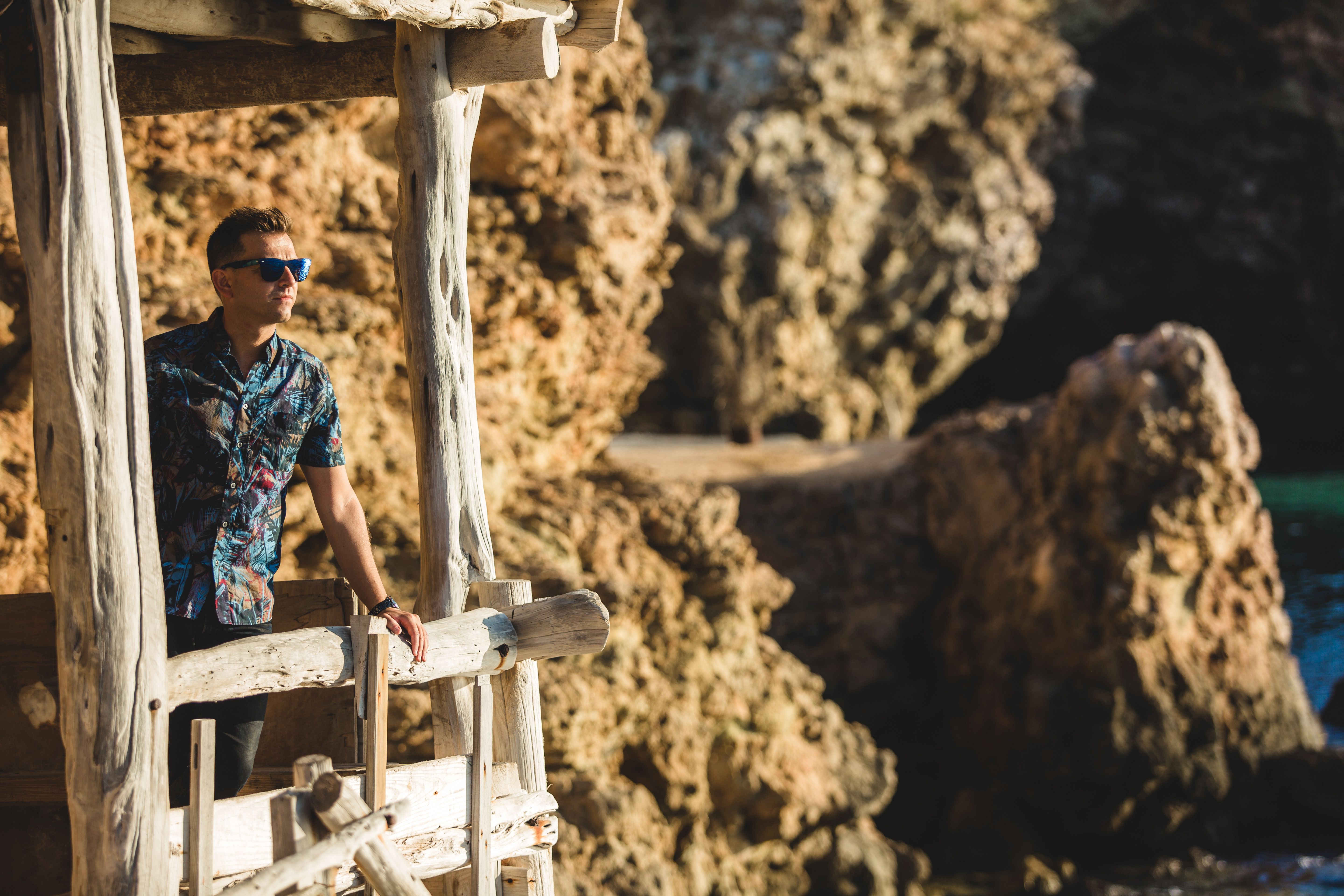
Name: Martin Vega aka MAR-T
Nationality: Spanish
Occupation: Producer, DJ
Current event: As the venue's longest active resident, MAR-T was part of the line-up of the recent opening party to the new season for Pyramid Ibiza at Amnesia Club.
Recommendations: I love the latest album by Bdrmm — it's fantastic. Also, Agar Agar's Player Non Player album really caught my attention; I find it super interesting.
If you enjoyed this MAR-T interview and would like to stay up to date with his music and gigs, visit him on Instagram, Soundcloud, and Facebook.
Do you think that some of your earliest musical experiences planted a seed for your interest in DJing? How and when did you start DJing?
My family has always been connected to clubs, so music was always present around me — though, surprisingly, not as much as you’d expect.
When I first got into music, I actually hated electronic club music. I started with rock, then moved into punk, and suddenly found myself obsessed with Electronic Body Music (EBM), discovering bands like Front 242 and Nitzer Ebb.
Then the whole Madchester scene from the '90s completely blew my mind — listening to New Order, Happy Mondays, and a loooong list of others.
With all this music in my head I started djing when my father gave me 2 old Technics and a Vestax mixer. All this together fueled my interest. Plus, seeing that I could organise warehouse parties, djay, have fun and make some money.
The first party was in a closed supermarket in my town. :-)
Today, DJs are rarely just DJs. Very often, they can be producers who are also DJs or DJs who are also producers. Where do you see yourself on this spectrum and what kind of potential issues and cross-pollinations does this create?
I'm not a great producer—I actually need help with the production side. I have the ideas, but I don't have the patience to spend hours in front of a computer.
That said, I also feel that some producers who later become DJs often lack the ability to truly create an atmosphere or tell a story through their sets. For me, that's something essential.
What were some of the most important insights you gained from teachers/tutorials, other DJs, or personal experience? What does it mean to be a “better DJ”?
I never used tutorials or had a formal teacher, but I learned a lot from my DJ friends. Also, being a resident DJ for many years gave me the chance to listen to all kinds of sets and to understand both the best and the worst practices.
For me, a great DJ is someone who can truly entertain using just the music, without needing anything else. Nowadays, though, the scene is full of performers who focus more on spectacle than on the music itself — and sometimes, that's what the audience seems to enjoy.
For you, is there still listening outside of looking for music for your next sets? If so, what do you prefer to listen to and how does it possibly nonetheless have an influence on your performances?
I listen to all sorts of music, but it always needs to have drums that make my gut move.
About 90% of what I listen to is new indie and electronic bands.
When digging, what are you looking for? Is the process all about taste for you, or is it about “going beyond taste”?
I always look for music that surprises me. But at the same time, I believe it should keep the dancefloor moving.
Sometimes I have to hold myself back—I’d love to play crazier stuff, but I usually save that for afterhours sets.
On the basis of one of your most recent gigs, tell me about how the preparation- and decision making process works during a gig with regards to the inclusion of key records, the next transition and where you want the set to go?
At the opening of Pyramid at Amnesia, I ended up playing an almost 4-hour long set. I knew it was going to be around 3 hours, and I was doing the warm-up, playing before Josh Baker, Rossi, and Ricardo Villalobos.
I wanted to do my classic warm-up, which for me means being really eclectic for the first hour and then slowly starting to build up, trying to find the right path between Josh’s energy and Ricardo’s vibe.
This is how I prepare: I listen to music and imagine I’m already DJing, to see if that’s the sound I want to create.
There must be endless ways of “matching” two or more tracks. How do you prefer to do it? What makes two tracks inherently “matchable” and what constitutes a great transition?
Personally, key matching has become really important to me over the past three years. Before that, I didn’t really pay much attention to it, but I’ve found that it makes my sets flow much better.
That said, sometimes it can also limit my creativity.
How would you describe the experience of DJing, physically and mentally? Do you listen – and deejay - with your eyes open or closed?
I listen with my eyes open, but not really looking — hahaha.
Do you engage with audiences/dancers - and how? Taking one of your online DJ mixes as an example, how does the experience and the way you deejay change when you subtract the audience?
I hate DJing without an audience.
Collaboration is a key part of almost every aspect of music making, but it is still rare in DJing. Tell me about your own views on back-to-back DJing, interactions with live musicians or other forms of turning DJing into a more collective process.
Back-to-backs are very popular right now, but sometimes you see ones that don’t really make sense.
I enjoy them when I know the other person personally and we have a connection. Otherwise, it feels a bit strange, and I don’t really enjoy it.
How important is dancing for our wellbeing on a personal and even on a societal level?
Dancing is about being free — a way to disconnect from the system.
Especially in the light of advances in AI, where do you see the role of humans in DJing versus that of technology? Can AI act as a collaborator or creative stimulus?
With the new audiences probably yes. It's horrible.
Tinnitus and developing hyperacusis are very real risks for anyone working with sound. Do you take precautions in this regard and if you're suffering from these or similar issues – how do you cope with them?
I don't … I'm a disaster.
When I was very young I had an operation which made me be able to control the sound volume with just opening my mouth. So I supposed this is my protection.
Let's imagine you lost all your music for one night and all there is left at the venue is a crate of records containing a random selection of music. How would you approach this set?
I’d probably panic at first … then I’d grab a vodka lemon to calm down, start searching for the first track, and while playing, I’d do my best to find the perfect transition.
But honestly, that’s HARD! :-)