Published
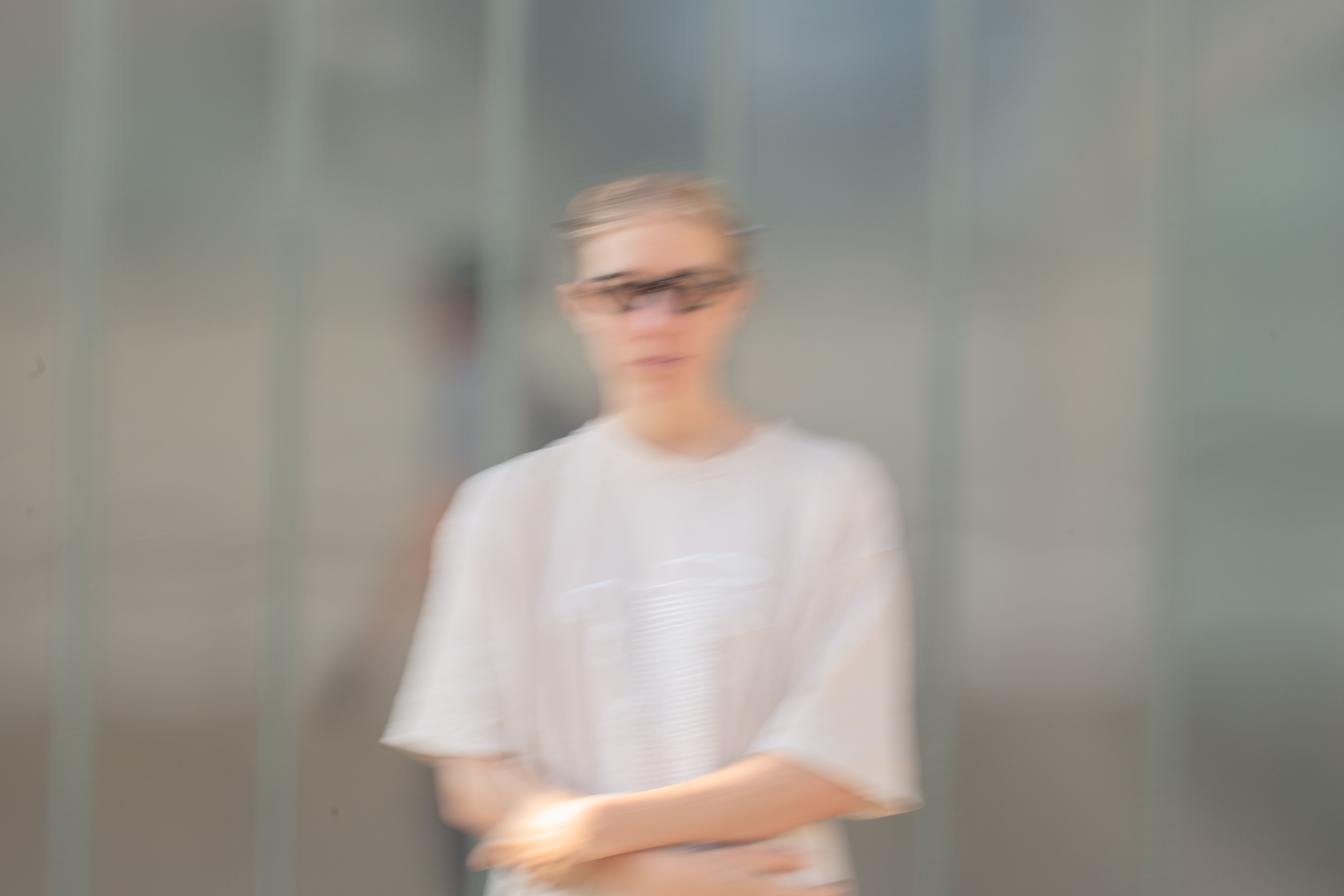
Name: Mara Schwerdtfeger
Nationality: Australian
Occupation: Composer, sound designer
Recent release: Mara Schwerdtfeger's most recent album At Every Corner is out via Pure Space.
Current event: Mara is currently performing live across Europe. Catch her at one of the following dates:
1 May 2025 - Operator Radio, Rotterdam
1 May 2025 - Kiosk Books, Rotterdam – Trio set w/ Colette Aliman and Anna Bierler
2 May 2025 - Divagation, Brussels
4 May 2025 - Kiosk Radio, Brussels
8 May 2025 - Kwia, Berlin w/ Pavel Milykov and Ulla
9 May 2025 - KM28, Berlin – Duo set w/ Marta Forsberg
13 May 2025 - ßpace, Karlsruhe w/ Nina Overkott and Hendrik Vogel
23 May 2025 - DATA médiathèque, Marseille w/ Frise Lumière
25 May 2025 - Earthly Futures, Paris w/ Victoria Pham and Rachel Schenberg
30 May 2025 - Murmur, Amsterdam w/ musing and Sino
12 June 2025 - Spanners Club, London w/ Mia Ghabarou, Memeshift, Stella Zheng (DJ)
30 June 2025 - Monday Improvisers Session, Vienna – Duo set w/ Uli Soyka
Recommendations on the topic of sound: Substack is the place to be right now! I really enjoy reading Bridget Chappell’s essays, the Through Sounds interviews, and Wild Information from Claire L Evans. But also the longreads on Sonic Acts and Liquid Architecture’s journal Disclaimer are always so interesting and inspiring.
[Read our Marta Forsberg interview]
If you enjoyed this Mara Schwerdtfeger interview and would like to stay up to date with her music, visit her official website. She is also on Instagram, and bandcamp.
When I listen to music, I see shapes, objects and colours. What happens in your body when you're listening? Do you listen with your eyes open or closed?
It’s more physical than visual for me. If it’s something that really affects me it’s got a weight to it, deep in my gut with that sort of dizzy lightness.
I’ve started a maybe bad habit of taking my headphones to bed. Maybe bad because it is a bit addictive listening to music in bed, but I think I have a very different focus for music in that space.
How does listening with headphones and listening through a stereo system change your experience of sound and music?
I mostly listen through headphones and I also make all my music on headphones. I really like the intimacy and detail of headphones but I think that’s because through the proximity of the sound you don’t have to be listening at a super loud level.
That being said it is super exciting to hear something played out on speakers and feel that added weight to it and shift in spatialisation.
Tell me about some of the albums or artists that you love specifically for their sound, please.
Recently I’ve been listening to Earthflower; Christina Vantzou’s No. 5.
There is always Smerz in the mix – their new song is on endless rotation; and I’m constantly returning to Jenny Hval’s Apocalypse, Girl. I really love Jenny Hval’s music because it is both vast and specific – it can shift so much but still keep her distinct voice.
There is a track from her project Lost Girls called “Drive” which moves through all these textures before landing at this heavy beat that grounds you in her semi-existential lyrics that I love so much.
An album I really love for the way strings are treated alongside electronics is Remain Calm by Mica Levi and Oliver Coates. Individually they are both artists I really admire as well.
[Read our Christina Vantzou interview]
Do you experience strong emotional responses towards certain sounds? If so, what kind of sounds are these and do you have an explanation about the reasons for these responses?
Something that I’ve only recognised recently, is how much footsteps in music affect me. I love that added perspective, movement and spatialisation it creates.
Some of my favourite field recordings that I’ve made include footsteps and it’s always a nice surprise – often I am trying to sit as silently beside the recorder to capture the ‘pure’ environment but it makes the recording so much more personal to understand the human perspective it’s coming from.
There can be sounds which feel highly irritating to us and then there are others we would gladly listen to for hours. Do you have examples for either one or both of these?
I often sit with my headphones on but nothing playing and I think that the softening of everyday sounds is so calming.
Like hearing sounds from the room next door – it’s also that spatial aspect that adds a certain quality to the sound.
Have you ever been in spaces with extreme sonic characteristics, such as anechoic chambers or caves? What was the experience like?
Yes! In 2020 I attended LungA school in Seyðisfjörður, a small town in the east fjörds of Iceland. They had a big, disused fish silo that we could climb into through a small porthole. The space has a really long, dense reverb.
The first time I went in was as a big group (about 20 of us) to sing a choral piece. It was intimidating to sing in there because you could hear yourself really clearly and closely, but everyone else’s voice was part of a swampy reverb.
Throughout the months I was there, I would go and improvise on my viola and play with the long decay. I also recorded this version of my song "Arthur" in there.
Then in 2022 I performed with Luke M de Zilva in a built reverb room. The room was at UTS [University of Technology Sydney] and had an anechoic chamber right next door.
It was a really strange feeling to walk between the two rooms, back and forth. Kinda surreal and dizzying.
What are among your favourite spaces to record and play your music?
I really like playing viola outside. I’ve played in some pretty windy places and it’s kinda funny how much control of the bow you lose, or how much strength you suddenly need to use to keep your control.
But I also like the chance of the wind interacting with the instrument and being able to respond to temperatures and sounds.
Does music and sound feel “material” to you? Does working with sound feel like you're sculpting or shaping something?
Yes, definitely.
I think especially because I am often working from recordings of objects, instruments or landscapes. So the sound is starting from a very physical place and then being compressed into the plane of my DAW. From there, composing is really like placing these sound objects in an environment.
I have also experimented a bit with presenting my work as ‘sound sculptures’ and have also thought a lot about sound as an architecture.
In 2020 I was commissioned to write a piece for Mpavillion (Naarm Melbourne). That piece was really about constructing a sonic architecture by leaning into drones or this kinda idea of a sonic covering, as well as the connotations of rising scales. (You can hear a rough rehearsal recording of that here).
How important is sound for our overall well-being and how far do you feel the "acoustic health" of a society or environment is reflective of its overall health?
I work a day job in an office and if I stay late and hear the air conditioning go off I am always shocked by the sense of relief that brings. It’s wild how we exist in these spaces that are filled with constant drones that we have learnt to tune out.
That constant noise is fatiguing and is also maybe training us to be less sonically aware?
Sound, song, and rhythm are all around us, from animal noises to the waves of the ocean. What, if any, are some of the most moving experiences you've had with these non-human-made sounds?
A few years ago I recorded one of my favourite sounds – I placed a contact mic near an ants nest and the hyper rhythms of their movement / communications when amplified is amazing to hear!
I am also obsessed with the wind at the moment – not just it’s sound but how it ‘plays’ other sounds. At the same spot I recorded the ants I also recorded bamboo moving in the wind, again with contact mics. I really like listening to the unpredictable rhythms.
Both those recordings are in my track “Code Switch.”
Many animals communicate through sound. Based either on experience or intuition, do you feel as though interspecies communication is possible and important? Is there a creative element to it, would you say?
Definitely, I think we can learn a lot through interspecies language once we learn to listen and understand knowledge that is communicated in rhythms and patterns, not just words.
So I guess there is some creativity there because we can use tools, such as our understanding of music – rhythm, melody, harmony – to monitor and decode these non-human languages.
If we take the time to recognise these patterns, eventually we will be able to learn from them.
Tinnitus and developing hyperacusis are very real risks for anyone working with sound. Do you take precautions in this regard and if you're suffering from these or similar issues – how do you cope with them?
I wear ear plugs at most live shows and I even went through a phase of wearing them when practicing viola when I was doing my final year of high school. With the amount of practice I was doing and having to play loudly it would cause ringing in my ears. That ringing is a really claustrophobic feeling.
I now also work a day job in audio so I’m wearing headphones a lot of the time and ear fatigue is something I experience a lot. I really try to give my ears ‘quiet time’.
We can surround ourselves with sound every second of the day. The great pianist Glenn Gould even considered this the ultimate delight. How do you see that yourself and what importance does silence hold?
From a compositional perspective silence is so important for creating contrast and shifting expectations.
And I guess that mirrors life as well – we are at a very hectic time in terms of the amount of media content we have available and we could easily have something on all the time but everything in moderation right, to keep it enjoyable.
Seth S. Horowitz called hearing the “universal sense” and emphasised that it was more precise and faster than any of our other senses, including vision. How would our world be different if we paid less attention to looks and listened more instead?
I’m not sure if it is about one or the other but maybe about giving energy to every sense to allow ourselves to pay full attention.
We are becoming a glancing society with the way we do a lot of things.