Published
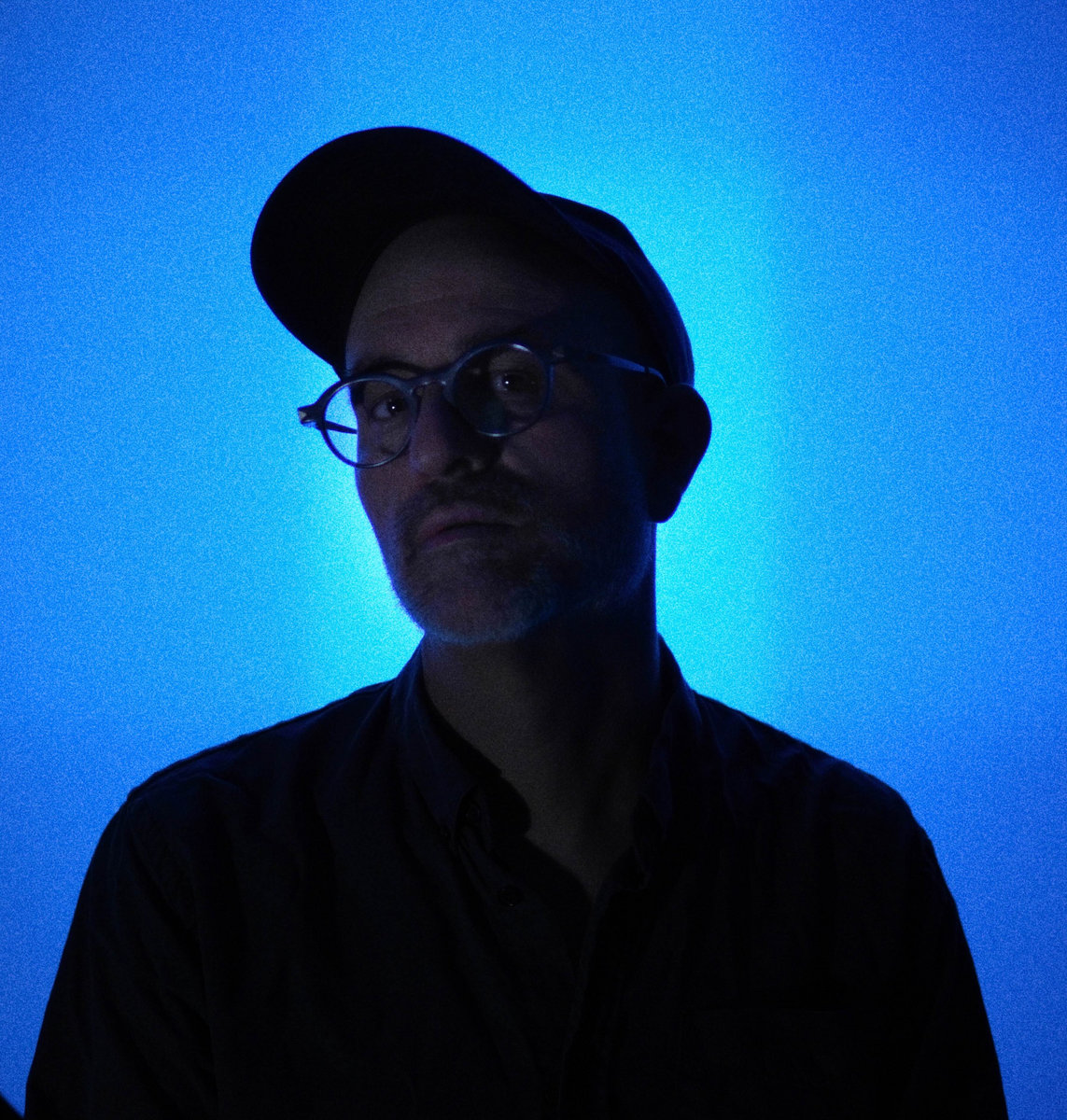
Name: Marc Melià
Nationality: Spanish, Brussels-based
Occupation: Producer, composer
Current release: Marc Melià's Pièces Monophoniques is out via Vlek.
Recommendation for Brussels, Belgium: In Brussels, I highly recommend going to a concert at Les Ateliers Claus. It’s one of the most special venues in the city.
If you enjoyed this Marc Melià interview and would like to stay up to date with his music, visit him on Instagram, Soundcloud, Facebook, and bandcamp.
Are there examples of minimalism in music – and outside of music – that impressed you early on?
Probably the first minimalist music that really struck me were the piano works of Erik Satie, which I loved to play when I was studying piano. Later, I discovered Steve Reich, who clearly became a deep influence on all the music I made afterwards.
At a more subconscious level, the a cappella songs my parents used to sing to me were deeply touching. I still remember my father’s voice echoing through the corridor while I was in bed.
That kind of peace, and the silence between the phrases, is something I believe remains present in my most recent record.
Were you ever interested in minimalism as a style – from the Philip Glass variety to solo instrumental work to minimal techno? If so, tell me a bit about your interest in this.
My parents had a copy of Glassworks, and it’s an album I return to often.
I feel like many electronic musicians come to Reich, Glass, or Riley through minimal techno. For me, it was the other way around. I didn’t grow up listening to techno. I had only a vague, somewhat superficial idea of what it was until much later.
That said, figures like Levon Vincent, Alva Noto, or Donato Dozzy became real influences for me in recent years. The hypnotic quality of minimal techno, the way repetition can evoke trance, introspection, or even emotion, fascinates me. I try to explore something similar, in my own way.
[Read our Alva Noto interview]
Do you tend to find that, as many claim, “less is more”? Are the notes you don't play really as important as the ones you do?
It’s an idea I’ve always found compelling, but I didn’t truly understand it until quite recently. With Pièces Monophoniques, I created a kind of dogma for myself: all tracks were made using a monophonic synthesizer, and recorded with no overdubs—purely monophonic.
This forced me to leave out many elements I might otherwise have added. But I discovered that what’s left out actually creates space for interpretation, imagination, and engagement.
For example, in the track “224 Steps,” I hope listeners can almost feel a beat that’s not actually there.
Many artists are becoming more minimalist in their music over time, focusing on the “essence.” How about you? How would you describe your development in this regard?
I can definitely relate to that. Over the years, I’ve worked on many different projects, with varying degrees of minimalism. But in the three albums I’ve released under my own name, a minimalist approach has been central.
Playing live has shaped this. My first album Music For Prophet was made entirely with a Sequential Circuits Prophet, and I would play everything live on the keyboard with no sequences.
For Pièces Monophoniques, the method changed: all the notes were sequenced, but all the modulations were performed live, with no backing tracks of course.
What were some concrete starting points for Pièces Monophoniques?
“Illusions of Polyphony” started with a very fast arpeggiated sequence drenched in reverb. The result creates sound clouds that almost resemble chords.
In “Échoes et Fantaisies,” I used short delays with long feedback tails to repeat small sequences. When played together, they create the illusion of two voices.
I promise, it’s all done with a monophonic synth and no overdubs! I love discovering these kinds of tricks.
Do you like to set yourself limitations? What were some for the new pieces?
Absolutely. Limitations were essential to this record. After reflecting on it, I realized the reason I simplified things so much was because of live performance.
For me, there’s something essential about the link between gesture and sound, the symbiosis between the performer and the instrument. On a record, I don’t care how music is made. But live, I’m not only presenting my music; I’m presenting myself as a performer.
If you play a cello, for instance, the link between gesture and sound is obvious, you draw the bow and the string vibrates. With electronic instruments, that link can become more abstract or even disappear. So by using a single monophonic synth, and focusing on small gestures like opening a filter, that connection becomes more tangible. That focus gives the performance its meaning.
That said, I’m also looking forward to making music that doesn’t need to be performed live. That, too, feels liberating.
Thanks to sampling and digital synthesis, there are endless possibilities for sound design. What are your considerations in that area?
I find sampling and digital synthesis fascinating, especially for studio work. I’ve often used granular synthesis in other projects. But for live performance, it’s less suitable.
Subtractive synthesis, on the other hand, is simpler and more intuitive. so I prefer that on stage. I’m fascinated by how voltage becomes emotion. That’s the magic of subtractive electronic music: you start with chaotic electrical energy, shape it through circuits and intention, and somehow it becomes beauty. It’s almost alchemical.
Music, for me, is not just about sound, it’s about energy, transformation, and transmission. I could talk about this forever.
What were some of the most important instruments or gear for Pièces Monophoniques?
I used only the MFB Dominion 1, an overdrive pedal, and various space treatments—delays and reverbs.
Reducing your options often leads to a different way of working. How would you describe your method?
When you reduce your options, you’re forced to go deep rather than wide. You explore a few things thoroughly instead of many things superficially.
And paradoxically, within that constraint, you find infinite freedom.
Guillaume Duchastel said: “Minimalism is about more than owning fewer things. It’s about focusing on what truly matters.” How do you decide what really matters?
For Pièces Monophoniques, my main strategy was to decide in advance what tools I’d use—and what I wouldn’t. That decision alone shaped the entire creative process.
With so much great music available, do you want to take it all in—or do you find yourself needing to be more selective? How do you choose what to invest your attention in?
It can be overwhelming. There’s so much great music out there—even just in Brussels, where I live. So many amazing musicians you may never hear about, simply because success in music has very little to do with making great music.
And now, with AI entering the picture, the landscape is changing even more. I think much of the music we’ll hear in the future will be AI-generated.
That’s why live concerts are so important, they allow for a real human connection. We’ll increasingly value that: the imperfection, the vulnerability, the presence.