

Name: Marcel Vogel
Nationality: German, Amsterdam-based
Occupation: Producer, DJ, label founder @ lumberjacks in hell
Current Release: Marcel Vogel's new label compilation Random Acts Of Kindness is out via Lumberjacks in Hell. Recommendations for The Hague, the Netherlands: Record Stores like Rush Hour, Waxwell, Red Light and Crazy Beats fuel the spirit and broaden the horizon. I frequent venues like DOKA, Radio Radio, Mur Mur, Bimhuis, Basement, Paradiso, Skate Cafe and parties Ciranda, Rush Hour, Phono Lake, Supersonic Jazz, Shelter, Estafette, Lofi, ADE. It's a huge interconnected scene thats quite organic. A lot of institutions contribute in a huge way to keep it fresh and interesting. Way too many to mention to be honest.
Also, the Museum Voorlinden close to The Hague.
Things I am passionate about but rarely get to talk about: I am a passionate Bullet Chess Player.
If you enjoyed this Marcel Vogel interview and would like to know more about his music and upcoming live dates, visit him on Instagram, bandcamp, Soundcloud, and Facebook.
What were some of the musical experiences which planted a seed for your interest in electronic music?
Seeing Terrence Parker in Bielefeld in about 1997. Seeing Traxx a few times between 1997 and 2000 in Stammheim / Kassel. Erick Morillo on MTV. Eurodance like 2Unlimited, Snap.
And then later discovering DJ Sneak, DJ Tonka, Cajual Records, Nick Holder and so forth.
[Read our DJ Sneak interview]
Most genres of music make use of electronic production means. What does the term “electronic music” mean today, would you say?
Well, I think of music foremost as music.
Electronic music must include everything from Björk to Detroit Techno, Aphex Twin, Mo Wax, Chicago, London ... leaving out the whole mega genres like EDM & Hardcore. I suppose electronic music has become just modern music. And people's pleasure for discovering and experiencing all of that. Artists like Carl Craig or Flying Lotus allowed the separation to become extremely fluid. Electronic music is kind of everything, other than classic rock. So it means nothing and everything.
I listen to a lot of podcasts and just recently I’ve listened to people speak about “House Music this and House Music that” but the examples they were giving just didn’t resemble my definition of house at all. It depends on the context, the rhythm of a night, and the audience, as to what makes music feel “electronic”.
This is perhaps a weird answer, but if you look at the music of the last 50 years there are so many throughlines and traditions that connect everything with everything in the most pleasant way.
Disco, house, techno, drum n bass, IDM and many other genres were about a lot more than just music. For you personally, is electronic music (still) a way of life – and if so, in which way?
By the definition given above, everything is electronic music. For me, music is a way of life. The rhythm of life itself.
Language has a rhythm too and music is a language in itself. Rhythm surrounds us everywhere, so I'd propose that everything is intersecting in rhythm.
Debates around electronic music tend to focus on technology. What, though, were some of the things you learned by talking to colleagues or through performing and/or recording with other musicians? What role does community play for your interest in production and getting better as a producer?
Every time you make music with others there is a big learning curve. So collaboration is an important training ground for evolution in my opinion.
Technology is a tool, an instrument, and a way to express ideas within this.
What kind of musical/sonic materials, and ideas are particularly stimulating for your own work right now?
Perhaps the most interesting idea for me is to condense my production into simpler ideas.
In the past I had a rather maximised approach, almost mimicking orchestral productions. Let me explain. The results I’ve arrived at came from the pursuit of sounding like certain productions without necessarily the ability to arrive at that goal. So, often it becomes an interpretation of the thing I wanted to express. Which is cool.
At the moment I am busy with simpler ideas and arrangements, to become a bit more DJ and dancefloor friendly. Both approaches complement each other.
Where do most of your inspirations to create come from – rather from internal impulses or external ones? Which current social / political / ecological or other developments make you feel like you need to respond as an artist?
The main impulse is to make music and grow as an artist.
I don’t actively process political or social impulses on a grand scheme of things but rather from the personal viewpoint of a human being.
Today, electronic music has an interesting relationship between honouring its roots and exploring the unknown. What does the balance between these two poles look like in your music?
Yes, I am just part of it. Everything relates to everything.
In Amsterdam the number one factor is accessibility. You can tap into so many different scenes easily, which keeps it fresh.
What were some of the recent tools you bought, used, or saw/read about which changed your perspective about production, performing, and making music?
I love my MPC Live 2. It’s a very versatile sequencer and sampler. Further more every thing is just a piece of the puzzle and has its own place within it.
Everything has its own colour. The more tools you have, the easier it can be to overcome mental hurdles. But it really lives for me from changing the approach on a regular basis.
For example I have a Roland SPD-SX drum pad with pedals and you can load samples into it and just drum it out. Same with the MPC Live 2. Or you sample something. The joy comes from changing it around to match your headspace.
Tempo is also interesting, although I rarely produce faster than, let's say, 120 BPM. Exploring all moods and grooves.
How do you see the role of sampling in electronic music today?
I think it's essential. Especially when it comes to drums.
I don't feel confident enough to use prominent samples in my work, I’d rather see those examples as edits.
In as far as it is applicable to your work, how would you describe the interaction between your music and DJing/DJ culture and clubs?
DJing and looking for music is essential for my drive to make music.
Even if AI will not entirely replace human composition, it looks set to have a significant impact on it. What does the terms composing/producing mean in the era of AI, do you feel?
I honestly don't know.
It's certainly very scary and takes a lot of adventure out of music production.

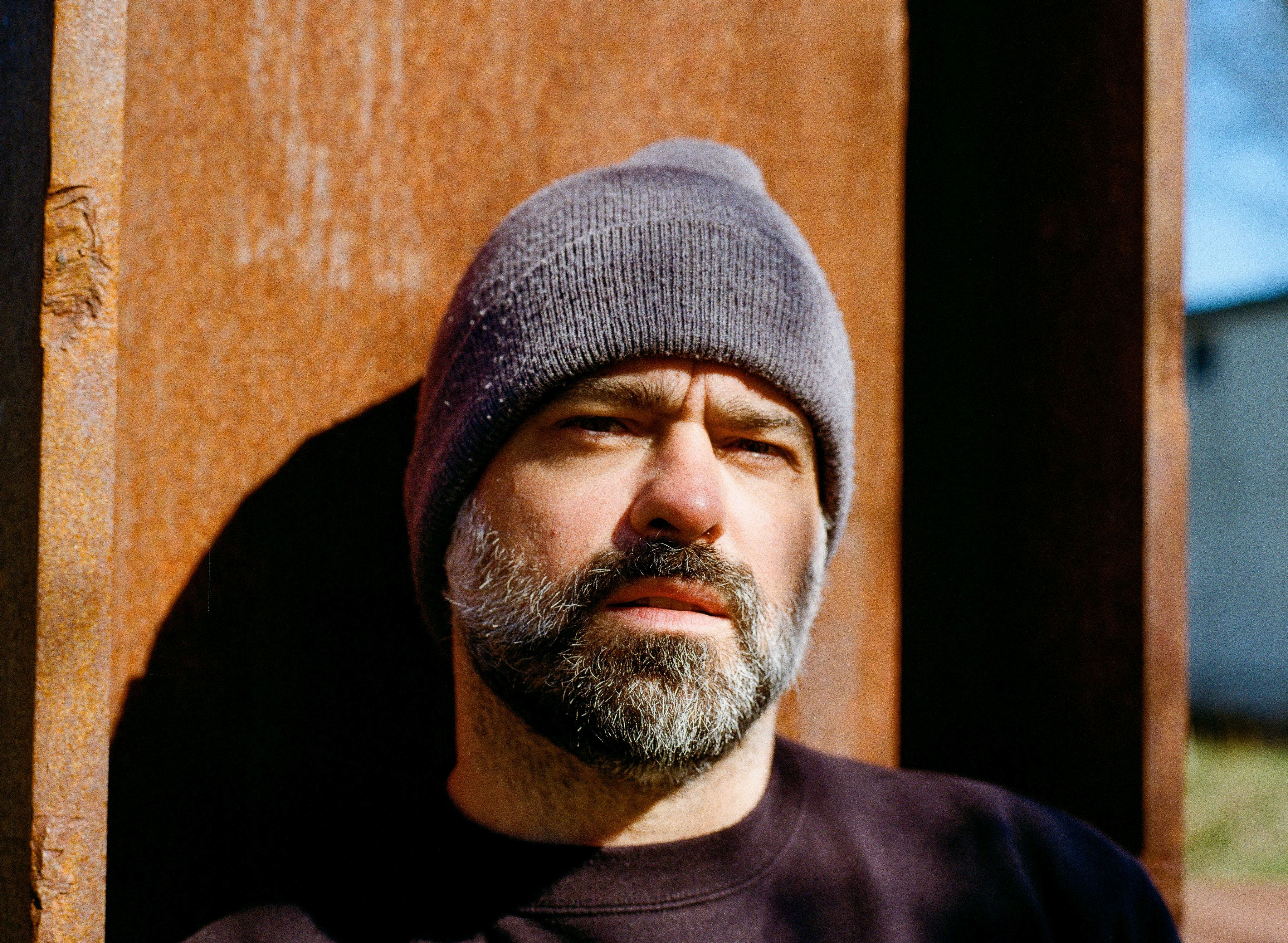 Marcel Vogel Interview Image (c) the artist
“Music is a way of life. The rhythm of life itself.“
Video
