Published
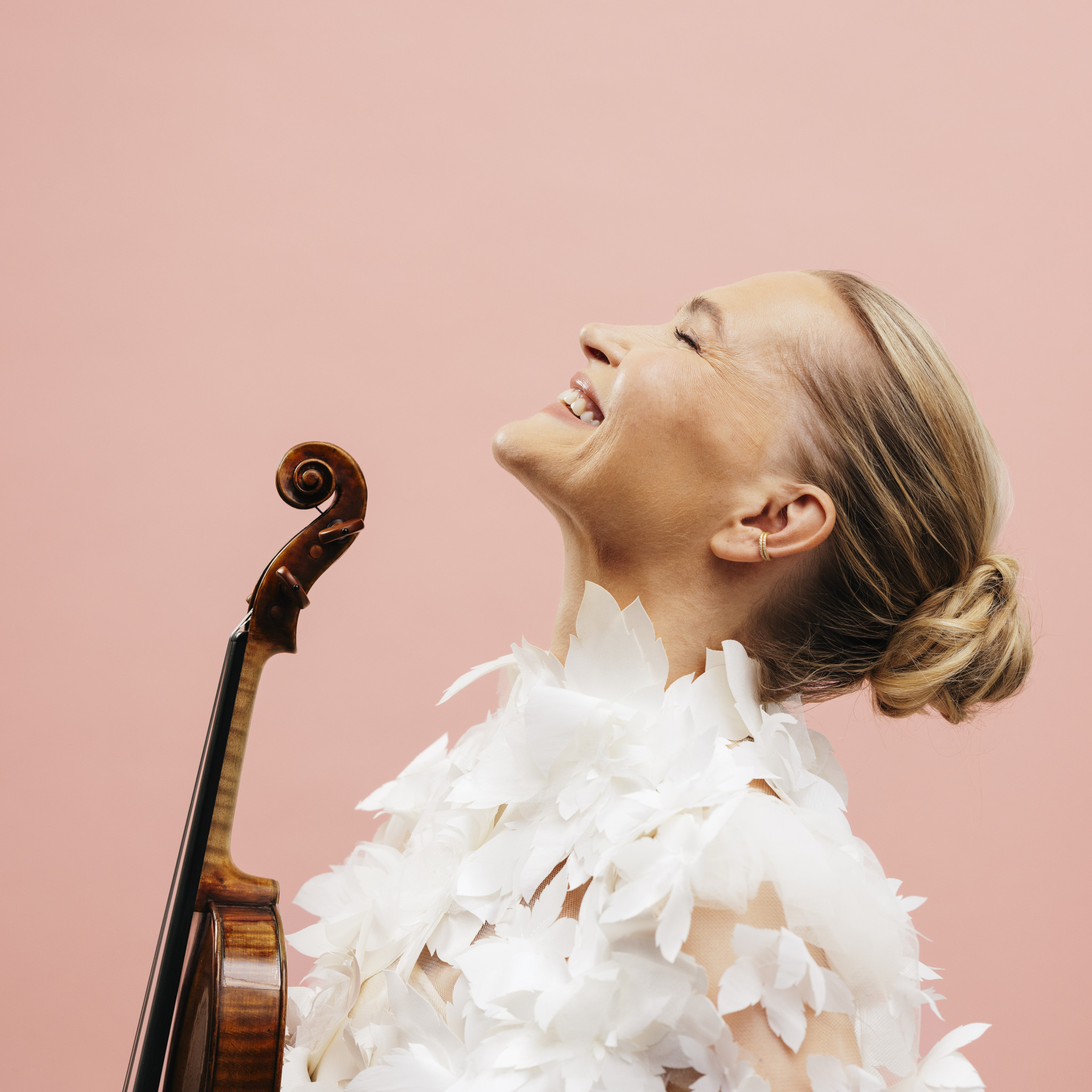
Name: Mari Samuelsen
Occupation: Violinst
Nationality: Norwegian
Recent release: Mari Samuelsen's LIFE is out via Deutsche Grammophon. It features works by Bryce Dessner, Nils Frahm, Ludovico Einaudi, Hania Rani, Steve Reich, Max Richter, and Olivia Belli.
[Read our Ludovico Einaudi interview]
[Read our Nils Frahm interview]
[Read our Hania Rani interview]
[Read our Max Richter interview]
[Read our Olivia Belli interview]
[Read our article on Max Richter's The New Four Seasons]
If you enjoyed this interview with Mari Samuelsen and would like to keep up to date with her work, visit her official website. She is also on Instagram, Facebook, and twitter.
For a deeper dive, we recommend our earlier Mari Samuelsen interview.
When did you first start getting interested in musical interpretation?
I think it's gradually grown on me. When I play a Beethoven concerto and make it mine, that's one thing. For me as a violinist that's always been there.
But finding my own path and personal musical identity came after that. That grew in my 20s.
Which artists, approaches, albums or performances captured your imagination in the beginning when it comes to the art of interpretation?
There are so many! In popular music, I've been very fascinated by Lady Gaga or the Rolling Stones.
Then of course I'm very inspired by the music of Philip Glass, Max Richter or Hania Rani and Bryce Dessner. That list keeps on growing.
Are there examples for interpretations that were entirely surprising to you personally and yet completely convincing?
Nils Frahm’s interpretation of “classical” music was very refreshing and unexpected when I first heard it.
Also, what Joep Beving was doing to the piano was very convincing. Coming from a violinist perspective, it was fascinating how he turned around the musical instrument and made his own interpretation of it, which sounded very personal.
How much creativity is there in the act of interpretation? How much of your own personality enters the process?
Very much. I would even say it’s 100%.
Could you describe your approach to interpretation on the basis of a piece, live performance or album that's particularly dear to you, please?
My approach differs each time. When I perform old and traditional music, I respect the historic roots of it and simply add my personal sound to it.
When I play new music, I have a different freedom. There's no reference - I can only trust my own musical intuition and go with that.
In many cases, the score will be the first and foremost resource for an interpretation. Can you explain about how “reading” a score works for you?
The score is an important foundation. It’s important to know all facts of the piece and to recognize as much of the composer's intention as possible.
But that alone is not enough to present it to an audience and communicate the piece. You must bring just as much of your personal touch to convince those you are playing for.
One of the key phrases often used with regards to interpretation are the “composer's intentions”. What is your own perspective on this topic and its relevance for your own interpretations?
One of the reasons I really enjoy playing music by living composers is that it is possible to communicate with them and find a way that is right for both me as a performer and for the composer, who has an original idea of how to convey it.
With regards to the live situation, what role does the audience play for your interpretation?
The audience plays a huge role for me. Without getting too spiritual, I would say there is a certain energy exchange that I feel. I can feel the unity, both between me and the team on stage and between me and the audience.
I find that very fascinating and a great motivation for what I do.
Some works seem to attract more artists to add their interpretation to it than others; some seem to even encourage wildly different interpretations. From your experience, what is it about these works that gives them this magnetic pull?
I think that's partly to do with popularity. A popular piece usually works. Also, some works are expected to be interpreted by a violinist who is learning the craft.
However, I think it's important to ask yourself: “Is this piece really the right one for me to perform? There has to be a certain conviction.
Artists can return to a work several times throughout the course of their career, with different results. Tell me about a work where this has been the case for you, please.
That will be “Johann Sebastian Bach: Chaconne d-Moll”
It’s an everlasting pillar of my work, which has changed, changes over time and will continue to change.