

Name: MARIA Die RUHE
Nationality: German
Occupation: Producer, DJ, vocalist
Current release: MARIA Die RUHE teams up with Tooker for a cover of WhoMadeWho's "Silence & Secrets," out via SONARA.
[Read our WhoMadeWho interview]
[Read our WhoMadeWho interview about the art of songwriting, conducted around the time of "Silence & Secrets"]
If you enjoyed this MARIA Die RUHE interview and would like to stay up to date with her music, visit her official homepage. She is also on Instagram, Facebook, and Soundcloud.
When did you first consciously start getting interested in singing? What was your first performance as a singer on stage or in the studio and what was the experience like?
I’ve been singing all my life, but for a long time it never felt like a real possibility to pursue professionally. It was something very personal, almost private.
My first actual performance happened in 2006 during an after-hours electronic music club session. It wasn’t planned — I just improvised in the moment, letting intuition guide me.
Afterwards, someone approached me who would end up changing my life. She was a classical singer and recognized something in my voice I hadn’t fully seen myself. We spent the whole night talking, sharing music, and exchanging ideas. Right there, she gave me my first-ever singing lesson.
That encounter was intimate and formative, opening a path that first led me through jazz before eventually bringing me back to electronic music. It made me realize my voice could be more than personal — it could become part of my artistic identity.
If you’re also playing other instruments, how does the expressive potential of these compare to your own voice?
I play piano and synthesizers for composing and in my live sets. I also produce my own drums, record found sounds, and shape atmospheres through production — all of which expands my expressive palette.
But my voice is the most direct instrument. It’s the bridge between soul and body, and the most universally connectable element. It allows for playfulness, yet it’s deeply personal — shifting from introverted reflection to extroverted performance energy can be challenging.
My production work complements this, allowing me to sculpt sound around the voice and fully explore its expressive potential.
Singing is an integral part of all cultures and traditions. Which of these do you draw from – and why?
I feel like I am the sum of all the music I’ve absorbed — from classic rock and hip hop to jazz, improvised music, minimal techno, and dance music. My travels exposed me to indigenous music and its raw, honest expression.
I try to keep my sets playful and full of surprises, letting all these influences flow naturally. The German language’s unique role in music is also fascinating, though that’s a discussion for another time.
What were some of the main challenges in your development as a singer? Which practices, exercises, or teachers were most helpful — were there also “harmful” ones?
A big challenge was overwork — trying to prove myself while managing full-time work and study. That led to burnouts and eventually intersected with my recent cancer diagnosis. I’m now redefining my relationship to music and work, which informs my new album.
Chronic jaw pain, finally diagnosed after 20 years, also forced me to prioritize health seriously to continue performing.
I’ve learned from teachers and from seeing what doesn’t work. Today, as an artist coach, I help others grow into their own artistic identity, whether they are vocalists, producers, or multi-disciplinary musicians. I’m not interested in imposing ideas; I guide people to discover their own voice and energy, and to develop the skills that support their unique artistic path.
What are the things you hear in a voice when listening to a vocalist? What moves you in the voices of other singers?
Personality and honesty move me most — vulnerability, depth, and the simplicity of words that convey real emotion.
Technical ability is impressive, but emotional connection and authenticity are what resonate most.
We have a speaking voice and a singing voice. Do these feel like natural extensions of each other, or different in kind?
I treat my voice as a homogeneous instrument across its entire range.
Speaking and singing are extensions of the same voice — consistent, flexible, effortless — shifting roles with emotion without strain.
How do you see the relationship between harmony, rhythm, and melody? Does honing your sense of rhythm and groove affect your singing skills?
All three — harmony, rhythm, and melody — are equally important. Rhythm work helps with timing and groove, but each element plays its own role.
They support each other without one dominating.
As a singer, it is possible to whisper, scream, reveal secrets, or confront audiences. How do you perceive and build this relationship?
Singing gives me full freedom. It allows whispering, screaming, revealing deep secrets, or confronting truths. When I add vocals in response to a crowd, spontaneous moments emerge — once-in-a-lifetime connections that are deeply powerful.
My production work also interacts with this energy, shaping the environment so the audience experiences a fully immersive, responsive performance.
How has technology, such as autotune or effect processing, impacted singing? Has it influenced your approach?
I’ve mostly danced around autotune — it hasn’t fit my work yet. I remain open to anything; maybe I’ll use it on the album — we’ll see.
My production experience gives me a strong sense of how effects can enhance or transform a vocal without losing its authenticity.
For recording engineers, the human voice is tricky to capture. What are some of your favorite recordings of your own voice, and what makes voices sound great in studio and live?
Finding the right vocal chain took a long time.
Meeting Christopher McLaughlin in LA last year leveled up my technical skills — he’s worked with Kanye West and Beyoncé and has Grammy nominations. Learning from him has been inspiring, and having mentors like him is invaluable.
Production allows me to sculpt both recorded and live sound so the voice translates emotionally and physically, preserving its character while enhancing its impact.
How connected is the human voice to your wellbeing, creativity, and society?
I believe in the power of the human voice — it’s the closest instrument we all have. Music can make us feel less alone, and I grew up with it always present.
I also see frequencies as a tool to heal and uplift. My work uses voice and music to help shift society toward a better, more conscious place. My music is a personal and collective soundtrack to transformation.
When writing song lyrics, do you sense a connection between your voice and the text? How about singing someone else’s songs?
A song isn’t right until it truly feels right. Words, melody, and music need to click naturally. Singing my own material, that connection comes instinctively.
With others’ songs, it’s about inhabiting their emotional space while letting my voice and instincts guide the performance. Ultimately, a song works only when it resonates emotionally and vocally.
My production work often feeds into this process, shaping the musical environment so the voice and lyrics feel integrated.
Strain is a serious issue for many vocalists. How do you take care of your voice?
Being a vocalist, and given my health, I prioritize overall wellness, which supports my voice.
Over the years, I’ve explored many techniques for vocal care and recovery, but specifics are best addressed in a personal coaching setting. In general, I focus on healthy habits, proper breath support, and mindful vocal use.
As an artist coach, I also guide others — vocalists, producers, and musicians — in preventing strain and building sustainable creative practices.

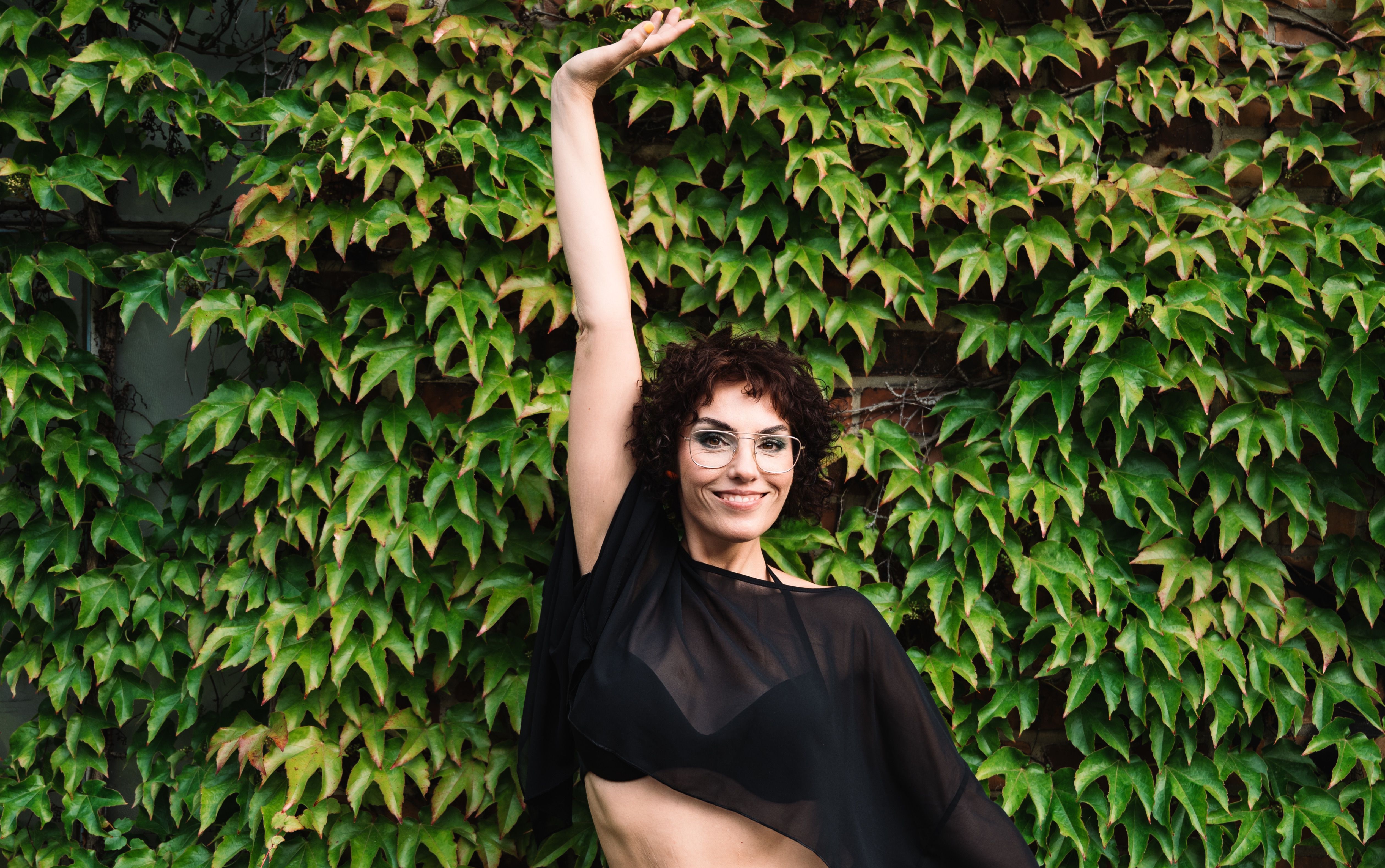 MARIA Die RUHE Interview Image (c) the artist
“My voice is the most direct instrument. It’s the bridge between soul and body.“
Video
