Published
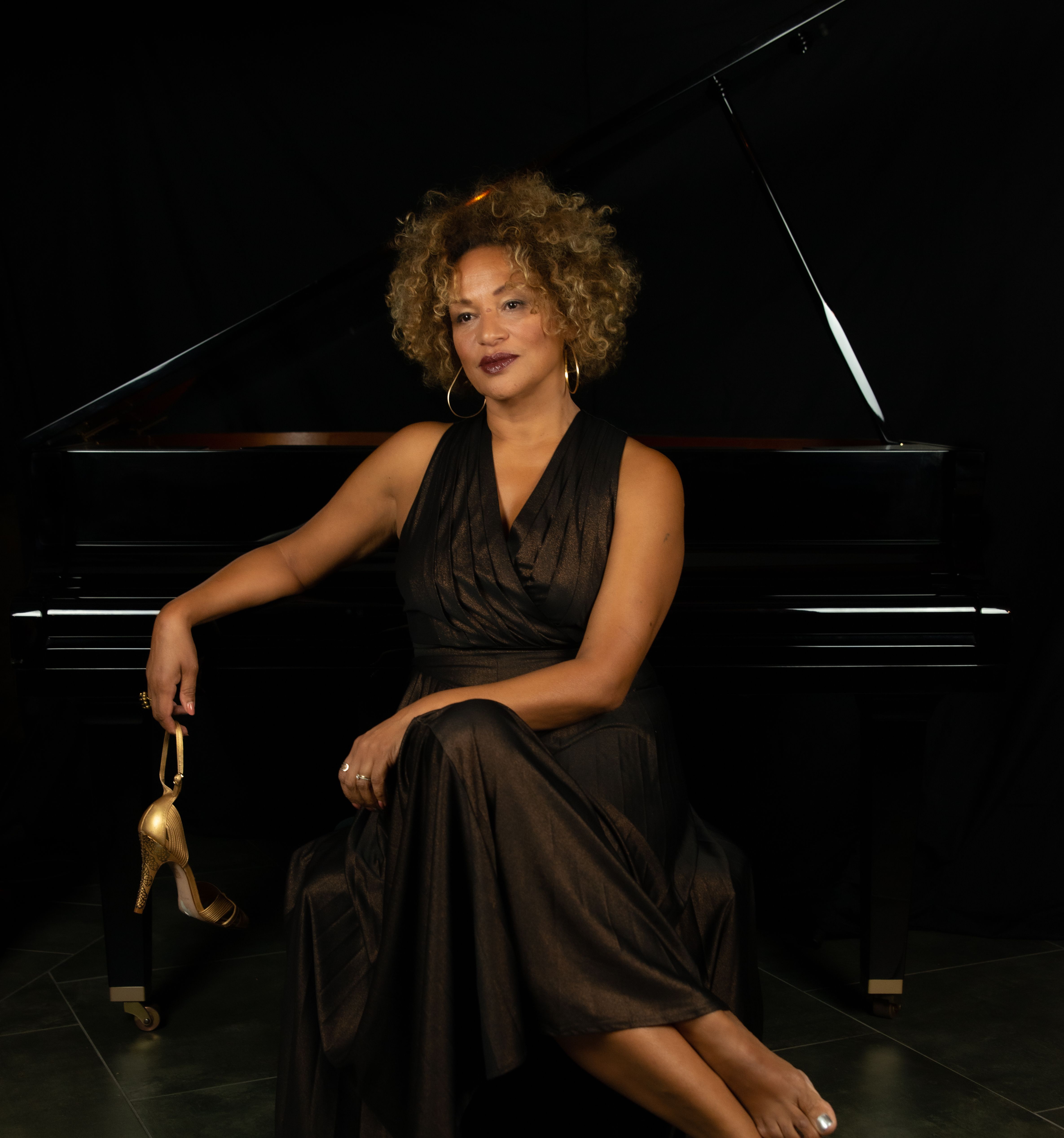
Name: Mariana Ramos
Nationality: Cape Verdian
Occupation: Singer, songwriter
Current release: Mariana Ramos's new album Sinfonico is out via Casa Verde Productions.
If you enjoyed this Mariana Ramos interview and would like to stay up to date with her music, visit her official homepage. She is also on Instagram, and Facebook.
When did you first consciously become interested in singing?
As the daughter of a professional musician, I grew up immersed in traditional music. My parents also listened to 1960s Latin music, African-American music, jazz, Motown, and French chanson.
My sisters and I used to sing standards together, and that’s when I noticed that while they often sang out of tune, I naturally placed my voice correctly and followed the rhythm. I loved listening to my mother sing Morna in Creole; it moved me deeply.
Dance was my first passion, but when I went on stage at 15 with my rock cover band, I realized I had more talent for singing than for dancing.
If you're also playing other instruments, how does the expressive potential of these compare to your own voice?
I enjoy accompanying myself with simple percussion instruments like maracas, which help me stay grounded in the rhythm.
Singing is an integral part of all cultures, and traditions. Which of these do you draw from – and why?
Morna is close to African-American blues and jazz.
These genres touch the soul directly through melodies and lyrics expressing “Sodade” — that sense of belonging to a country, a culture, roots — something universal across cultures.
What were some of the main challenges in your development as a singer/vocalist? Which practices, exercises, or teachers were most helpful in reaching your goals – were there also “harmful” ones?
Singing has always felt natural to me. I prefer singing to public speaking.
In the beginning, I made mistakes such as adding vocal effects to beautify my voice. This created bad habits that distorted my interpretations and altered my natural timbre.
After becoming aware of this — not immediately — I evolved and could hear my progress in my albums. At first, I didn’t fully master my mother tongue, Creole, and I had an accent that I gradually refined over time.
What are the things you hear in a voice when listening to a vocalist? What moves you in the voices of other singers?
A voice is primarily a timbre with different ranges.
I am especially sensitive to warm, low voices without excessive superficial effects.
How would you describe the physical sensation of singing? [Where do you feel the voice, do you have a visual sensation/representation, is there a sense of release or tension etc …]
Singing is letting go. One should not listen to one’s own voice but project it enough to ensure it reaches the audience pleasantly, especially without amplification.
Stage fright may create initial tension, but it quickly transforms into serenity, well-being, and gentle euphoria.
We have a speaking voice and a singing voice. Do these feel like they are natural extensions of each other, ends on a spectrum or different in kind?
The singing voice is a natural extension of the speaking voice. To remain sincere in interpretation, this connection is essential.
How do you see the relationship between harmony, rhythm and melody? Do you feel that honing your sense of rhythm and groove has an effect on your singing skills?
For me, melody is the most important element in a song. It is the key to a beautiful piece.
What are the potentials and limits of your voice? How much of your vocal performance can and do you want to control?
My mid-range voice moves comfortably into lower tones, which enhances its beauty.
In higher registers, I may occasionally drift slightly off pitch.
As a singer, it is possible to whisper at the audience, scream at the audience, reveal deep secrets or confront them with uncomfortable truths. Tell me about the sense of freedom that singing allows you to express yourself and how you perceive and build the relation with the audience.
To be close to my audience, I must remain sincere and authentic in every interpretation.
The audience sees, hears, and feels everything.
I'd love to know more about the vocal performances for Sinfonico, please, and the qualities of your voice that you wanted to bring to the fore.
Sinfonico was recorded live with a symphonic orchestra and a major challenge in my career. Blending classical music with the traditional music of Cabo Verde was a bold project.
I find the result surprising and wonderful, while preserving my original and natural interpretation.
When you're writing song lyrics, do you sense or see a connection between your voice and the text? Does it need to feel and sound “good” or “right” to sing certain words? What's your perspective in this regard of singing someone else's songs versus your own?
Words influence interpretation. Intention and intonation vary according to meaning.
Even when singing another writer’s song, the interpretation will never be identical — except in imitation.
Accuracy of pitch is not the most important element; intention matters more.
Strain is a particularly serious issue for many vocalists. How do you take care of your voice? Are the recipes or techniques to get a damaged voice back in shape?
The recipe is simple: sleep well and stay hydrated.
How has technology, such as autotune or effect processing, impacted singing? Has it been a concrete influence on your own approach?
Auto-Tune and sound processing can suit certain musical styles. In traditional music, however, they do not add authenticity.
For recording engineers, the human voice remains a tricky element to capture. What are some of the favourite recordings of your own voice so far and what makes voices sound great on record and in a live setting?
I prefer my voice live rather than in the studio. Live performance carries more emotion and authenticity.
Motherese may have been the origin of music, and singing is possibly the earliest form of musical expression, and culture in general. How connected is the human voice to your own sense of wellbeing, your creativity, and society as a whole?
What could be more wonderful than connecting with others and bringing well-being to someone else?