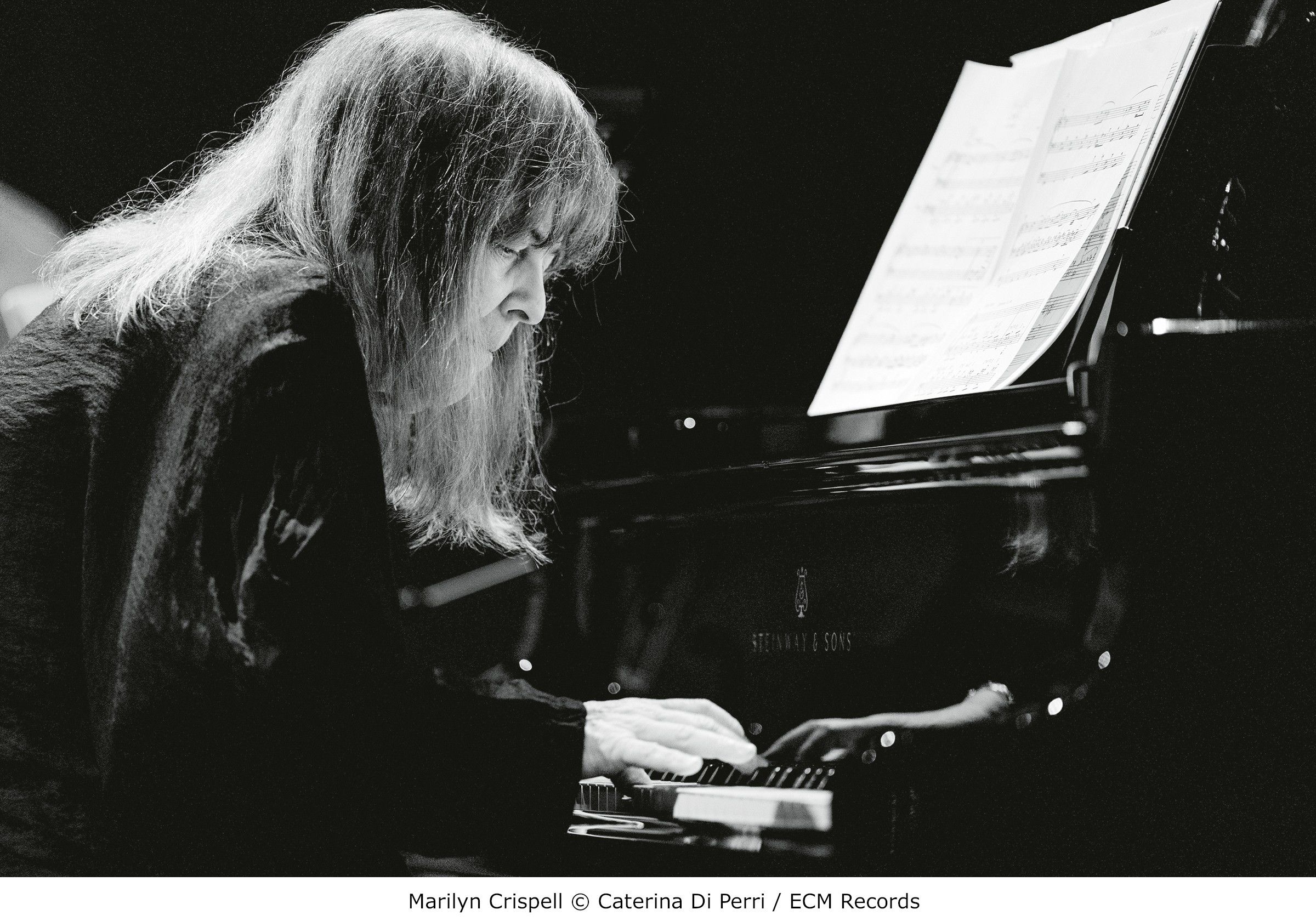
Published
Name: Marilyn Crispell
Occupation: Pianist, composer, performer, improviser
Nationality: American
Current release: Marilyn Crispell teams up with Anders Jormin for their new album Memento, out now via ECM.
If you enjoyed this Marilyn Crispell interview and would like to know more about her music, visit her official website. She is also on bandcamp.
When did you first consciously start getting interested in musical improvisation? What was your first improvisation on stage or in the studio and what was the experience like?
I’ve improvised since I first started studying classical piano at age seven, making up little songs around the pieces I was studying, etc.
My first major experience of improvising in public, besides playing for modern dance classes, was when I attempted to play Beethoven’s Pathetique Sonata in a student recital.
Tell me about your instrument and/or tools, please. What made you seek it out, what makes it “your” instrument, and what are some of the most important aspects of playing it?
The piano, I, the musicians I’m playing with and the people listening are all one instrument, in a manner of speaking- we are all essential alchemical elements in the musical experience.
Within that realm of experience are many different elements, and there is a fluid interchange between them.
Do you feel as though there are at least elements of composition and improvisation which are entirely unique to each? Based on your own work or maybe performances or recordings by other artists, do you feel that there are results which could only have happened through one of them?
Improvisation and composition are related- different but not separate. You can’t really compartmentalize them.
You could speak of improvisation as spontaneous composition, and in fact, we carry everything we’ve ever seen heard, learned, felt, experienced within us, and it all comes into play when we’re creating music. Nothing comes from nothing. We’re a repository of all our life experiences- emotional, intellectual, spiritual …
I often improvise things at the piano, write down some of the ideas I like, then go back and add, subtract, change things. Occasionally I work with a system to write a piece, but I’m always free to change things within the system if I don’t like them.
When you're improvising, does it actually feel like you're inventing something on the spot – or are you inventively re-arranging patterns from preparations, practise or previous performances? What balance is there between forgetting and remembering in your work?
It’s not as if our brain is turned off when we improvise.
Sometimes we function more on an executive level, making choices and judgments, changing and organizing things, and other times we function more on an intuitive level where the executive function is still present, but more on the back burner.
It’s as if we’re the instrument, and we’ve prepared the ground for the music to take place. We’re not jumping in blind.
In a live situation, decisions between creatives often work without words. From your experience and current projects, what does this process feel like and how does it work?
Listening and going with the flow of the music, in an ensemble and also solo, requires moment by moment adjustments to the flow of the music, and a willingness to give up preconceived ideas of what should happen.
I often feel that the music is coming through me as opposed to from me, and I’ve just prepared the ground to make that possible. Many musicians have said the same thing.