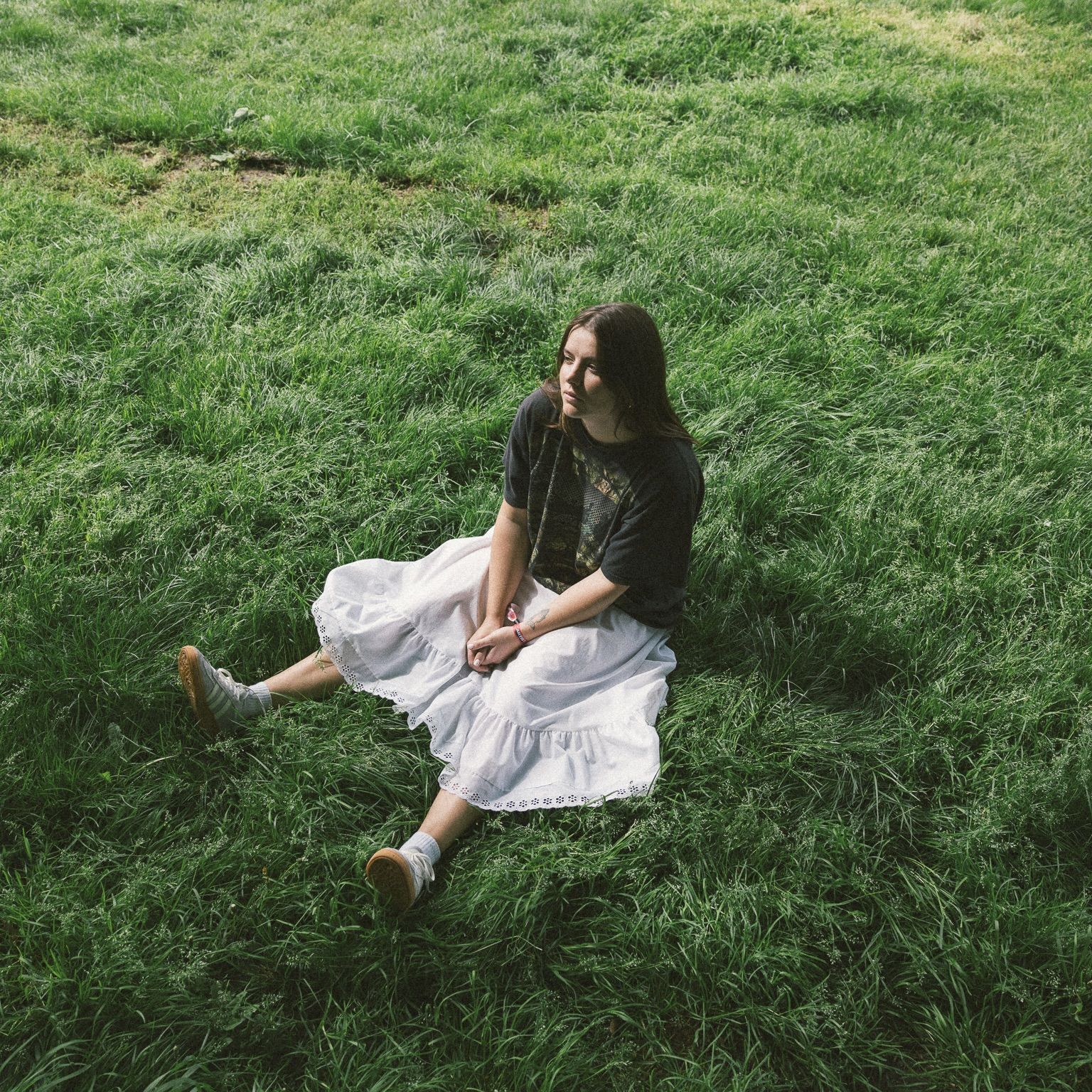
Published
Name: Marissa Burwell
Nationality: Canadian
Occupation: Singer, songwriter
Current release: Marissa Burwell's new singles "Tell me when it rains" and "Say it again" are out via DevilDuck. They are taken off her upcoming new album Before The Hour's Up.
If you enjoyed this Marissa Burwell interview and would like to know more about her music, new releases and upcoming live dates, visit her official homepage. She is also on Instagram, Facebook, and tiktok.
Do you think that some of your earliest musical experiences planted a seed for your interest in writing lyrics or poetry? How and when did you start writing?
Absolutely. I was always a journal kid, having multiple going at a time, writing about my crushes, the injustice of a 7-year old’s life and also coming to terms with real fears and sadness in my little heart.
The journaling continues always. Though when I was a kid I would never finish a journal, I would want to find a cool new one to write in before my previous one was even filled. Now I take great pride when I fill in that last page.
I think journaling really got me in touch with my feelings which allowed me to begin writing poems and then lyrics. In grade 5 (I think?) my teacher Mr. Howse had like twenty guitars in his classroom and I joined guitar club, in the years after picking up the basics I began pairing the poems with the guitar. It gave me a place to express things that I didn’t feel like I could talk to anyone about.
Things really developed for me in high school when I met my first friend that had a shared interest in singing and most importantly song writing. My friend, Amaya, and myself began sharing songs with each other and writing together. From then on, I really haven’t stopped.
Entering new worlds and escapism through music and literature have always exerted a very strong pull on me. What do you think you are drawn to most when it comes to writing?
I use writing as a coping mechanism, that’s where it began so I guess in a way writing was/is a form of an escapism for me too. While I have tried to sharpen my skills so I am writing songs more than when I am only in crisis, coping with those big hard feelings continues to be at the forefront of why I write and why I play.
I’m drawn to the idea of being understood and I feel like when I am writing I’m building a tool to make that happen. Writing a song and being able to portray how I feel in that exact moment, or disguise those thoughts I don’t want to say out loud to a string of words that don’t sound so exposing feels so freeing.
Like I am telling listeners everything about me but you have to look at it in the right light in order for it to be exposing.
I have always considered many forms of music to be a form of poetry as well. Where do you personally see similarities? What can music express which may be out of reach for poetry?
I definitely agree that music can be a form of poetry. Looking at that comparison strictly literal, there are songs of mine (specifically in my earlier catalogues) that have started as poems and turned into songs.
For example, the first song I ever put out in 2019, “Missing Number,” was first a poem and then turned into a song. So, the similarities in this example are quite straight forward.
I think poetry and music can provide similar and very different experiences. Something I think music can express with ease is the unmissable influence of mood.
While both forms provide room for the reader/listener to use their own experiences to interpret the piece, hearing the accompaniment of instruments and what they’re playing before the vocals even start have you making a judgment on what the vocalist is trying to portray.
For example, you hear slow sultry piano lead into soft vocals; you may think the song to be sad, when you hear blaring horns and a choir of vocals at an up-tempo speed you may make an assumption that its celebratory. Those assumptions can be wrong but with poetry you have to dive right in and read it a time or two before the initial judgement.
Now this is all coming from a girl that is just starting her poetry consumption journey so my insight is subject to change!
What are areas/themes/topics that you keep returning to in your lyrics?
My lyrics are 99% of the time melancholic for sure.
I have a tendency to focus on the wonder and uncertainty of the future rather than take things as they are moment by moment. This leads to existential questioning on whether I do one thing or another and I go around and around in circles for a real long time. Some examples of my contemplation are in “Roles Reversed,” “Either Way” and “Tight Grip.“
“Roles Reversed” - I’ve been trying to convince myself, that I don’t want to be somewhere else. Theoretically, I don’t know where that place would be. You felt like home before, but I think I’ll move next door.
“Tight Grip” - How long do you fight for it? Till there’s nothing left to give / If I’m giving up on this, will I spend my life asking what could have been?
“Either Way” - How long should I stay looking for land? Drop the paddle and go with the stream, I’m dying to know which way it would take me.
I also tend to process past relationships in a new light via song.
“Inside Out” – I had to stop picking up your calls cause — I’m on the other line. When I left, we said we’d stay friends but that feels like another life.
“Poplar Tree” - I wanted to know you for myself, now all I know is through someone else.
“You’re Not Trying Very Hard” - You’re not trying very hard, I don’t like to think about if you did. I used to cry on my birthday now I am crying on yours.
“Bittersweet” - I ran away, from the things you could have said. Cause I knew I would have stayed , so it was easier I left.
On the basis of a piece off your most recent release, tell me about how the lyrics grew into their final form and what points of consideration were.
My latest release is the second single (“Tell Me When It Rains”) off my upcoming record (Before the Hour’s Up). “Tell Me When It Rains” was the first song to be recorded for the record and my first co-write of the album.
Sam Lynch (co-writer) and I were discussing the details of my relationship. My partner and I had spent significant time away from each other for the last couple years and with that came a lot of distance (physical and emotional). I dumped everything out to Sam, the desires to share a life with my partner and not simply update one another on the weather conditions of the city we were in.
Throughout this period, I felt like the sadness of this time did a number on me. I’d always known myself to be overly romantic, hopeful, a dreamer and now I felt hardened, focused on what I was missing out on instead of dreaming about the future. It felt like I was losing a part of myself, I loved that part of myself and now I couldn’t find it.
In the song I write “A callus on my heart, I try not to be mean, I used to be so soft, now the thing won’t even bleed”. This song helped me explore those feelings, taking away the shame of it and just sitting in the uncomfortable feeling for what it was.
I would love to know a little about the feedback you've received from listeners or critics about what they thought some of your songs are about – have there been “misunderstandings” or did you perhaps even gain new “insights?”
There have definitely been misunderstandings and confusion from listeners.
I have a song called “Francis,” it sounds like it could be about a long-lost love but really it was a song I wrote about leaving my best friend after meeting in England when we were both studying abroad.
On my first EP, there is a song called “Connemara,” I have had people think it was about a relationship where I was cheated on, but really, we were never together. I was just romanticizing the “relationship” in my mind and while I did that, I didn’t know they were with someone.
So, it felt like betrayal but really it wasn’t.
I have also had folks ask me why my songs are so sad if I am in a relationship, or be confused who they could be about since I am in said relationship.
To that I say, I can romanticize anything. I will be reminded of a feeling from a past relationship, maybe have a delusional thought about how someone feels about me now, or I can explore the hard feelings that can come up in a relationship.
Also, not all relationships that I write about have to be romantic. They can be family dynamics, friend dynamics, or even the person that was mean to me at the grocery store dynamic!
What were some of the artists and albums which inspired you early on purely on the strength of their lyrics? What moves you in the lyrics of other artists?
I have thought about lyrics in music for as long as I can remember. Growing up I would put myself in the story of so much of the music I was listening to and pretend I was the main character of the story, whether I was listening to Taylor Swift, Carrie Underwood, Beyonce.
Growing up with Taylor Swift’s records was integral in my love of storytelling in songs. Her first records Fearless and Speak Now were relatable, fun, and witty.
Fast forward to the years when I started to write songs more intentionally, Julien Baker was a big influence, her song “Appointments” had me in a choke hold for I swear a full year after I heard it for the first time.
Paired with Julien shortly after were Phoebe Bridgers and City and Colour.
Relatability is a big part of what moves me in other artist’s lyrics, songs that I wish I wrote because they feel so relevant to my season of life.
The poetic nature of lyrics also very much moves me whether it’s the not knowing exactly what the writer is trying to say that gets me thinking or maybe they describe a scene that makes me feel like I am standing there in it, living in the scene they have created for the listener.
Have there been song lyrics which actually made you change (aspects of) your life? If so, what do you think, leant them that power?
Because I use writing as a processing and coping tool, I often make discoveries along the way which can lead to inspiration for change. My song “Coward” starts with the line “I’m showing my teeth too often, ashamed to say that its common”. Picture me as a dog, snarling, that’s the idea.
It was my first public admission that I wasn’t being the person I wanted to be. I felt ashamed, I feel like the general picture of me from the outside is kind, happy go lucky kind of gal, and this public admission was me bursting the bubble and acknowledging that those aren’t always words I would use to describe myself.
However, at the same time, it felt like a wakeup call because above all I want to be kind and shame took over as I pictured others seeing me the way I was seeing glimpses of myself, teeth out.
Upon deeper reflection, I had a realization that these feelings were coming up due to the fact I wasn’t living authentically. This sounds hippy-dippy but stay with me. In the song I say “I’m a coward, can’t say what I want, it’s on my tongue but I can’t spit it out”, this is me realizing that I’m holding in how I truly feel, specifically when the feelings could make me or others uncomfortable, instead I hold it in and it bubbles up. I don’t trust that I feel the “right” way, or that I want to make the “right” change.
As I continued to write the song, I decided that I needed a shift in language to change the narrative. I couldn’t sing a song over and over about how I’m not capable of speaking up for what I want and that I’m just going to stay gagged.
In the last pre-chorus I added another line “what if I speak up and dealt with the repercussions then? This single line challenges everything, it's asking me what’s the worst that can happen? Telling me that I need to make changes of my own to see changes.
This single line gave me the power to question my life instead of accepting it as is and believing that I have no control. It challenged me to take those risks and speak up instead of cowering away.