Published
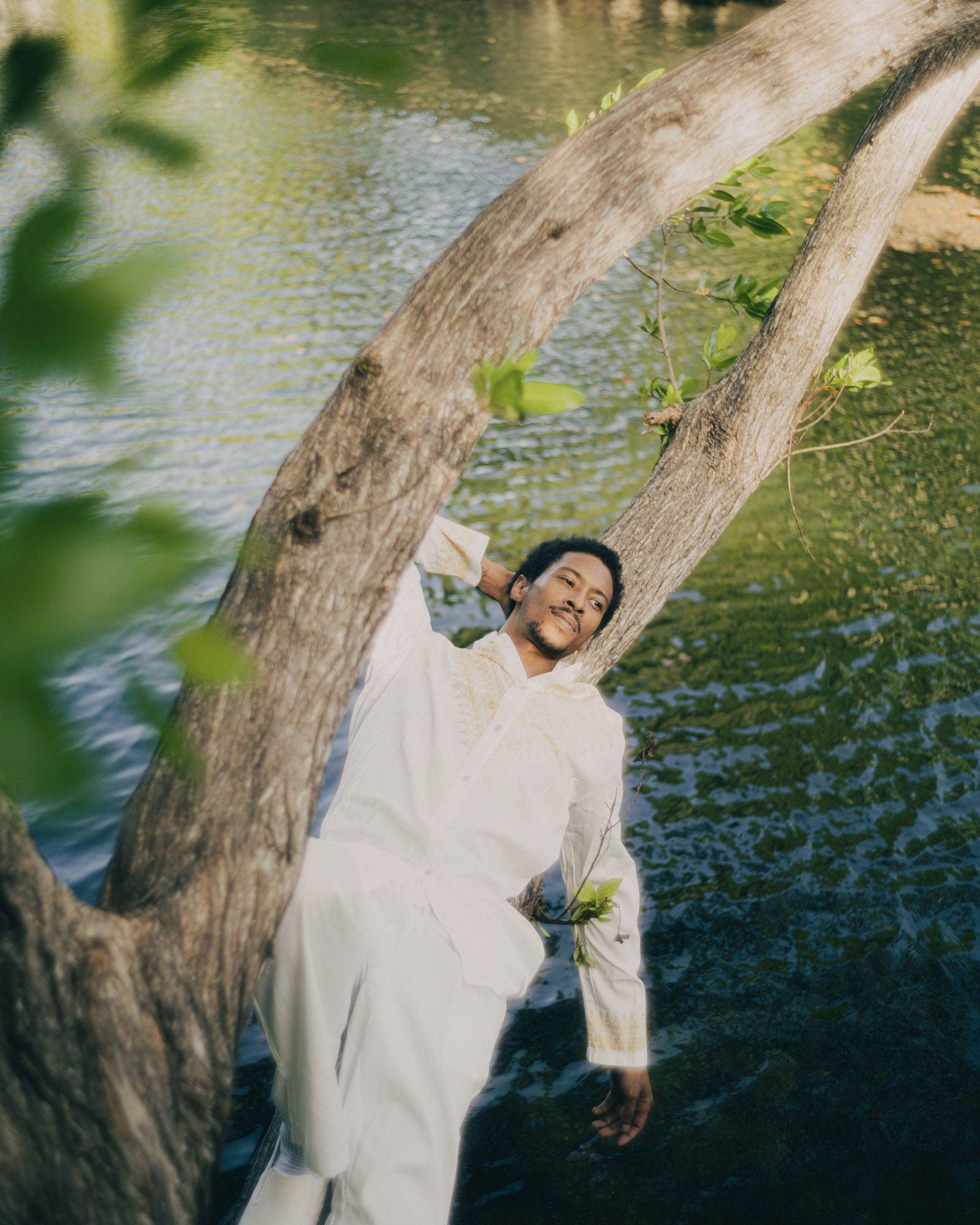
Name: Marquis Fair
Nationality: American
Occupation: Singer, songwriter
Current Release: Marquis Fair's new album Better World is out now.
Recommendation for Miami, USA: Earth 'n' Us Farm.
If you enjoyed this Marquis Fair interview and would like to know more about his music, visit him on Instagram, Facebook, and bandcamp.
When did you first consciously start getting interested in singing? What was your first performance as a singer on stage or in the studio and what was the experience like?
It was terrifying, was shaking the entire time, I had never done something so nerve wrecking.
It also made me want to do it more so I could settle my nerves and perform to the best of my ability.
If you're also playing other instruments, how does the expressive potential of these compare to your own voice?
The music helps me express my voice and passion - I do not necessarily use the music or notes themselves to express myself. However the musical tones do dictate the mood of the expression.
So if the sound is melancholic even though I may say something positive, the overall mood may still be melancholic due to the pairing with the music.
Singing is an integral part of all cultures, and traditions. Which of these do you draw from – and why?
I take from my ancestors who created some of the most popular forms of music to date.
They had an incredible ability to turn hardship into triumph. I carry that with me and you can feel it when I sing.
What were some of the main challenges in your development as a singer/vocalist? Which practices, exercises, or teachers were most helpful in reaching your goals – were there also “harmful” ones?
Performing everyday was the best practice and teacher for me. I had already had formal training in high school but nothing too in-depth or enriching. It was more of a basic Do, Re, Me and breath techniques.
I was making the bulk of my income through street performing which gave me a good incentive to keep getting better.
Playing and singing better equals better pay and opportunity - that was my mind set at that time.
What are the things you hear in a voice when listening to a vocalist? What moves you in the voices of other singers?
I love vocal acrobats when people start one way and end another.
Also the subtle ad libs before or after a word is sang are some of my favorite things to listen to vocally.
How would you describe the physical sensation of singing? [Where do you feel the voice, do you have a visual sensation/representation, is there a sense of release or tension etc …]
The best way I could explain it is that you release tension that you have built up by yelling or screaming. If you ever find yourself angry or frustrated, try yelling at a wall and see how much better you will feel.
Or if you have ever been to church where they have a good choir. After and during the singing, you can feel the same way. It’s a release of tension and a cry of relief balled into the production of sound.
We have a speaking voice and a singing voice. Do these feel like they are natural extensions of each other, ends on a spectrum or different in kind?
Definitely I feel they are on the same spectrum.
Your singing voice is your most powerful form of your natural ability of expression - it is an extension of your speaking voice.
How do you see the relationship between harmony, rhythm and melody? Do you feel that honing your sense of rhythm and groove has an effect on your singing skills?
They go hand in hand and one without the other is just not enough.
Yes, your sense of rhythm and groove has an effect. Being able to get lost in the music so to speak will allow for spontaneous ideas that align with the vibe of the sound.
What are the potentials and limits of your voice? How much of your vocal performance can and do you want to control?
Certain keys that are above my range and some that are below are off limits for me. I do believe with proper training I could achieve my own version or close to the vibe of the octaves but maybe not actually hit the note itself.
I do like to get lost in the music so I let the music guide me. Most of the performance is automatic - the control or awareness comes in when factoring in time and staying synchronized with the band, mainly when I am playing an instrument as well. Without the instrument I’m letting the music guide me and getting lost in the performance.
The only control or awareness I have then is for my breathe and to be sure to express each line to sound the way I meant for it sound when I wrote it. That can be difficult when factoring the speed at which I wrote the music and the speed of the song during a live performance.
As a singer, it is possible to whisper at the audience, scream at the audience, reveal deep secrets or confront them with uncomfortable truths. Tell me about the sense of freedom that singing allows you to express yourself and how you perceive and build the relation with the audience.
To be honest this is the one are where I need the most improvement.
I have plenty of experience expressing myself and engaging with small crowds under 500 people. It’s also not so hard because the settings an are intimate and I feel comfortable.
However, with large crowds of 3000 plus I need more experience. It’s actually a bit nerve wrecking, there are so many faces and you want to give them all a bit of attention, like they deserve. However, you have to perform and try to give everyone as much attention as you can.
I'd love to know more about the vocal performances for your latest release, please, and the qualities of your voice that you wanted to bring to the fore.
I wanted to show different qualities of my vocal style. I have a wide range of qualities that I express in this new release: Some softer tones paired with a rasp; blending lots of contrasts to establish sort of yin yang connections.
When you're writing song lyrics, do you sense or see a connection between your voice and the text? Does it need to feel and sound “good” or “right” to sing certain words? What's your perspective in this regard of singing someone else's songs versus your own?
I feel a very strong connection between my voice and the text. They go hand in hand, the words inspire the passion with which I express my vocal intonation and even the meaning of a word can generate a different sound.
Strain is a particularly serious issue for many vocalists. How do you take care of your voice? Are the recipes or techniques to get a damaged voice back in shape?
Drinking “warm” tea, wearing a scarf, resting well - all of these things are essential for taking care of my voice, especially when touring.
How has technology, such as autotune or effect processing, impacted singing? Has it been a concrete influence on your own approach?
I don’t use autotune.
There are recording techniques that can make you sound like you are in a gym or in a bathroom. There is also something called reverb that cleans and enhances the quality of your vocals ... these are standard recording tools that professionals use.
Aside from the standard use of reverb and non voice altering effects, I like my vocals to be as dry as possible. I want people to get the closest to what they would hear and feel if they were in a room with me while I am performing.
For recording engineers, the human voice remains a tricky element to capture. What are some of the favourite recordings of your own voice so far and what makes voices sound great on record and in a live setting?
None of my favorite recordings is of me singing a song that I have not finished. It’s so very peaceful, the way it makes me feel and I’m sure others as well. It’s very hopeful.
What makes voices sound great on recording and live is the essence of the individual. No one can create another version of you, your fingerprint is unique and so is your expression.
Therefore every individual is uniquely amazing in their own way and however they choose to express their individuality will inspire their unique expression when performing live or recording.
Motherese may have been the origin of music, and singing is possibly the earliest form of musical expression, and culture in general. How connected is the human voice to your own sense of wellbeing, your creativity, and society as a whole?
Singing is healing, it heals me and others, it soothes their souls. It also alarms and informs.
Therefore my voice is interconnected with my wellbeing, creativity and society. All of these factors influence what I sing about and how I sing. Vice versa, I also use my singing to influence these factors as well.