Published
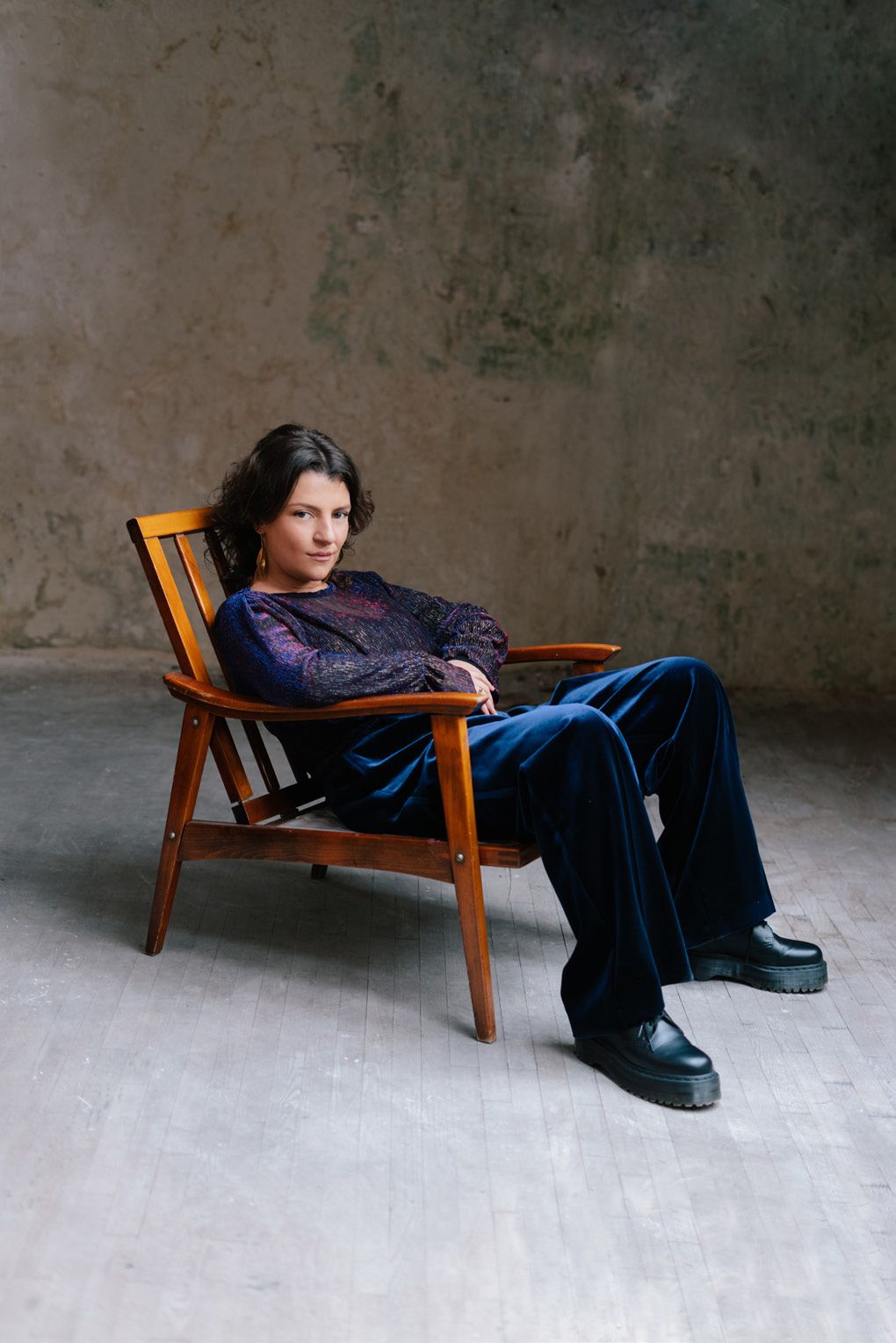
Name: Marta Finkelštein
Occupation: Pianist, curator
Nationality: Lithuanian
Recent release: Marta Finkelštein's new LP Between a Thousand Moons is out via Music Information Centre Lithuania.
Recommendations for her hometown of Vilnius: Vilnius is a perfect city for flaneur’ing - walking through the city without particular aim, observing streets and people. This is also the title of a project that I curated in 2020, during quarantine when walking through an empty city was an only reminiscence of normal time.
My invitation to travelers is to listen to this album with music by Lithuanian composers Dominykas Digimas, Julius Aglinskas and Ramūnas Motiekaitis, who created an album that really captured the essence of Vilnius - nostalgic yet bright. This suggestion comes from me, as a person who loves flaneuring through cities. I often don’t have particular goals, but my favourite thing is observe the city and its everyday life.
Topic I rarely get to talk about: I am passionate about music curating. I finished my artistic doctorate at Lithuanian Music and Theatre Academy researching this topic and often I am realising my curatorial ideas in the context of ensemble Synaesthesis. For me it is a real playground of experimentation of possibilities to get with musical projects to more contextual interdisciplinary space.
If you enjoyed this interview with Marta Finkelštein and would like to keep up to date with her work, visit her official website.
When did you first start getting interested in musical interpretation?
The moment I started to read the musical score - the interpretation began. Musical space for forming certain concentrated ideas fascinated me - it seemed endless.
From the very beginning I also noticed a huge difference between the feel of playing the pieces in the practising situation and on stage. The sense of time, energy and meaning were completely different - changed by the circumstances of the moment.
With time and experience as a pianist and music curator - I gathered more and more insight and now I would say that interpretation is a very complex phenomenon. It starts from creative reading of notated musical ideas, but it also includes space, context, communicational message, relationships between other performed pieces, overall mood of the performance and many more details.
I often can tell how my performance will go by small details: the tone of the person who met me at the venue, concert hall design, chosen program, and the curiosity and sense of audience. And a good audience is the biggest luxury in a performer's life.
Only a great audience gives space for performers to take real creativity, breathe with each phrase, go to radical dynamics, in some instances even read intended humour and get lost with you in passages - it is the ultimate professional pleasure.
Are there examples for interpretations that were entirely surprising to you personally and yet completely convincing?
At the moment I am fascinated with pianists that are performing their own music. In some ways it seems like coming back to roots of piano recital tradition, as I remember reading stories of how iconic composers (Ferenc Liszt, Frederic Chopin, Clara Schumann just to name a few) fantastically performed their own music as well as improvised.
People like Nils Frahm, Duval Timothy, Chilly Gonzales, Koko Nagani, Hania Rani and many other incredible artists are creating their own music and giving new breath to the piano.
[Read our Nils Frahm interview]
[Read our Chilly Gonzales interview]
[Read our Hania Rani interview]
I have a duo with composer Agnė Matulevičiūtė, where we are making music - myself on piano and her with her collection of synthesizers. It is a pleasure to create, taking with me all the knowledge of piano playing, extended techniques and repertoire. But there is a certain importance to me to study and perform music that is composed by other people. In this balance I find my pianistic identity.
Also I am searching for a fresh outlook on repertoire. I enjoy masterful performances of canon pieces, but my pleasure is to read the narrative in the programming decisions, or seeing instruments in a new light. Thinking of new ways of seeing Lithuanian piano repertoire was the basis on forming the album Between a Thousand Moons. I wanted to blur the sense of an aesthetical category and the periods that pieces were created.
There are compositions from 1905 to 2024, but they are not performed in chronological order and structured by suggesting interactions between pieces. It is my game with Lithuanian authors and genres - I mix pieces for children, or those that were popularised by being ”competition” pieces or just taking things from archives that I find very interesting but forgotten.
I want to reach a sense of freshness of well known pieces, or authors by putting them in a new light. They are all miniatures, so I have a chance to have a broad variety of Lithuanian music representation.
What do you personally enjoy about the act of interpretation? Are you finding that this sense of enjoyment is changing over time?
There were so many chapters in my life around the topic of interpretation. From the primal sense of discovery of creative space in reading text to more complicated periods.
I came into quite a big crisis in my study years. It was a story that many classical pianists can relate to. As pianistic culture creates pressure for perfection influenced by recording culture (that now I understand often are heavily edited), as well as competitiveness coming out of the realisation that thousands of people are playing the same repertoire. I felt paralysed in forming my own interpretation.
My biggest shock was when I came to study in the UK and I started to get “reports”. Little reviews after every playing that very often would go bar by bar, meticulously commenting on each sign in the score. Sometimes it would be things like - “in bar 46, there is a crescendo from p to f, you only did p < mf”. I was lost as I was sure that interpretation is more nuanced than this, that there is a gradation of meaning of each sign in the overall logic of the piece, and even they can be interpreted differently around the main interpretational idea, depending on the space instrument and every detail on performance day.
Certainly I felt I was not encouraged to interpret, but only recreate the text. It depleted me. I was trying not give up, still hold on the idea of artistic expression, but those reports were torture to imagination and artistic dialogue. Like a bureaucratic outlook to pianistic expression. I got an allergy from this text reading devotion.
It took me many years to mature as an artist to form my own criteria and feel meaning in interpretation. Or simply to understand that forming personal interpretation by creating your personal relationship with the piece is more meaningful than fitting into certain academic music criteria.
A lot of it has to do with working in the contemporary music field and taking down the myths of ‘auteur’ - meeting with live people who write music and understanding that signs in score shifts through years and different circumstances. It does not take importance from signs in text, rather gives it wider context and artistic space.
How much creativity is there in the act of interpretation? How much of your own personality enters the process?
Everything in interpretation comes through personality.
One of the ideas shared by a teacher, who is an important person in my professional path - Diana Berulytė, stuck with me. After sitting in exams for the whole day she told me how when listening through countless pupils she can tell - if they have a sense of humour, if they read books, know other languages and many things about their character.
In an interesting way, this idea liberated me from thinking that interpretation is formed only at the piano. The conclusion is simple - you have to live a very full life to channel something meaningful to the audience.
Also interpretation is about being daring - after playing countless contemporary composers that I often met in real life - I also dropped the idea that musical text is a somewhat perfect translation of a finished idea. Very often composers seek performers' insight and trust performers' suggestions.
Let’s not forget that performers have very different experiences - on stage time flows differently, dramaturgy or ideas are being presented live - depending on instrument, space, audience. I can bet - if Frederic, Ludwig or Clara would participate in rehearsals of their pieces today - they would have open discussions, not only pointing to the things written on paper.
What was your own learning curve/creative development like when it comes to interpretation - what were challenges and breakthroughs?
My process starts from physical acquaintance - getting to know technical challenges, harmonic logic, understanding what is interesting in the piece's overall idea. Basically getting material in my fingers and mind. It takes 90% of the time. It is the most challenging time, that always makes me hate being a pianist :)
But I am always rewarded or I could say there is a point of breakthrough. It is these last 10 % - when after finding an interpretational concept - I move to refining it until I feel a certain elegance of idea and lightness in execution.
My ultimate goal is an effortless listening experience to the audience. If I get the comment from the audience that they felt lightness in performance and clearness of musical idea - that is the biggest compliment to me.
In many cases, the score will be the first and foremost resource for an interpretation. Can you explain about how “reading” a score works for you?
Opening a new score requires the same attention as a very important conversation. After studying and trying to understand what is being said through the score to me as a performer, I form ideas (through dramaturgy, gestures, dynamic strategy) and rehearse how I will translate it to the audience in the moment of performance.
I do not believe that the score is meant to represent the ultimate and only version. Or to put it another way - every version of a performance is an interpretation.
One of the key phrases often used with regards to interpretation are the “composer's intentions”. What is your own perspective on this topic and its relevance for your own interpretations?
A musical score is a language, and like all others - it has its limitations. Text that was written 200, 50 or even 10 years ago has its contextual particularities that are impossible to recreate in a given moment - as things change - vocabulary, cultural codes, even sociopolitics. This is why we are always forming contemporary interpretations, even if they are informed by knowledge of past contexts.
But beautiful performances for me are the ones that are the result of performers' experience, knowledge and most importantly - creativity.
I am infinitely fascinated by radically different or even “wrong” interpretations – the tempi of Toscanini, Kempff's Goldberg Variations. Are there extreme interpretations that you enjoy as well? Do you personally draw a line – and if so, what happens when we cross it?
I love interpretational eccentrics - especially of repertoire that is painfully well known. I would imagine that for creative performers sometimes it becomes a cheeky task - to find a different approach to it.
There are few memorable live performances that made me superbly curious about the liberty that performers took. I remember a very romanticized and heavily pedaled Bach by Lithuanian pianist Petras Geniušas, or a very unexpected Chopin Recital by French pianist Jean-Phillipe Collard. Not less of an impression than performances - I loved the liveliness in the conversations after these concerts - people fighted, discussed, shared love or annoyance with these interpretational decisions. It is fantastic if interpretation creates conversations.
I also remember one special event when Martha Argerich was visiting Vilnius with Kremerata Baltica and I got to participate in a closed rehearsal where only a few people were in the audience. She played the second Beethoven concerto in the manner of an improviser. I was in awe. She did not do the same in the public performance of the piece, still playing fantastically but not with the same liberty of private space.
It got me so curious - what are the most liberating, intuitively curious ideas in the heads and fingers of the top pianists in the world, that are not being heard because of certain expectations to the faithfulness to text.
Artists can return to a work several times throughout the course of their career, with different results. Tell me about a work where this has been the case for you, please.
There is an interesting and very personal phenomenon in every pianist's life - to come back to pieces in different periods of their life. They turn into a kind of memory container.
I can give a and example from the album Between a Thousand Moons. I came back to the piece ”Fate” by Julius Andrejevas, a composer that was an important cultural figure in Lithuania, but for me, he firstly was my fathers friend and then my chamber ensemble tutor.
I remember so vividly the warm Summer day when he came to listen to this piece at my parents apartment more than 15 years ago. I remember how clumsily I made him coffee, spilling it all over the kitchen counters, burning myself and his very magnetic aura and very imaginative comments. The moment I open the scores all this information is pouring at me.
And on this album, there are many pieces filled with memories of certain periods in my life, or by composers that I know as friends. So their personal portraits also become part of my interpretation.