

Name: Mathias Landæus
Nationality: Swedish
Occupation: Pianist, composer, improviser
Current release: Mathias Landæus teams up with Nina De Heney and Kresten Osgood for their new album Dissolving Patterns, out via SFӒR.
[Read our Kresten Osgood interview]
If you enjoyed this Mathias Landæus interview and would like to know more about his music, visit his official homepage. He is also on Facebook, and bandcamp.
When it comes to experiencing the sensation of “energy” as as a listener, which albums, performances, and artists come to mind?
John Coltrane, Alice Coltrane, Elvin Jones, Sonny Rollins, Cecil Taylor, Jeff Buckley, Aretha Franklin, Björk - just a few on the top of my head.
There can be many different kinds of energy in art – soft, harsh, healing, aggressive, uplifting and many more. Which do you tend to feel drawn to most?
Abandonment is necessary for true energy. It can come out aggressively or in an uplifting way, but there has to be honesty and vulnerability involved.
As I have gotten older I feel more drawn to the kind of energy that unfolds naturally as you patiently dig deeper and deeper into the music. The immediate energy of youth is a different thing. Both are great.
I love how there is space for different kinds of energy and expression in the jazz tradition. I play with sax legend Gilbert Holmström who, now 87 years old, projects fantastically concentrated energy with just a few notes.
I have had a hard time explaining that listening to death metal calms me down. When you listen to a song with a particular energy, does it tend to fill you with the same energy – or are there “paradoxical” effects?
Yes, I am familiar with that effect.
My first child, during a certain baby period, could only fall asleep to Coltrane while being bounced pretty heavily.
In as far as it plays a role for the music you like listening to or making, what role do words and the voice of a vocalist play for the transmission of energy?
It’s all about the artist and about connecting, not so much about the instrument.
All instruments have their advantages. The voice is the original instrument and is superior, in a way. But the source of the energy has nothing to do with the instrument.
When it comes to experiencing the sensation of “energy” as as a creator, how would you describe the physical sensation of experiencing this energy? [Where do you feel it, do you have a visual sensation/representation, is there a sense of release or a build-up of tension etc …]
I can’t explain it.
Sometimes I can feel like a wave is surging through my body and urging me to surrender.
When it comes to composing / songwriting, are you finding that spontaneity and just a few takes tend to capture energy best? Or does honing a piece bring you closer to that goal?
For me, it’s definitely the first. I like to capture the freshness and curiosity in a take, the feeling of a child at play - which is hard to get when your mind starts closing in on a mental picture of what you’re trying to achieve.
I always chose mistakes and vitality over perfection and safety. I never do more than three takes in a studio, usually just one or two. That’s when there a written tunes.
When I play free improvised music like with Kresten and Nina, it goes without saying that there can be only one take.
How much of the energy of your own music, would you say, is already part of the composition, how much of it is the result of the recording process?
That’s an interesting question. Sometimes the energy quality is just assumed from the content of a composition, there’s an unspoken agreement of where it should be at.
But I try generally to be open to new interpretations of my work, so I mostly don’t tell the musicians where we are heading. It’s an excursion that we are doing together.
However, in my band Landæus Trio, we have recently been working on deliberately staying at the at same energy level in certain tunes, to abstain from taking it up a notch by default. There will be some of that on our new album.
For your current release, what kind of energy were you looking for?
I wasn’t looking for anything. It was three musicians coming together and improvising, listening to each other, accepting the flow.
What role do factors like volume, effects like distortion, amplification, and production in general for in terms of creating the energy you want?
I rarely depend on those factors in my music these days. It used to be more.
With one exeption: I play in this synthpunk-freejazz duo with saxophonist Martin Küchen where I rely a lot on tape echo and synt noise for expression.
But generally, when it comes to recording - the mixing can make a difference in how the energy comes across. But it has to be there already.
In terms of energy, what changes when you're performing live on stage, with an audience present, compared to the recording stage?
It’s different. There are very few people in a recording studio and the energy can only come from them.
How does the presence of the audience and your interaction with it change the energy of the music and how would you describe the creative interaction with listeners during a gig?
Every person in the audience has an effect on the music. The more improvised the music is, the bigger is the potential of each person to effect the sound in the room.
In a performance there is communication between listeners and musicians (who are also listeners!) on a very very subtle level. So the energy can be very different depending on the constellation of people, the room and how connected everybody feel.
I prefer intimacy over huge crowds, but they are both good energies.
The energy that music is able to generate can sometimes be overwhelming. How, do you think, can artists make use of this energy to bring about change in the world?
We need a peaceful revolution. And that requires music.
We music makers have the power to connect people, and we are in a good position to reject capitalist incentives to make our art.

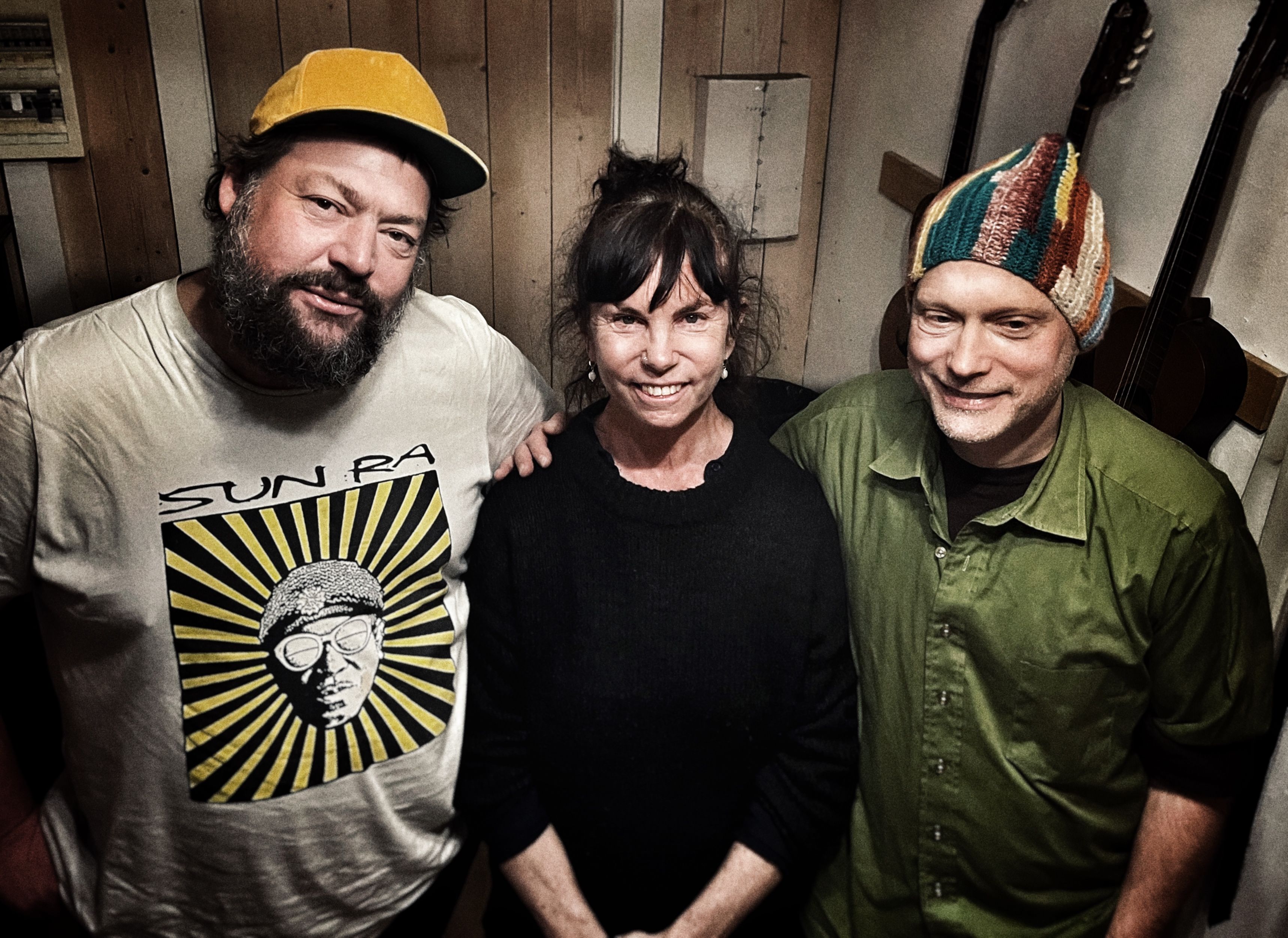 Landaeus deHeney Osgood Interview Image (c) the artists
“Every person in the audience has an effect on the music. The more improvised the music is, the bigger is the potential of each person to effect the sound in the room.“
Video
