Published
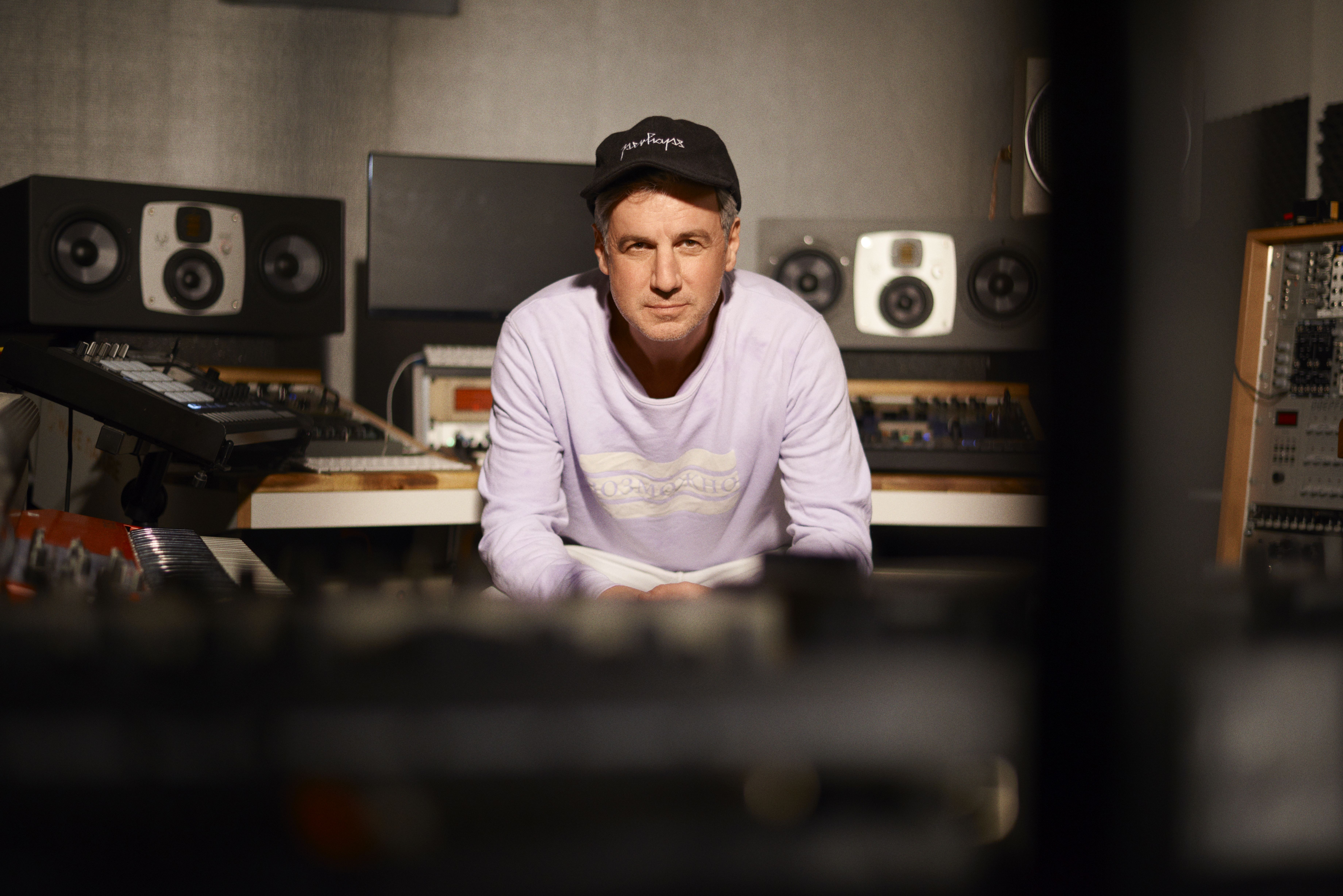
Name: Mathias Modica aka KAPOTE
Occupation: Producer, DJ, multi-instrumentalist, label owner at Toy Tonics
Nationality: Italian-German
Current release: Mathias Modica's new album under the KAPOTE moniker, Para Mytho Disco, is out via Toy Tonics.
If you enjoyed this Mathias Modica interview and would like to stay up to date with his music and live dates, visit him on Instagram.
Tell me about the space of your current studio/workplace and how you've set it up to optimise creativity.
I don't have an studio of my own anymore as I live in different cities. Instead, I'll go to studios of friends.
What I need are 5 good synthesizers. Moogs, Prophet, Rhodes piano, and best case a real piano. Also, mics for vocals and the possibility to record live bass and percussion.
Currently, I work in a space in London, one in Berlin and one in Milan.
I had a really interesting conversation with Stefan Betke about his incredible (and almost insanely expensive) monitor speakers. Can you tell me a bit about the reasons for choosing the EVE AUDIO SC4070 for you and how you see the balance between investment and reward for this part of the production chain?
I am a bit different. I think to record, compose or produce interesting and individual music, what you need are THE RIGHT SKILLS, not the right gear. It's much more important to have knowledge about music, music history, music styles, and how to PLAY an instrument than to have expensive professional gear.
I regularly get send demos of people who'll tell me about the gear ... but after 30 seconds, I can hear if the person has a musical IDEA, a personal vision, passion to be DIFFERENT etc - or if it's just a reproduction of something that has already been made 1000 times … (and maybe better).
Especially in the electronic music world, too many DJs and “producers“ make music that sound the same … even if it's made with high quality speakers … it's already been done before…
Look: you can give a master like Anderson Paak, Luke Vibert, Quincy Jones or Moroder just an old broken synthesizer and a 4 track recording tape machine and they will make amazing music. They don't need the hyper-professional gear ... :)
From the earliest sketches to the finished piece, tell me about the production process for Para Mytho Disco, please.
I'll start with a beat … then I'll go to the piano and play chords and basslines to that beat. When I have the chord progressions and basslines I'll go to the computer and play this with the MIDI keyboard.
Once I have this, I'll start adding new sounds and additional chord patterns or little melodies. Later, I'll add more percussion (often live- to get a human, organic feel) and I often replace the synth bass with a real bass (human feel, groove). Later I'll sometimes add vocals … can be just words … to make the music more personal.
I have many layers of musical elements that are just in the background, but to make an electronic music piece sound more rich and warm it's important to add live-played elements and small things that the EAR doesn't consciously process but the BRAIN does …
In the end, I will have many tracks but I'll only release the ones that I think sound different, haven't been done before and which have a personal vibe.
The word “production” as a separate item from “composition” suggests a creative processes with different stages. Do you see it that way – or are all the steps towards a piece of music always integrated and connected for you?
I think it's a good way to see the different kinds of music: The guys who produce music often make music that is functional - tools for DJs or a track that should sound like stuff that has already been there.
Whereas “composing” is more about creating something new, different, trying to invent a new style or way of sound.
Para Mytho Disco is not just another retro/vintage disco album, it has a decidedly personal sound. What kind of colours and moods were you looking for? Tell me about putting together the instruments and sounds for this one to achieve the result you wanted.
I am not really looking for anything … it's more what happens. as I wrote I look for having a personal sound, music that you want to listen to at home as well. Music that is not just made for the dance floor, even if it's based on dance beats.
In the end, something comes out and hopefully it sounds special. The best case is that some love it intensely and others “hate” it … haha.. That's the best proof that the music you made has something meaningful.
Particularly disco-related music, I feel, benefits from an almost-live feeling in the grooves. But these days, it's mostly not played by a band anymore. Can you tell me about your thoughts on this and how you managed to capture a great swing in the studio for these tracks?
Swing comes from syncopated rhythms. So it's about the percussion and the “in-between“ notes.
It's easier to create a real swing by adding a live percussionist, but it's also easy if you take good loops from your computer. It all comes down to FEELING the groove. And here's the problem: many people don't have a sense for groove. They don't really feel it. So for such a person it's not easy to create a groove, while others intuitively feel when it grooves.
For me, the easiest way to describe if a track has a groove is to separate the “vertical dance music” from the “horizontal dance music.” This is what I mean by that: Horizontal music makes you swing your hips … and goes to the stomach. It makes your body make warm flowing moves.
The not so groovy vertical dance music, on the other hand, just makes you move vertically - like marching music or bad types of techno with no soul. :)
I love “Jerks of Neukölln,” but I also feel as though some of the vocal pieces work really well. What's your personal take on an ideal balance between track and song in dance music?
Hard to tell myself … as a DJ I often play music other DJs would not play for dancing ... So saying what constitutes a track and what a song is very subjective ... People can go crazy dancing to Franz Ferdinand or a Cuban jazz funk group like Irakere … others just to a monotonous dance beat for 5 hours …
It's all subjective.
I was intrigued by the title “Kunst als Pose,” especially for this particular track. Can you briefly reflect on the title which translates as “Art as a Pose”?
Haha … thanks. I live in Neukölln Berlin, an area with many people who would like to be seen as artists - but they make no art …. (fake artists).
And so this title pokes a little fun at this.
The press release characterises you as a sonic explorer. What does the exploration part of the creative process look like for you?
With my own music and also with my labels, we try to create a new universe of sounds. This new music approach can be based on mixing diverse old styles into something new, or working with unusual instrumentation, or bringing together musicians and DJs or combining styles that haven't been combined before ... I think this could be maybe pioneering.
Especially in the electronic music world over the past 10 years almost everybody is making “retro music.“ Revivaling old trends from the 90 such as ACID, TRANCE, TECHNO, BREAKBEAT, OR LOOKING FOR RARE VINYL FROM THE 80s. While we look for creating something new, by taking old stuff and turning it into new by combining it with new beats or new vibes or a different attitude or as a re-combination.
As a mater of fact, the so called “NEW“ in ART and MUSIC has always been a combination of an old element turned into a new context or combined with a new (technical) element … and that's I guess what it means to be pioneering.
Examples: the synthesizer. Even when it was first introduced, it was not all NEW. It was just a piano connected to electronics. Techno in the 90s?: It was just disco and marching rhythms, without the harmonies and melodies created on electronic instruments. Ar also in art: Picasso? He used the antique technique of painting and the aesthetics of old Greek noses and destroyed them in a Cubist style … ;) etc etc ,.. ;(