Published
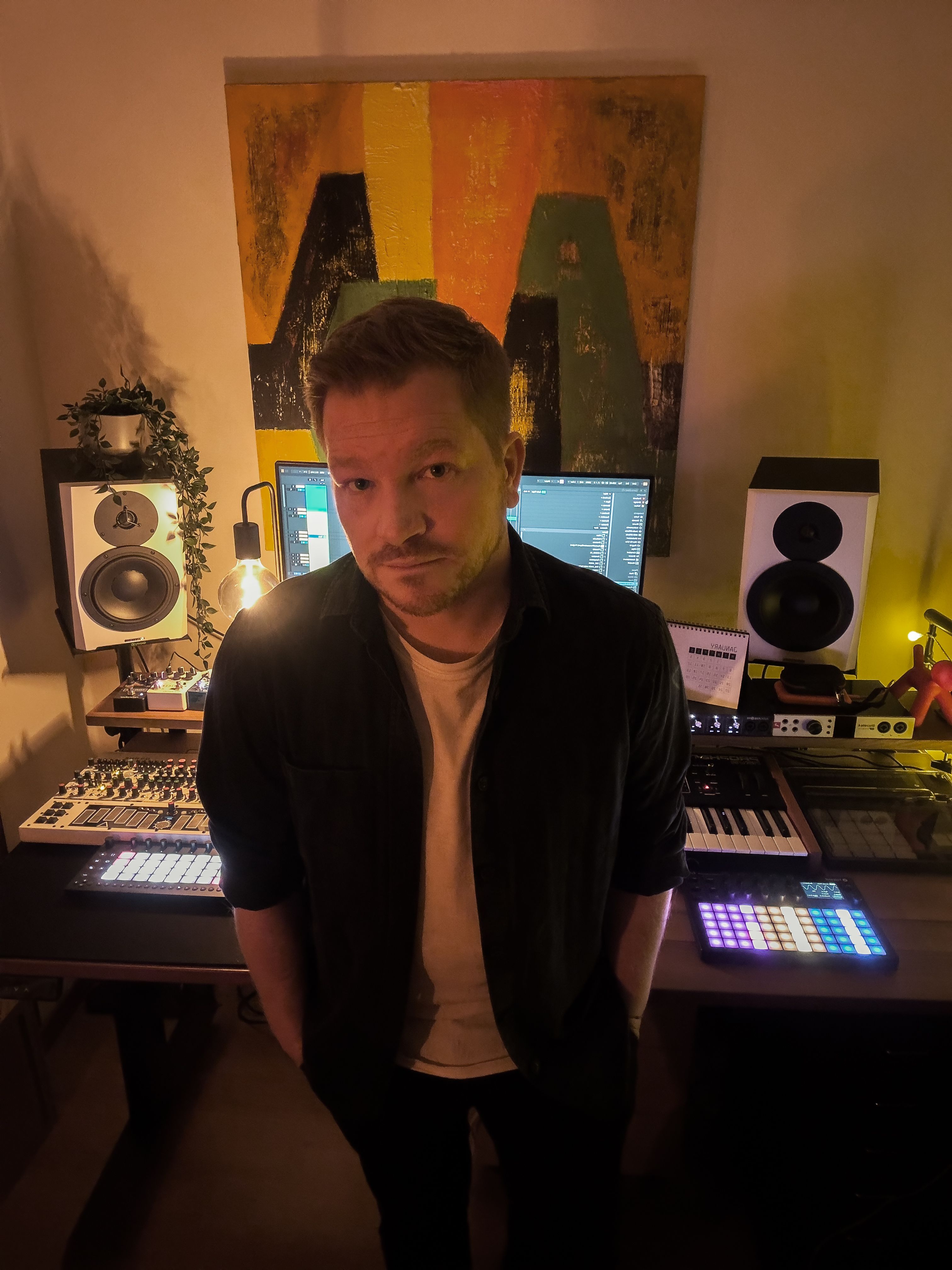
Name: Matteo Scapin aka Matthew S
Occupation: Producer, songwriter
Nationality: Italian
Recent release: Matthew S's latest single "seedless Grape," a collaboration with Gary Dourdan, is out now.
Recommendations on the topic of sound: For those who want to delve into the world of sound and music, there are many interesting resources that I can recommend, both for beginners and for those who wish to explore more complex aspects.
For example, one of the books I found particularly enlightening is The Soundscape: Our Sonic Environment and the Tuning of the World by R. Murray Schafer. This text explores the role of sound landscape in our daily lives and makes us reflect on how we are surrounded by sound in ways that we often take for granted.
Another very fascinating book is This Is Your Brain on Music by Daniel J. Levitin, which links neuroscience and music, exploring the way our brains interpret and respond to sounds.
If you enjoyed this Matthew S interview and would like to know more about his music and work, visit his official homepage. He is also on Instagram, and Facebook.
When I listen to music, I see shapes, objects and colours. What happens in your body when you're listening? Do you listen with your eyes open or closed?
For me, listening to music is like immersing yourself in a flow of sensations that depend on the moment.
Some prefer to close their eyes to focus on the sounds and let themselves be carried away, while others keep their eyes open to connect what they see with what they hear.
How do listening with headphones and listening through a stereo system change your experience of sound and music?
Listening with headphones and listening through a stereo system create two completely different experiences for me.
With headphones, the sound becomes intimate and personal, as if it were inside me. I can hear every detail, every nuance, and this allows me to analyze the music in depth, focusing on the small elements that might otherwise be missed.
Tell me about some of the albums or artists that you love specifically for their sound, please.
There are many albums and artists that I love for their unique and distinctive sound, because they create sound worlds that deeply inspire my work.
For example, I love Aphex Twin, especially for albums like Selected Ambient Works, because he manages to combine complex electronic elements with an emotional and intimate atmosphere.
Another artist I really admire is Jon Hopkins: his albums, like Immunity or Singularity, are a perfect balance between sonic experimentation and engaging melodies, and I am fascinated by his ability to build layered soundscapes.
Finally, I find the work of Four Tet extraordinary, who, with his music, manages to combine electronic sounds with acoustic and organic influences, creating a warm and hypnotic sound.
These artists are not only sources of inspiration, but also examples of how sound can become an art form in itself.
Do you experience strong emotional responses towards certain sounds? If so, what kind of sounds are these and do you have an explanation about the reasons for these responses?
Yes, I often have very strong emotional responses to certain sounds. For example, soft ambient sounds, like the sound of rain or rustling leaves, give me a feeling of calm and introspection.
At the same time, deep, pulsating bass or syncopated rhythms give me energy and an almost physical connection to the music.
There can be sounds which feel highly irritating to us and then there are others we could gladly listen to for hours. Do you have examples for either one or both of these?
There are definitely sounds that I find extremely annoying and others that I could listen to for hours.
For example, I find it hard to bear the loud, metallic and repetitive sounds like the squeak of a chalk board or the continuous whistle of an alarm.
I think it’s because these sounds create an instinctive tension, almost as if the body wanted to "escape" them.
Are there everyday places, spaces, or devices which intrigue you by the way they sound? Which are these?
There are many places and everyday spaces that intrigue me for their sound. For example, I find railway stations fascinating: the mix of announcements, footsteps echoing, trains in motion and fragments of conversations creates a kind of "urban symphony" that inspires me a lot.
Even large empty spaces, like a church or a museum, impress me for the acoustics: reverberation and almost tangible silence give a unique depth to any sound. Finally, electronic devices intrigue me for their tones and rhythms: I think of the sound of an old printer, the click of a tape recorder or even the sound signals of a smartphone.
Each of these sounds has its own personality and can become a creative inspiration for my work.
Have you ever been in spaces with extreme sonic characteristics, such as anechoic chambers or caves? What was the experience like?
Yes, I have had the opportunity to enter spaces with extreme sound characteristics, and these experiences have deeply impressed me.
Once I was in an anechoic room, and the silence was so total that at first it seemed almost disturbing. I could not hear any external noise, only the sound of my body, like the heartbeat or breath.
It’s like being immersed in a sound void, a very different feeling than what we are used to living
What are among your favourite spaces to record and play your music?
One of my favourite places to record and play my music is definitely a studio with good acoustics, where I can control every detail of the sound. I like working in intimate and isolated environments, where I can concentrate completely on creation, but at the same time I look for spaces that have a certain energy, that can inspire me.
Some natural environments, such as rooms with large windows overlooking an open panorama or spaces with materials that reflect the sound in an interesting way, are ideal for recording. I also love the idea of playing outdoors, in open spaces like parks or woods, where the sound mixes with the surrounding environment, creating a unique atmosphere.
Each space has its own characteristic that can influence the music and, for me, it is important to choose the right place for every stage of the creative process.
Do music and sound feel “material” to you? Does working with sound feel like you're sculpting or shaping something?
Yes, for me music and sound have a "material" quality. When I work with sound, I don’t just perceive it as a wave that crosses the air, but as something that I can shape, sculpt and transform. Every sound has a shape and texture that allows me to "work" with it, just like a physical material.
I like to think of the creative process as sculpture: I start with a block of raw sound and finish it, sculpt it, modify it until it reaches the shape I want. Sometimes, this can mean adding subtle details, other times radically modifying the sound, but always with the idea of giving it a shape, a consistency and a character that tell something.
Sound becomes a medium for expressing emotions, thoughts and visions, and that’s what makes it so fascinating and "material" to me.
How important is sound for our overall well-being and in how far do you feel the "acoustic health" of a society or environment is reflective of its overall health?
Sound is fundamental to our overall well-being. Living in a balanced sound environment can have a huge impact on our mental and emotional health.
Harmonious and natural sounds, such as the singing of birds, the noise of the sea or relaxing music, can help to calm people down, reduce stress and improve concentration. In contrast, the constant chaotic or too-intense noise that is typical of many urban areas can create tension, anxiety and even physical problems such as insomnia or hypertension.
I think that the "sound health" of a society or environment is very much a reflection of its general state. A place where natural and harmonious sounds are valued and harmful noises are reduced tends to be a place where people’s well-being is given more attention.
Conversely, a messy or neglected sound environment may indicate a wider imbalance, both socially and environmentally. Sound is not just an aesthetic element, but an essential component of our quality of life.
Sound, song, and rhythm are all around us, from animal noises to the waves of the ocean. What, if any, are some of the most moving experiences you've had with these non-human-made sounds?
Some of the most exciting experiences I’ve had with non-man-made sounds are related to nature.
I remember a time when I was on a beach at sunset and listening to the steady rhythm of the ocean waves. That sound, so simple and repetitive, almost seemed to speak directly to my mind, creating a feeling of deep peace and connection with something greater.
Many animals communicate through sound. Based either on experience or intuition, do you feel as though interspecies communication is possible and important? Is there a creative element to it, would you say?
I firmly believe that inter-species communication is possible and, above all, important.
Although we cannot "speak" the same language as animals, sound is a universal means of establishing connections. Animals use sounds not only to communicate with each other, but also to express emotions, warn of danger or attract attention, and I think that by listening carefully we can understand a lot about their world.
There is definitely a creative element in this type of communication. When we try to imitate the sounds of animals or respond to their calls, we are participating in a form of dialogue that goes beyond words. And the way that natural sounds inspire us - whether it’s the singing of birds, the call of a wolf or the call of a whale - shows that there is a deep and creative connection between us and other species.
This kind of exchange not only enriches our understanding of nature, but also reminds us that we are part of a shared ecosystem.
Tinnitus and developing hyperacusis are very real risks for anyone working with sound. Do you take precautions in this regard and if you're suffering from these or similar issues – how do you cope with them?
I am aware of the risks associated with working with sound, such as tinnitus or hyperacusis, and try to take all possible precautions to protect my hearing.
For example, I avoid exposing my ears to loud sounds for long periods of time and often use earphones or earplugs with sound protection when working in noisy environments or during live sets. Also, I take regular breaks to allow my ears to rest, especially during extended mixing or recording sessions.
We can surround us with sound every second of the day. The great pianist Glenn Gould even considered this the ultimate delight. How do you see that yourself and what importance does silence hold?
I think that surrounding yourself with sounds can be a wonderful experience, almost like creating a personal soundtrack for every moment of the day. Glenn Gould was right to consider it a pleasure, because sound can profoundly influence our mood, accompany us in our thoughts and constantly inspire us.
As an artist, I love living immersed in sound, because every noise, rhythm or melody can become an idea to develop.
Seth S. Horowitz called hearing the “universal sense” and emphasised that it was more precise and faster than any of our other senses, including vision. How would our world be different if we paid less attention to looks and listened more instead?
If we paid less attention to the visual aspect and learned to listen more, I think our world would be very different, perhaps more empathetic and connected.
Listening requires a deeper kind of attention, which goes beyond the surface and allows us to grasp emotions, intentions and nuances that often escape sight. Sound is immediate, sincere, and can communicate things that images or written words fail to convey.