Published
Names: This is Pan
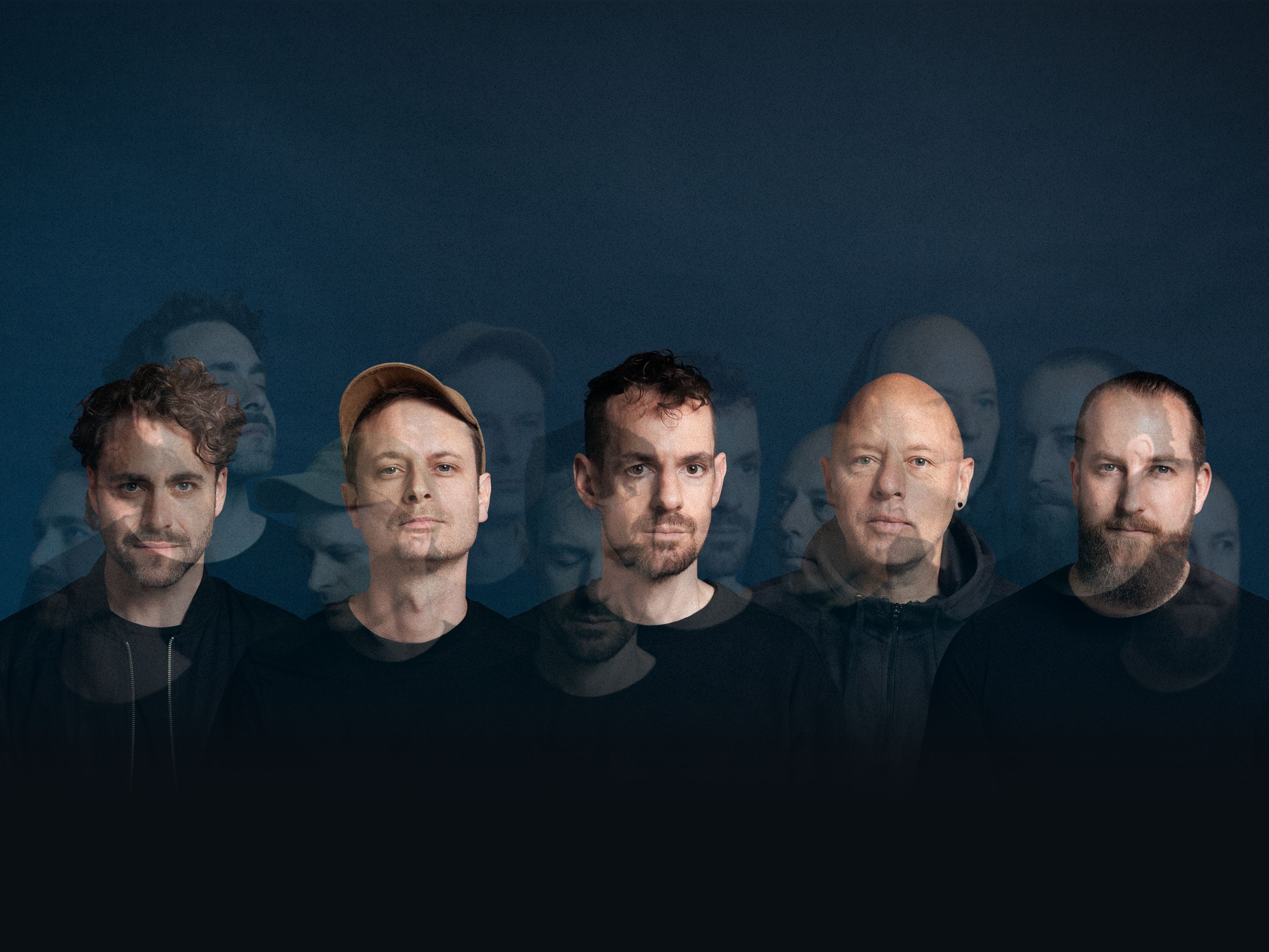
Members: Matthias Kohler (composition, alto saxophone), Lukas Thoeni (trumpet), Dave Gisler (guitar), André Pousaz (bass), Gregor Hilbe (drums)
Interviewee: Matthias Kohler
Nationality: Swiss
Current release: This is Pan's Taller in your Dreams is out via ANUK and be ordered directly by email from Matthias. More information can be found here. About the recording of the album, he remembers: “With This is Pan, recording is just a breeze: We’ve been playing together for so long. We rehearsed the music over the span of a few months, then played a small show for some friends and family to try the music in a non-rehearsal setting. The recording took place over three days in a beautiful studio here in Bern. We usually track everything ourselves. By excluding a tracking engineer and just sticking with ourselves, we can get this space capsule feeling that has proven to be really beneficial. Some of the songs changed a lot just within those three days: By dealing with the music so intensely, everybody tends to have really good ideas to enhance the intention of the songs. So we do a whole bunch of overdubs or even change whole forms.”
If you enjoyed this Matthias Kohler interview and would like to know more about his work, his music and This is Pan, visit his official homepage.
You mentioned Kara Walker's Triptychon and a quote by Anselm Kiefer as a direct source of inspiration to your recent album and your creativity as a whole. What was it about them, do you think, that triggered a creative response in you?
I had been doing research around memory, and more specifically transgenerationality, prior to finding this super interesting article in Panorama Journal about Walker’s work. The sheer depth of this particular piece seems overwhelming, and the virtuosity in her work is just stunning.
The specific topics that she deals with are obviously not mine to touch – but from a methodical perspective, I began to reflect about my own relationship with cultural techniques that were passed on to me on various levels. In the sense of: “what is my own triptychon”? What’s my relationship with the culture and the cultural techniques I grew up in and with? Where do I feel resistance, how can I surpass it, and how can I define my place as an artist in this long stream – or rather, these many streams – of cultural tradition? This led quite directly to compositional choices and production techniques on the latest album.
For example, I always try to find new ways to think about form in a musical sense, and this is in direct counterpoint to the things I was taught in my professional education.
Kiefer’s quote worked on a completely different level, much more emotional in a way. He said in an interview something along the lines of: “the only material an artist really has to work with are the secrets of their childhood”. [1] Whenever I think about this, I immediately have this image of myself as a kid in my parents’ backyard during a hot summer afternoon – the secrets of my childhood just really resonates with me.
So this idea is really another end of the “memory”-spectrum to me: on one end, there is the cultural, societal memory. On the other, there is the very intimate, personal kind.
Anselm Kiefer's quote is interesting to me as well, because I've asked myself that very question – why do the same chord sequences keep stirring me again and again, why do others simply not have an effect on me? And very often, they lead me back to my childhood. When it comes to your own work, what are some of the childhood mysteries you keep returning to?
As a child, most of the world seems uncertain and magical. When I was little, anything could be true or real. This feeling of endless possibility, of a very unclear separation between the imagined and the manifest, interests me a lot.
As an adult, things started to make sense, I had an idea of what was true or false – but now as I am realistically somewhere around my mid-life, I try to get away from certainty again as much as I can. For me, this has to do with empathy: I want to be as open toward other people as I can. You could look at it through a constructivist lens, meaning: who am I to judge whether something is true?
So the childhood mystery, for me, is this feeling that I try to return to. The wondering and the openness.
As creative beings, how can we access those mysteries and put them to use?
I think this might be a highly individual matter. As for myself, the artistic research into topics that I connect with (and expanding on them sort of aimlessly, by association and sheer chance) has time and again made me stumble onto things that just strike this emotional spark.
And when it happens, I try to hold on to it! I spend time with whatever ‘it’ is and trust it to grow into something.
I see Kiefer's quote as both insightful and slightly pessimistic – but maybe I'm wrong. Do you think that the creative process comes to a natural halt when we have successfully resolved our “childhood issues”?
I really hope the mysteries remain unresolved forever! In the sense of: may we as artists never lose the wonder. From this angle, Kiefer’s quote doesn’t seem pessimistic to me at all. Rather, the artistic superpower is the ability to find more mystery along the way …
Resolving issues is another animal. To me personally, this meant letting go of expectation and overcoming confinement. Growing up into those inner expectations was the creativity killer. I’m happy to be freely connected to my childlike wonder again, if that makes sense. At least on a good day.
In a similar vein, making music, in the beginning, is often playful and about discovery. How do you retain a sense of playfulness and how do you still draw surprises from tools, approaches and musical forms you may be very familiar with?
First off, I am super lucky to be working only with immensely creative and highly skilled people. This is of course the members of my group This Is Pan, but also my wonderful wife with whom I bounce ideas back and forth (check out her project on trees, amazing!), and all the project partners over the years.
So when I bring in new music for example, I can just let go of all the brain stuff that might have gone into the “work” part of the process: My band connect instantly to the emotional vibe of the music, and I can just watch it grow. Such a beautiful thing! The interesting part is the double lens: At one level, just letting go and playing in this beautiful garden, and on another, being a critical analyst and developing it further while in the process.
Thinking about it, the same happens when I’m at the desk composing: ideas have a tendency to just grow by themselves. I guess this is what you’d call flow and it certainly feels playful to me!
Another aspect you mentioned is transgenerationalism. Tell me about your interest in the topic, what it means to you and why you feel it matters?
It has to do with the resolution of childhood issues for me. I think I underwent a sort of second detachment phase in my mid thirties. During that time, I thought a lot about these transgenerational ripples: I picked up so much behavioral stuff from my parents, as they did from theirs etc. – what do I want to keep passing down to my own kids?
We are lucky to be living in a generation where we can allow ourselves to even consider all this emotional stuff, and I see it as my job as a father to examine this.
This family related stuff sent me on this exploration of memory and transgenerationalism, where these super heavy concepts like transgenerational trauma have been the hype of socio-psychology. The passing down of songs and stories, of cultural artifacts of all kinds seem to me a bit like the positive flipside of this.
What pieces of art have served as transgenerational bridges to you?
There is a lot of stuff I picked up through my dad, who is a passionate jazz fan. Coltrane and all those giants, but also a lot of later free jazz stuff. I try to cultivate the family stream with my own kids by establishing music that has meaning to all of us in the family.
On a much less personal level, I know I am part of this western European cultural stream. Gothic architecture, counterpoint, EDM will always be a part of me.
You mentioned that writing the song “Exploring Memory” with Kristin Berardi turned out to be a departure point for a deeper investigation into the topic.
Yes. I had met Kristin when we were invited to play a concert with This Is Pan and her as a feature singer. She is such a badass! She came to my house to track her vocals as overdubs onto the band recording. She improvised these beautiful layers, didn’t do a single “meh” take, just great!
So after a while we took a coffee break. We talked about the music and what else we could do … finally, she spilt the beans: On a tour break somewhere in Germany, she had taken a walk to listen to the band recording. As she passed a bed of flowers, she had this immediate association to her grandmother’s garden.
Kristin started telling me her family’s immigration story into Australia – I asked her to just tell it into the microphone. So what is now on the album is a one take of her stream of consciousness.
Let me tell you … it was a super emotional afternoon for the both of us!!
That song eventually turned into something bigger, i.e. your album Taller in Your Dream with This Is Pan. How, in terms of songwriting and composition, did you explore them on the album as a whole? What are some of the memories that are discussed here?
The most challenging part seems to be turning these ideas into music … I try to go beyond “just” associative writing. One important key are these little melodies and musical devices that you’ll find across multiple songs. All of the songs are cross-connected with these “quotes” from one another.
Then there is the use of musical techniques like counterpoint and others from Renaissance and other musical eras. I do this as a way to deal with my cultural heritage.
On a post-production level, memory is depicted by the use of tape delays, sometimes with very (very!) long decays. They have this beautiful property of degrading over time, sort of like our own reproduction of memories changes over time.
The title of the album deals with another mode of experience – dreaming – which is also connected to memories. What role do dreams play in your creativity and how do you see the role of dreams in general?
Before I had kids, I had a phase when lucid dreaming interested me a lot. The kids made the sleeping part a bit more complicated …
What fascinates me about dreams is that, on a neurological level, they are no less “real” than what we experience in our waking hours. So I try to reflect on them on an emotional level like I would with an intense waking experience. I guess they would influence me creatively from that angle: as emotional states.
The term carries another meaning, though: That of an aspiration, of a utopia maybe. “You Were Taller in Your Dream”, the title-giving track on the album with Tobias Preisig, is also a lot about that: About coming of age, letting go of your idols, of some expectations. Growing into someone maybe less grand, but more real than you maybe thought you would.
There might actually be something quite heroic in this.
[Read our Tobias Preisig interview about the violin]
What were some of the insights you gained directly through writing the music for the album?
Honestly, the real insight on this project was during the artistic research phase. I learned so much and got really in touch with myself in reflecting on these topics.
The composition, to me, is really the output of the research phase and doesn’t usually generate much knowledge or new emotional states for me. But rehearsing and recording does! Because I get very direct feedback on some technical issues that I may have overlooked, and more importantly, I get to connect emotionally with my band members, who are also some of my closest friends.
One thing I've also thought about in terms of memories is how songwriting and composition have changed as a result of a reduced attention span. I think it's fair to say that the symphonic form or long improvised solos over a given theme are more challenging today because they require us to remember things that happened perhaps minutes ago – while most of us are finding it hard to focus even on what's happening right now. On the other hand, it can be wonderful to allow the music to wash over you and switch off our memory system altogether. How do you see that balance yourself?
This might be not in my best self-interest: But I kind of refuse to deal with this.
I write pretty long forms because I just love the way a long musical arc can develop. Also, it’s really rewarding when you can keep the energy up over such a long span as a group. Then, on the other hand, I love doing these “mood pieces” like “You Were Taller in Your Dream” that don’t really have much development or really melodic content, but they create atmosphere and vibe.
From a listener perspective, I think the long arcs still have a place though. I get this feedback especially at concerts: People feel like it’s a trip to listen to these long songs. Even if you zone out or get carried away in a conversation, maybe at an open air festival, you can still get back into it and emotionally re-connect. I think the self-referencing that I like to do across albums really helps with this.
In terms of memories of music, I always found it fascinating that what we remember from a concert can be wildly different from what actually happened, as I found out on some occasions where I re-listened to the event later on. The effect can be both sobering and surprising. What causes this divergence, would you say? And: Do you think it would be better if most of our impressions were like that and that we would remember music from memory rather than conveniently returning to it via a recording?
I would suggest a constructivist perspective on this: there is no such thing as “what actually happened”. Much rather, everybody carries their own mood, energy, pre-occupations etc. to a concert experience. So they might really connect with the music at a live show on one day, but not feel much when they listen back to a recording on the next.
Re-listening to a recorded live show can be a beautiful, or at least useful thing – but the expectation to sort of re-live the moment is aiming a bit too high.
I attended a concert by Dark Star Orchestra, a band which re-enacted the Europe 72 tour by The Grateful Dead. It was both fascinating and bewildering.
This might be the dilemma of long careers in pop music: Artists have to (and hopefully, want to) keep making music, but on tour, the crowds go nuts over the old hits.
I think I could only be disappointed if someone tried to re-create a thing of the past. I also much prefer artists to do live versions completely differently than album versions for this exact reason: They are just two different media.
It’s a funny thing, when I listen to music at home, I hardly ever gravitate toward live albums or formats like Tiny Desk, great as they may be. It just feels as if the concert was intended for the crowd who was really there, not the people watching through a screen.
I try to emphasize those differences in my own productions as well: for me, a concert should always sound distinctly different from an album version.
[1] "Ein Künstler stellt immer nur dar, was er in seiner Kindheit und Jugend erlebt hat, ohne es schon einordnen und werten zu können. Auch bei Schriftstellern gibt es kein anderes Material als die Geheimnisse ihrer Kinderjahre." –Interview with Anselm Kiefer by Sven Michaelsen, Das Magazin, 11. Dezember 2021