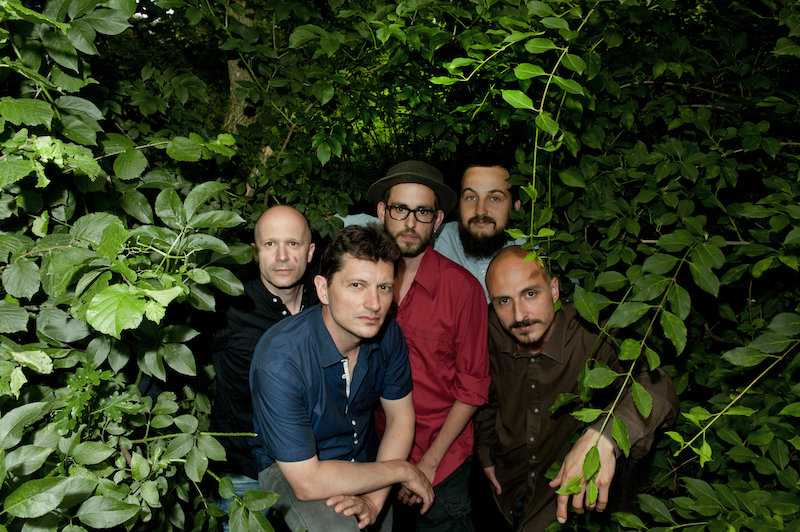
Published
Name: Matthias Spillmann
Nationality: Swiss
Occupation: Trumpet player, composer, improviser
Current release: Matthias Spillmann's new album with his trio, Walcheturm, featuring Bill McHenry, is out via Unit.
If you enjoyed this Matthias Spillmann interview and would like to know more about his music, visit his official website. He is also on Instagram, and Facebook.
What were some of the musical experiences which planted a seed for your interest in jazz?
My first trumpet teacher was a chef but also a passionate amateur musician and director of the wind band in the town, I grew up in. He was also a jazz lover and had his own big band in the 70s, which was quite extraordinary at the time.
Then in high school, we had a great school band. Many members of that band would follow a career as musicians, for example the great drummer Dominik Burkhalter. We played together a lot already in our late teens.
What does the term jazz mean today, would you say?
I was following the discussion about this term and I can definitely see its problematic sides and neo colonial aspects. On the other hand, for many Europeans, “jazz” was a symbol for the liberation after the dark periods of WWII and before (or after) and it emphasises the role of the African Americans in that process.
When I grew up, it had still some of that flavour for me, but today, the term doesn’t mean a lot to me. I still use it, sometimes for lack of reflection, sometimes for marketing purposes or just in absence of good alternatives.
I think, I play improvised music. Sometimes I use the expression “the music called jazz”, which I like, because people get an idea of what I’m talking about. But it indicates that the music itself doesn’t need a name.
Jazz was about a lot more than just music in the 60s and 70s, from politics to fashion. For you personally, is jazz still a way of life – and if so, in which way?
Basically, being a musician is a way of life.
Many people perceive jazz as a genre with high barriers of entrance, both for listeners and musicians. What have your own experiences been in this regard?
Any serious art form has a certain entrance barrier. But for jazz in particular, I’m on the contrary often surprised how some (not all ...) jazz musicians can make music with the highest level of sophistication that is very accessible. (Louis Armstrong, Cannonball Adderley or Herbie Hancock are very prominent examples). My feeling is, that often the circumstances, under which the music is performed raise a barrier, much more than the music itself.
Secondly, when you hear a poor performance of, for example, a Bach Fugue you still hear a great composition. With improvised music it's just lousy music, a poor performance.
So yes, it’s hard to make great improvised music! But when it happens, usually people appreciate it.
What, would you say, are the key ideas behind your approach to improvisation?
In my case it’s listening to the other musicians and creating a group sound.
I never worked as solo artist and I don’t think, I ever will.
How would you describe your relationship with your instrument – is it an extension of your self/body, a partner and companion, a creative catalyst, a challenge to be overcome, something else entirely?
It’s all of that plus it just feels good. Playing the trumpet is my elixir.
Jazz has always had an interesting relationship between honouring its roots and exploring the unknown. What does the balance between these two poles look like in your music?
I don’t see this as two opposite poles, it’s rather two sides of the same coin.
When I go back in history, I often explore unknown territory, similar to exploring my own personality when I compose or the ones of my friends, when I play with them.
For many artists, life-changing musical experiences take place live. How do you see that yourself?
Definitely! In my case, the concerts, that made a strong impression on me were mostly rather intimate concerts, when I really felt the presence of the artists.
Records can influence you, if you develop a long-term relationship with them.
How, would you say are your live performances and your recording projects connected at the moment? How do they mutually influence and feed off each other?
The only reason, why I record my own music, is to play it in concert. But producing an album is always an important step in the development of a band, both artistically and commercially.
My latest Trio recording Walcheturm was done in an almost live setup – no headphones, everyone in one room, no editing. With my other group Mats-Up, I sometimes like to benefit from possibilities of the recording studio, because the music is orchestral to a certain extent.
Some percussion or extra horn parts on Ivovo ...
... or the choir on The Nature Of The Blues are some examples.
I couldn’t afford all those people to go on tour with and wouldn’t even want to, because the music would be less spontaneous in a live situation. But still, I planted the orchestral idea in the ears of my musicians and it affects their playing.
There are various models to support jazz artists, from financial help to mentorships/masterclasses. Which of these feel like the best way forward to you?
I don’t know any jazz musician who has rich peoples problems, so I guess, some financial help would never hurt anyone.
But the best way to support artists is to go to clubs and see their shows. Plus that’s the most fun!