Published
Name: Matthieu Prual
Nationality: French
Occupation: Sound artist, saxophonist, composer
Current release: Matthieu Prual teams up with Carol Robinson, Toma Gouband, Gabriel Lemaire, Joris Rühl for La Démesure du Pas, out via Ormo/Pagans. The album follows in the wake of a string of walking concerts and captures "a series of outdoor recordings in the spring of 2023. Mirroring their public musical wanderings, they alternated between walking sessions and exploring locations with unique acoustics and poetics, varying the instrumentation with solo, duo, and quartet pieces."
If you enjoyed this Matthieu Prual interview and would like to know more about his music, visit his official homepage.
For a deeper dive, read our earlier conversation with Matthieu about his other project in our No Tongues interview.
What was the spark for the walking concerts?
It comes from a personal instrumental practice that I have since the days I was in musical school.
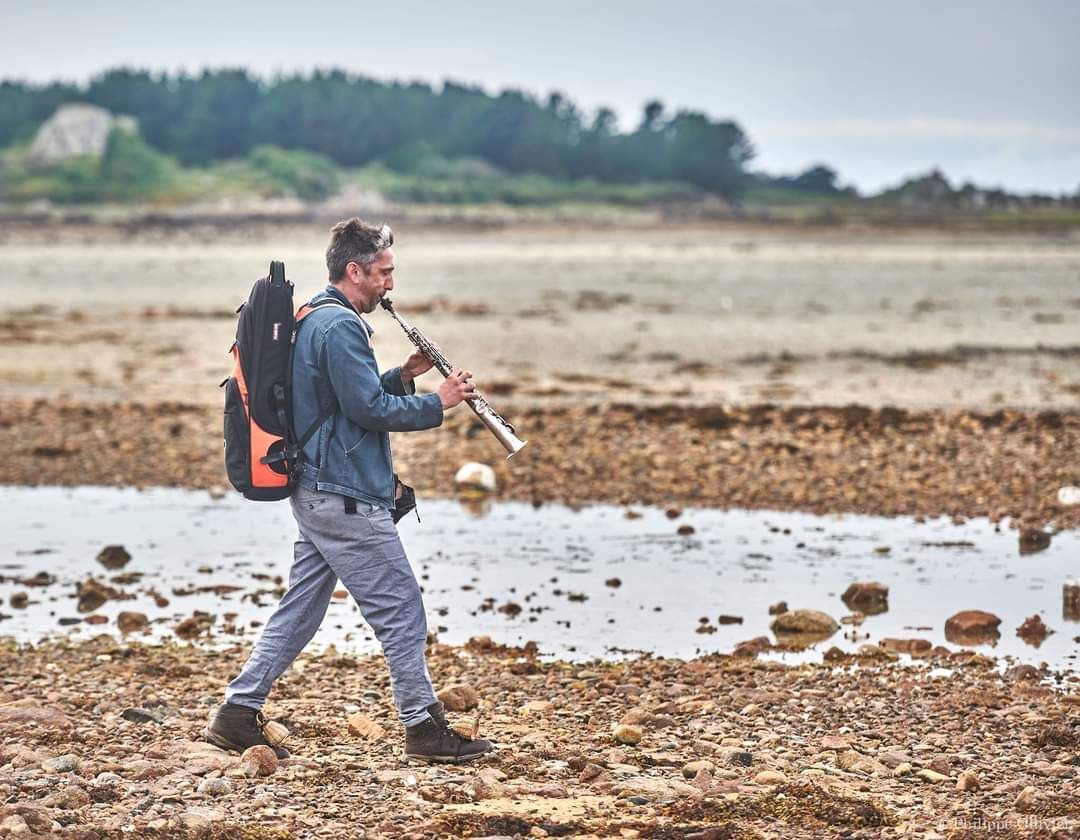
I wasn't well organized so I had no rehearsal room booked ... I found myself outside playing my sax, and soon started to walk at the same time.
When I read about the concept, I instantly had to think of Handel's Water Music. Were there any precedents from history that were inspiring to you and did you ever before take part in such a performance as a spectator?
I did a few gigs with musical proposals in nature, but it was more organized by music in one place between walking moments.
Historically speaking I linked this way of doing music more with all the moments when humanity had to walk long ways in a nomadic way of life, and I'm sure that they were special songs for it.
Personally, it's also because when I walk music comes to me very naturally.
What changes when the concert itself becomes mobile, do you feel?
It changes the link between musicians, audience and environment. Musicians feel the environment to create music and in the same time stay linked to the audience to keep the listening awake and offer different space configurations.
The listener feels music and landscape at the same time, but has also the freedom to move his listening and viewing point.
The landscape and it's inhabitants offer the score and participate by offering sound and acoustics.
I know the topic is not directly related, but even outside of walking concerts, sound, song, and rhythm are all around us, from animal noises to the waves of the ocean. What, if any, are some of the most moving experiences you've had with these non-human-made sounds? In how far would you describe them as “musical”?
The music in these surrounding sounds is in your way of listening. You can hear a very good music and find it a terrible noise, and a terrible noise becomes a huge musical feeling, depending on your listening.
I listened a lot to the metro of Paris, planes, cars, water in all its forms, winds, leaves, waves, stars ...
Is interacting with the sounds that surround the musicians part of the pieces? If so, how does this interaction unfold?
Yes of course. We play with plane drones, car passing, birds responding to us, donkeys singing with us, cows and sheep's bells, dogs barking, footsteps rhythm of joggers, human voices.
And also with all the different acoustics we pass by: forest sweet reverb, urban sharp echoes, mountain long answers, underground parkings, naked fields, lakes, rivers, sands, stones, woods, grasses …
What were among your favourite spaces to record and play your music as part of these concerts?
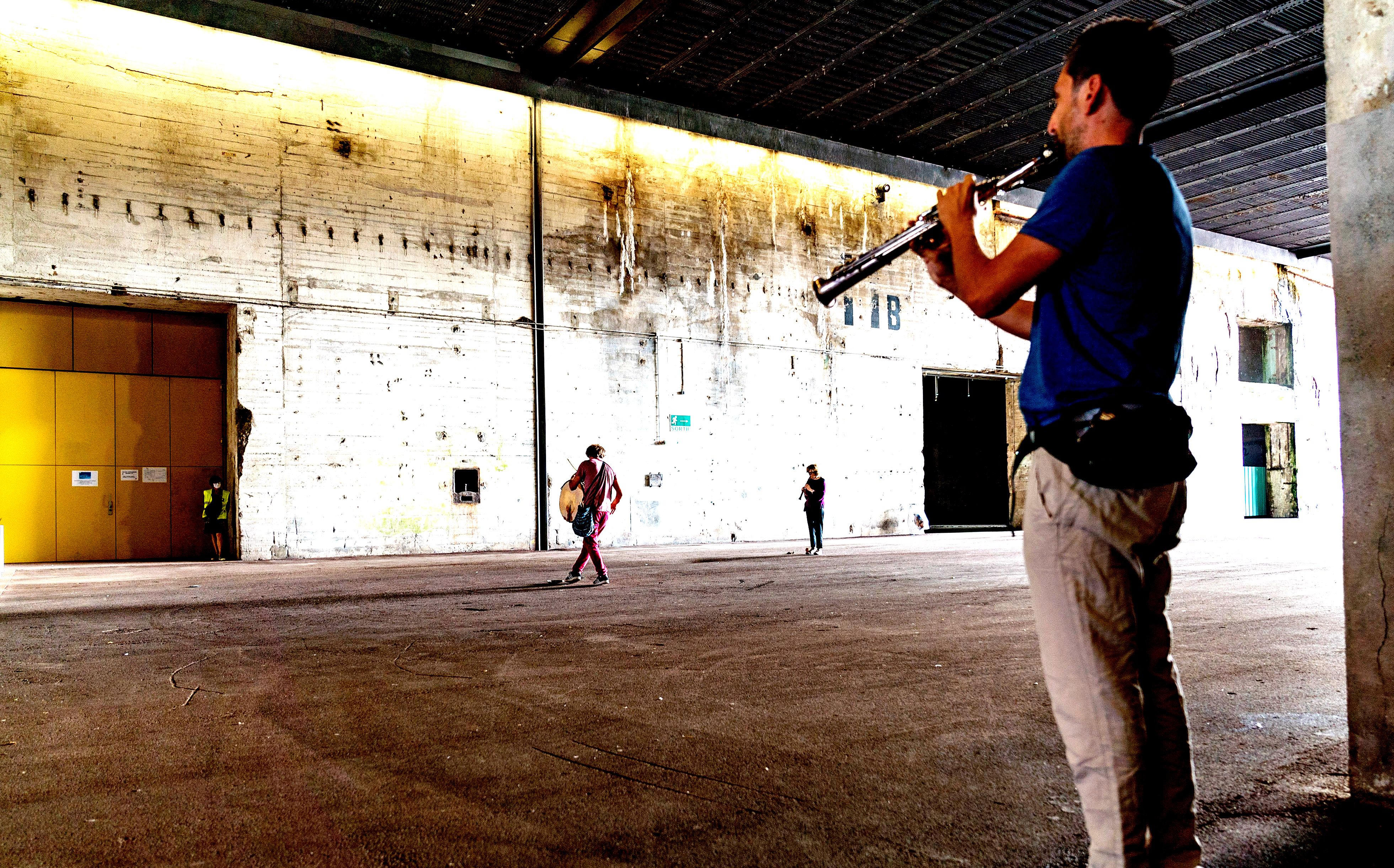
The blockhouse building called Vip in St Nazaire with a great reverb. The small space under a concrete stairs facing the sea in the track Sainte Marguerite, mixing small resonant concrete space and waves sounds just behind.
And generally all places where sound is shaped by the environment. 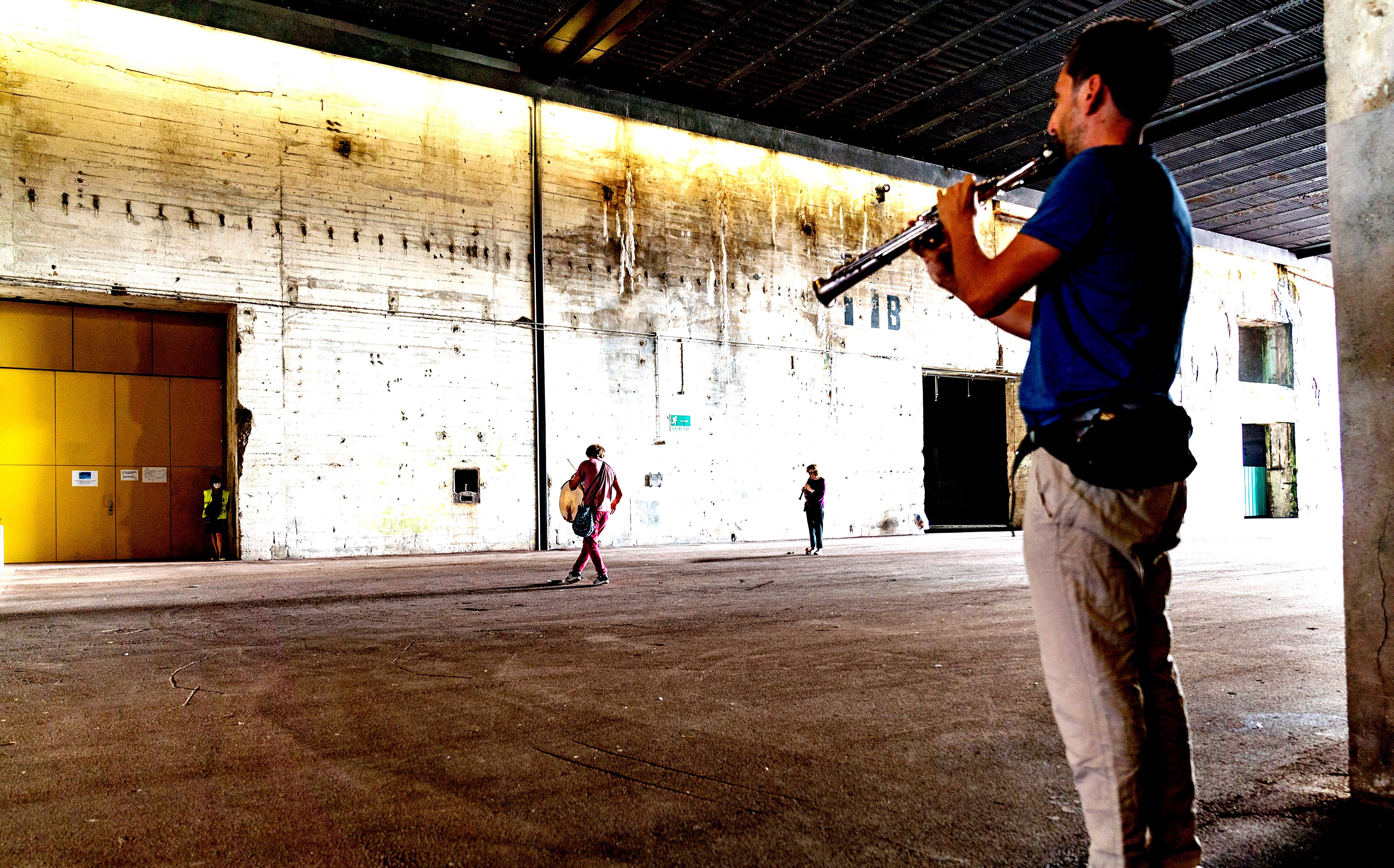
Bunker St Naz Image by Eric Sneed
I could imagine that performing in these spaces is both a stimulation for the eyes and the ears, possibly for our sense of touch and smell as well. From your concerts so far, how do these senses interact to create our experience – and what happens once the acoustics are all that's left?
I think we can talk about moods, I mean the feeling you have with all senses open.
But in the end we produce only sounds of music. All what comes around is more like a sensitive resonance.
The walking concerts seem to be based on the idea that the body is moving through the music. What made it seem even possible at all to take this concept to the format of a recorded album?
For the musicians it's more the music that is moved by the body. We walk and we produce sounds within this movement, according to our body and also to the sound of our colleagues coming from their bodies.
It's one of the strange moments where “Démesure” comes, because the measure of our walking and breathing rhythm have to open themselves up to the meeting of the others, human and landscapes together.
How, do you think, is movement in music created in our mind in the absence of actual movement?
Music is movement and time. The movement of the body that creates the music doesn't change the fact that music moves, it just shapes the music to this former body action and may gives something more to the listener.
Maybe a thin trace of this first move that makes you do a sound?
When I listen to music, I see shapes, objects and spaces. So the concept behind this album feels entirely natural to me. For non-synaesthetics, what happens in the body when they're listening to these pieces, do you feel?
Music moves the soul of everyone in different ways. Body and soul. 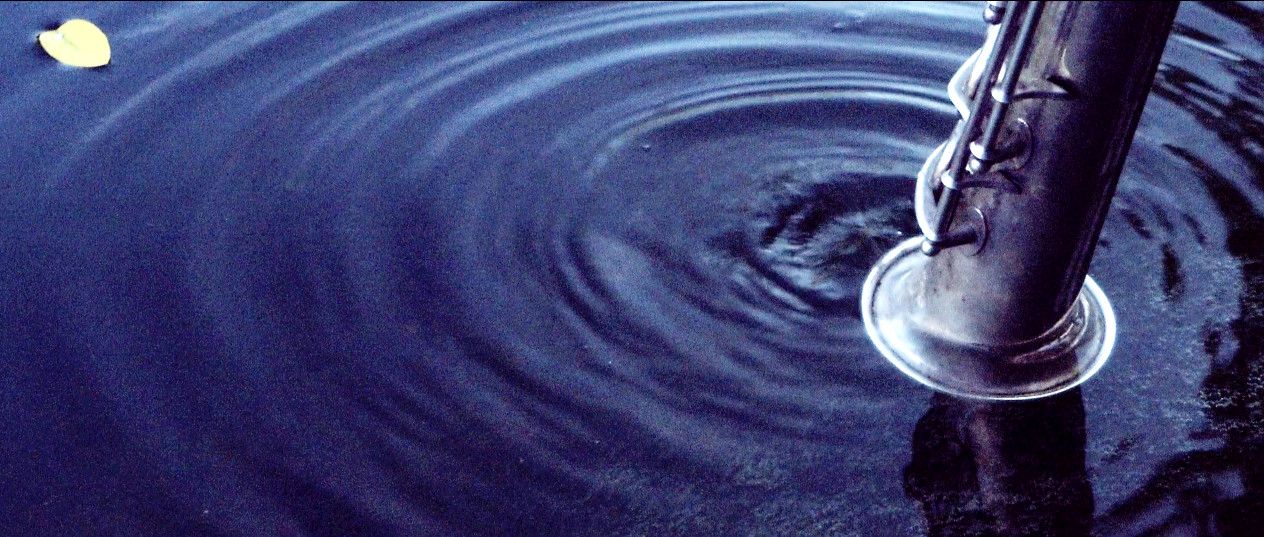
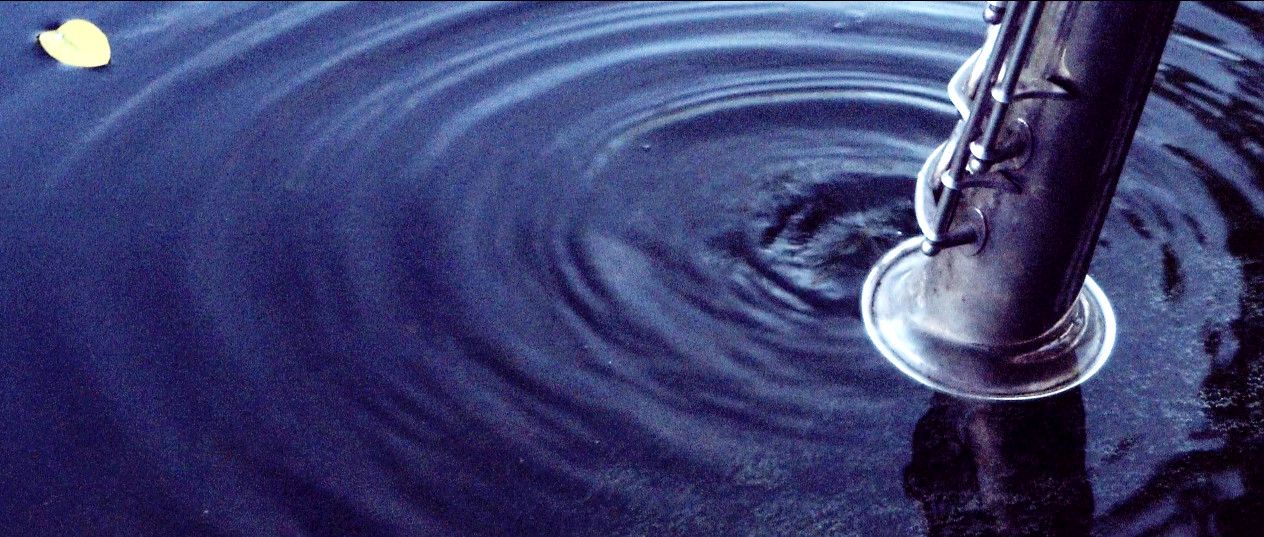
Sax and Water Image by Vincent Moon
For many other artists, a project like this would have been a certain candidate for a surround sound mix. What are your thoughts on this and how surround sound compares to what you did for La Démesure du pas?
We worked on this project with the will that music opens the mental spaces by the mean of a simple stereo mix.
Surround technology could have increased the stimulation but in the end I feel that it doesn't change that much the fertility of the imaginary ways of receiving it.
The press release speaks about a “recomposition of spaces.” What does this entail, exactly and how do these recomposed spaces relate to the actual spaces?
We wrote the movement between the different pieces to create a journey for the listeners. For that we used some technical strategies that I will keep secret!
I have often thought that one of the things that drew me to music most was that it allowed me, seemingly, to leave my body behind. Yours focuses on steps, breath, and thus a stronger involvement of the body. Do you think these two views are compatible or complementary in some way, rather than contradictory?
When you play an acoustic instrument your body is obviously involved in producing the sound. I have always shaped my sounds with my body, which I like to imagine as a sound receiver, witch produces a certain type of sound according to specific body state. Sound is already there, we just make it appear.
You can imagine a music in your head but you will always have to make some movements to make it appear to others, using bodies or speakers, or electrons, moving matter.. Body and soul.