Part 1
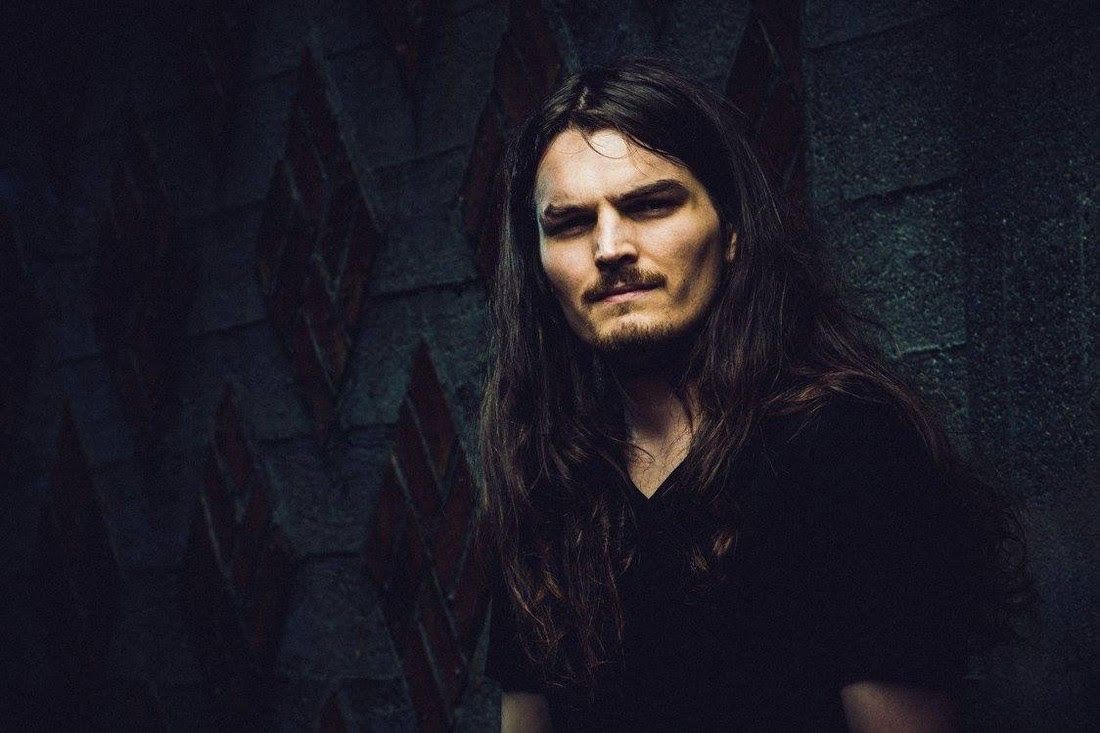
Name: Max Walker
Occupation: Guitarist, composer, arranger, teacher, copyist
Nationality: American
Current release: Max Walker's new album Chronostasis is slated for release May 2nd 2025 via Orenda. The second single off the album is out now.
Recommendation for Seattle: In Seattle, I would recommend checking out the Owl & Thistle jam session! It is a fantastic jam session that has been running since 1995. The new host, Matt Williams, actually played piano on the first track of my new record!
If you enjoyed this Max Walker interview and would like to know more about his music, visit his official homepage. He is also on Instagram, bandcamp, and Facebook.
What were some of the musical experiences which planted a seed for your interest in jazz?
My interest in jazz began in high school. I had been playing guitar for most of my life, but up to then I was mainly interested in rock and metal. I really struggled in high school and considered dropping out for a while. I had trouble fitting in and mainly just wanted to play guitar.
I was lucky, however, to have a band director who took an interest in me and let me join the school’s jazz ensemble (we weren’t a big enough school for a big band) on the condition that I stay in school. He gave me my first jazz CD, Smokin’ at the Half Note by Wes Montgomery, and I probably listened to it a thousand times over the next year or so.
He introduced a lot of the musicians and records that would come to deeply influence me in my early years with jazz, such as Grant Green, Django Reinhardt, Don Cherry, and Herbie Hancock.
Over the next few years, I would take guitar lessons with a friend of my band director. He introduced me to a lot of the basic building blocks of jazz guitar, and I still catch myself playing some of the licks that he taught me!
Our ensemble competed at the Moscow Idaho University Jazz Festival and was granted the opportunity to perform on the main stage. I think that performance cemented for me that I wanted to play music for a living. I had often struggled to relate to people, but that moment on stage provided a sense of connection that I felt I had lacked until then.
It was also the first time I realized I might have some talent, and I wanted to explore how far I could push myself going forward.
As of today, what kind of materials, ideas, and technologies are particularly stimulating for you? & What role do electronic tools and instruments play for your creative process?
I feel that I am often bouncing back and forth between embracing more modern technologies and avoiding them when searching for inspiration.
The majority of my tunes typically begin as either solo guitar or piano arrangements, and I tend to stick to jotting things down on physical sheet music rather than composing directly into a notation software or DAW. However, I have begun to experiment more with composing into DAWs, and it has certainly garnered interesting and unique results.
The final track on my new album, titled “Dusk”, was composed in this way. I began by improvising different harmonic progressions into Ableton on a synthesizer and then built the tune by improvising different layers on top of my original idea, chopping up old sections, and moving things around until I had something that I liked. I found the process to be very organic, and I am excited to continue experimenting with it!
Otherwise, I am always interested in using technology to develop new sounds on my instrument. There are several tones that I am particularly happy with on Chronostasis, including a few instances of Ebow chords in the tracks “Charybdis” and “Duck//Rabbit”.
I’m often attempting to achieve near synth-like tones on the guitar. An example of this is the melody tone that I achieved on “Charybdis”, which pairs a Micro POG (Polyphonic Octave Generator) with distortion and overdrive pedals.
Where do most of your inspirations to create come from – rather from internal impulses or external ones? Which current social / political / ecological or other developments make you feel like you need to respond as an artist?
I feel that my musical inspirations come from both internal and external impulses. In some cases, a tune that I write might be an attempt to work through emotions that I’m going through at the time. For example, “Petrichor” was a tune that I wrote as I was preparing to leave my home in Seattle for Los Angeles in 2021.
I was often overcome with feelings of deep melancholy and wistfulness, and writing “Petrichor” helped me to translate those feelings into something beautiful (at least I think so!).
I really enjoy capturing the different shades of melancholy in my music. It’s a very complex emotion, and one that I encounter often. I think that working through my relationship with that emotion with my music has helped me to feel more connected to myself and to those that I share my art with.
I also often write tunes that serve as musical experiments. Oftentimes, I am particularly interested in a theoretical concept, an orchestration technique, or some other external musical idea, and I will write one or more tunes around that concept as a means of internalizing it.
During the COVID-19 lockdowns, I challenged myself to write a tune for each of the chapters in Vincent Persichetti’s seminal book 21st Century Harmony. Two of those experiments made it into my album: “Duck//Rabbit” was an experiment with “mirror chords” (the title being a reference to the famous duck-rabbit illusion, an apt metaphor for mirror harmony in my opinion), and “Mercurial” was an experiment with 12 tone composition.
Music has become a lot more global, and incorporating elements from other parts of the world or the musical spectrum is commonplace. Do you still think there are city scenes with a distinct, unique sound? How does your local scene influence your work?
I absolutely agree that music has become more global. The internet, of course, plays a huge role in modern musical conversations, and I think that is a good thing!
I initially became drawn to the Los Angeles music scene because of the content that I encountered online. Clips on YouTube from artists like Louis Cole, Jacob Mann, and Jon Hatamiya were massively influential to me in my formative musical years, so I feel that the LA scene deeply impacted my music long before I even moved to LA!
As for the Seattle scene and the impact of local scenes in general, I certainly believe that they still exist and retain distinct identities. It’s one thing to watch clips of musicians in a scene online, and another thing entirely to be immersed in that scene both on and off the bandstand. Obviously, the music is one aspect of a local scene, but an equally important aspect is the hang and the sharing of ideas that lead to the creation of that music.
My time in Seattle absolutely impacted my musical perspective. The music scene there is vibrant and unquestionably unique. I was deeply influenced by the free/avant-garde community while playing in Seattle. Free improvisation sessions and new music showcases at Seattle’s famous “Cafe Racer” have helped to contribute to a large community of avant-garde musicians in Seattle, and I would often play with musicians from that scene.
While I wouldn’t call my music avant-garde, that scene has undoubtedly impacted my music, and I do often leave spaces for free improvisation in my tunes. For example, there is a moment in my tune “Duck//Rabbit” that was completely freely improvised. My instruction to the band was simply to start around the note E and then see where things went before I cued the next section.
The scene that was cultivated at the Seattle college where I spent my undergrad, Cornish College of the Arts, was also extremely impactful on my musical perspective. In fact, Tim Carey (who plays bass on Chronostasis) was my theory teacher during that time!
A great deal of this influence can be attributed to the teachings of the late Jim Knapp, whose theory book Jazz Harmony served as a template for our music theory education at Cornish. Jim’s unique, modern, and truly visionary musical perspective has served as the framework for how I and many of my peers from that time view harmony.
I can confidently say that I wouldn’t be the musician I am today if not for him.
Thanks to technological advances, collaboration has become a lot easier. What have been some of the most fruitful collaborations for you recently and what approaches to and modes of collaboration currently seem best to you?
The topic of long distance collaboration is very relevant to Chronostasis.
The record was recorded in 2021, just before I moved to LA. As the lockdowns were still in effect during that time, communicating with my bandmates over the phone and with tools like Zoom or Discord was imperative. We were able to rehearse twice before recording, but all of our discussions regarding tone choice and form were otherwise held online.
Additionally, the record was not edited, mixed, or mastered until I had already moved to Los Angeles. As a result, all of my communications with my engineer who edited and mixed the record (the amazing Jesse Field, who lived in Seattle at the time but now lives in LA) were done online. Jesse and I spent many late nights comparing snare sounds over Discord calls, and this record would not have come together if that wasn’t an option.
Jazz has always had an interesting relationship between honouring its roots and exploring the unknown. What does the balance between these two poles look like in your music? & What does the term jazz mean today, would you say?
Like many of my musical heroes, I often grapple with my music’s place in the jazz canon. I prefer to simply make music that inspires me and to draw from my many influences rather than worrying about whether or not my music is or isn’t jazz.
This being said, I do believe that the jazz tradition has shaped my perspective as a musician, and that I owe that tradition a great deal for all that it has given me.
From my perspective, studying the history of jazz, or Black American music, is my responsibility as someone who wishes to contribute to it. While my music might not have a lot in common with artists like Jelly Roll Morton or Sidney Bechet, I still feel that it is crucial to understand how the things those artists were doing may have led to the music that influences me today.
Additionally, I feel that it is important to understand jazz artists’ musical philosophies in their own words. While what I’m doing might be very far from the music of some of the musicians that I study, I can still work to incorporate their philosophies and relationships with music and performing into my own.