

Name: Maximilian Hering
Nationality: German
Occupation: Drummer, pianist, composer, improviser
Current release: Maximilian Hering's new album The Gathering is out now via Klangraum.
Pure Drum Recording Recommendations: The record EN by my former teacher, Etienne Nillesen. It’s not only a pure drum recording; it’s actually just one snare drum and some different materials to get sound out of it! The recording was made without any overdubs or the use of electronics, and it’s very fascinating what Etienne can create with such limited materials but unlimited possibilities in his imagination. Nothing to listen to while you’re busy, but definitely worth diving into!
[Read our Etienne Nillesen interview]
If you enjoyed this Maximilian Hering interview and would like to stay up to date with his music and upcoming live dates, visit his official homepage. He is also on Instagram, Facebook, and tiktok.
It seems as though most aspiring artists are drawn to the drums and percussion for one of two reasons: Creating sound/noise and creating rhythm. What captivated you?
Definitely rhythm.
It all started when I was very little. I was fascinated by the impact that strong rhythms in music had on me. As a baby, I had a jumper (kind of a swing), and my parents would put on music, and I would always move and bounce along to the rhythm.
Then I began drumming on all kinds of objects and creating my first simple rhythms, until my parents finally gave me my first drum kit at the age of four.
What was your first drum set like and what are you using today? What, to you personally, are factors in terms of build and design that you appreciate in drums and percussion instruments?
Even before having a “real” drum set, I used to play on pots and other non-instruments.
For Christmas in 1998, I got a small kids’ drum kit with three toms, a bass drum, a snare, a hi-hat, and two cymbals - everything in tiny sizes, of course. At most gigs today, my setup is actually almost the same, just with two toms instead of three. I usually use two ride cymbals that I can also crash.
The look of drums is definitely one of the factors that made - and still makes - me love this instrument so much. There are so many beautifully colored drum finishes out there; mine actually have a very understated, natural wood appearance. Sometimes it’s nice, though, to add something special, like a particular cymbal or another unique piece.
Listen to “Ojo de Madera,” where I used a China cymbal to intensify the explosive final section of the composition.
Late Rush-drummer Neil Peart said: “The equipment is not an influence. It doesn't affect the way I play. It's an expression of the way I play.” What's your take on that?
Since I often don’t play my own equipment, I’m convinced that, at the end of the day, it doesn’t really matter that much, because what you mainly hear is the musician behind the instrument, not the particular drum set. Bringing at least my own cymbals gives me the familiarity and intimacy of knowing how they sound, how they respond to my playing, and what I can do with them.
I would disagree with Neil in the sense that a drum set can very much influence the way I play. If it’s a great-sounding kit, or if there’s something exciting about it, maybe because it sounds completely different from what I usually play, it can absolutely inspire me and shape my playing in the moment.
In improvised music, everything influences what and how you’re going to play: the room, the audience, and the sound of your own and your bandmates’ instruments.
The drums and percussive instruments are an integral part of many cultures, and traditions. Which of these do you draw from in your playing – and why?
When I think about where I was raised, the “German drum culture” probably influenced me less, because the music I loved listening to (and that first drew my attention as a kid) mostly came from the American continent: Al Jarreau, the Jacksons (actually first Janet, then Michael), Carlos Santana …
So there’s definitely an influence from the drumming traditions of Black American music, from “Latin” styles such as Afro-Cuban music, and from African drum culture.
“Moles on Her Skin” definitely features some Latin-influenced drumming.
What were some of the main challenges in your development as a drummer / percussionist? Which practices, exercises, or experiences were most helpful in reaching your goals?
It took me quite some time to really develop a proper posture while playing. My shoulders always tended to be tense, for example.
The teachers at the conservatory had some excellent methods to help me, like working on my balance on the drum throne and placing a mirror in front of me while playing.
How would you describe the physical sensation of playing the drums? [Where do you feel the resonances/pulse/groove, what are emotional sensations, is there a sense of release or tension etc …]
This feeling of making a big thing like a drum or cymbal vibrate and sound is just brilliant.
The drums have all the frequencies, so you will feel the bass in your belly and butt; you will have the clarity of cymbals and the snare wires, and everything in between. They can be a valve for heavy emotions, be it joy, anger, or sadness.
The loudness is definitely a strong aspect, but also the possibility of playing very softly. “Being in the groove” creates some kind of frenzy.
What is the relationship between harmony, rhythm and melody? How do nonpercussion instruments contribute to the overall rhythmic texture of a piece?
To me, a sequence of tones can already easily create harmony, but you cannot know the rhythm without having something played rhythmically. So a real melody is always very much defined by its rhythm. People often think rhythm and tempo are the job of the so-called “rhythm section,” but actually they are very important to each voice and instrument.
To me, rhythm is the most important thing of these three, although it’s all connected (so if you play any percussion rhythm, there is some melody to it, and it can also sound like harmony). So all nonpercussion instruments contribute quite a lot to the rhythmic texture.
One example would be funk music, where the “groove” comes from the interplay of many instruments, where everyone fills in a little gap with some groove. And then the rhythmic phrasing of voice / melody defines how you sense it: laid-back and relaxed, pushing forward, fast/slow, etc.
Do you feel that honing your compositional / songwriting skills has an effect on your drumming skills?
Yes! Everything that can make me a better musician automatically makes me a better drummer - not concerning technical abilities, but in terms of how much my playing can inspire and touch listeners.
Gaining experience as a composer definitely contributes to my broadened musicianship.
I've long been intrigued by bands or ensembles where the drummer is the leader and/or main composer. In as far as it is possible to generalise, what do you think changes in terms of the music or performance in these situations?
I’ve often asked myself that. Because if someone were to say, “Ah, this sounds like a drummer’s band (or record),” it wouldn’t sound like a compliment to me.
But if a drummer leads and sets up a band thoughtfully, the musicality doesn’t suffer. Instead, very interesting and unusual music can emerge. What I experience is that I sometimes wouldn’t know which is a nice chord progression to improvise on, which often leads to very unconventional solo forms in my compositions that may challenge the players but, on the other hand, open up something new.
I think when listening to a band led by drummers, you will never be bored by the rhythmical variety during an album or show, because we as drummers make sure that it stays interesting and fresh.
“Route A66” is a perfect example because it was created based on a bass line and groove idea.
Many recording engineers have remarked that the drums can be particularly hard to capture. What makes drums sound great on record and in a live setting?
Hmm, it’s true that it’s often the hardest thing to mix well.
I like it when the instrument can still breathe, so there’s not too much compression on it. At least, it shouldn’t sound too compressed, in my opinion. At the same time, the instrument needs to give you this “hit,” as it would do live if you were standing next to it.
Of course, it really depends on the music style and which drum sound you’re going for, but I think there has to be some punch, like in the bass drum, even if it’s a jazz record.
Another very important factor is the balance in volume of the parts. If the overheads are too loud, it just sounds exhausting to the ears. If the balance of bass drum and snare is not right, it also disturbs.

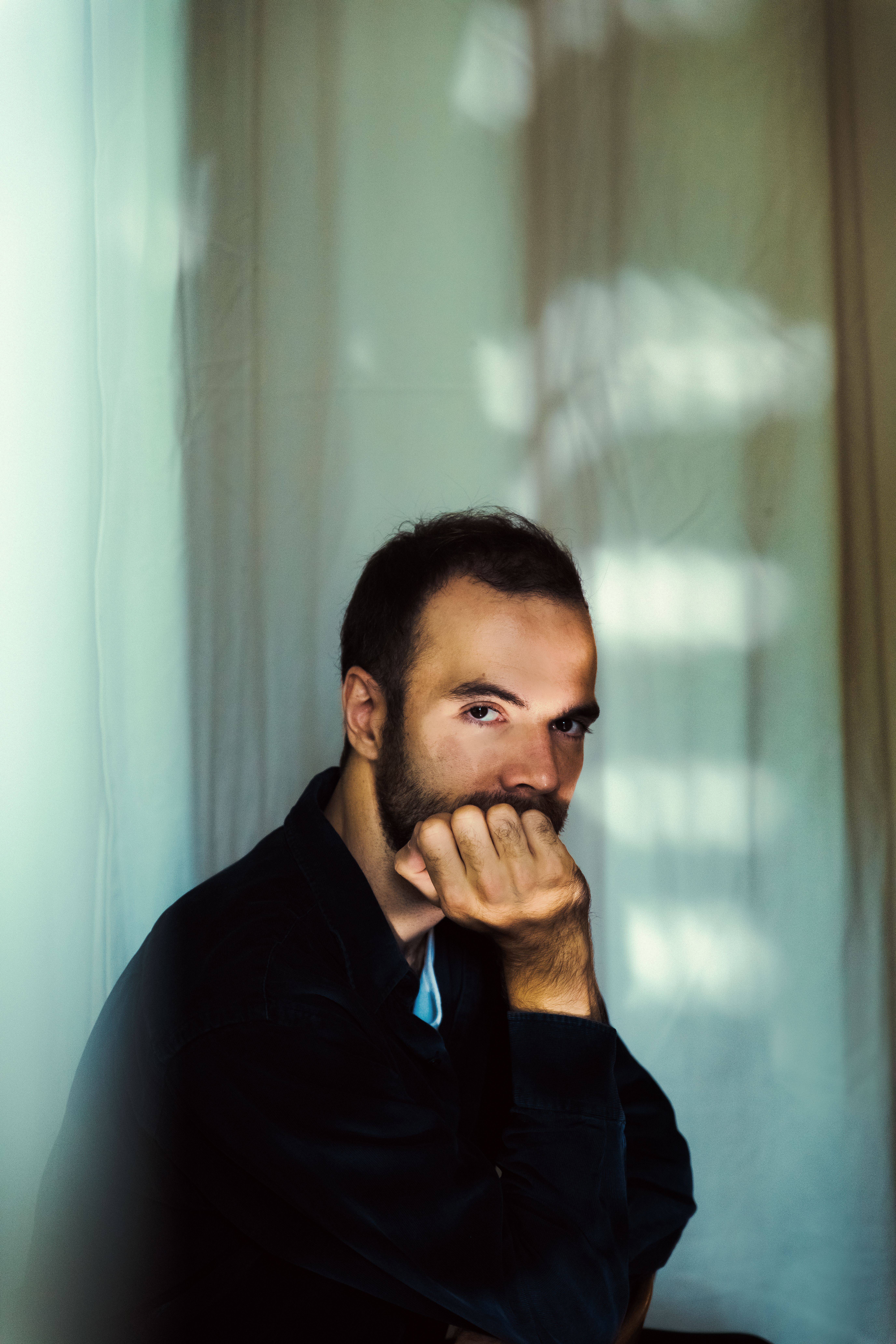 Maximilian Hering Interview Image (c) the artist
“Everything that can make me a better musician automatically makes me a better drummer.”
Video
