Published
Name: Mayflower Madame
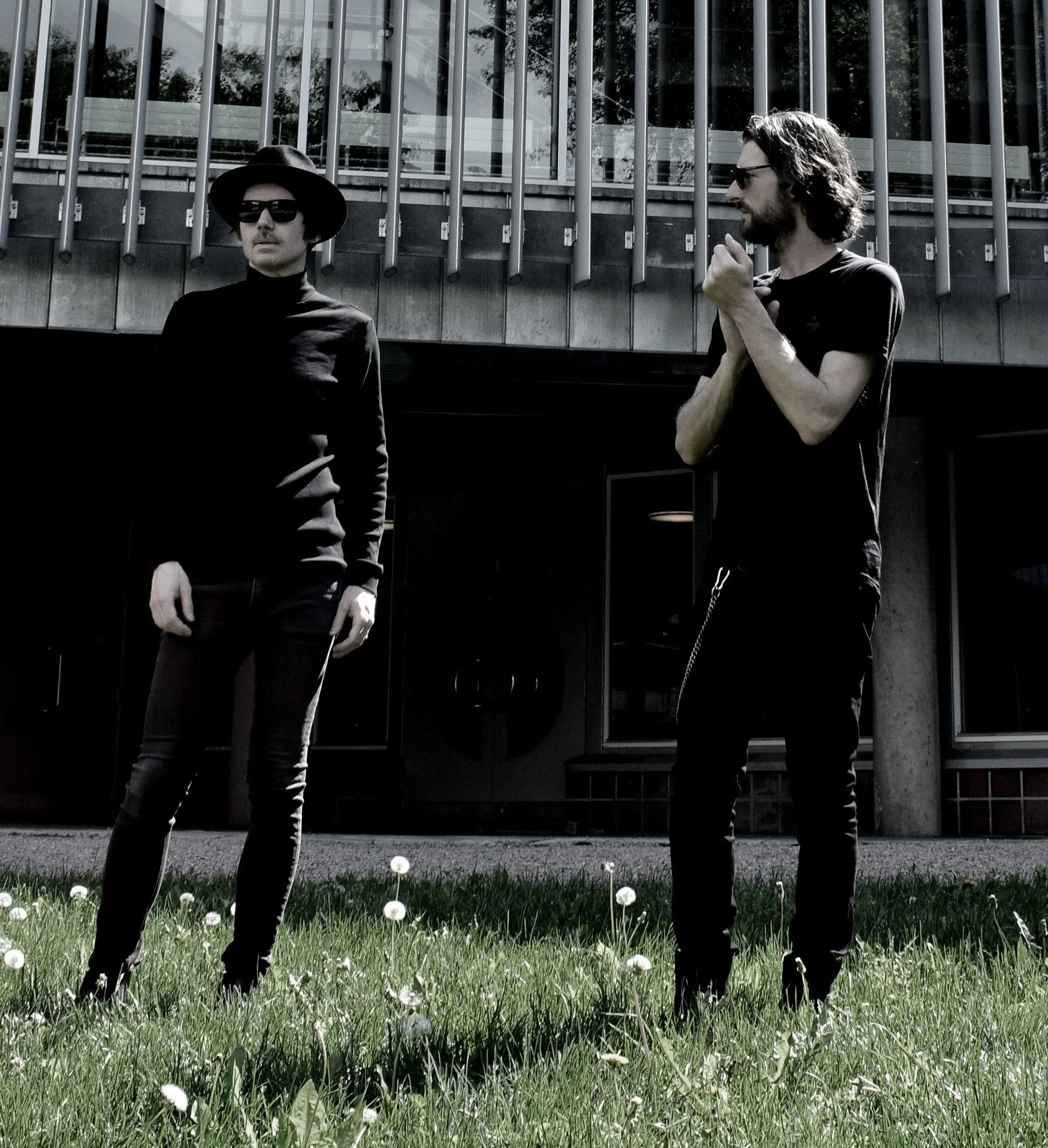
Members: Trond Fagernes (vocals/guitar/bass), Ola J. Kyrkjeeide (drums)
Interviewee: Trond Fagernes (vocals/guitar/bass)
Nationality: Norwegian
Current release: Mayflower Madame's new album Insight will be released on November 1st, 2024 via labels Night Cult Records, Up In Her Room and Icy Cold.
Recommendations: I think everyone should check out these two artists/paintings:
George Grosz - Der Liebeskranke / The Lovesick
Paul Delvaux - Sleeping Venues
If you enjoyed this Mayflower Madame interview and would like to know more about the band and their music, visit them on Instagram, and Facebook.
Where does the impulse to create something come from for you? What role do often-quoted sources of inspiration like dreams, other forms of art, personal relationships, politics etc play?
I mostly write about personal emotions and relationships, but quite often my choice of how to express this is also inspired by dreams and visual arts.
I have a master’s degree in art history and the fact that it also stimulated my creativity definitely boosted my motivation for my studies.
For you to get started, do there need to be concrete ideas – or what some have called a 'visualisation' of the finished work? What does the balance between planning and chance look like for you?
Well, I often visualize the final work, but in the end it usually turns out different anyway. So all in all I think chance plays a bigger role here.
Most of the time, the concrete idea is just really simple. For example, for the first single - ‘A Foretold Ecstasy’ - from our new album (‘Insight’) all I initially had in mind was that I wanted to create a song based on a relentless, groovy bass line.
That determined the structure of the song, everything else was later added layer by layer.
Is there a preparation phase for your process? Do you require your tools to be laid out in a particular way, for example, do you need to do 'research' or create 'early versions'?
For all the songs on the new album I recorded early versions with a drum machine, but eventually reshaped them into semi-final works before my collaborators Ola J. (drums) and Kenneth (synth) added their parts at the end.
Other than that, there's rarely a preparation process or any research in advance.
Do you have certain rituals to get you into the right mindset for creating? What role do certain foods or stimulants like coffee, lighting, scents, exercise or reading poetry play?
Not really, except that there’s often a lot of coffee involved. I feel that I work best when I’m really energetic and almost a bit tense.
What do you start with? And, to quote a question by the great Bruce Duffie: When you come up with a musical idea, have you created the idea or have you discovered the idea?
The creation of most of my songs until now have started with a guitar riff, but I’m curious to start from a different angle when I get back into the songwriting process.
As for the Bruce Duffie quote/question, I have no idea, haha. I like to think that I have created it, but most likely I have just discovered it ...?
When do the lyrics enter the picture? Where do they come from? Do lyrics need to grow together with the music or can they emerge from a place of their own?
My lyrics usually come from a place of their own. They’re rarely created simultaneously with the music, most often later, but they tend to fit together anyway.
However, there are a few exceptions, for example for our new album’s opener - ‘Ocean of Bitterness’ - the lyrics were created first and originally belonged to a different song.
But somehow the original combination didn’t feel right and I made a new, quieter song that was better suited to the words.
What makes lyrics good in your opinion? What are your own ambitions and challenges in this regard?
I think the important thing is that they make me feel something and the stronger emotions they awake the better.
I don’t necessarily need to connect with the whole thing, sometimes it’s enough if there are certain lines that give me a specific vision and I can create the rest of the narrative myself even though it’s not perhaps exactly what the author had in mind.
I guess my ambition is the same - to make people feel something, but it’s not a conscious goal and not something I can control. My lyrics must emerge from my inner thoughts or memories alone and hopefully they’re also relatable for others.
Many writers have claimed that as soon as they enter into the process, certain aspects of the narrative are out of their hands. Do you like to keep strict control or is there a sense of following things where they lead you?
Hmm, difficult question. In many ways, I follow things where they lead me, meaning that I don’t always know exactly what I feel before I’ve tried to put it into words.
Bbut of course I always have some sense of control of what I want to express.
Often, while writing, new ideas and alternative roads will open themselves up, pulling and pushing the creator in a different direction. Does this happen to you, too, and how do you deal with it? What do you do with these ideas?
Yeah, sure. I really like it when that happens and try to follow the new ideas as freely and open-minded as possible.
One example is ‘Paint It All in Blue’ where the outro part of the song happened spontaneously and really changed it into a far more melancholic, dreamy piece.
I recorded the early version of this song with the band’s founding member Rune (who made a comeback contributing with guitar on three of the songs on the new album) and we had no plan. After the second chorus, we were supposed to stop where that ended, but we just kept on playing and it all came together naturally.
There are many descriptions of the creative state. How would you describe it for you personally? Is there an element of spirituality to what you do?
The creative state is a bit of a mystery. Some days it just flows out so easily, while other days are really slow and I have to force myself to create things that usually don’t end up that good anyway.
Unfortunately, I can’t really explain it, but I can feel it in advance, before I sit down with my guitar or notebook or go into the studio, if I’m in a creative state or not.
I guess there’s some element of spirituality to it. Luckily, there are things that can be done on bad days as well - like recording second takes of something you’ve already created.
When you're in the studio to record a piece, how important is the actual performance and the moment of performing the song still in an age where so much can be “done and fixed in post?“
From my point of view the actual performance is still very important. I suppose there’s a lot that can be «fixed» by editing, mixing etc., but I really want the recording to be a true image of how the song would sound in a live performance.
Also, at least when it comes to our own music, I can still hear the difference between a really good and a not so good recording even after a long mixing and mastering process.
Once a piece is finished, how important is it for you to let it lie and evaluate it later on? How much improvement and refinement do you personally allow until you're satisfied with a piece? What does this process look like in practice?
This is often a bit of a dilemma and it changes from song to song.
I sometimes struggle with letting it lie, but I think the key for me is just to trust my gut feeling. When a song is as good as it can be, I somehow know it. Sometimes this takes several rounds of reworking, but most often the process is pretty quick.
A good example of the first is ‘Tightrope Walker’ and a good example of the latter is ‘Crippled Crow’.
Even recording a solo song is usually a collaborative process. Tell me about the importance of trust between the participants, personal relationships between musicians and engineers and the freedom to perform and try things – rather than gear, technique or “chops” - for creating a great song.
Between the musicians I think the most important thing is openness and to feel at ease with each other. From there comes a freedom to experiment and to try different things. We record everything ourselves in our own studio which makes the process less stressful and enables the opportunity to write and record a song simultaneously.
In relation to the mixing engineer, I think good communication is the key. There must be a mutual understanding of what kind of sound you’re looking for and one must feel that the engineer apprehends and responds to your ideas and visions.
What's your take on the role and importance of production, including mixing and mastering for you personally? In terms of what they contribute to a song, what is the balance between the composition and the arrangement (performance)?
I especially feel that the mixing process is of utmost importance for how the final work sounds. Mastering is more like a smaller refinement of the end result.
The composition is never changed after the recording is finished, but to get the right balance between the instruments and to get the sound you’re looking for, you need to have the right person mixing it.
The same song/recording can sound totally different from one producer to another.
After finishing a piece or album and releasing something into the world, there can be a sense of emptiness. Can you relate to this – and how do you return to the state of creativity after experiencing it?
I can definitely relate to a sense of emptiness after finishing the recording of an album. Usually, it takes a pretty long time before I’m ready to write something new again, but sometimes it also happens quicker.
I guess it’s partly a matter of how soon you find a new source of inspiration and partly a matter of how draining and exhausting the piece you just finished was.
Music is a language, but like any language, it can lead to misunderstandings. In which way has your own work – or perhaps the work of artists you like or admire - been misunderstood? How do you deal with this?
It can maybe not be called a misunderstanding, but the most common thing is that quite often reviewers think of our music as much darker than we do ourselves. It also happens that lyrics are misinterpreted.
However, none of these things bother me much, I think it’s a good thing that people find their own meaning in the lyrics, which I guess I also often do myself when I listen to other bands and artists.
Creativity can reach many different corners of our lives. Do you personally feel as though writing a piece of music is inherently different from something like making a great cup of coffee? What do you express through music that you couldn't or wouldn't in more 'mundane' tasks?
Haha, yeah, I definitely feel that it’s different and I suppose the main factor is that music (or other forms of art) provides you with an outlet to express your feelings and inner thoughts.